
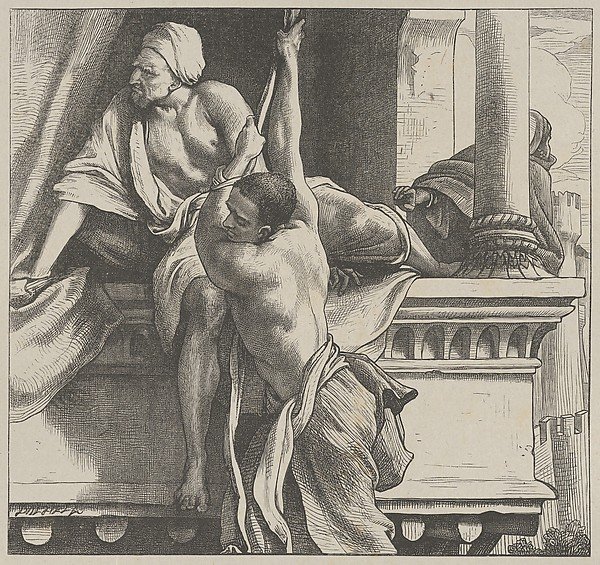
“Stop to appreciate the intense detail and dramatic lighting in this small wood engraving. It depicts a tense biblical escape, rendered with a classical touch that brings the ancient story to life.”
In this dramatic wood engraving, two figures scale a wall, their escape rendered with intense detail and a sense of urgency. Created for "Dalziels' Bible Gallery," a significant Victorian project illustrating biblical narratives, the scene captures a pivotal moment from the Book of Joshua. The artist, Frederic Leighton, brings a classical sensibility to the biblical story, evident in the figures' idealized forms and the dramatic composition. Despite the small scale of the print, the intricate lines and deep shadows create a powerful chiaroscuro effect, enhancing the tension as the spies descend into the unknown. The medium of wood engraving, popular in the 19th century, allowed for widespread dissemination of such detailed imagery, bringing grand artistic interpretations of religious texts into homes.
- Artist
- Lord Leighton Frederic
- Date
- 1865
- Medium
- Wood engraving on India paper, mounted on thin card
- Location
- The Metropolitan Museum of Art
- Dimensions
- Image: 6 5/8 in. × 7 in. (16.8 × 17.8 cm) India sheet: 8 9/16 × 8 15/16 in. (21.8 × 22.7 cm) Mount: 16 7/16 in. × 12 15/16 in. (41.8 × 32.8 cm)
- Collection
- Drawings and Prints
- Credit line
- Anonymous Gift, 1926
What to Notice
Five details hide in plain sight. Here’s where to look.
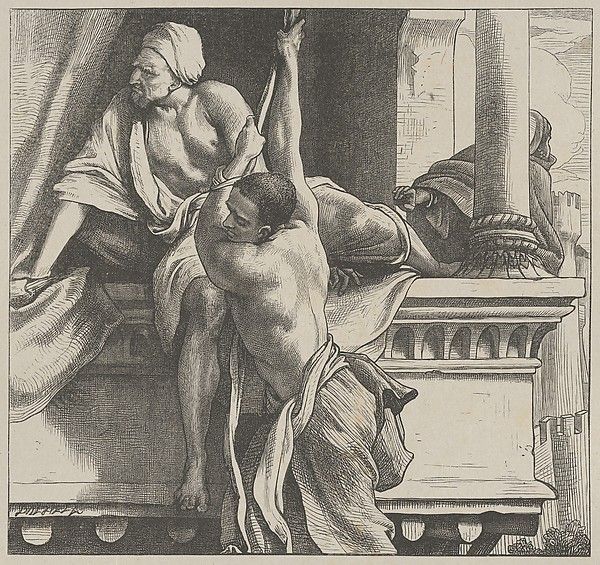
The intricate cross-hatching that creates deep shadows on the wall.
The determination on the faces of the two escaping spies.
The way the rope guides your eye down the composition.
The detailed rendering of the stone wall and its texture.
1 more detail is waiting.
See all 5 in Art Whisper →Stand in front of it and listen
The full narration walks you through The Spies Escape, from "Dalziels' Bible Gallery" — the story behind it, the details most visitors miss, and why it matters. Free in the Art Whisper app.
Further Works by Frederic
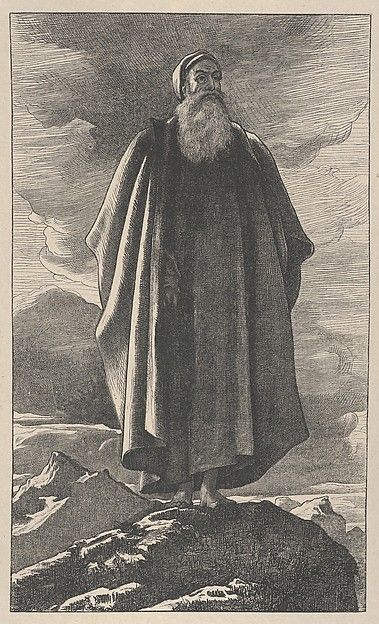 Moses Views the Promised Land, from "Dalziels' Bible Gallery"
1857 · The Metropolitan Museum of Art
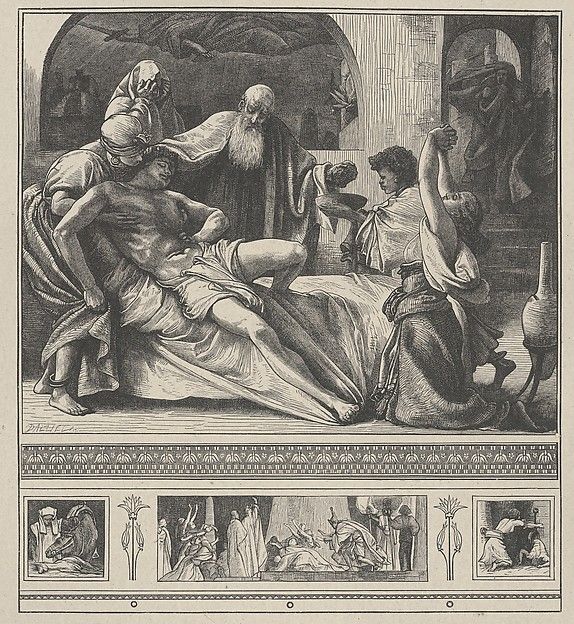 Death of the Firstborn, from "Dalziels' Bible Gallery"
1865 · The Metropolitan Museum of Art
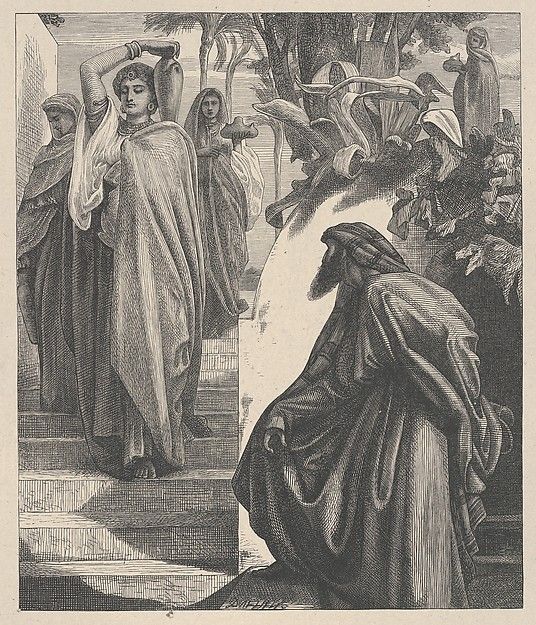 Eliezer and Rebekah, from "Dalziels' Bible Gallery"
1865 · The Metropolitan Museum of Art
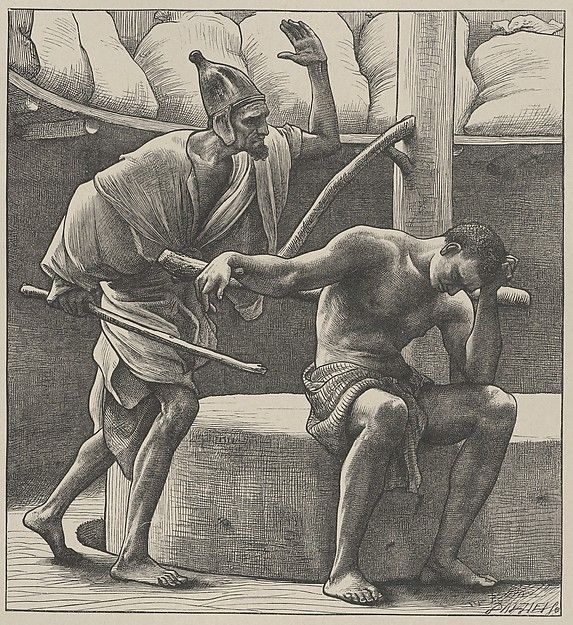 Samson at the Mill, from "Dalziels' Bible Gallery"
1865 · The Metropolitan Museum of Art
More works to explore
Beyond Frederic: works from the same years.
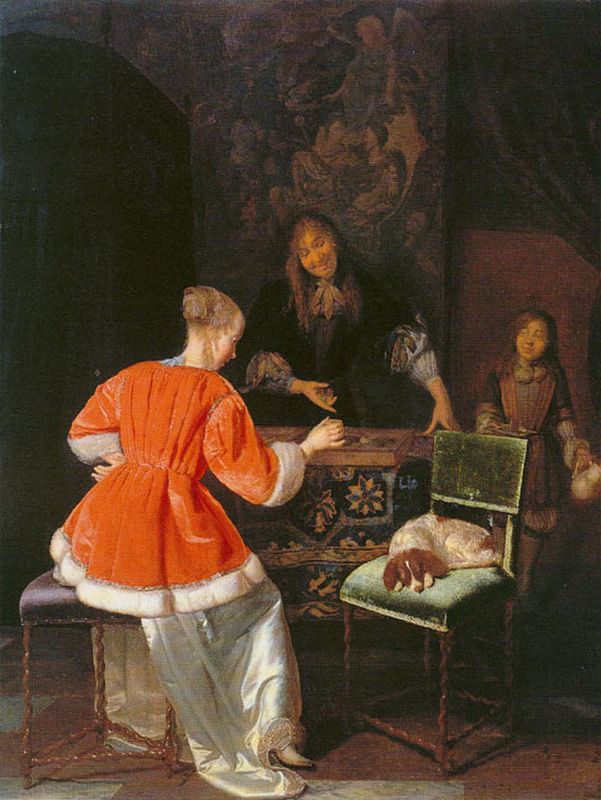 Same era · 1850s–1880s
The Backgammon Players
Philip Webb · 1861 · The Metropolitan Museum of Art
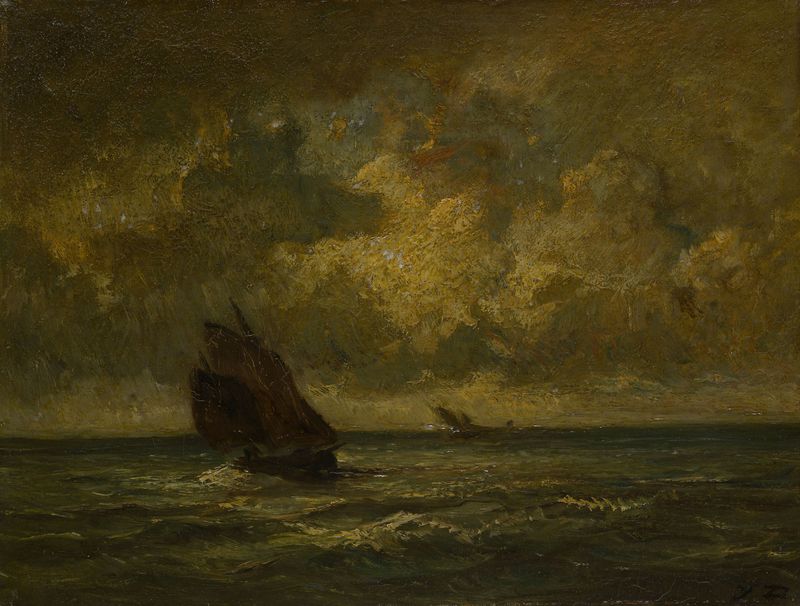 Same era · 1850s–1880s
Two Boats in a Storm
Léon-Victor Dupré · 1870 · Art Institute of Chicago
 Same era · 1850s–1880s
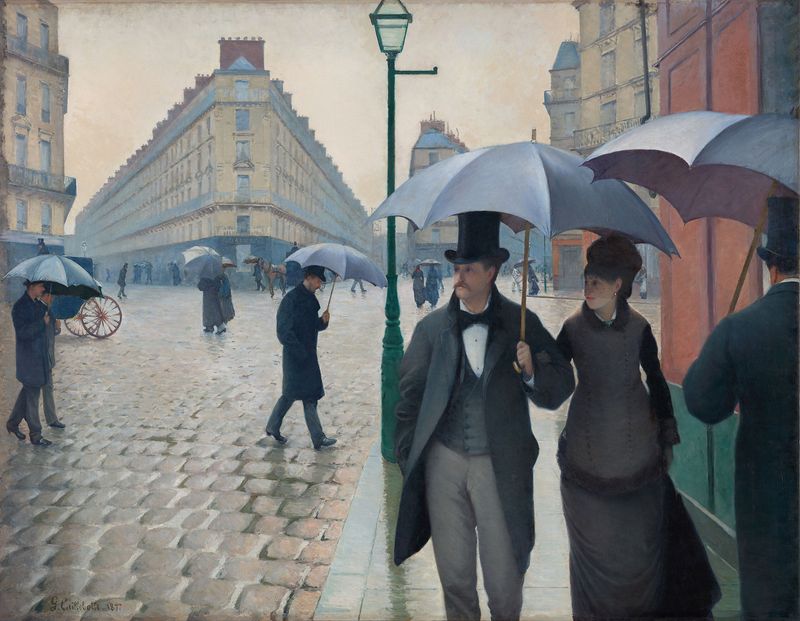
Paris Street; Rainy Day
Kawabata Gyokushō · 1877 · Art Institute of Chicago
 Same era · 1850s–1880s
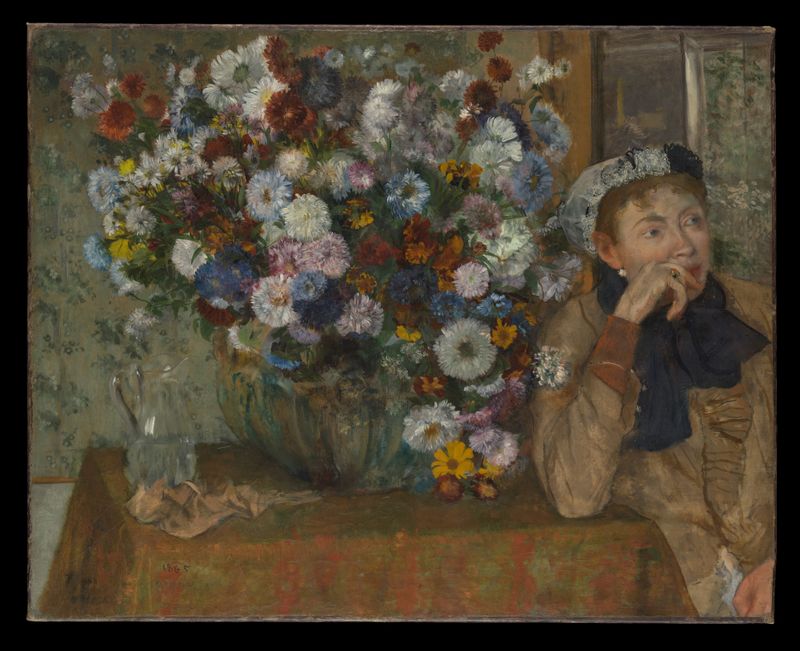
A Woman Seated beside a Vase of Flowers (Madame Paul Valpinçon?)
Edgar Degas · 1865 · The Metropolitan Museum of Art
 Same era · 1850s–1880s
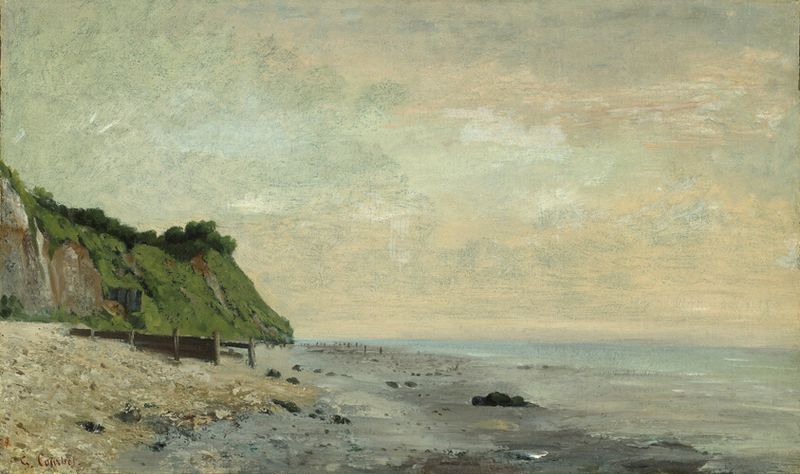
Cliffs on the Sea Coast: Small Beach, Sunrise (Falaise au bord de la mer, vu Petite Plage, soleil levant)
Gustave Courbet · 1865 · Art Institute of Chicago
 Same era · 1850s–1880s
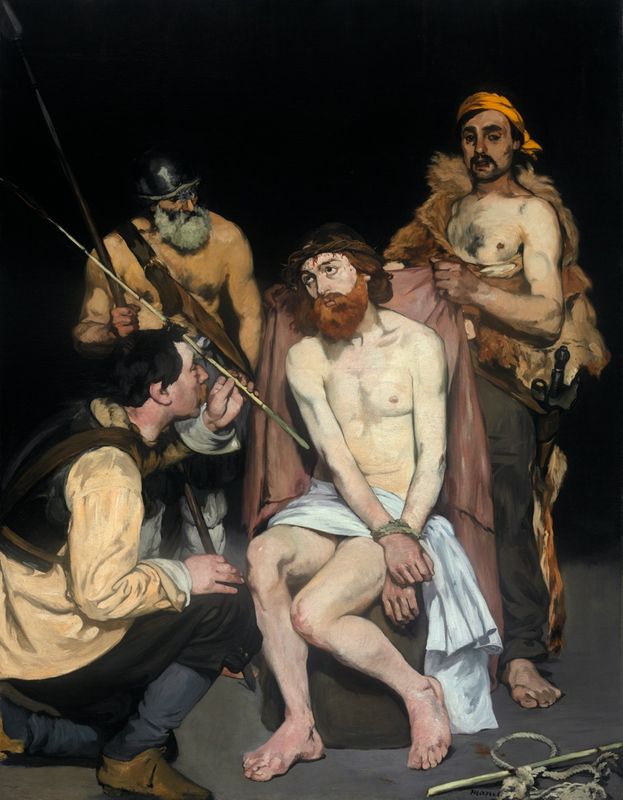
Jesus Mocked by the Soldiers
Édouard Manet · 1865 · Art Institute of Chicago
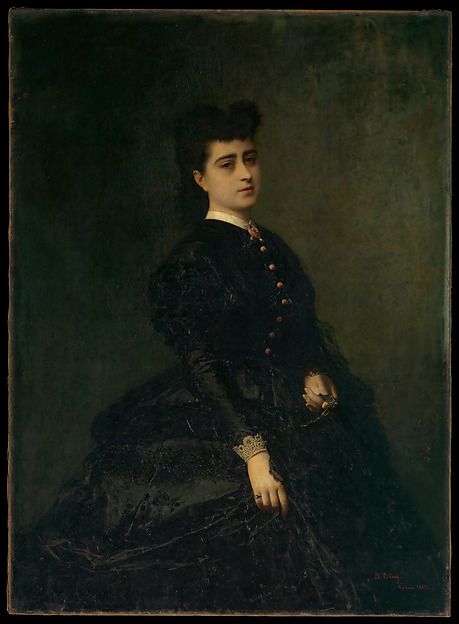 Same era · 1850s–1880s
Mirope Savati Gaye
Mariano Fortuny Marsal · 1865 · The Metropolitan Museum of Art
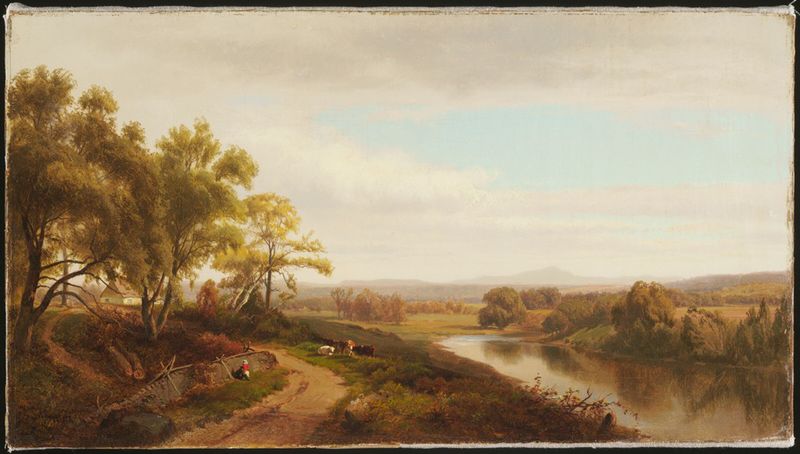 Same era · 1850s–1880s
Valley of the Bedford
William Hart · 1865 · Fogg Museum
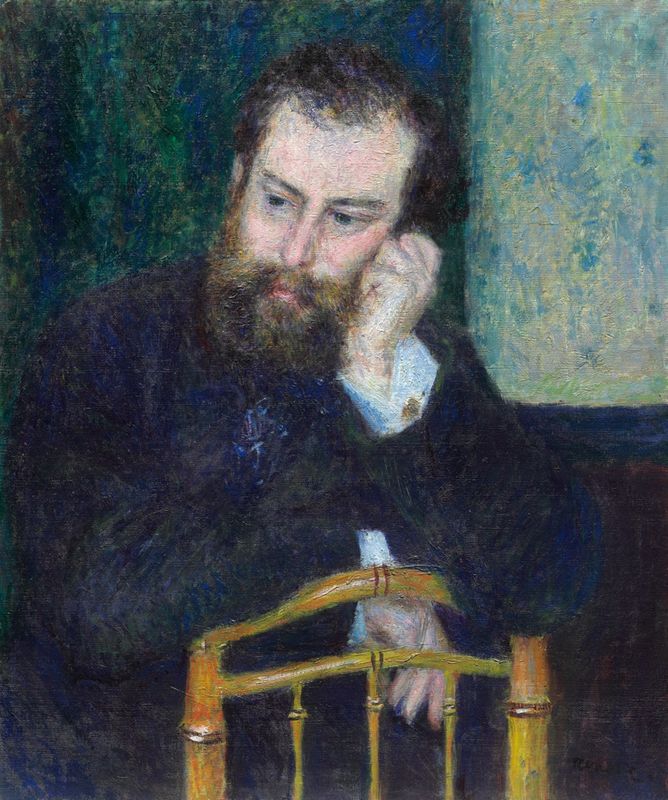 Same era · 1850s–1880s
Alfred Sisley
Pierre-Auguste Renoir · 1864 · Foundation E.G. Bührle Collection
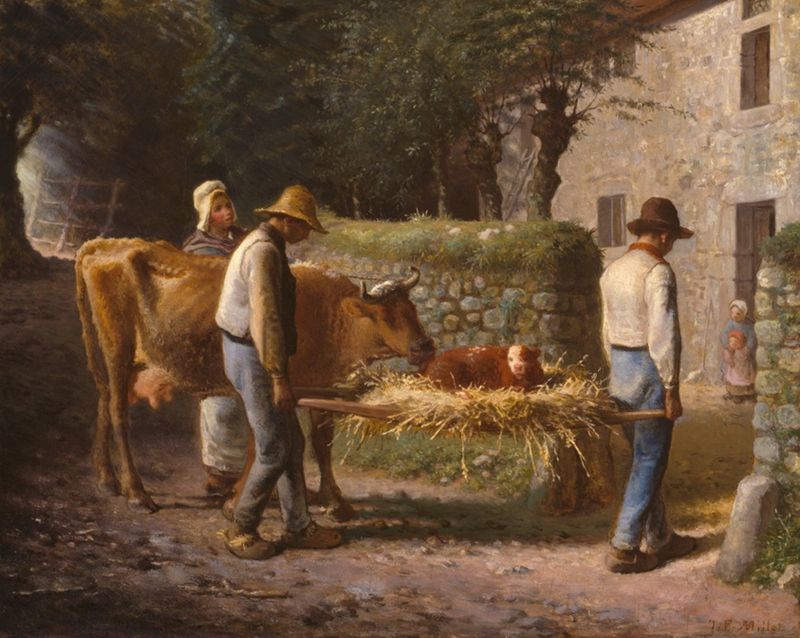 Same era · 1850s–1880s
Peasants Bringing Home a Calf Born in the Fields
Jean-François Millet · 1864 · Art Institute of Chicago
 Same era · 1850s–1880s
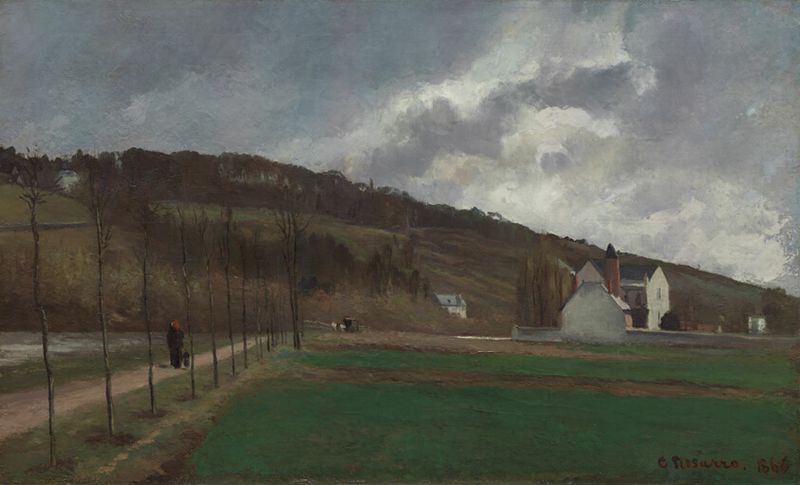
The Banks of the Marne in Winter
Camille Pissarro · 1866 · Art Institute of Chicago
 Same era · 1850s–1880s
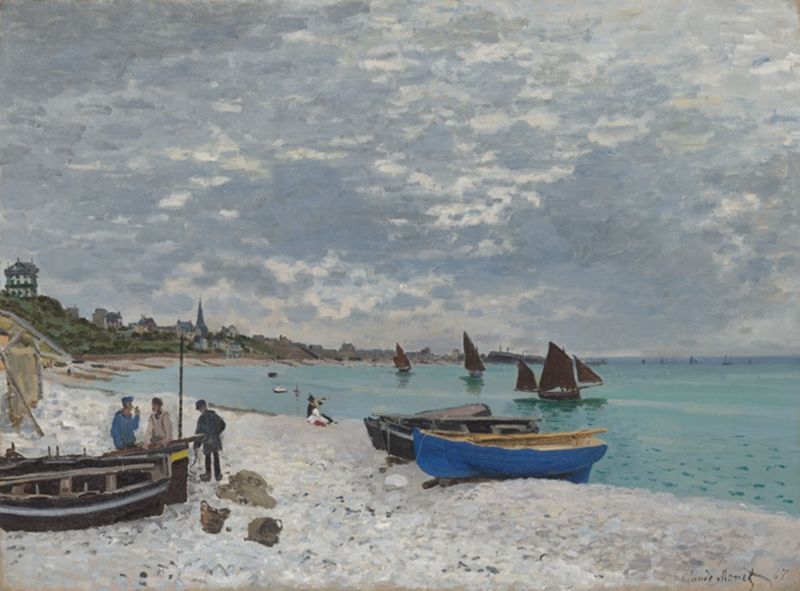
The Beach at Sainte-Adresse
Claude Monet · 1867 · Art Institute of Chicago