
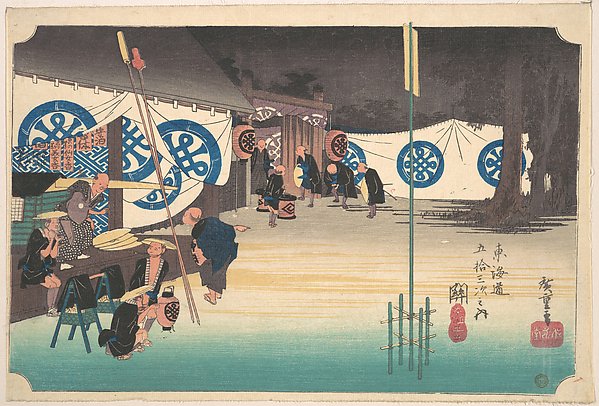
“Stop to appreciate this vivid snapshot of travel on Japan's ancient Tokaido Road. It captures the energy and subtle beauty of a cold, early morning departure, highlighting the human effort behind the journey.”
In this dynamic woodblock print, a cold dawn breaks over the Seki station, a bustling post town on the historic Tokaido Road. Two porters, their bodies straining, hoist a palanquin onto their shoulders, ready to depart. The scene is full of movement: another porter bends under a heavy load, while a lantern bearer hurries ahead, his light casting a warm glow against the cool blues and grays of the early morning. This work, part of a famous series depicting the 53 stations of the Tokaido, captures the everyday life and constant motion of travel in Edo-period Japan. The artist uses a subtle gradation of color, known as bokashi, to evoke the atmospheric chill and dim light, drawing the viewer into the narrative of the journey.
- Artist
- Utagawa Hiroshige
- Date
- 1824
- Medium
- Woodblock print; ink and color on paper
- Location
- The Metropolitan Museum of Art
- Dimensions
- 9 15/32 x 14 1/16 in. (24.1 x 35.7 cm)
What to Notice
Five details hide in plain sight. Here’s where to look.
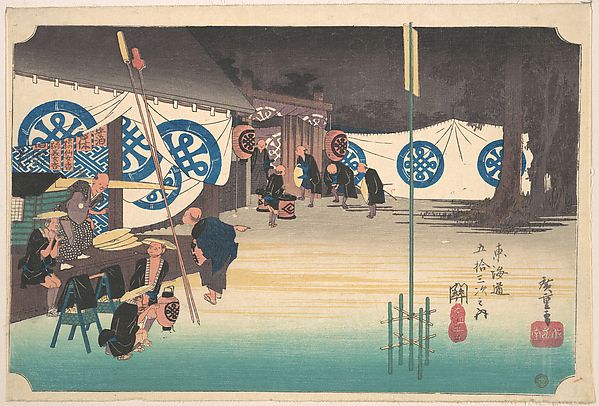
The way the porters' muscles are defined as they lift the palanquin.
The warm glow of the lantern contrasting with the cool morning light.
The details of the travelers' straw hats and winter clothing.
The faint outlines of buildings in the background, just waking up.
1 more detail is waiting.
See all 5 in Art Whisper →Stand in front of it and listen
The full narration walks you through 東海道五十三次之内 関 本陣早立|Seki, Honjin Sotatsu — the story behind it, the details most visitors miss, and why it matters. Free in the Art Whisper app.
Utagawa Hiroshige
1797–1858 · JapanUtagawa Hiroshige, the last great master of ukiyo-e, transformed landscape printmaking with his poetic scenes of Edo Japan and vibrant use of color gradation.
Further Works by Hiroshige
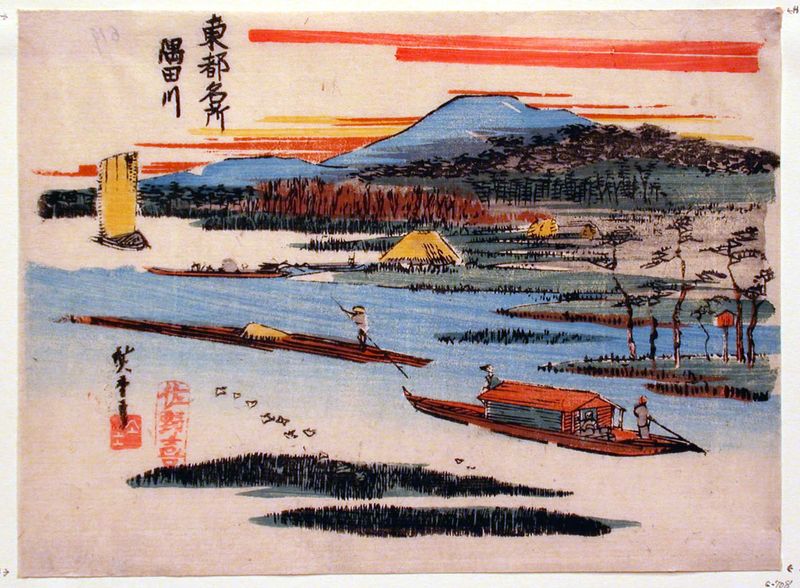 Boat on the Sumida
1817 · The Metropolitan Museum of Art
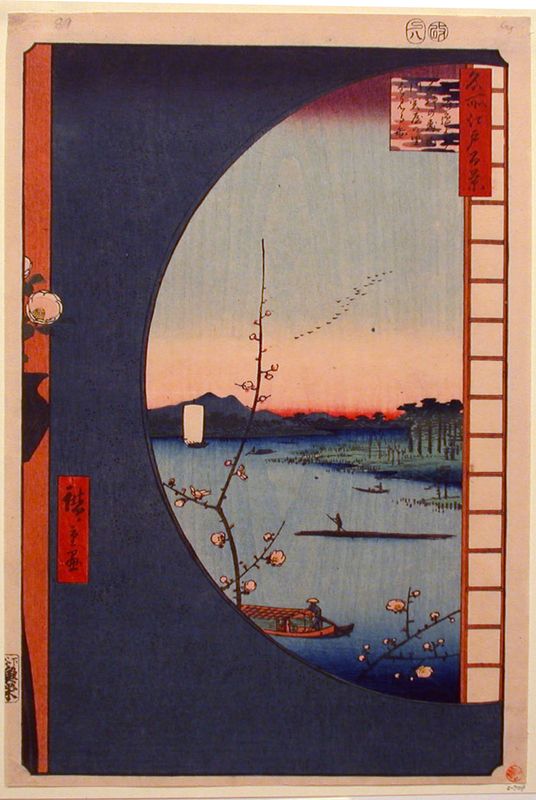 Small View of Yedo
1817 · The Metropolitan Museum of Art
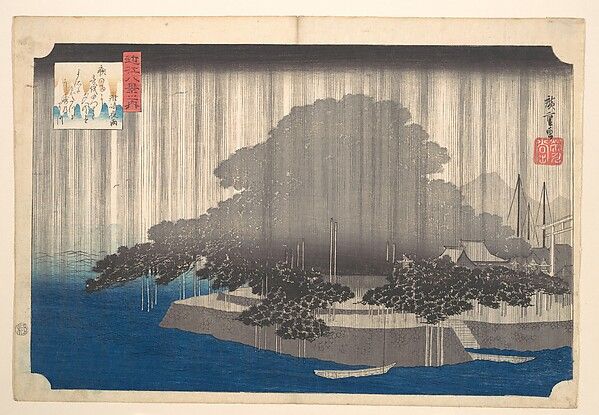 近江八景之内 唐崎夜雨|Evening Rain at Karasaki-Pine Tree
1822 · The Metropolitan Museum of Art
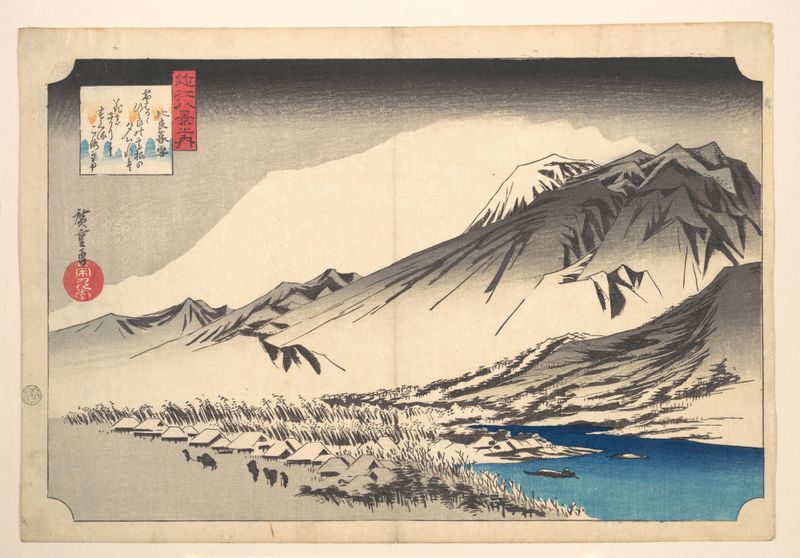 近江八景之内 比良暮雪|Evening Snow on Mount Hira
1822 · The Metropolitan Museum of Art
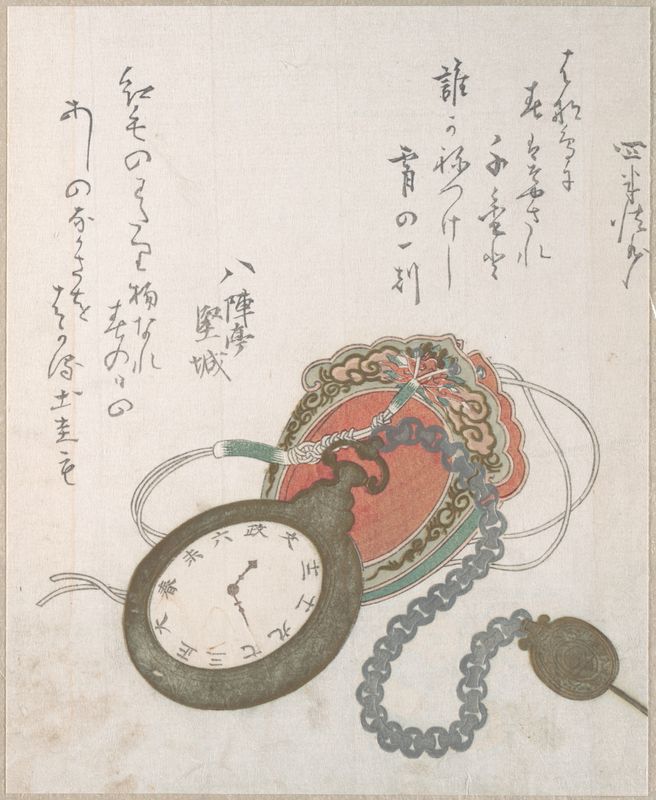 西洋風の懐中時計『春雨集』 摺物帖|Western Pocket WatchFrom the Spring Rain Collection (Harusame shū), vol. 3
1823 · The Metropolitan Museum of Art
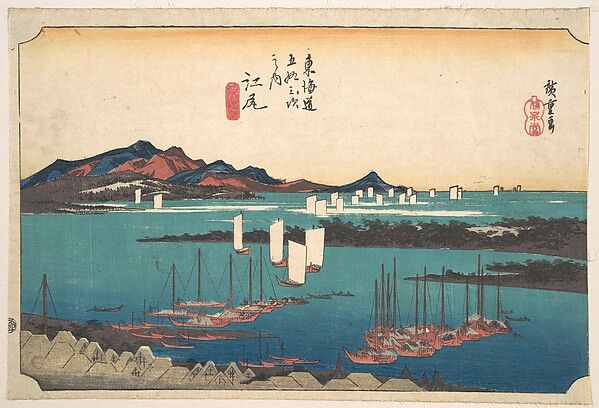 東海道五十三次之内 江尻 三保遠望|Distant View of Miho Beach from Ejiri
1824 · The Metropolitan Museum of Art
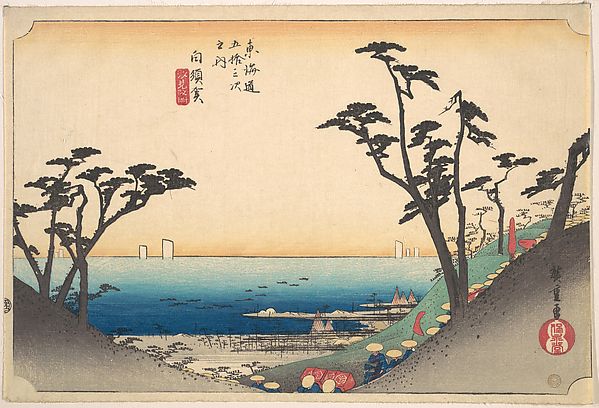 東海道五十三次之内 白須賀 汐見阪図|Shirasuka, Shio-mi Zaka
1824 · The Metropolitan Museum of Art
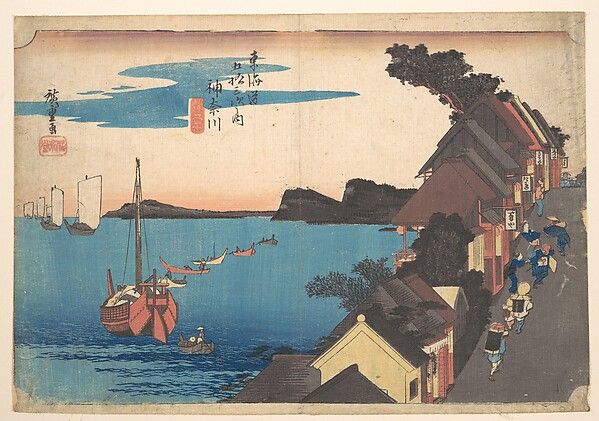 東海道五十三次之内 神奈川 台之景|View of Kangawa at Sunset
1824 · The Metropolitan Museum of Art
More works to explore
Beyond Hiroshige: works from the same years.
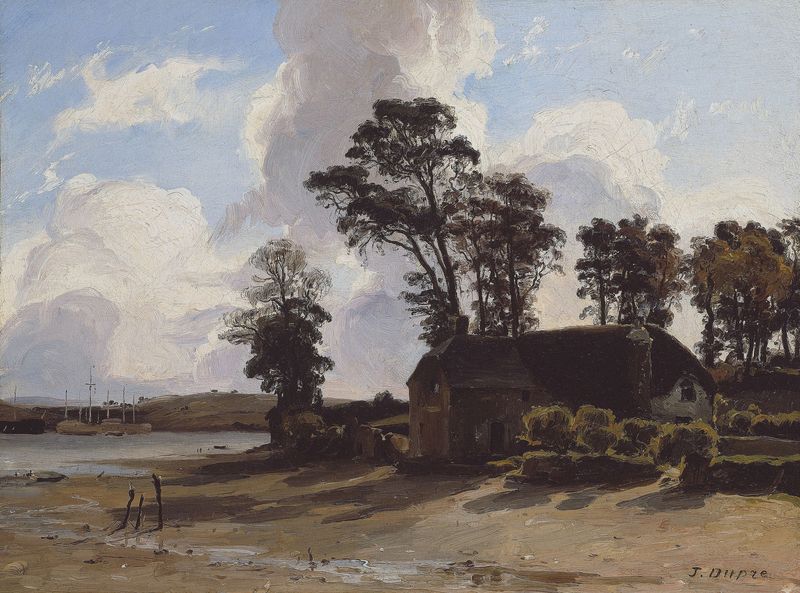 Same era · 1800s–1830s
The Estuary Farm
Léon-Victor Dupré · 1831 · Art Institute of Chicago
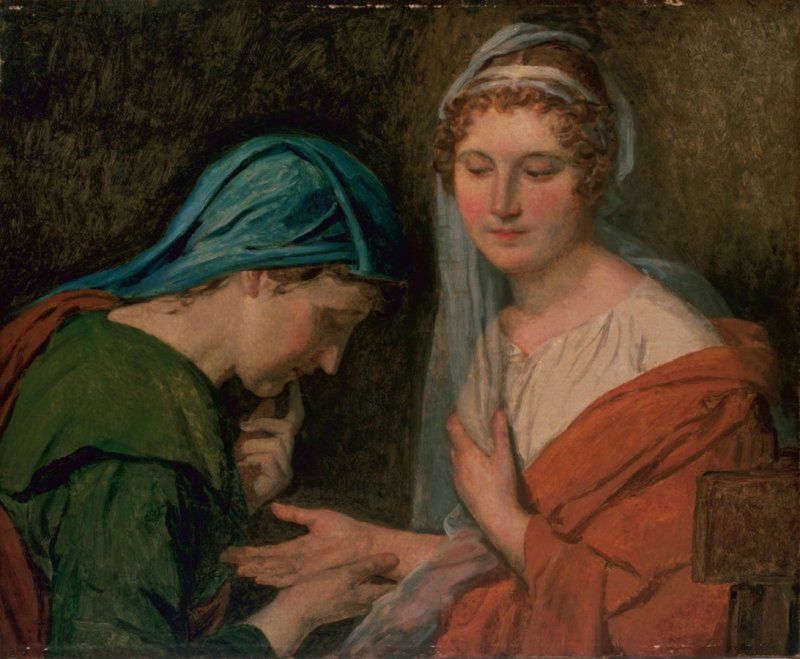 Same era · 1800s–1830s
The Fortune Teller (La Bonne Aventure)
Jacques-Louis David · 1824 · Fine Arts Museums of San Francisco
 Same era · 1800s–1830s
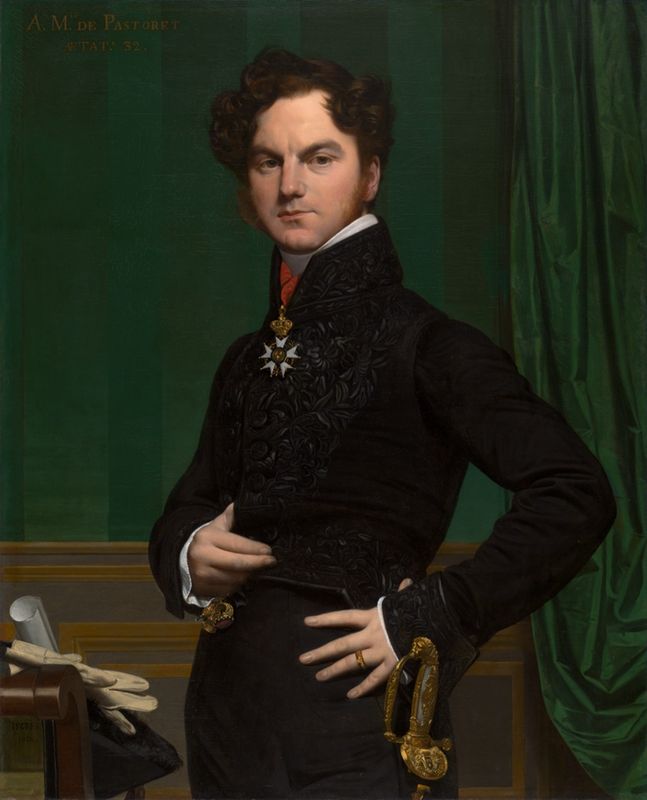
Amédée-David, the Comte de Pastoret
Jean-Auguste-Dominique Ingres · 1823 · Art Institute of Chicago
 Same era · 1800s–1830s
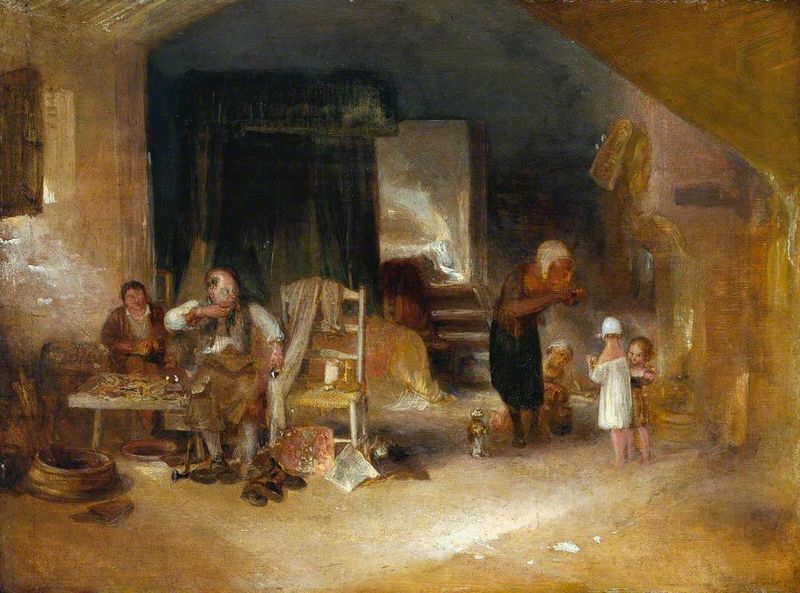
The Cobbler’s Home
J. M. W. Turner · 1825 · National Gallery
 Same era · 1800s–1830s
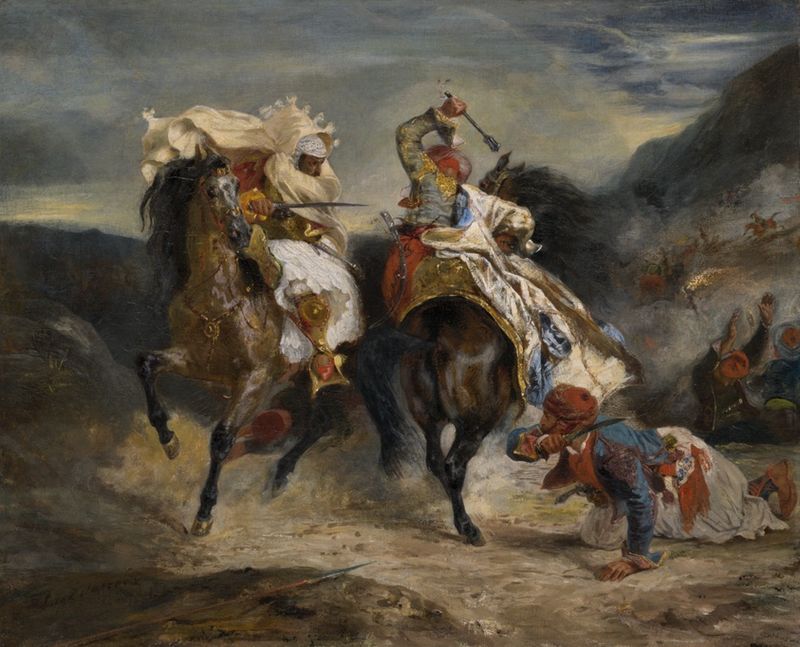
The Combat of the Giaour and Hassan
Eugène Delacroix · 1826 · Art Institute of Chicago
 Same era · 1800s–1830s
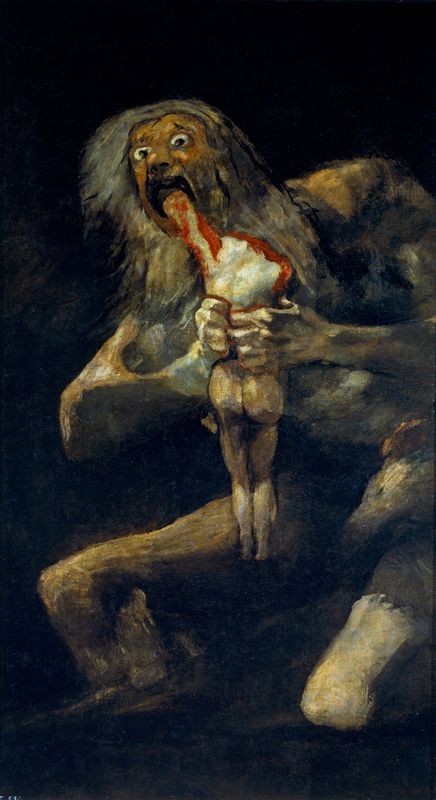
Saturn Devouring His Son
Francisco Goya · 1820 · Museo del Prado
 Same era · 1800s–1830s
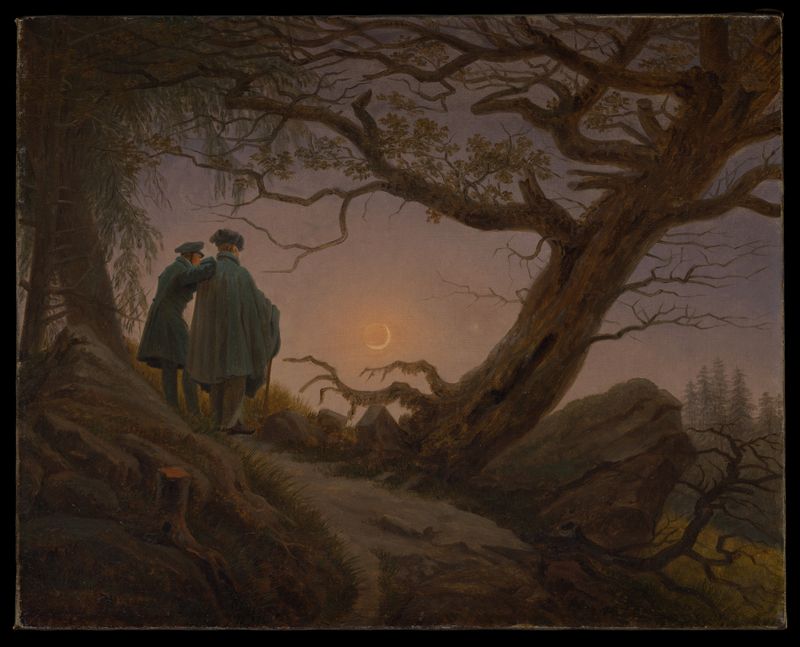
Two Men Contemplating the Moon
Caspar David Friedrich · 1819 · Staatliche Kunstsammlungen Dresden
 Same era · 1800s–1830s
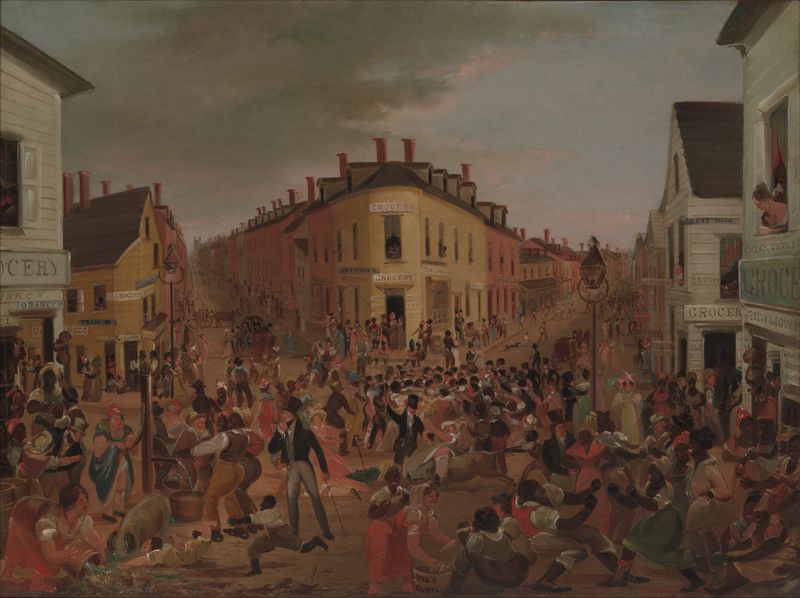
The Five Points
Artist Unknown - The Mercat Cross, Aberdeen · 1822 · The Metropolitan Museum of Art
 Same era · 1800s–1830s
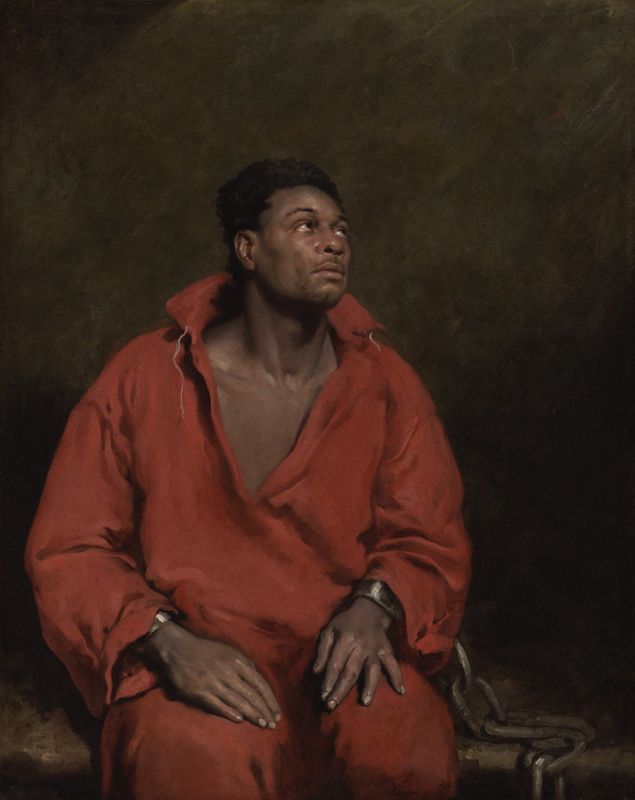
The Captive Slave (Ira Aldridge)
John Philip Simpson · 1827 · Art Institute of Chicago
 Same era · 1800s–1830s
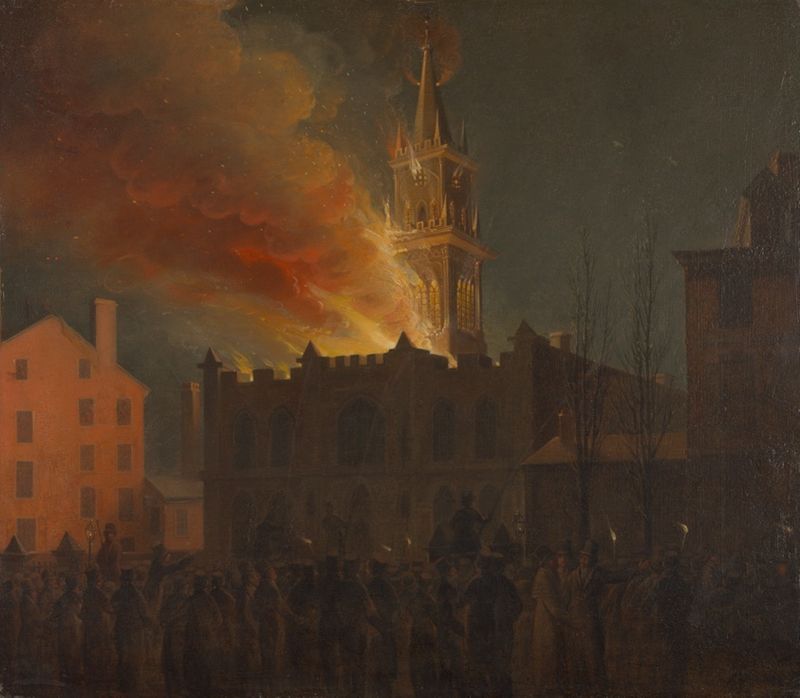
Conflagration of the Masonic Hall, Chestnut Street, Philadelphia, Pennsylvania
Samuel Jones · 1819 · Art Institute of Chicago
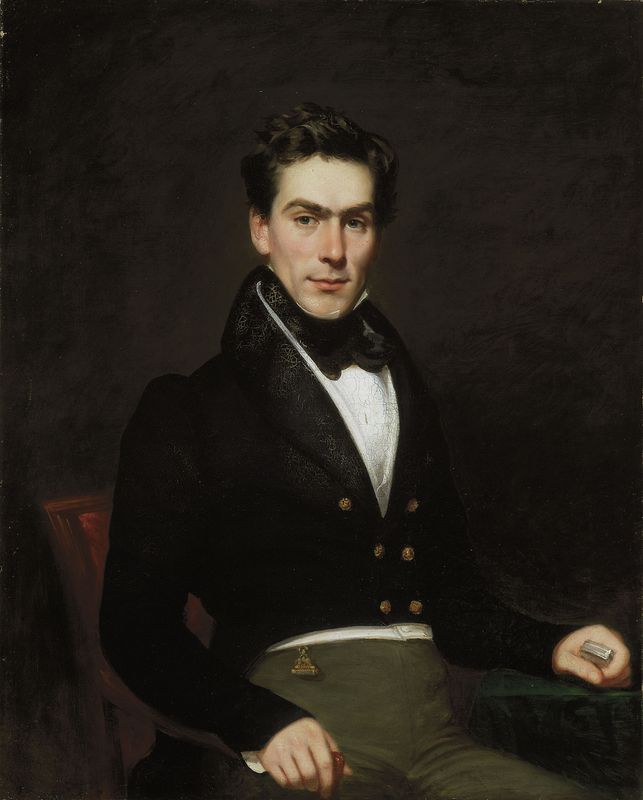 Same era · 1800s–1830s
Mr. James Mackie
Samuel Alcock & Company · 1830 · Art Institute of Chicago
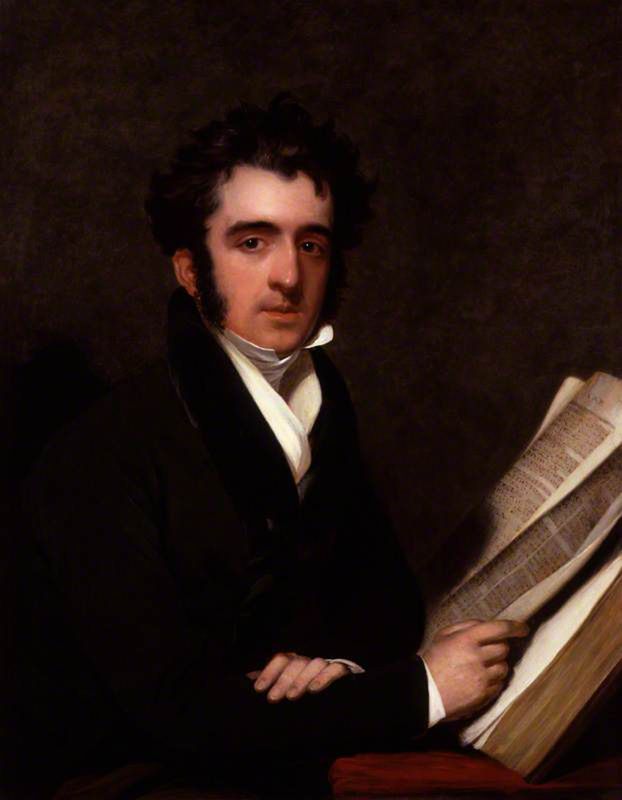 Same era · 1800s–1830s
George Grote
Thomas Stewardson · 1824 · National Portrait Gallery