
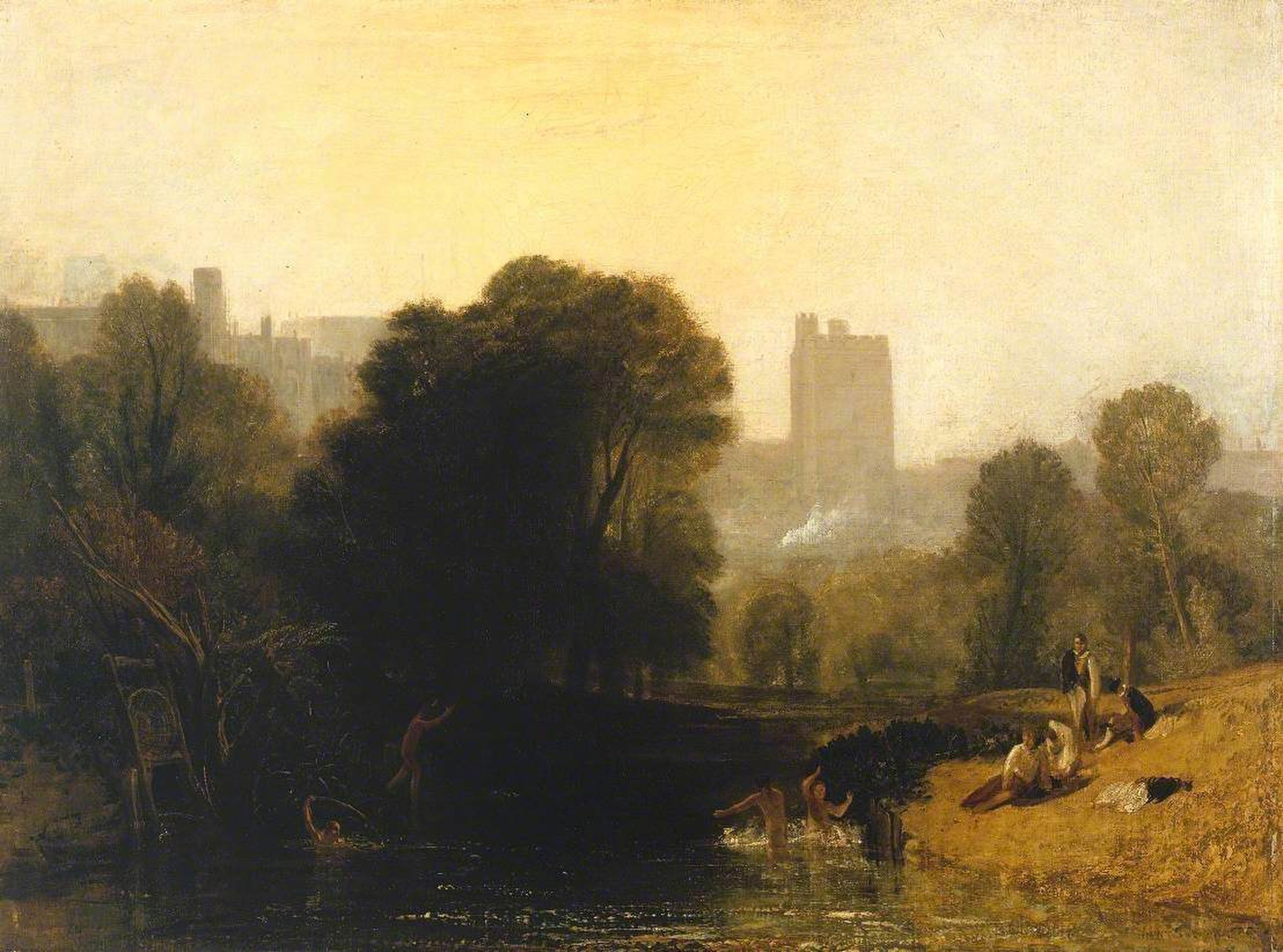
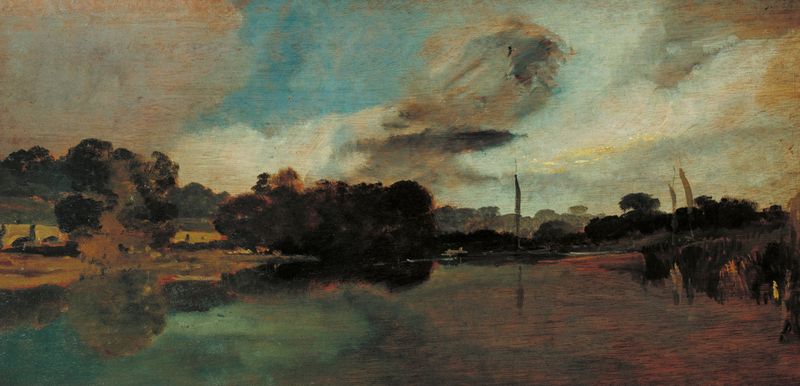
“This painting captures a serene view of the Thames near Windsor, showcasing a masterful play of light and atmosphere. It invites you to pause and observe the quiet beauty of an early 19th-century English river scene, a less turbulent but equally evocative work by a painter known for his dramatic seascapes.”
A wide, tranquil river dominates this painting, reflecting a sky that transitions from bright, hazy light to darker, more dramatic clouds. The scene captures the Thames near Windsor, a familiar stretch of water for the artist, who spent time in Brentford and Sunningwell during his youth. Here, the river is a stage for everyday life, with small boats navigating its surface and figures dotting the banks. The composition draws the eye along the water's gentle curve, past distant structures, towards an atmospheric glow that suggests either dawn or dusk. This work, created in 1809, comes from a period when the artist, then in his mid-thirties, had already established his reputation as a painter of maritime scenes and was exploring diverse landscapes beyond the dramatic storms for which he was also known. It’s a quiet moment, yet full of the expressive coloring and imaginative landscape that would mark much of his output.
- Artist
- J. M. W. Turner
- Date
- 1809
- Medium
- Oil on canvas
- Location
- Tate
What to Notice
Five details hide in plain sight. Here’s where to look.
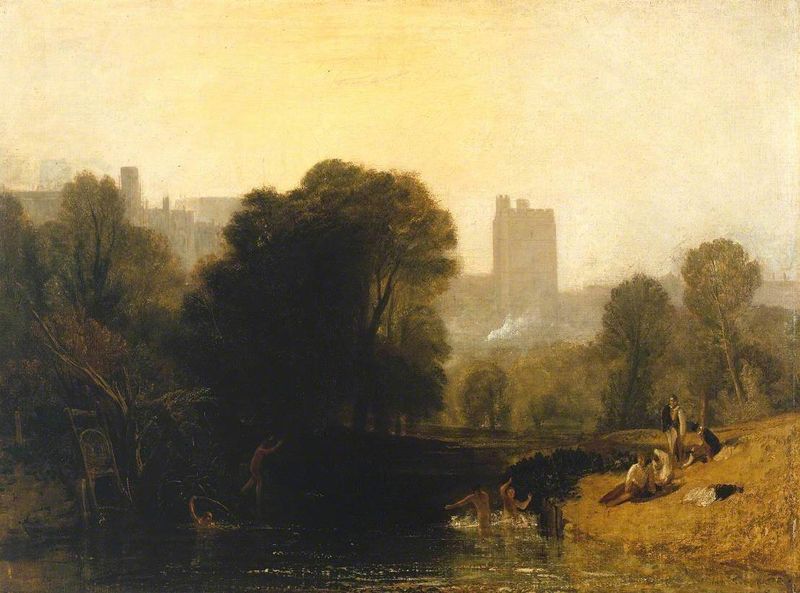
The subtle shift in light across the sky, from clear to cloudy.
Small figures on the riverbank, perhaps fishing or walking.
The reflection of the sky and distant trees on the water's surface.
The distant buildings on the horizon, hinting at Windsor Castle.
1 more detail is waiting.
See all 5 in Art Whisper →Stand in front of it and listen
The full narration walks you through Near the Thames’ Lock, Windsor — the story behind it, the details most visitors miss, and why it matters. Free in the Art Whisper app.
J. M. W. Turner
1775–1851 · Kingdom of Great BritainJ. M. W. Turner, the 'painter of light,' transformed landscape painting with his turbulent marine scenes and expressive use of color.
Further Works by Turner
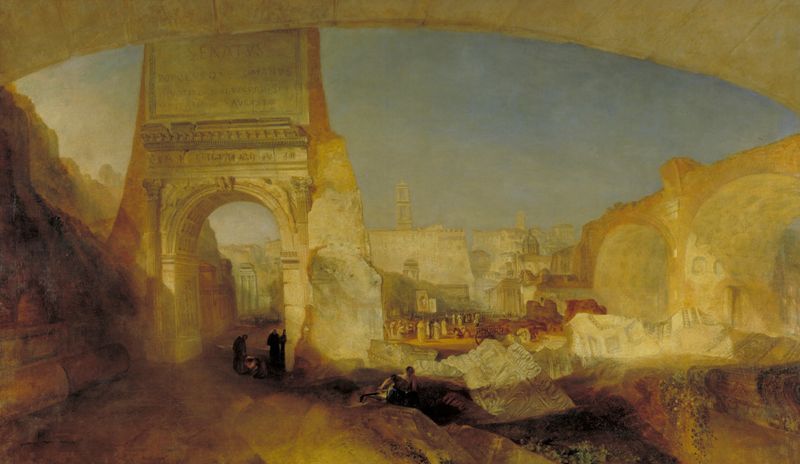 Forum Romanum, for Mr Soane's Museum
1826 · Tate
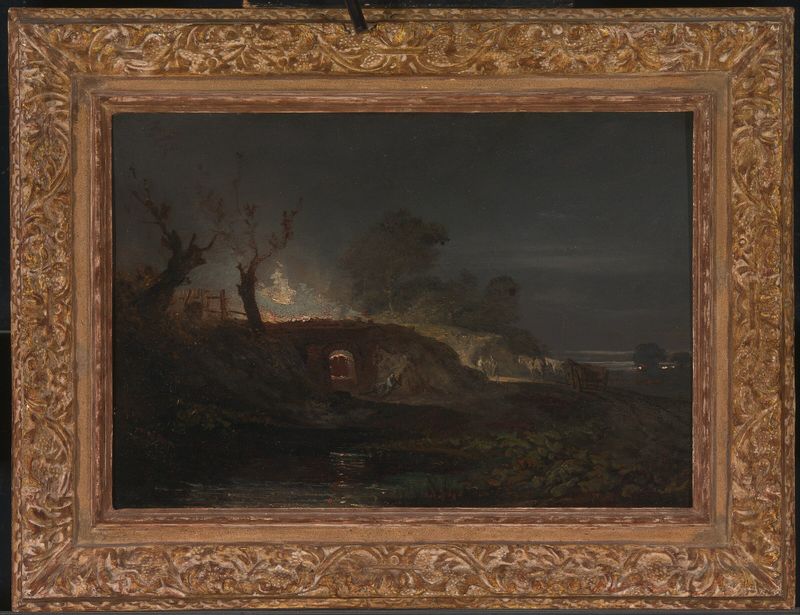 A Limekiln, Possibly at Briton Ferry in South Wales
1797 · Yale Center for British Art
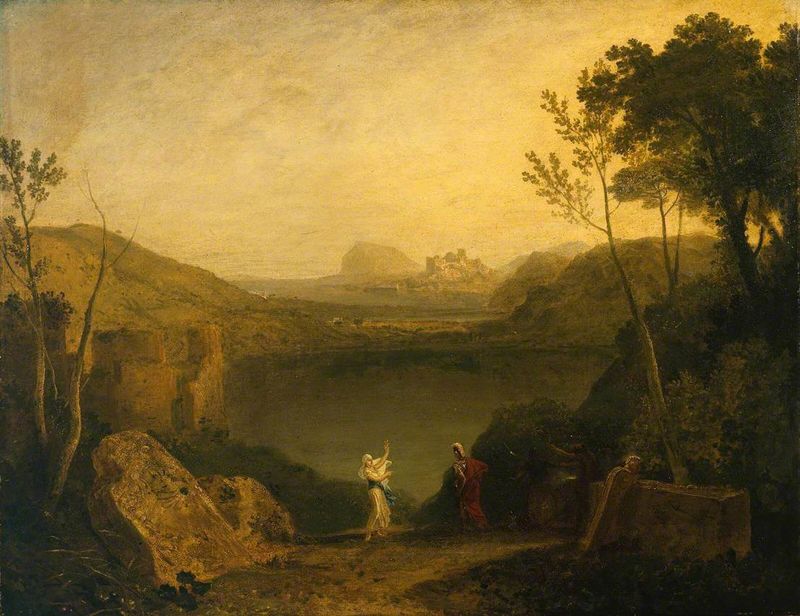 Aeneas and the Sibyl, Lake Avernus
1798 · National Gallery
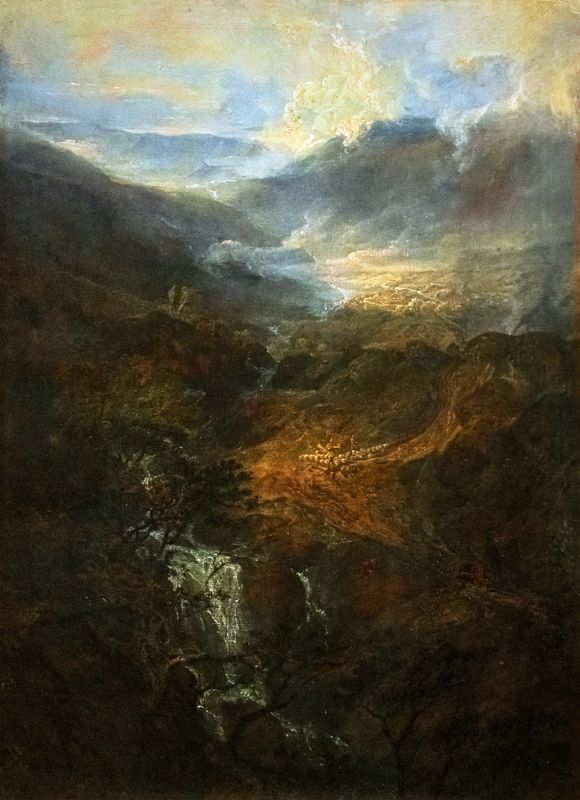 Morning amongst the Coniston Fells, Cumberland
1798 · National Gallery
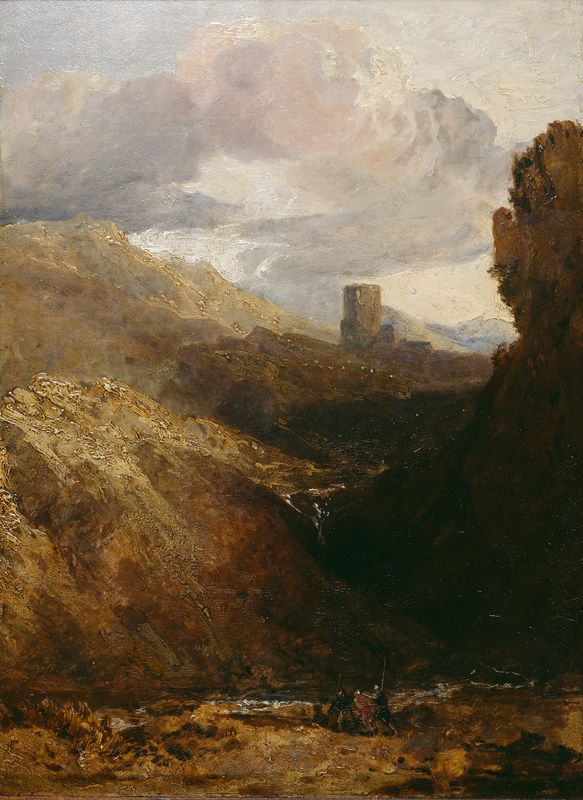 Dolbadarn Castle
1800 · National Library of Wales
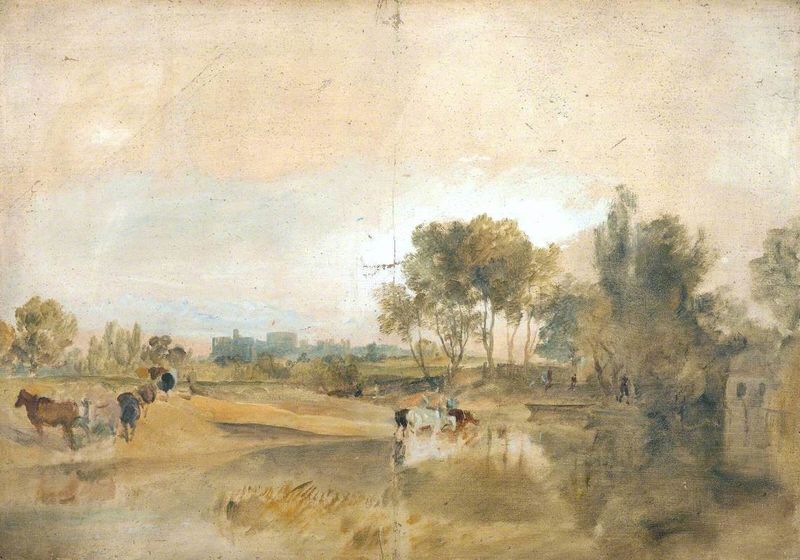 A Thames Backwater with Windsor Castle in the Distance
1805 · National Gallery
 Walton Reach
1805 · National Gallery
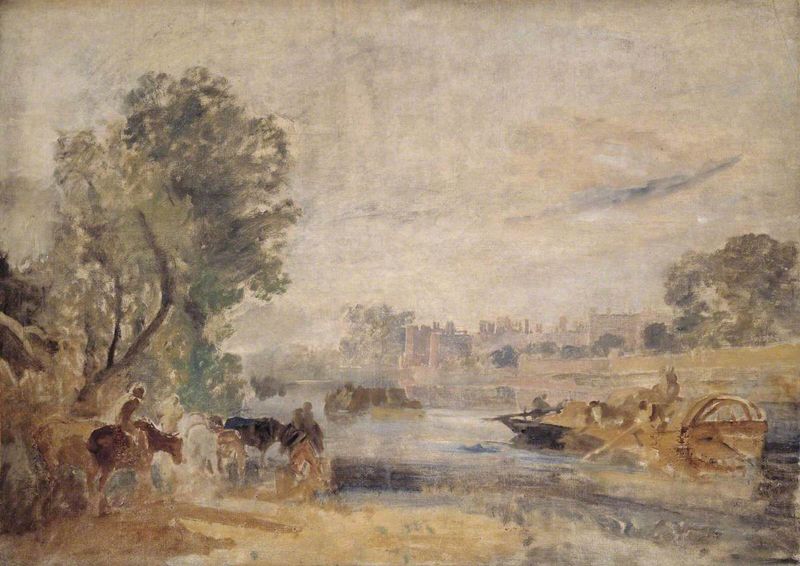 Hampton Court from the Thames
1806 · National Gallery
More from Romanticism
More works to explore
Beyond Turner and Romanticism: works from the same years.
 Same era · 1790s–1820s
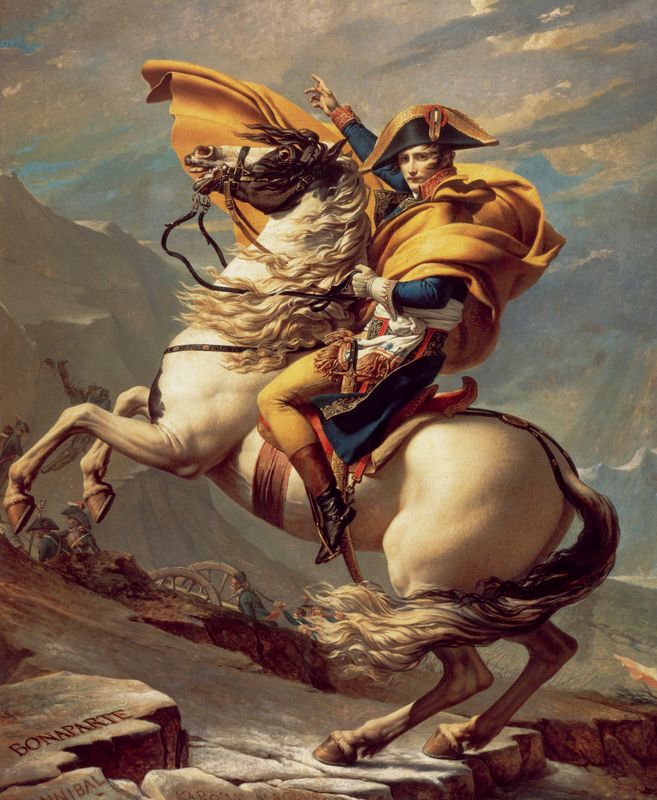
Napoleon Crossing the Alps
Jacques-Louis David · 1800 · Musée national de Malmaison et Bois-Préau
 Same era · 1790s–1820s
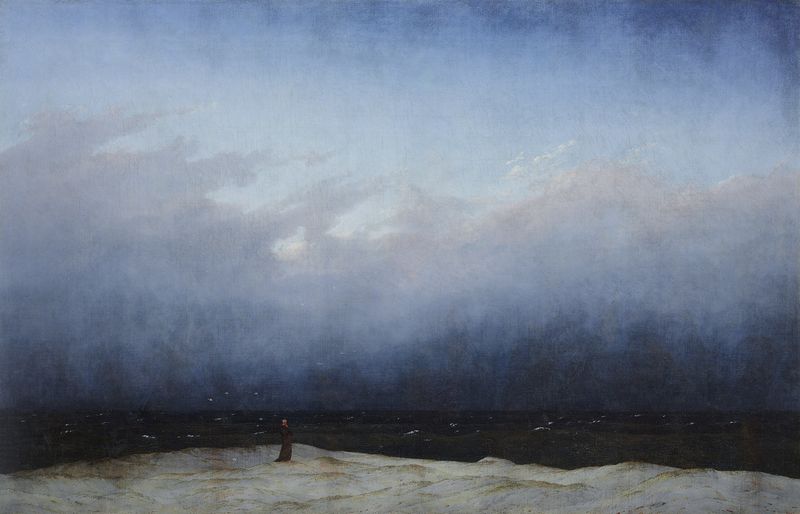
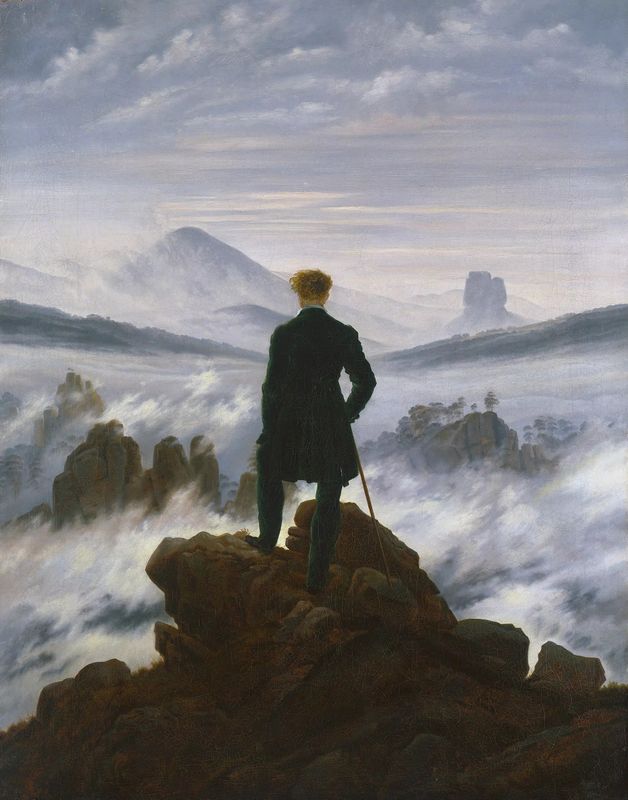
Wanderer above the Sea of Fog
Caspar David Friedrich · 1818 · Hamburger Kunsthalle
 Same era · 1790s–1820s
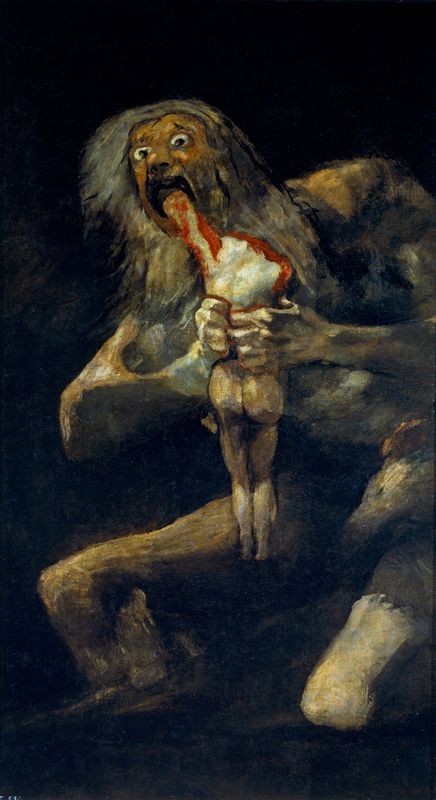
Saturn Devouring His Son
Francisco Goya · 1820 · Museo del Prado
 Same era · 1790s–1820s
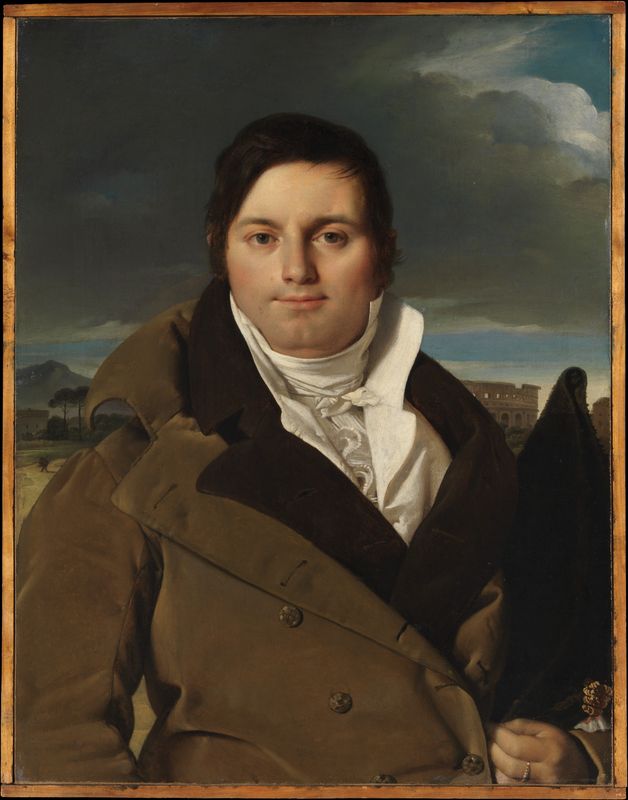
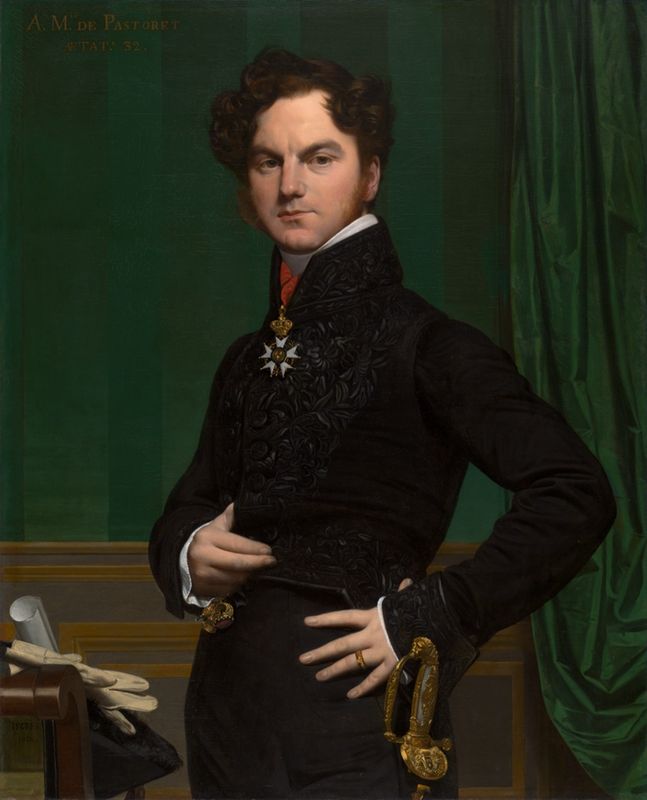
Amédée-David, the Comte de Pastoret
Jean-Auguste-Dominique Ingres · 1823 · Art Institute of Chicago
 Same era · 1790s–1820s
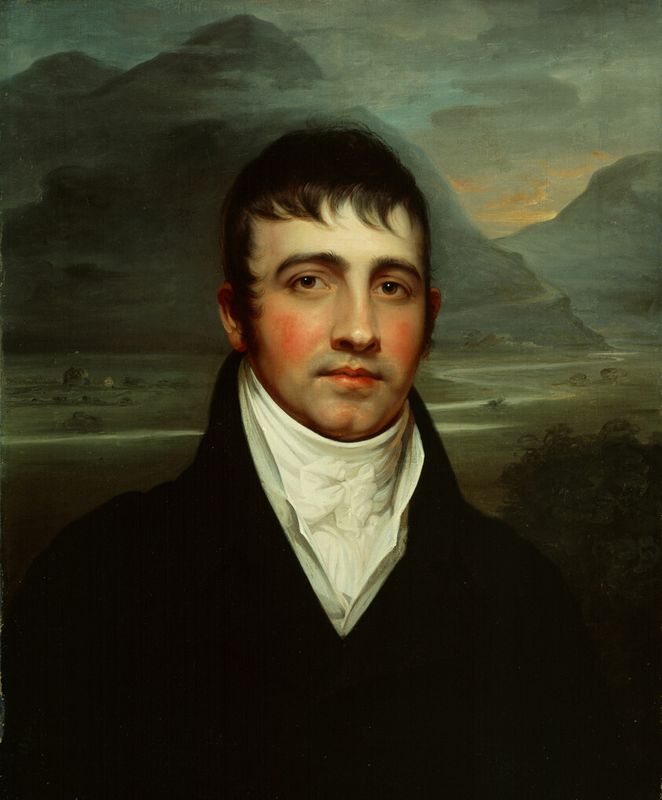
Samuel Fisher Bradford
Rembrandt Peale · 1803 · Art Institute of Chicago
 Same era · 1790s–1820s
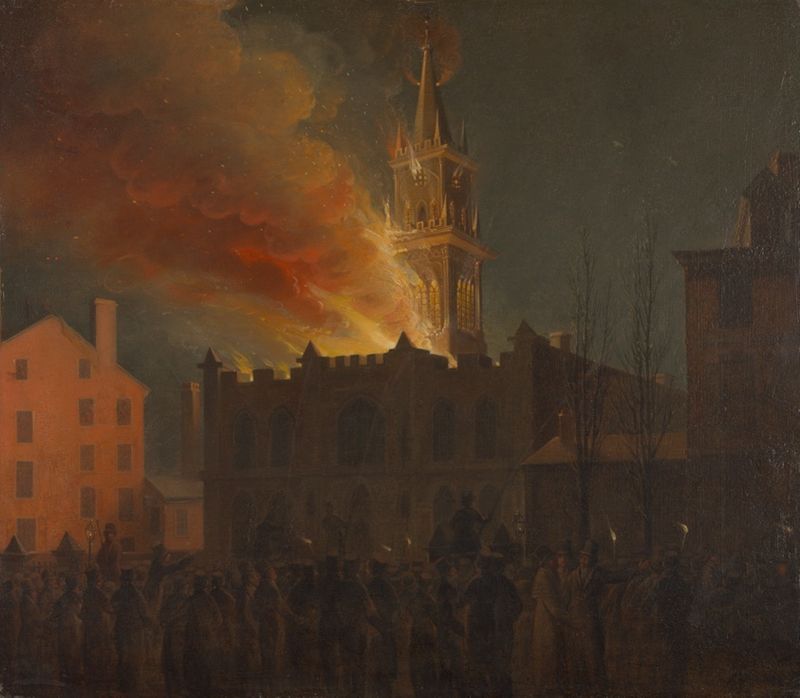
Conflagration of the Masonic Hall, Chestnut Street, Philadelphia, Pennsylvania
Samuel Jones · 1819 · Art Institute of Chicago
 Same era · 1790s–1820s
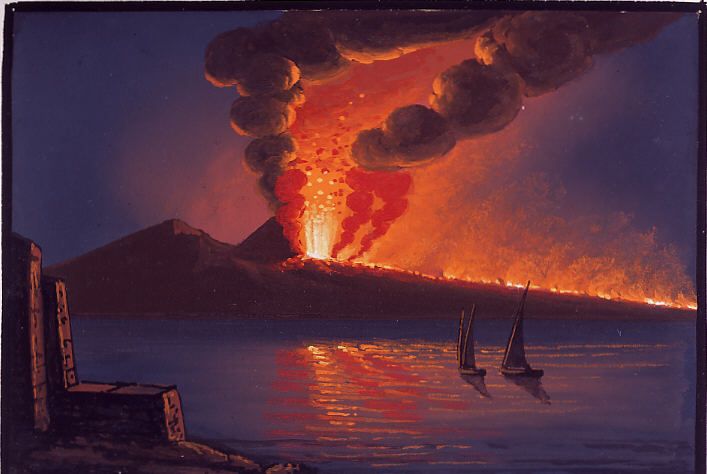
Sketchbook: Souvenir of Naples
Artist Unknown - The Mercat Cross, Aberdeen · 1821 · The Metropolitan Museum of Art
 Same era · 1790s–1820s
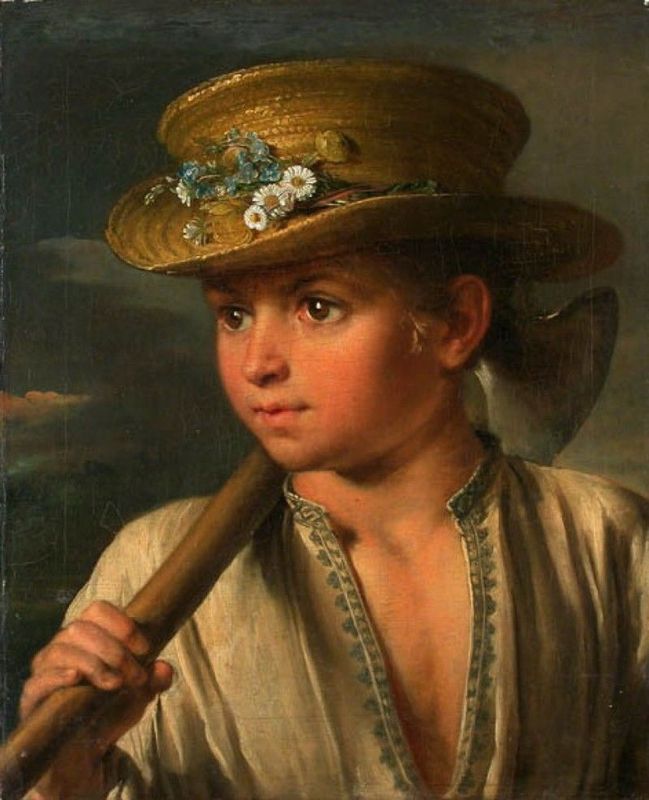
Boy with an axe
Vasily Andreevich Tropinin · 1810 · Belarusian National Arts Museum
 Same era · 1790s–1820s
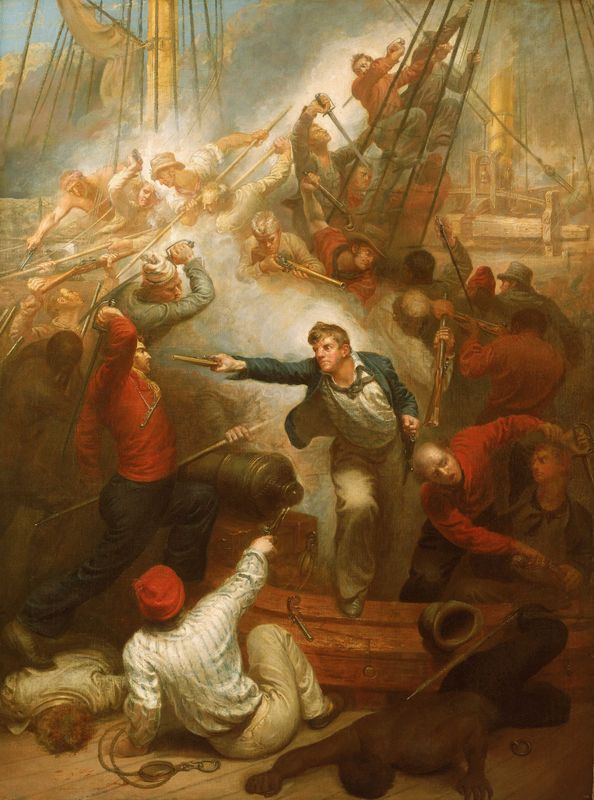
Captain William Rogers capturing the 'Jeune Richard', 1 October 1807
Samuel Drummond · 1808 · Royal Museums Greenwich
 Same era · 1790s–1820s
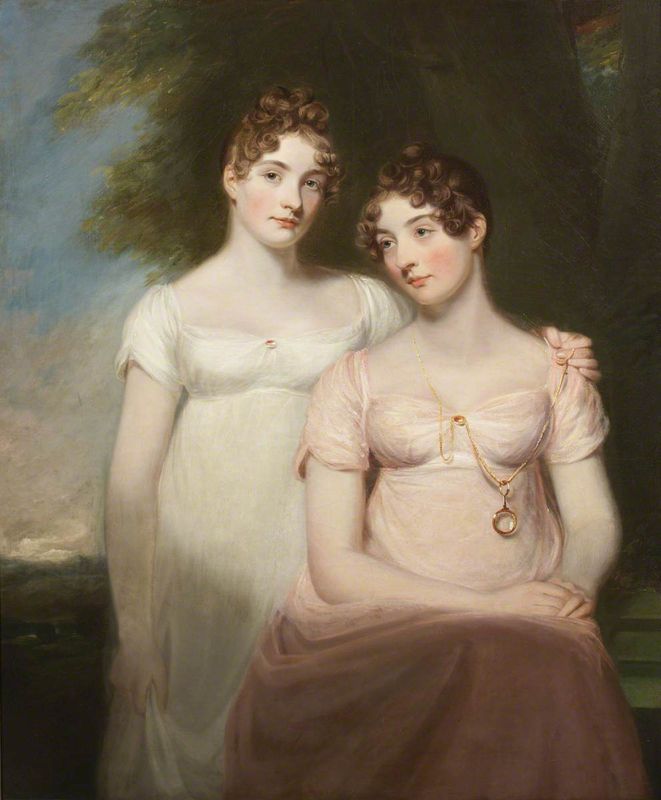
The Ainslie Sisters (Agnes and Margaret)
Thomas Stewardson · 1808 · Abbot Hall Art Gallery
 Same era · 1790s–1820s
Cilgerran Castle
William Havell · 1805 · National Museum Cardiff
 Same era · 1790s–1820s
Winchester from the South
Tobias Young · 1803 · Winchester Guildhall