01
The young artist
A young woman in a copper-brown dress sits in profile at her easel, holding a pencil to the drawing. Her face is calm and absorbed, and it anchors the quiet scene.
1 of 5 on the painting
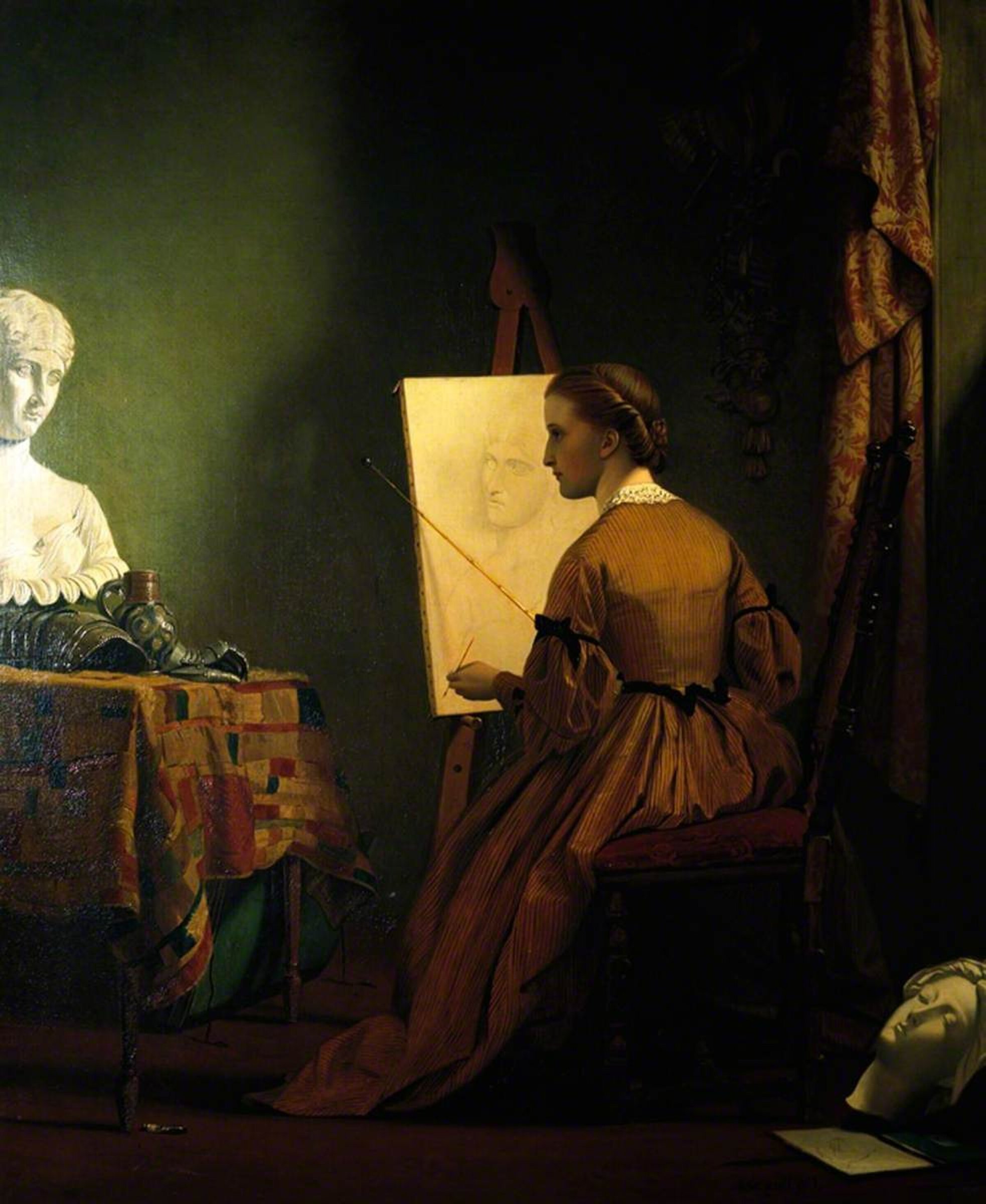
“This painting captures a quiet, relatable moment of a child's music lesson, offering a window into Victorian domestic life and the universal experience of learning, or perhaps, wishing the lesson was over.”
In this charming domestic scene, a young woman, likely a governess or tutor, sits attentively at a piano, her gaze fixed on the sheet music. Beside her, a young boy, perhaps her pupil, stands with a slight slump, his hands clasped behind his back, seemingly lost in thought rather than the lesson. The artist, John Haynes-Williams, captures a quiet moment of instruction, highlighting the subtle power dynamics and the gentle, yet sometimes challenging, nature of learning. The room itself is richly detailed, suggesting a comfortable, middle-class Victorian home, with the light from an unseen window softly illuminating the figures and the polished wood of the piano. The painting offers a glimpse into the era's emphasis on domestic education and the roles of women within the household, even as it hints at the universal experience of childhood distraction.
Five details hide in plain sight. Pick one and we’ll show you exactly where to look.
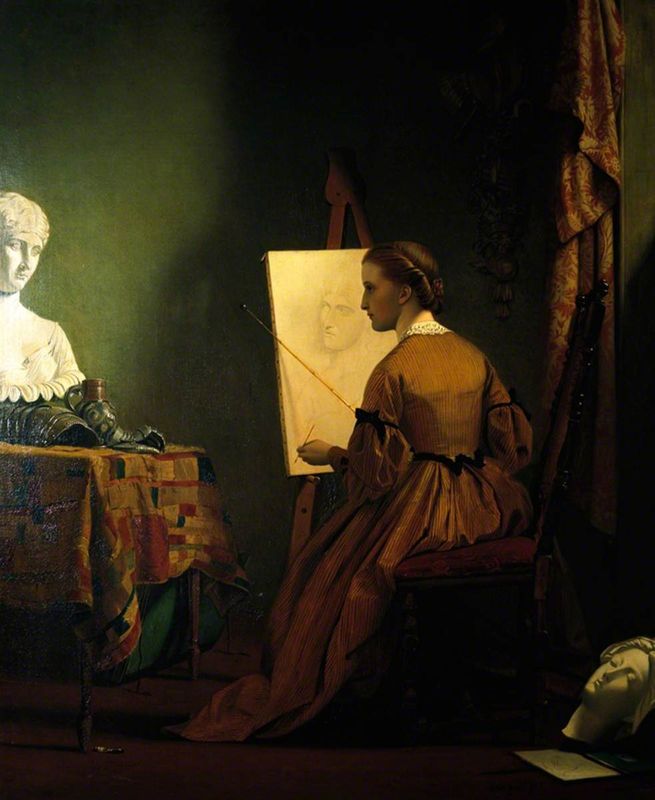
A young woman in a copper-brown dress sits in profile at her easel, holding a pencil to the drawing. Her face is calm and absorbed, and it anchors the quiet scene.
On the far left, a white plaster bust catches the brightest light in the room. She seems to be drawing from it, which makes it the likely model for her work.
On the pale sheet on the easel, a faint pencil head in profile can be made out. It appears to echo the bust, and the delicate first lines suggest a work in progress.
Fine vertical stripes in the dress catch the lamplight in the bodice and fade into shadow across the sweeping skirt. Dark bows add crisp accents.
In the lower right corner, a pale plaster cast of a face lies tilted on the floor near a sheet of paper. It suggests a studio with other casts and study materials.
The full narration walks you through My Pupil — the story behind it, the details most visitors miss, and why it matters. Free in the Art Whisper app.
John Haynes-Williams was a British painter known for his detailed oil paintings, including works like 'Alice' from 1892.
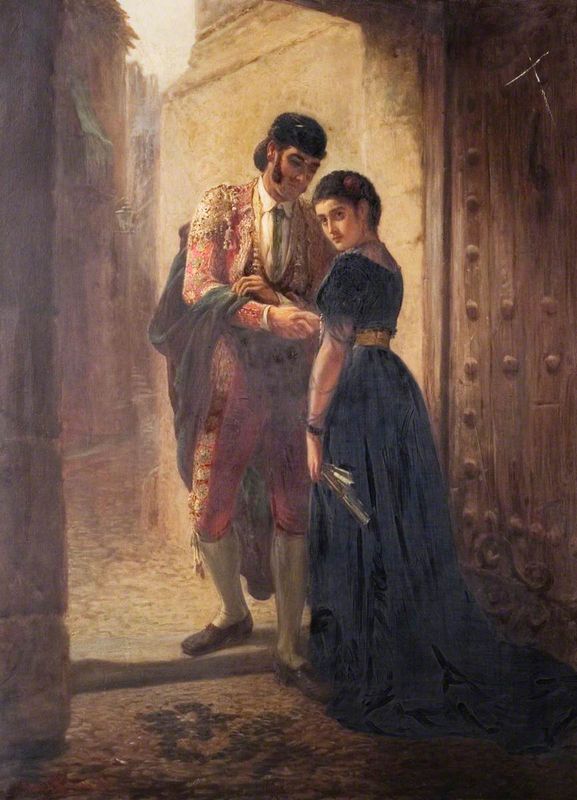 Adiós (Farewell)
1871 · Herbert Art Gallery and Museum
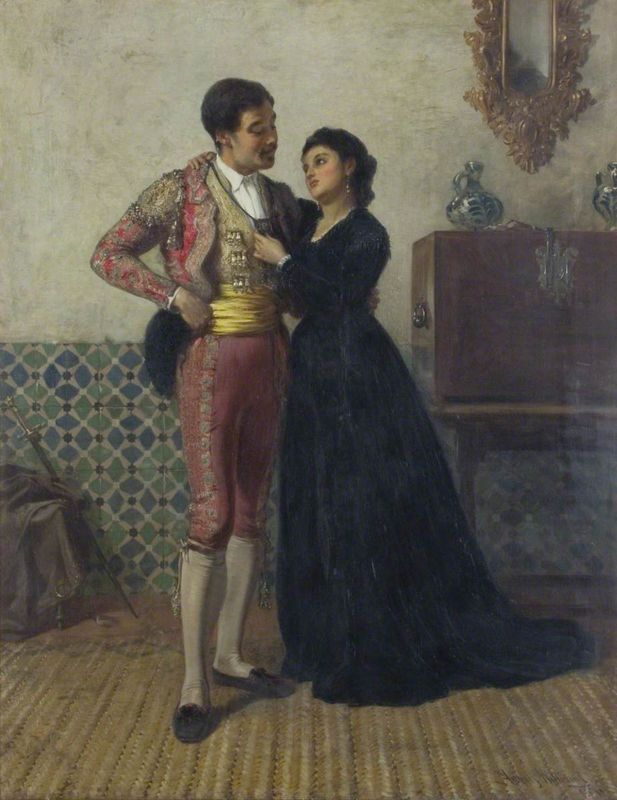 The Talisman
1871 · National Museum Cardiff
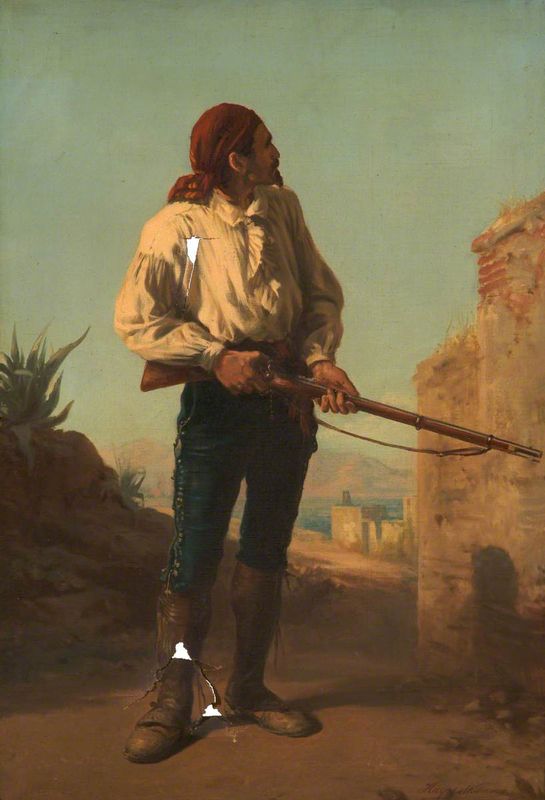 A Spanish Warrior
1873 · Touchstones Rochdale
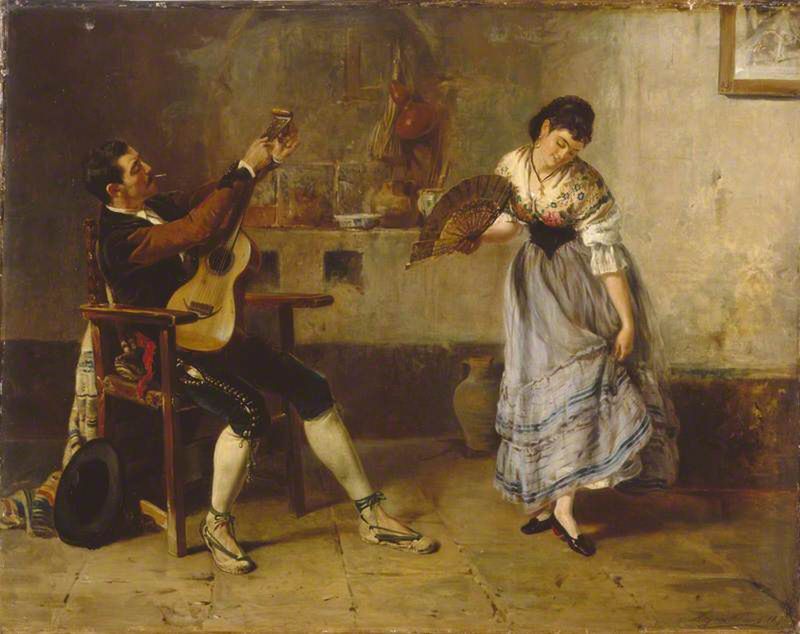 Spanish Dancer
1873 · Manchester Art Gallery
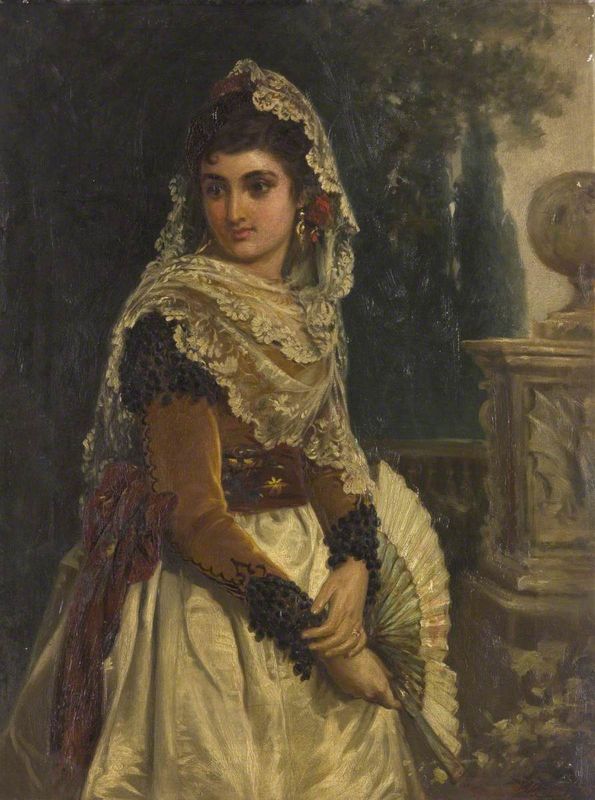 Will He Come?
1875 · National Museum Cardiff
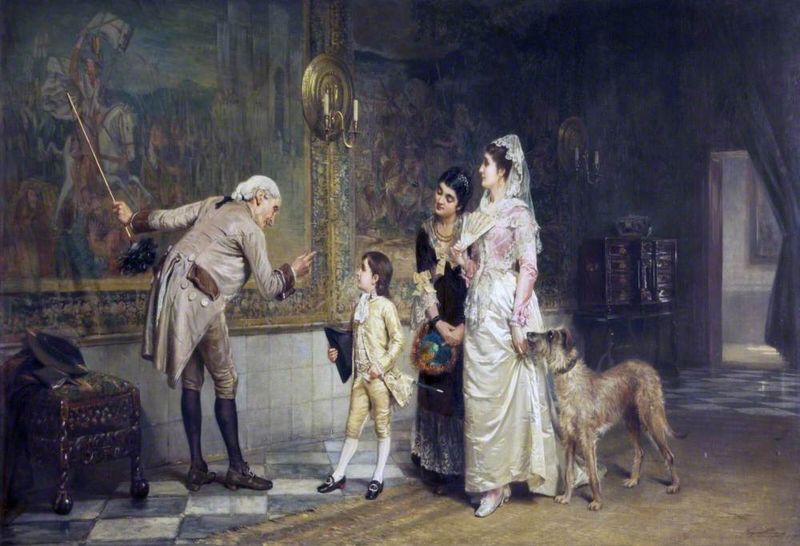 The Ancestor on the Tapestry
1876 · Walker Art Gallery
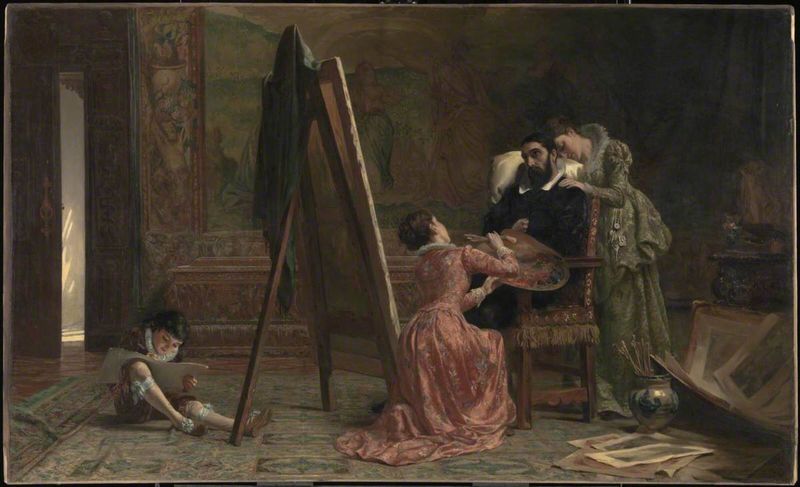 Ars Longa, Vita Brevis
1877 · National Gallery
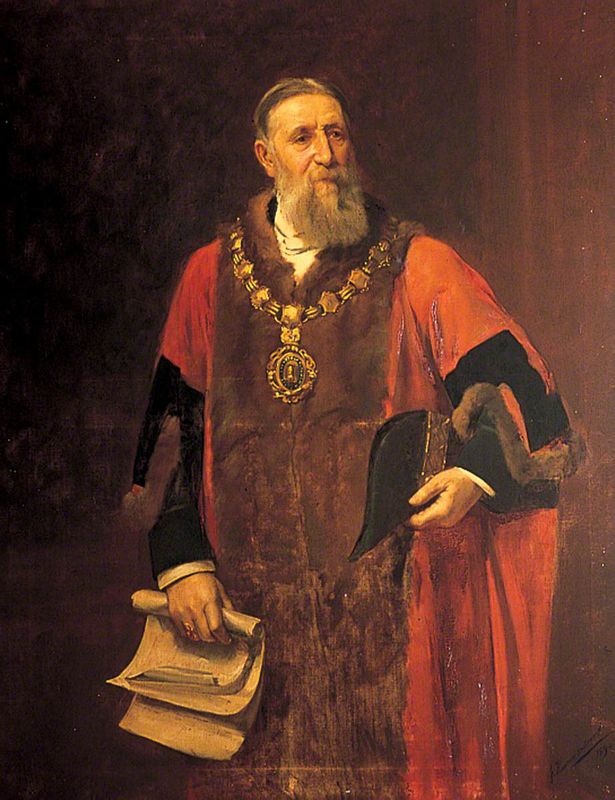 George Matthews Arnold (d.1907) (8 times Mayor of Gravesend, made Honorary Freeman of Gravesend December 1907 just before his death)
1894 · Gravesham Civic Centre
Beyond Haynes-Williams: works from the same years.
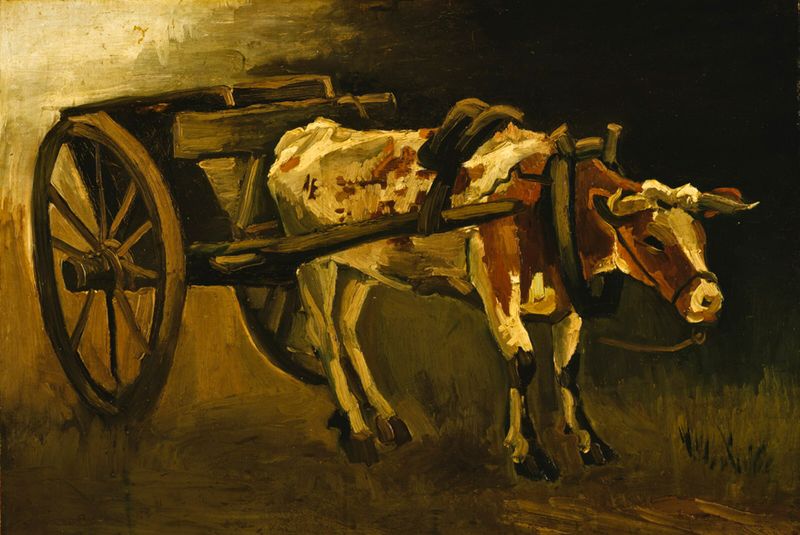 Same era · 1850s–1880s
Cart with Red and White Ox
Vincent van Gogh · 1884 · Kröller-Müller Museum
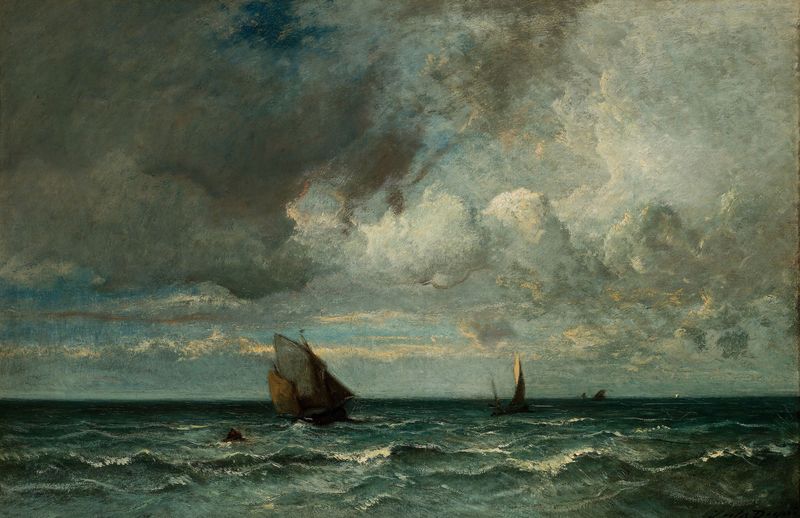 Same era · 1850s–1880s
Barks Fleeing Before the Storm
Léon-Victor Dupré · 1870 · Art Institute of Chicago
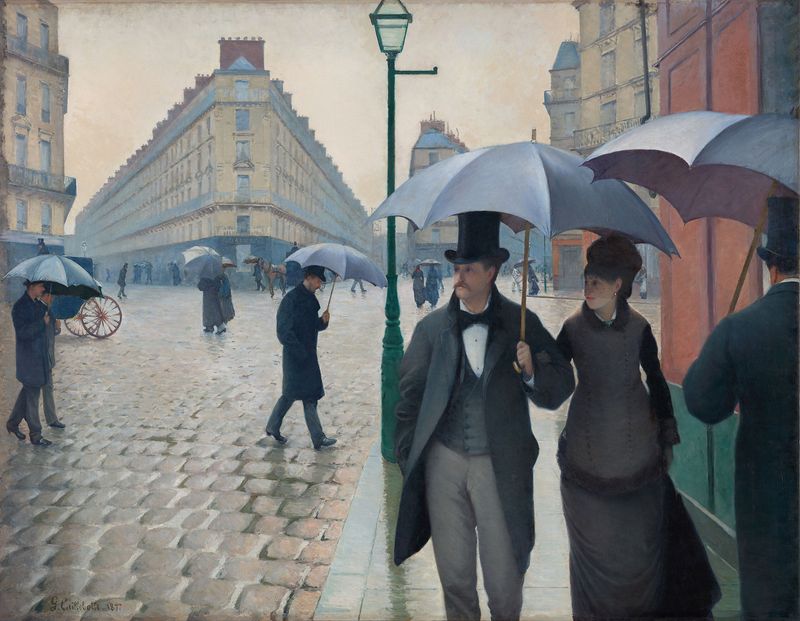 Same era · 1850s–1880s
Paris Street; Rainy Day
Kawabata Gyokushō · 1877 · Art Institute of Chicago
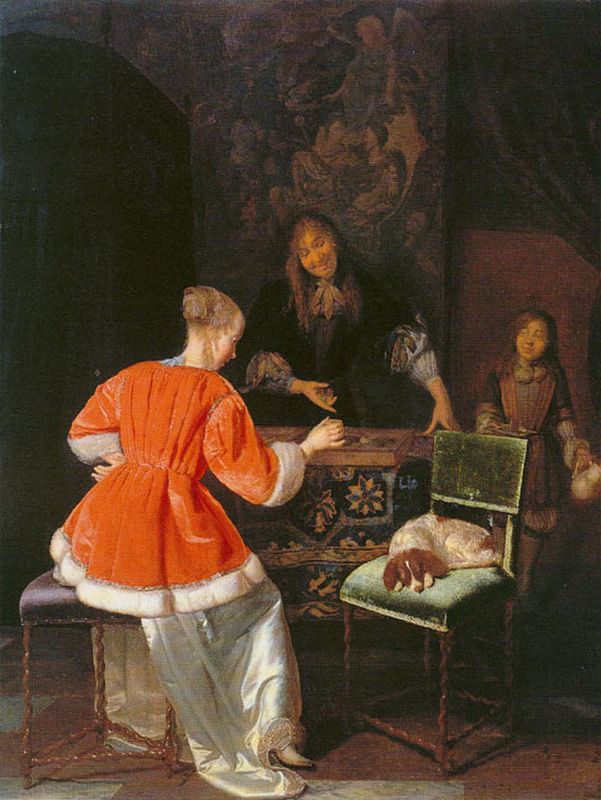 Same era · 1850s–1880s
The Backgammon Players
Philip Webb · 1861 · The Metropolitan Museum of Art
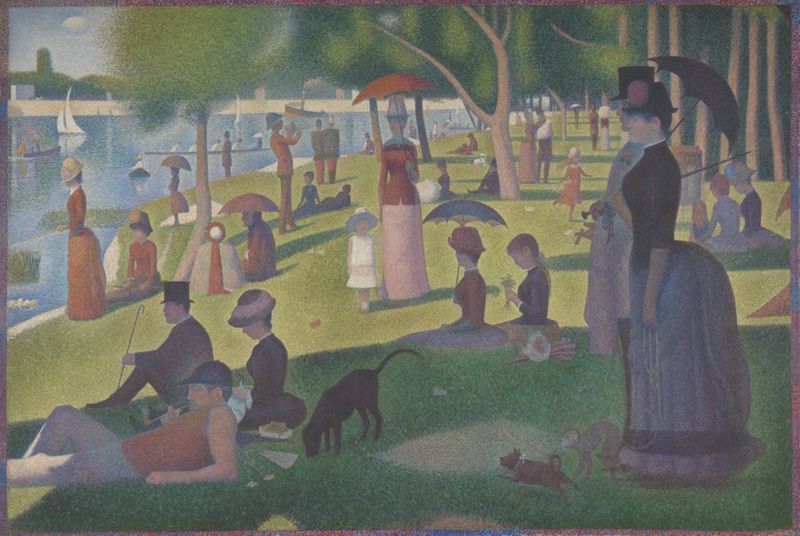 Same era · 1850s–1880s
A Sunday on La Grande Jatte — 1884
Okada Saburosuke · 1884 · Art Institute of Chicago
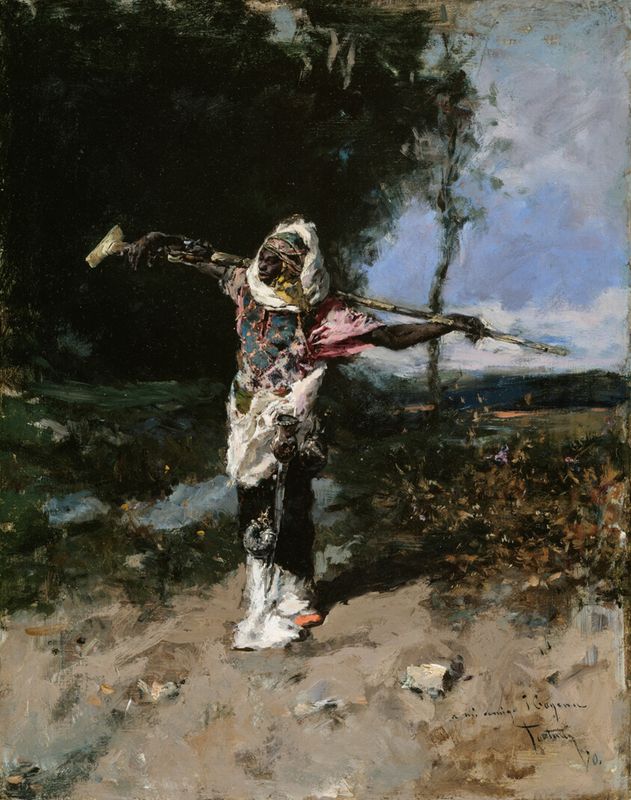 Same era · 1850s–1880s
African Chief
Mariano Fortuny Marsal · 1870 · Art Institute of Chicago
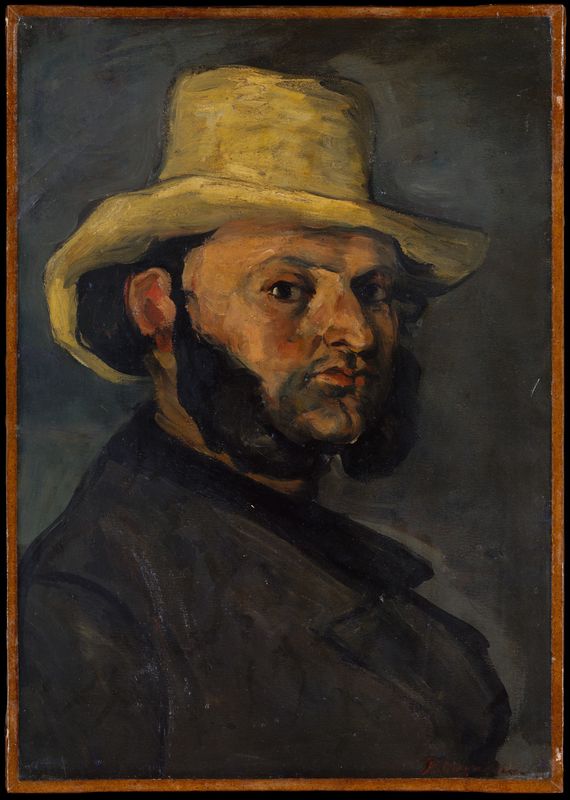 Same era · 1850s–1880s
Gustave Boyer (b. 1840) in a Straw Hat
Paul Cézanne · 1870 · The Metropolitan Museum of Art
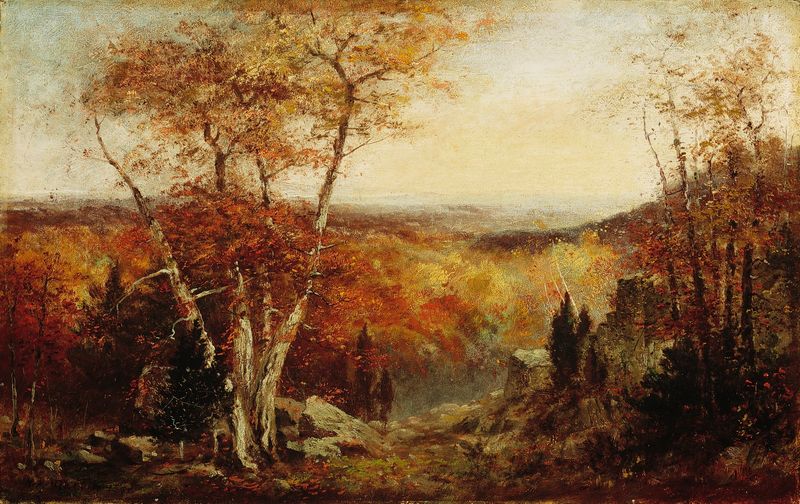 Same era · 1850s–1880s
In the Adirondacks
William Hart · 1870 · Q847508
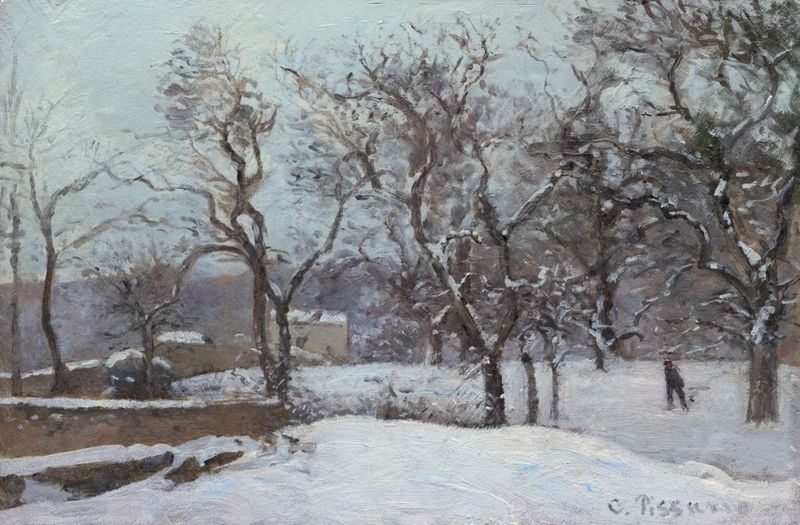 Same era · 1850s–1880s
Snow at Louveciennes
Camille Pissarro · 1870 · Art Institute of Chicago
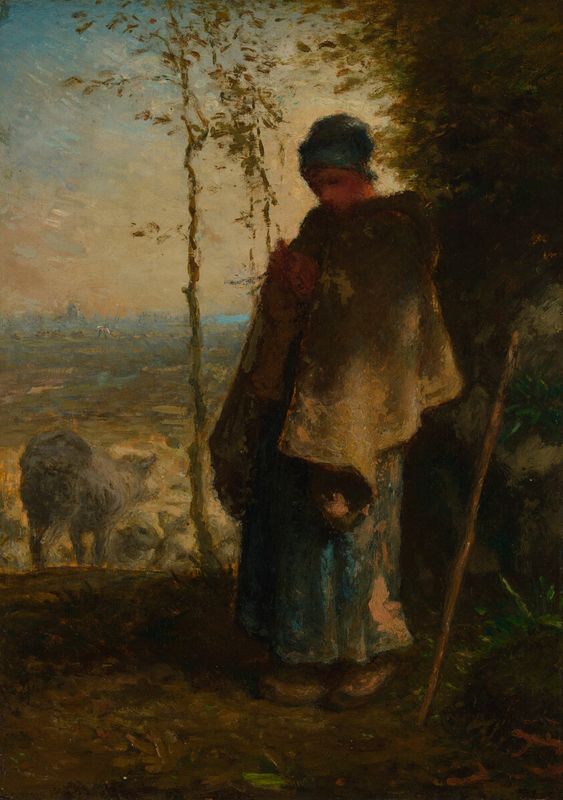 Same era · 1850s–1880s
The Little Shepherdess
Jean-François Millet · 1870 · Art Institute of Chicago
 Same era · 1850s–1880s
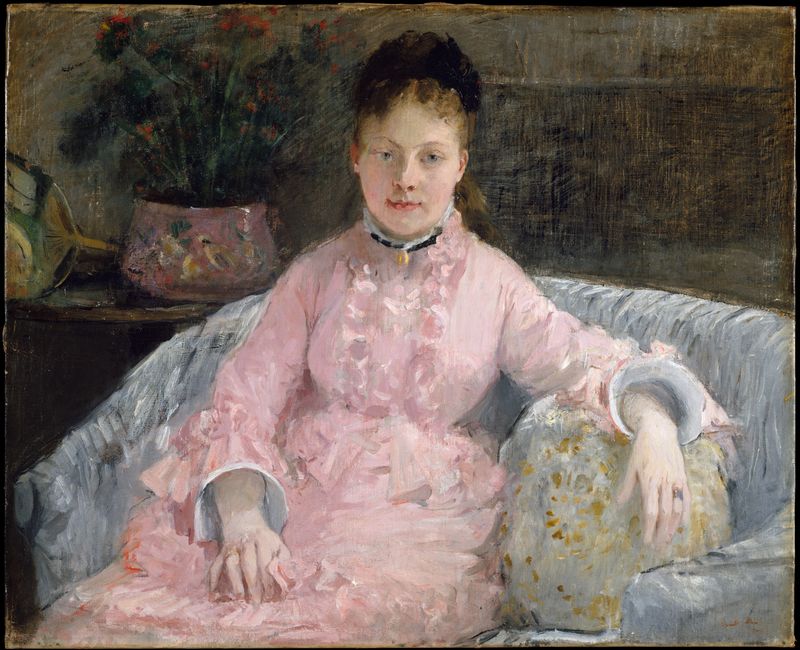
The Pink Dress (Albertie-Marguerite Carré, later Madame Ferdinand-Henri Himmes, 1854–1935)
Berthe Morisot · 1870 · Metropolitan Museum of Art
 Same era · 1850s–1880s
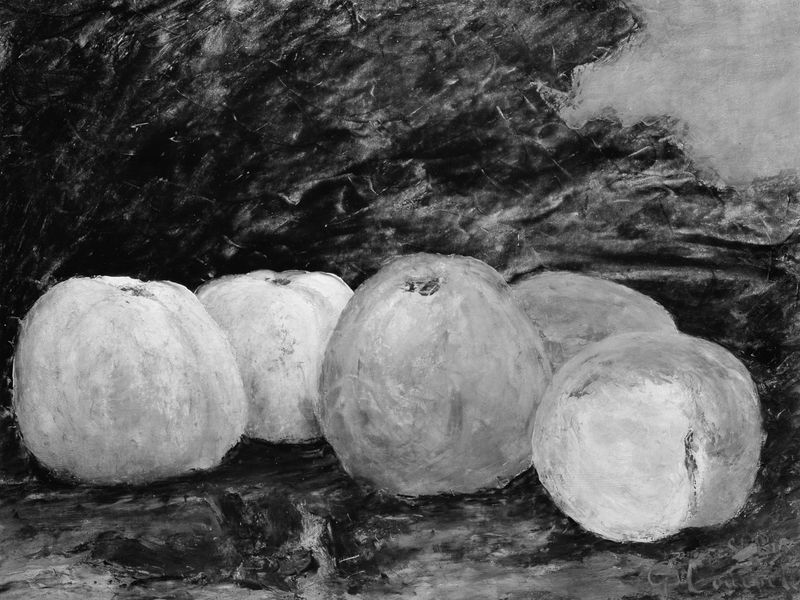
Apples
Gustave Courbet · 1871 · National Museum of Western Art
