01
Rider seen from behind
The soldier turns his back to us, wrapped in a bulky cloak and turban. We follow him into the scene without seeing his face.
1 of 5 on the painting
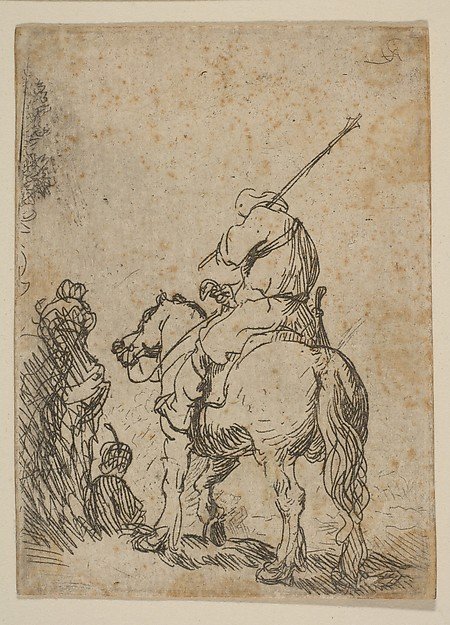
“Stop to see this early etching, a dramatic miniature by Rembrandt. It captures a turbaned soldier on a rearing horse, showcasing the artist's early mastery of light and movement in printmaking.”
A turbaned soldier on horseback rides with a spear in this small etching, a work from the very beginning of the artist's career. The figure is rendered with a striking sense of drama, even at this miniature scale. The horse rears up, its powerful form suggested through a few confident lines, while the rider, cloaked and hatted, seems to emerge from the shadows. The dynamic pose and the interplay of light and dark demonstrate an early fascination with capturing movement and atmosphere, qualities that would define the Dutch Golden Age. This print offers a glimpse into the artist's early experimentation with etching, a medium he would explore extensively throughout his life.
Five details hide in plain sight. Pick one and we’ll show you exactly where to look.

The soldier turns his back to us, wrapped in a bulky cloak and turban. We follow him into the scene without seeing his face.
A thin pole slants diagonally up across the rider's shoulder. This bold line cuts through the empty upper sheet and lifts the eye upward.
The horse's head turns to the left, with fine bridle lines drawn around the muzzle. It leads our eye toward the dark hatched figures at the left edge.
At lower left, crowded crisscross lines build a dark mass of shadow. Against the pale paper it makes the figures there feel tucked away.
Near the bottom left, a small figure in a cap sits half hidden beside the hatching. It is easy to pass over, yet it adds a quiet second presence to the scene.
The full narration walks you through Turbaned Soldier on Horseback — the story behind it, the details most visitors miss, and why it matters. Free in the Art Whisper app.
Rembrandt painted ~40 self-portraits across his life, creating history's most intimate visual autobiography.
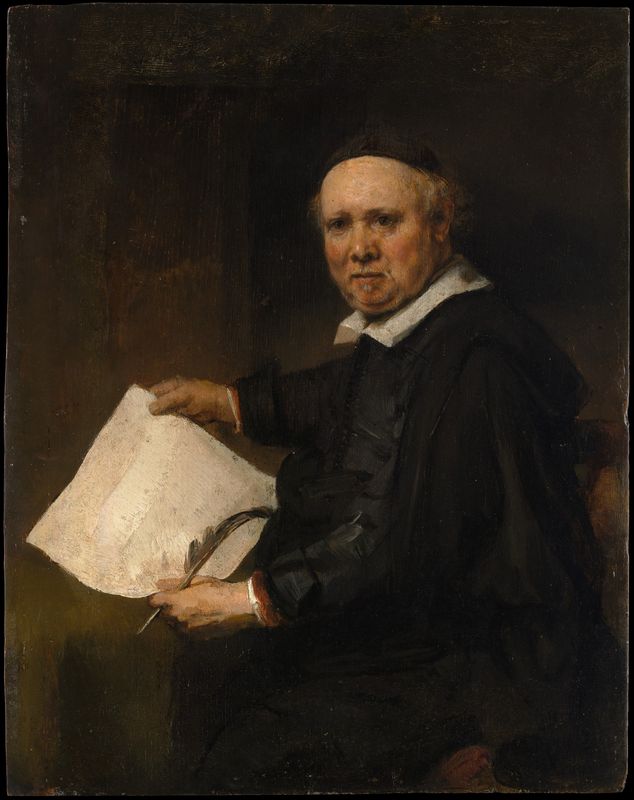 Lieven Willemsz van Coppenol (born about 1599, died 1671 or later)
1626 · The Metropolitan Museum of Art
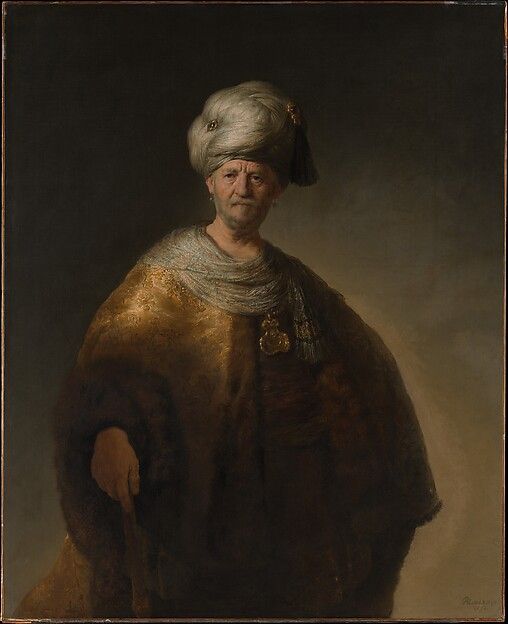 Man in a Turban
1632 · The Metropolitan Museum of Art
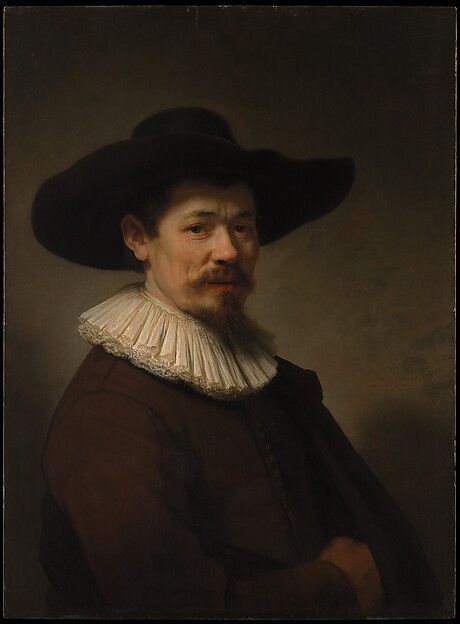 Herman Doomer (ca. 1595–1650)
1640 · The Metropolitan Museum of Art
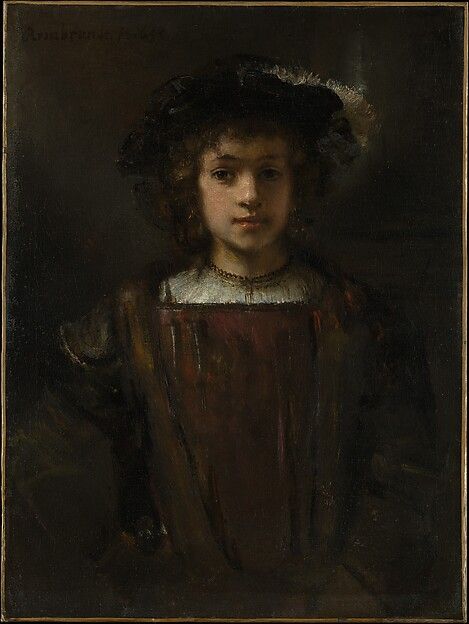 Rembrandt's Son Titus (1641–1668)
1650 · The Metropolitan Museum of Art
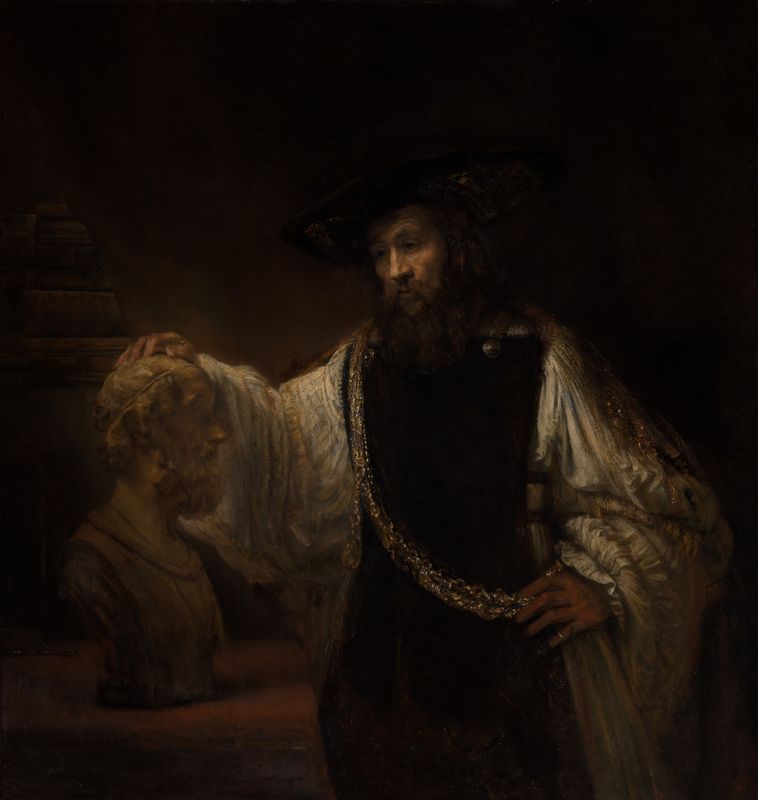 Aristotle with a Bust of Homer
1653 · The Metropolitan Museum of Art
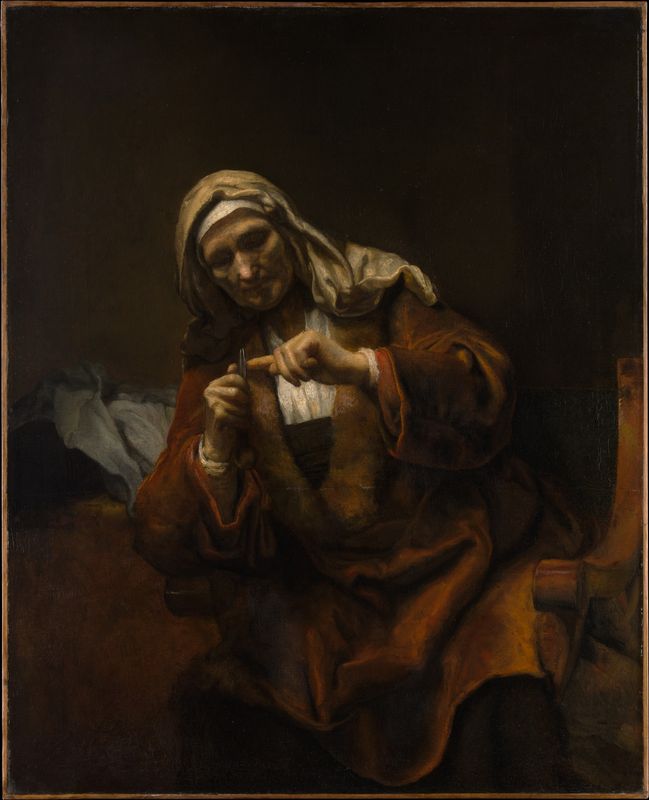 Old Woman Cutting Her Nails
1655 · The Metropolitan Museum of Art
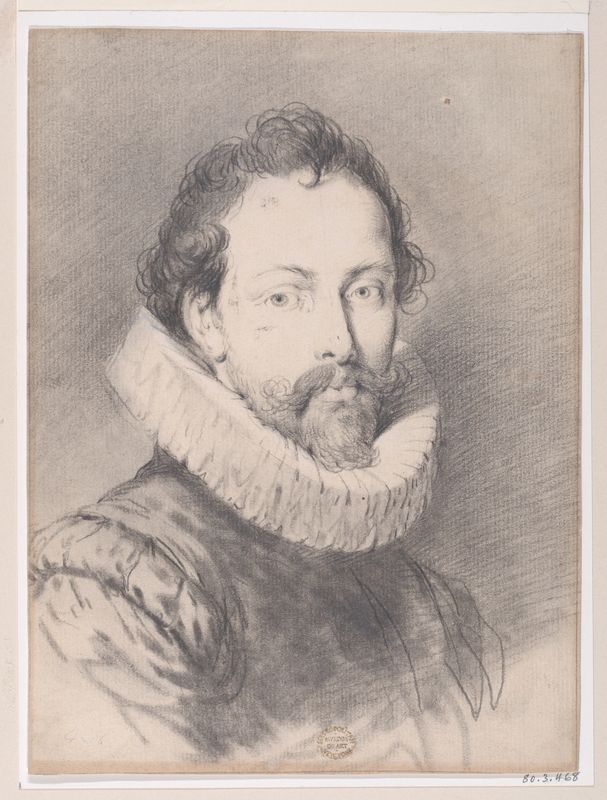 Portrait of a Man
1655 · The Metropolitan Museum of Art
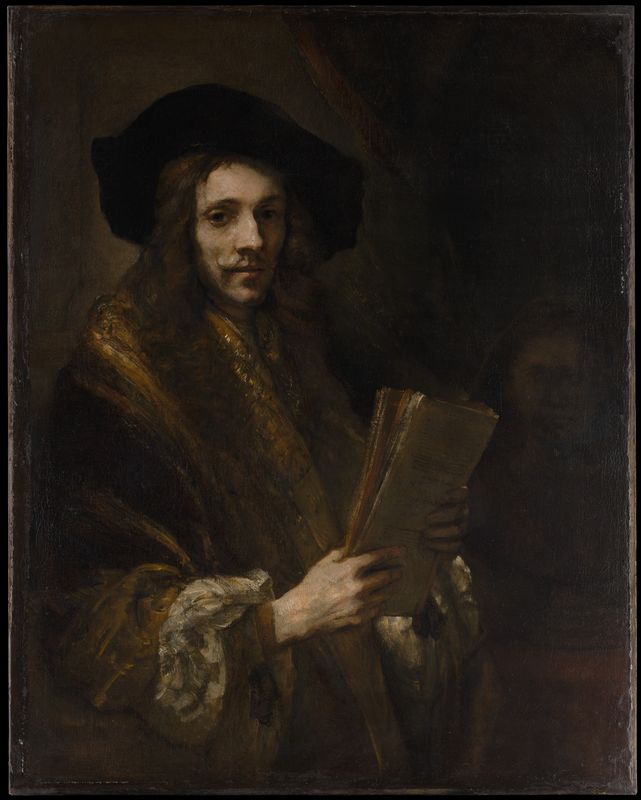 Portrait of a Man ("The Auctioneer")
1658 · The Metropolitan Museum of Art
Beyond Rembrandt and Dutch Golden Age painting: works from the same years.
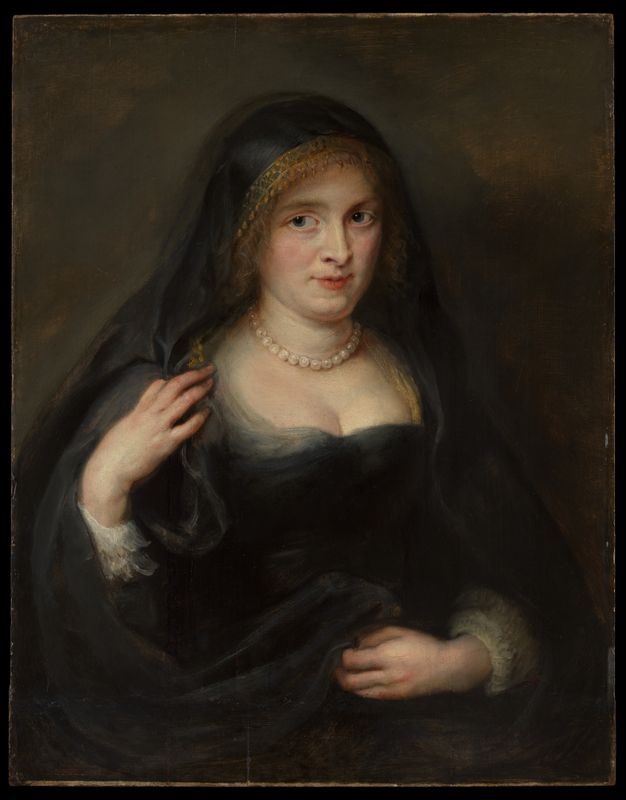 Same era · 1600s–1630s
Portrait of a Woman, Probably Susanna Lunden (Susanna Fourment, 1599–1628)
Peter Paul Rubens · 1625 · The Metropolitan Museum of Art
 Same era · 1600s–1630s
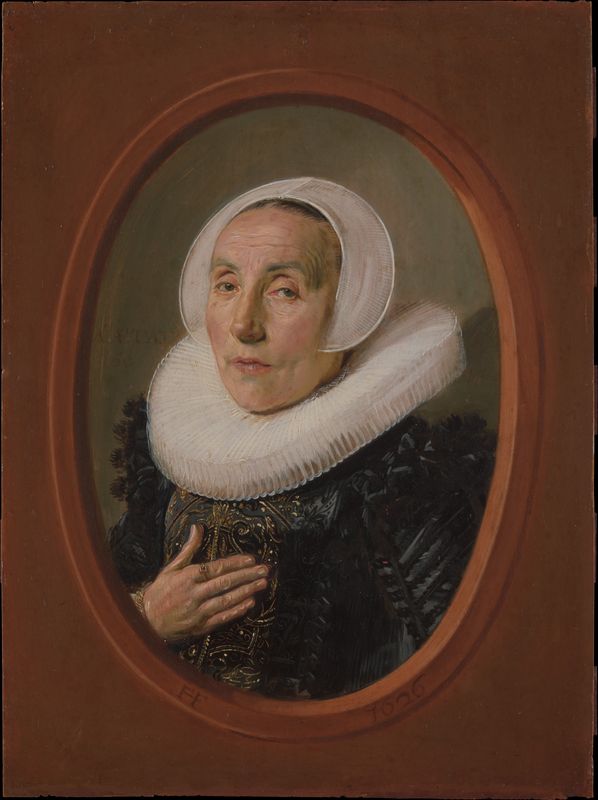
Anna van der Aar (born 1576/77, died after 1626)
Frans Hals · 1626 · The Metropolitan Museum of Art
 Same era · 1600s–1630s
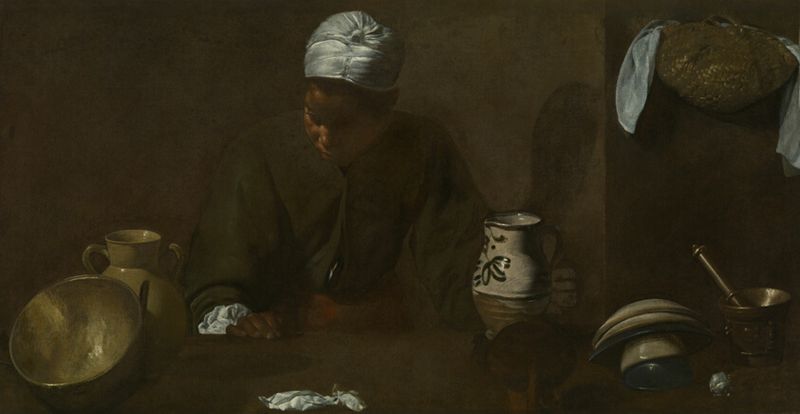
Kitchen Scene
Diego Velázquez · 1618 · Art Institute of Chicago
 Same era · 1600s–1630s
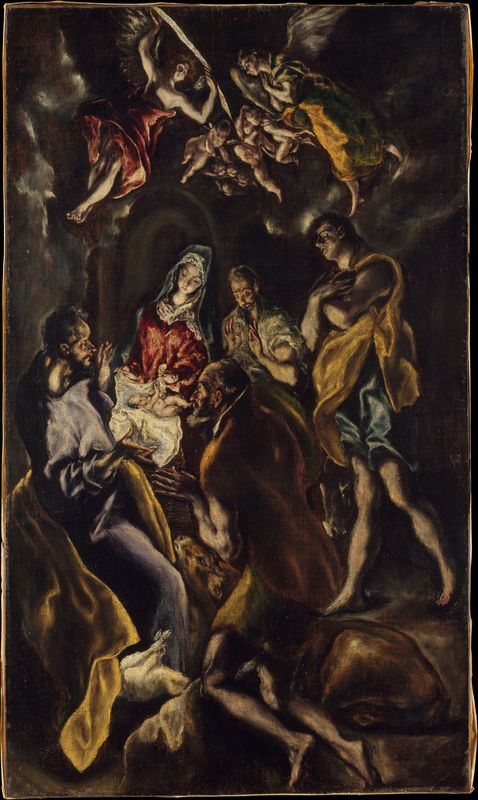
The Adoration of the Shepherds
El Greco · 1610
 Same era · 1600s–1630s
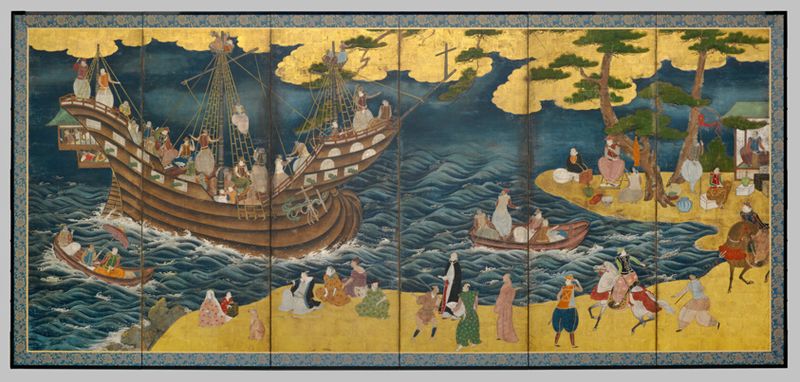
Southern Barbarians
Artist Unknown - The Mercat Cross, Aberdeen · 1625 · Art Institute of Chicago
 Same era · 1600s–1630s
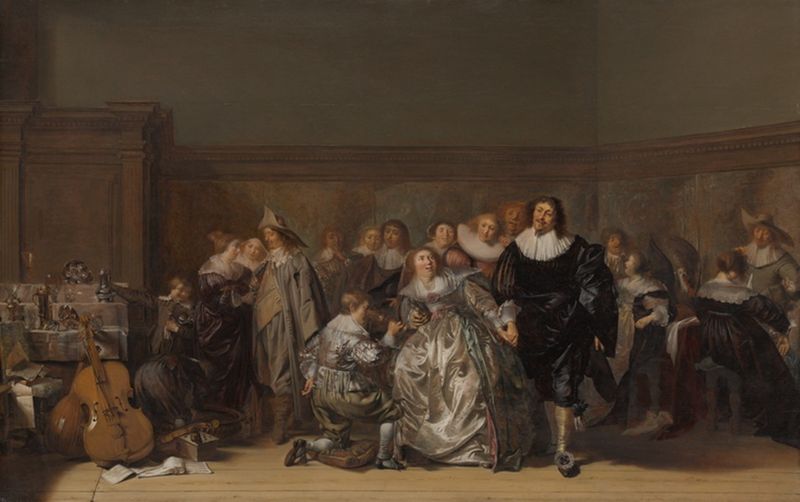
An Elegant Company
Samuel Alcock & Company · 1632 · Art Institute of Chicago
 Same era · 1600s–1630s
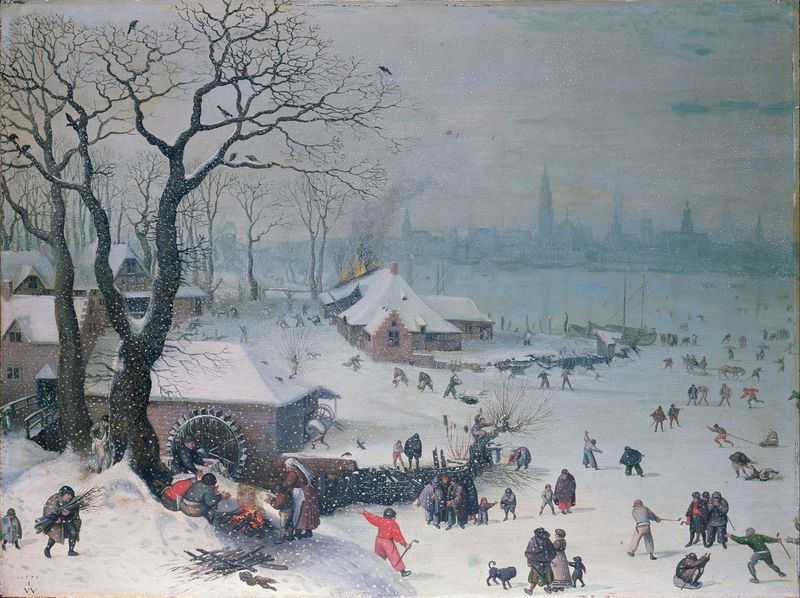
Winter Landscape with Snowfall near Antwerp
Jan Brueghel the Elder · 1610
 Same era · 1600s–1630s
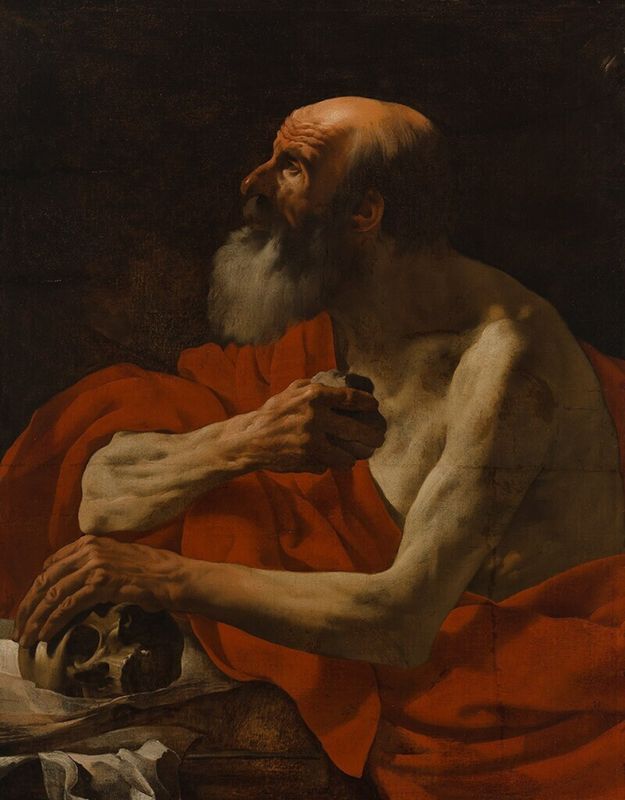
Saint Jerome
Hendrick ter Brugghen · 1624 · Museum Boijmans Van Beuningen
 Same era · 1600s–1630s
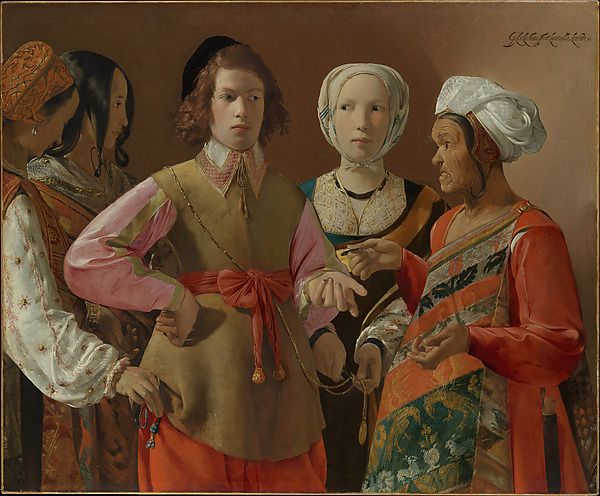
The Fortune-Teller
Georges de La Tour · 1630 · The Metropolitan Museum of Art
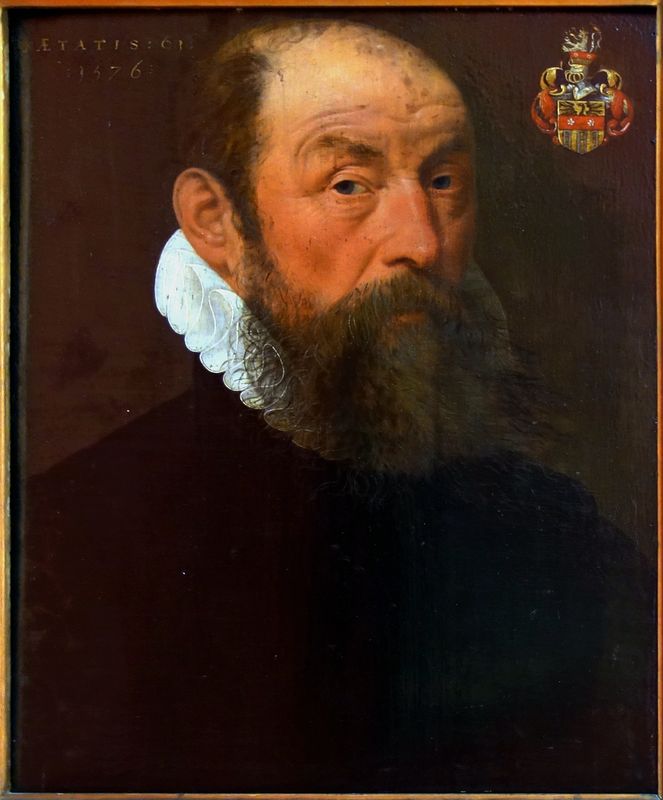 Same era · 1600s–1630s
Portrait of a man
Willem van der Vliet · 1634 · Pushkin Museum of Fine Arts
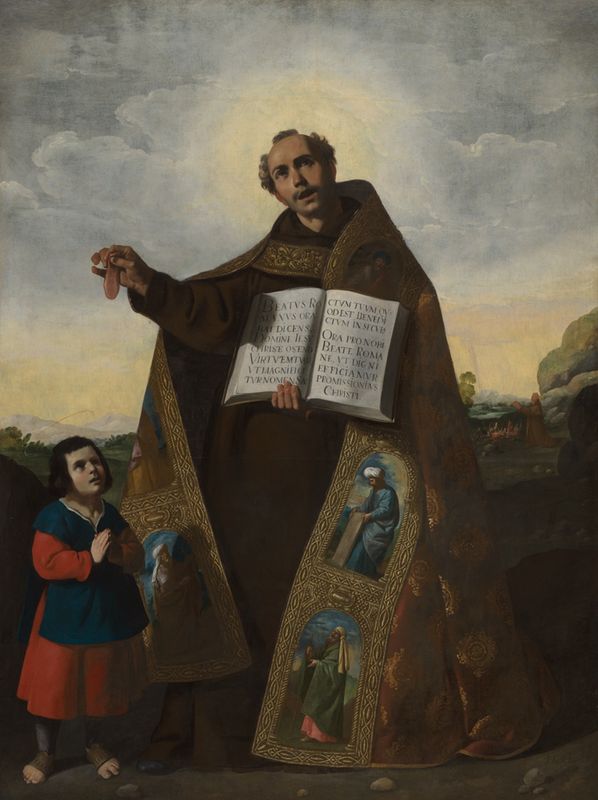 Same era · 1600s–1630s
Saint Romanus of Antioch and Saint Barulas
Master of the View of Saint Gudula · 1638 · Art Institute of Chicago
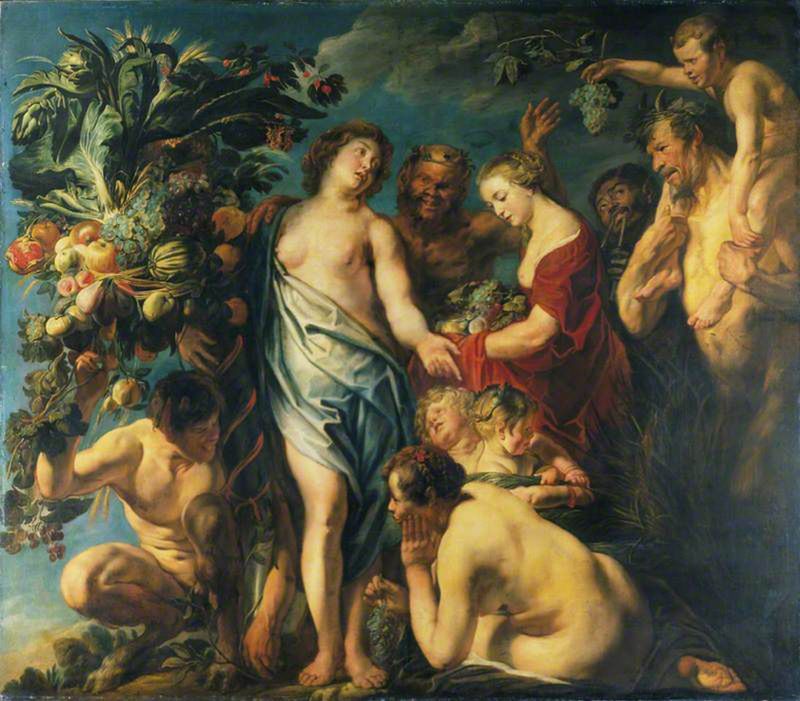 Same era · 1600s–1630s
An Allegory of Fruitfulness
Jacob Jordaens · 1620 · Wallace Collection