01
The weary face
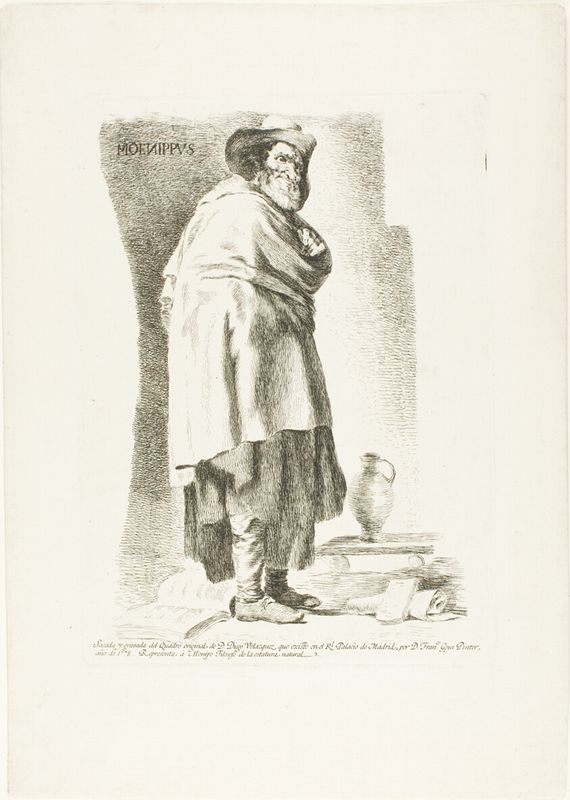
Look at the face at the top. The deep-set eyes and lined skin make Aesop seem like a real, tired man, not a legendary storyteller.
1 of 5 on the painting
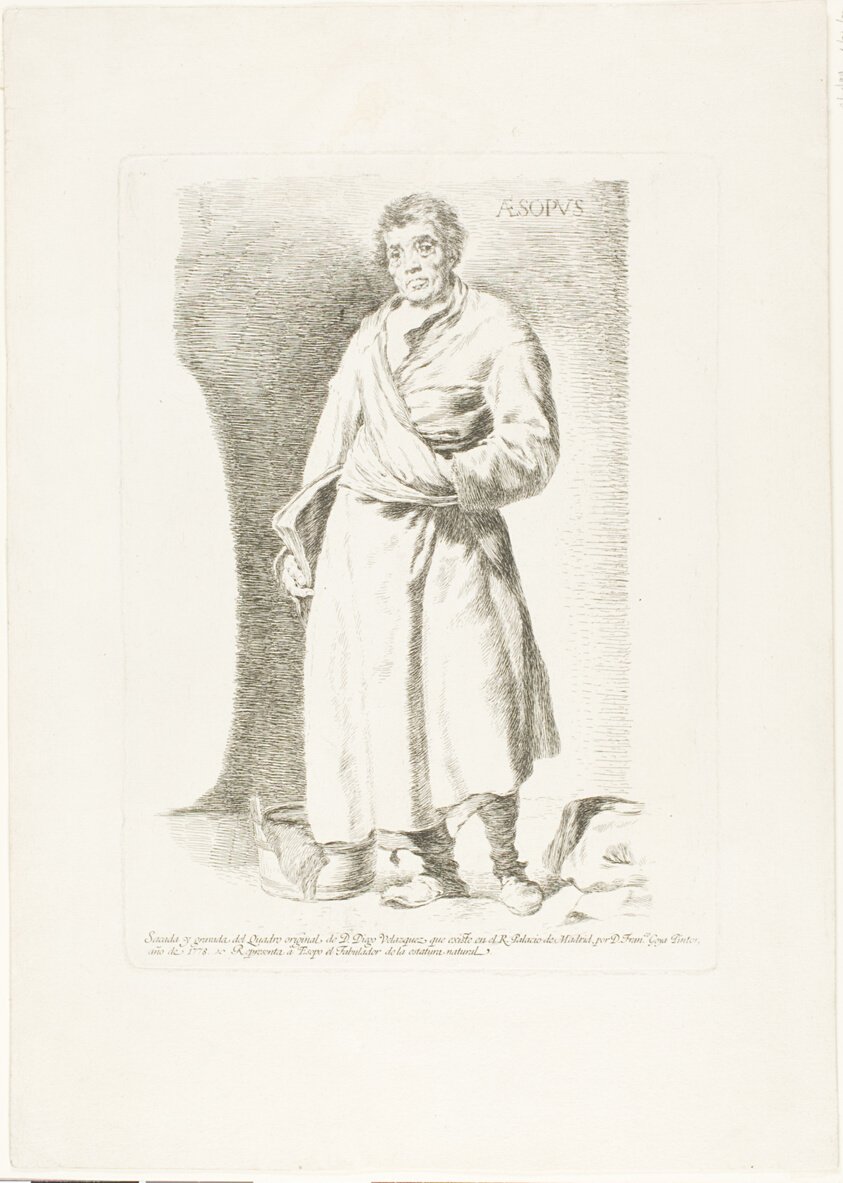
“Stop to consider this compelling portrait, believed to be Aesop, where the artist's masterful brushwork brings a timeless figure to life with striking realism and emotional depth.”
A man with a thoughtful, slightly melancholic expression gazes out at us from this portrait. He wears a simple, dark tunic, its folds rendered with a rough, almost sculptural quality that suggests the texture of coarse wool. The background is a muted, earthy tone, allowing the figure to command our full attention. This striking directness is characteristic of the Baroque style, which emphasized dramatic realism and emotional intensity. The figure is believed to be Aesop, the ancient Greek fabulist, though there are no specific attributes to identify him beyond the title. This ambiguity invites us to consider the man not just as a historical figure, but as a universal representation of wisdom or contemplation, a quality often associated with Velázquez's portraits of philosophers and writers.
Five details hide in plain sight. Pick one and we’ll show you exactly where to look.
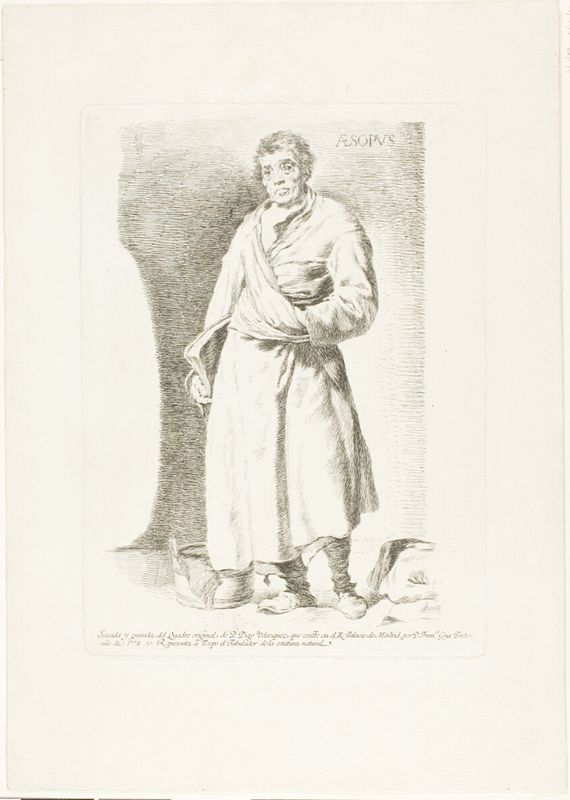
Look at the face at the top. The deep-set eyes and lined skin make Aesop seem like a real, tired man, not a legendary storyteller.
The dark, scribbled shadow behind the left side makes the pale robe stand out. It pushes the figure forward and gives him presence.
Follow the dense, slanting lines across the long robe. Layers of fine etched strokes build its folds and weight without any solid color.
At the feet, scuffed shoes, ragged stockings and a battered tub suggest a life of little means. Aesop appears as a humble figure, not a grand one.
Along the bottom, a looping script says the image was copied and etched from Velázquez's original painting in the Royal Palace in Madrid, by Francisco Goya in 1778. This is an etching after a painting.
The full narration walks you through Aesop — the story behind it, the details most visitors miss, and why it matters. Free in the Art Whisper app.
Court painter to Philip IV whose mastery of light and realism changed Western art forever.