01
The sidelong glance
Find the bearded face under the wide hat, turned back over the shoulder. The wary, sideways look gives the old philosopher a sharp, living presence.
1 of 5 on the painting
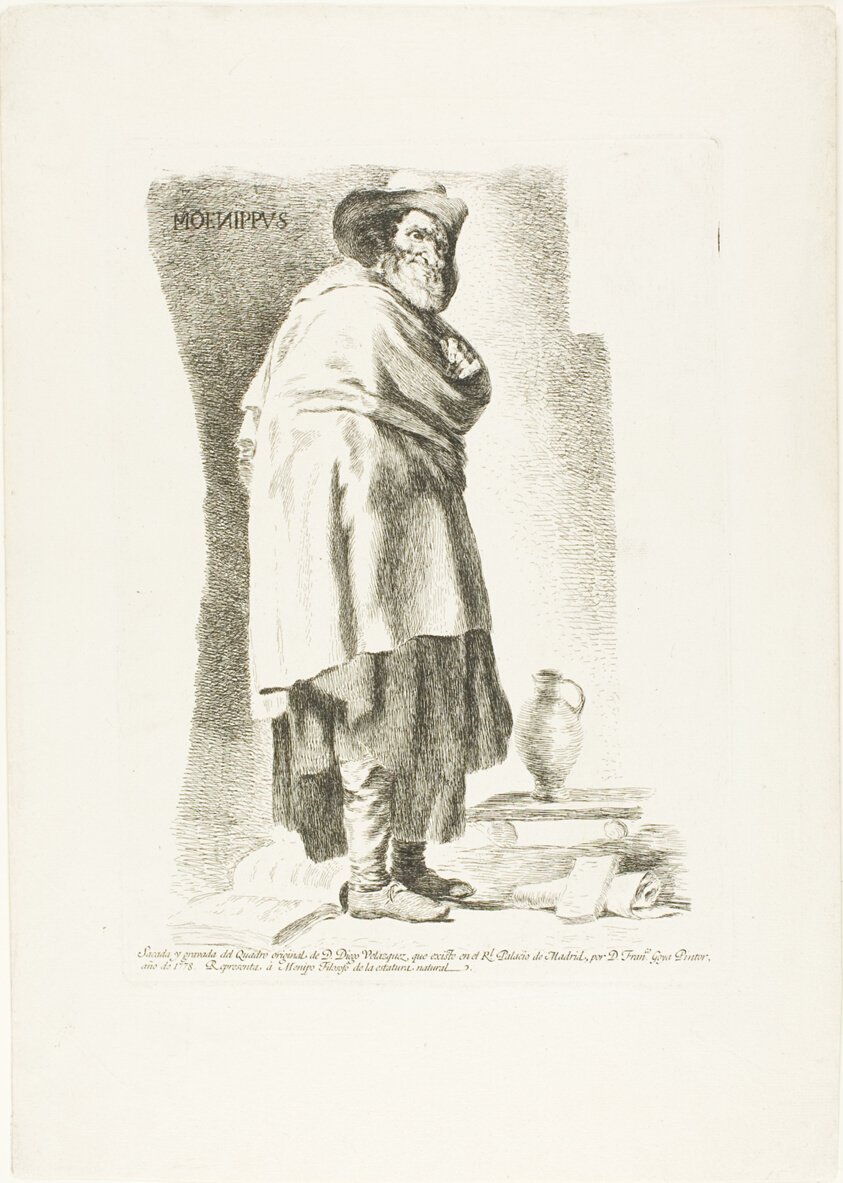
“Stop to see this powerful, unidealized portrait of the ancient philosopher Menippus. The artist’s use of dramatic light and earthy tones brings a compelling realism to this classical figure.”
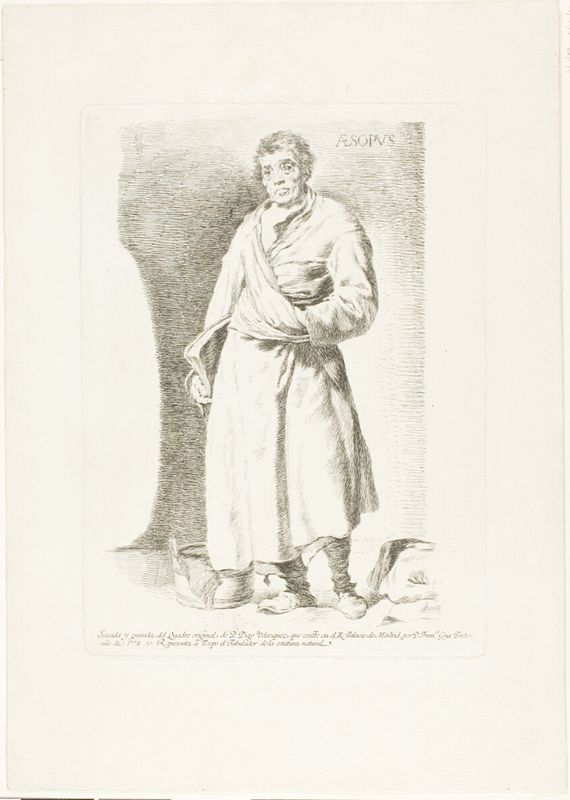
A figure emerges from a dark, undefined background in this striking portrait of Menippus, an ancient Greek Cynic philosopher. He is shown with a disheveled beard and a tattered cloak, holding a book, perhaps a collection of his satirical writings. The artist uses a stark, theatrical lighting to emphasize the philosopher's face and the folds of his worn garments, creating a powerful sense of presence. This portrayal of Menippus, along with its companion piece, "Aesop," reflects a fascination with classical figures, but rendered with a raw, unidealized realism. The painting captures a contemplative yet world-weary expression, inviting viewers to consider the philosopher's unconventional wisdom and his rejection of societal norms. It's a work that speaks to human character and the dignity found even in poverty.
Five details hide in plain sight. Pick one and we’ll show you exactly where to look.
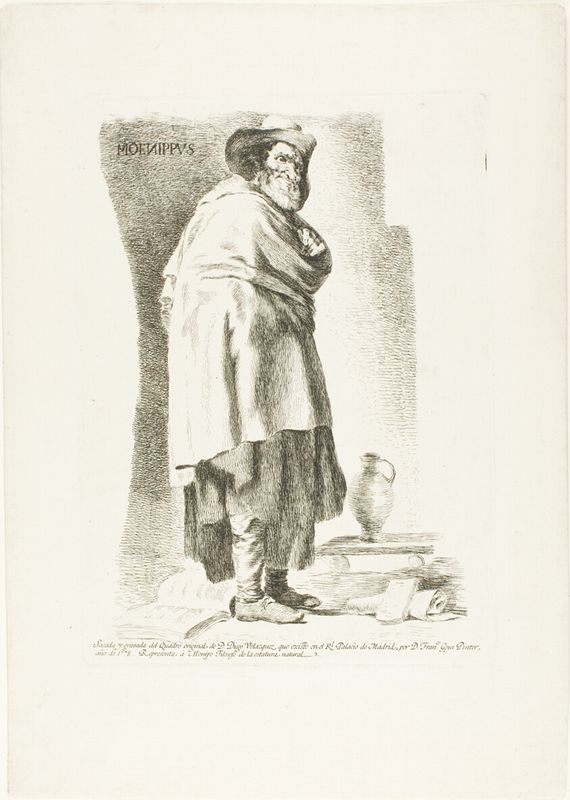
Find the bearded face under the wide hat, turned back over the shoulder. The wary, sideways look gives the old philosopher a sharp, living presence.
Look at the pale cloak, built from fine crisscross lines. Few lines mean bright cloth, dense ones mean shadow, so the heavy folds seem to have real weight.
The name MENIPPUS is lettered in the upper left, like an inscription cut into the wall. It identifies the figure as the ancient philosopher Menippus.
The plain jug on the low ledge suits the humble, ragged figure. Its smooth curves contrast with the rough, scratchy lines of the cloak.
The handwritten lines at the bottom say this is an engraving after Velázquez, made in 1778 by Goya. It is a copy of a painting, not the original.
The full narration walks you through Menippus — the story behind it, the details most visitors miss, and why it matters. Free in the Art Whisper app.
Court painter to Philip IV whose mastery of light and realism changed Western art forever.