01
Direct, calm gaze
Look at the pale face and steady eyes. The soft light on forehead and nose makes him feel present and approachable, not stiff.
1 of 5 on the painting
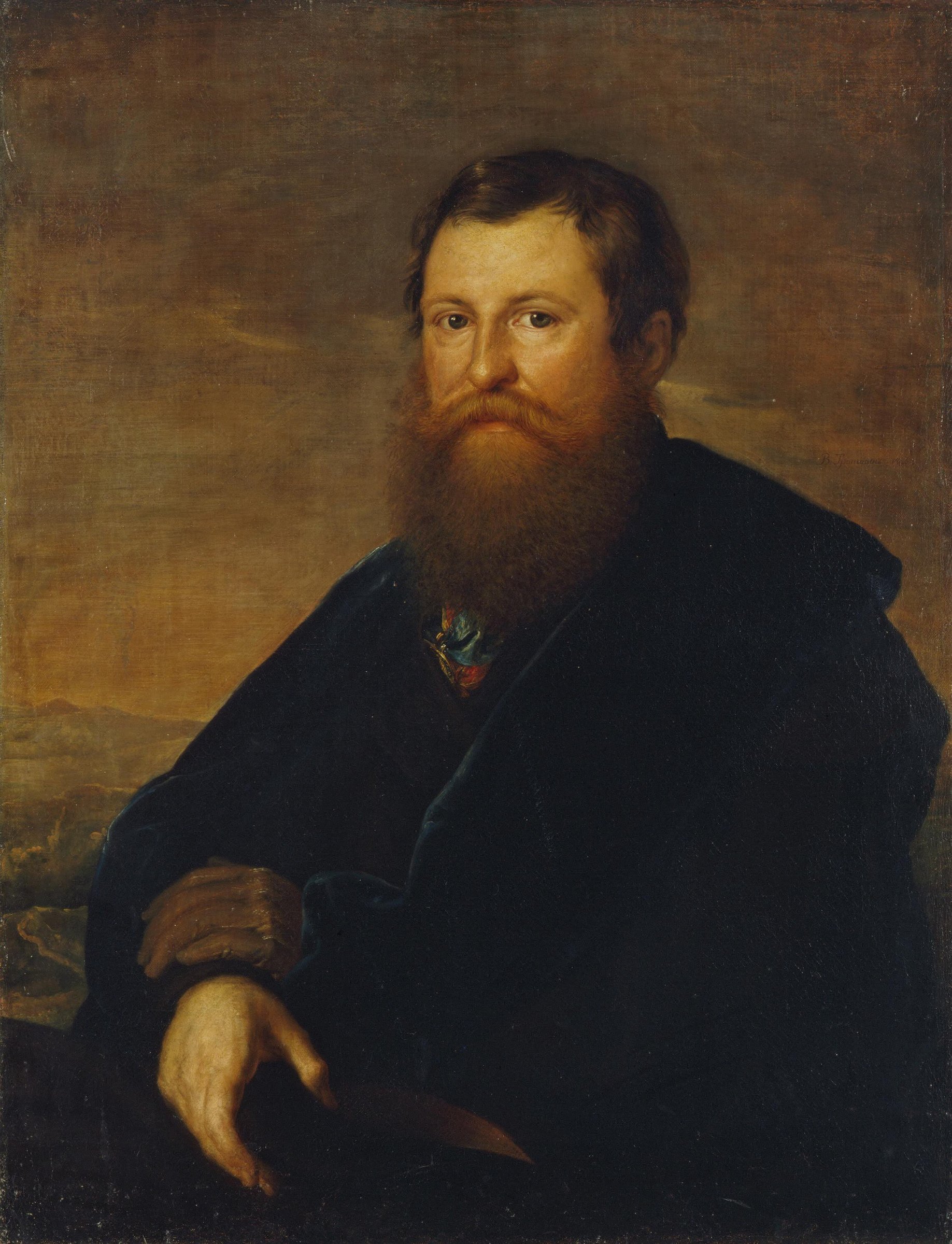
“This portrait captures the direct gaze of a successful merchant, Alexander Sapozhnikov, rendered with a realism that reflects Russia's Romantic movement. It offers a window into the rising social influence of the merchant class in the 1820s.”
Alexander Sapozhnikov, a prominent merchant, gazes directly out at us, his expression conveying both confidence and a hint of weary wisdom. Vasily Andreevich Tropinin, himself a former serf, captures the sitter with a naturalistic warmth that was characteristic of Romantic portraiture in Russia. The rich textures of Sapozhnikov's fur-lined coat and the subtle folds of his white cravat are rendered with an almost tactile quality, suggesting the sitter's status and comfort. Painted in 1826, this work reflects a period when a rising merchant class began to commission portraits, shifting patronage beyond the traditional aristocracy. The painting’s intimate scale and the sitter’s unpretentious pose invite a personal connection, making this more than just a record of appearance, but a glimpse into a specific personality of the era.
Five details hide in plain sight. Pick one and we’ll show you exactly where to look.
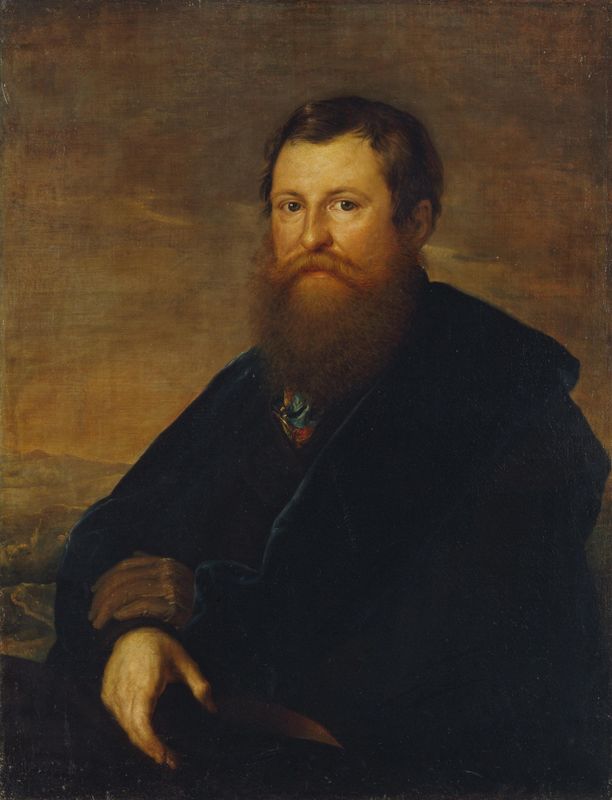
Look at the pale face and steady eyes. The soft light on forehead and nose makes him feel present and approachable, not stiff.
The huge red-brown beard fills the center of the canvas. Fine strokes of orange and brown make each strand look soft and thick.
At his collar, a small patch of blue, red and gold peeks out from the black clothes. It is the one bright accent in a dark mass.
One hand rests in shadow on the arm, while the other hangs pale and well lit in front, with a dark shape, perhaps a paper, near its fingers. Together the hands pull the eye down from the face.
The dark cloak is not flat black. Blue-green highlights on the sleeve and lapel edges suggest soft velvet and give the heavy folds weight.
The full narration walks you through Portrait of the Merchant Alexander Sapozhnikov — the story behind it, the details most visitors miss, and why it matters. Free in the Art Whisper app.
A serf who secretly studied art and went on to paint over 3,000 portraits — including Russia's greatest poet.
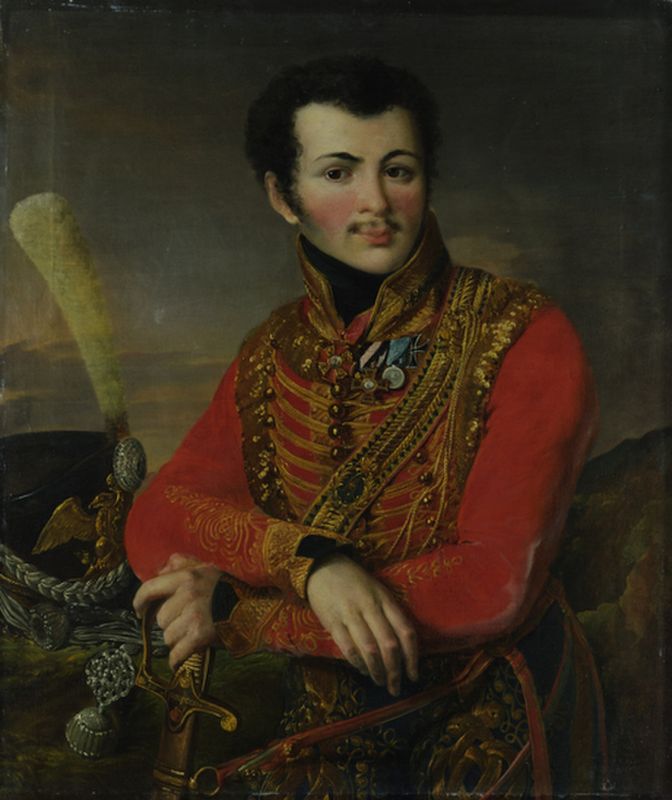 Portrait of Artemy Lazarev (1791-1813), the Poruchik of the Life Guards Hussars Regiment
1819 · Hermitage Museum
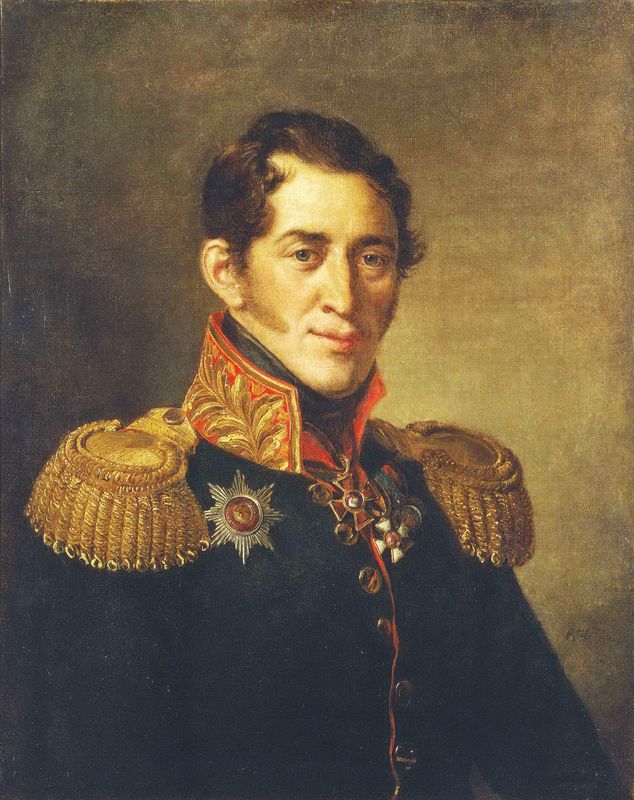 Portrait of Sergei Volkonsky
1824 · Hermitage Museum
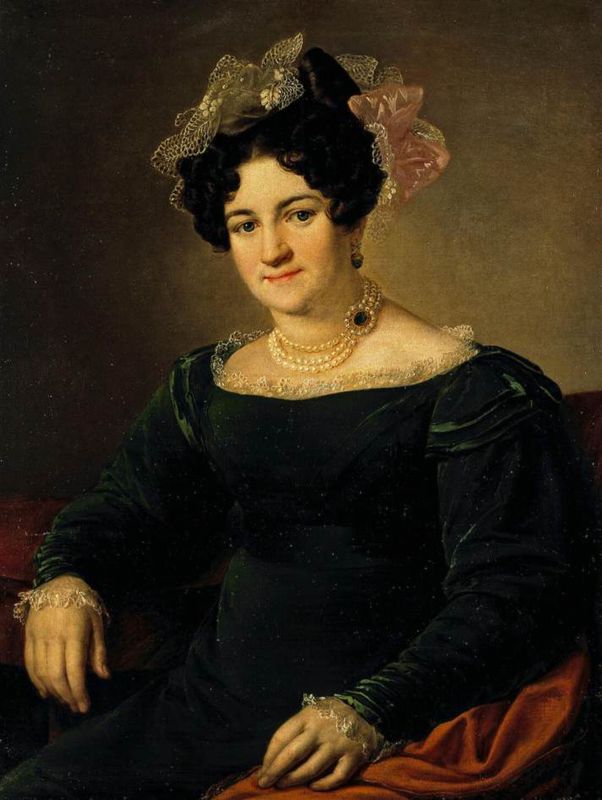 Portrait of P.I. Sapoznikova
1826 · Hermitage Museum
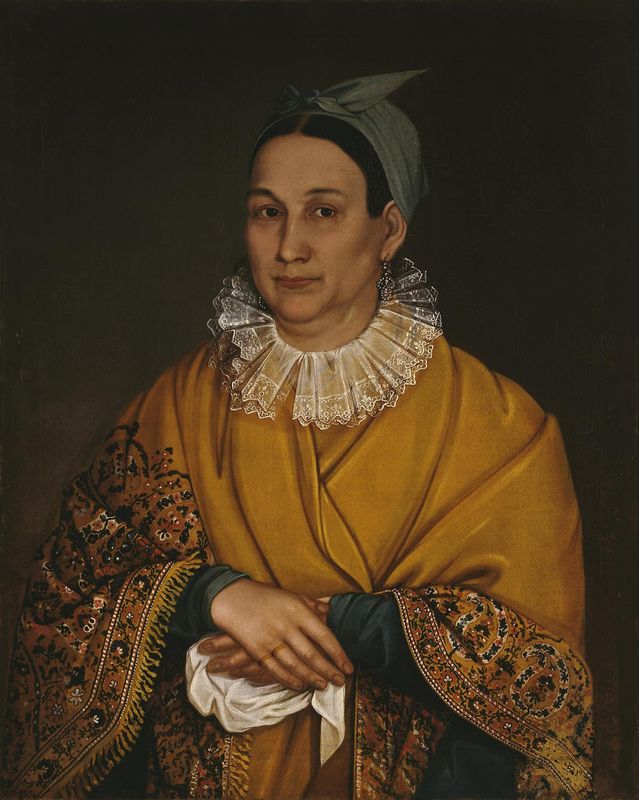 Portrait of a Merchant's Wife
1839 · Hermitage Museum
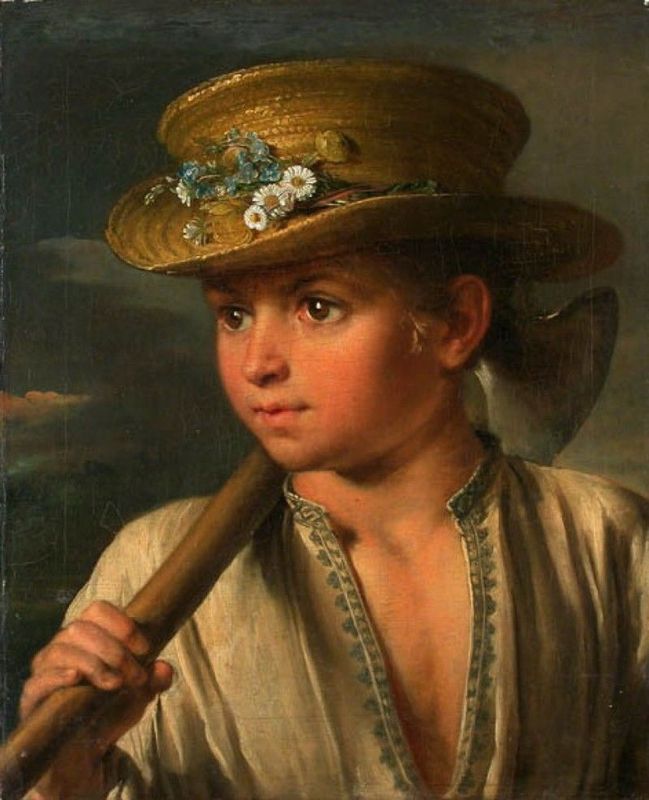 Boy with an axe
1810 · Belarusian National Arts Museum
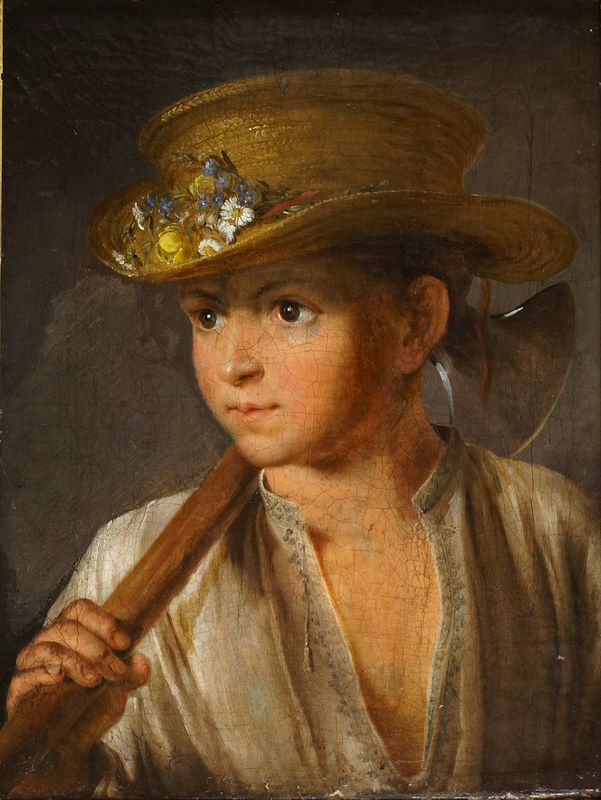 The Peasant Boy with a Hatchet
1810 · Ekaterinburg Museum of Fine Arts
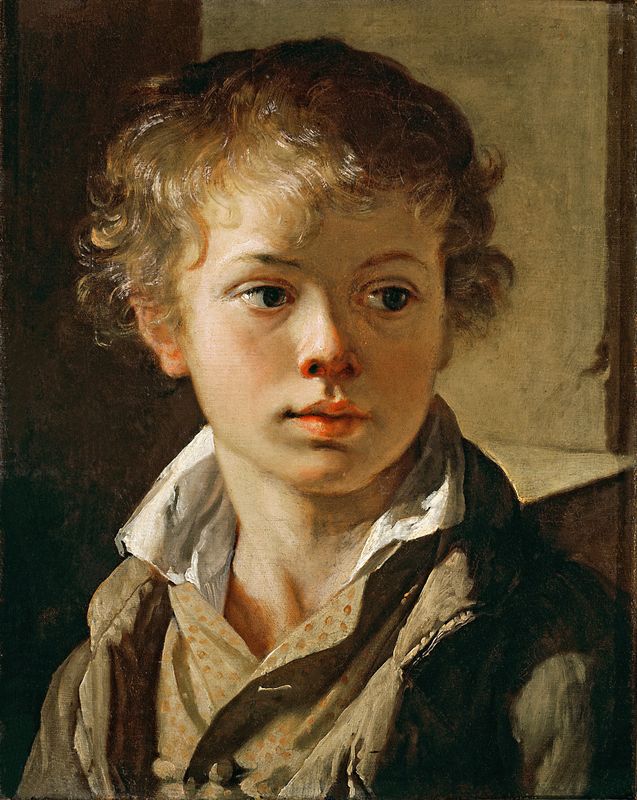 Portrait of A. V. Tropinin
1818 · Tretyakov Gallery
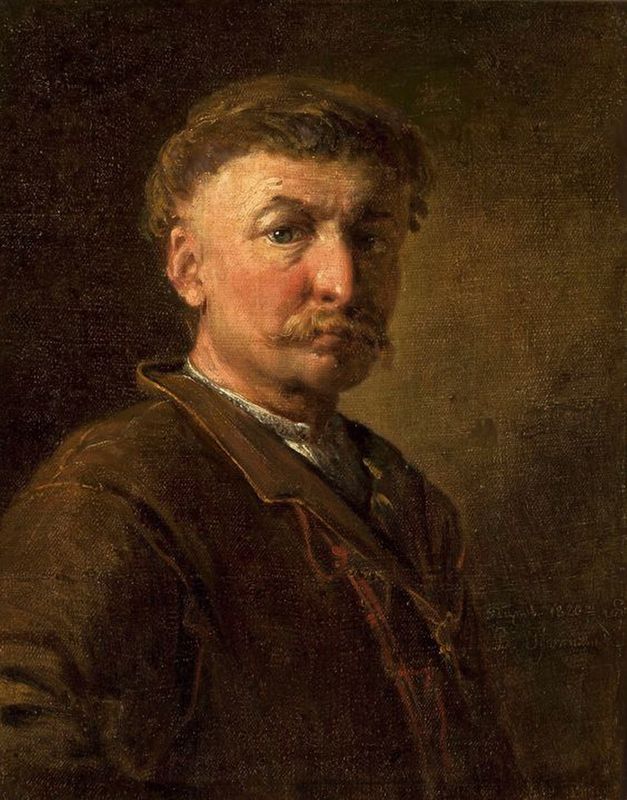 Portrait of an Ukrainian peasant.
1820 · National Museum in Warsaw
Beyond Tropinin: works from the same years.
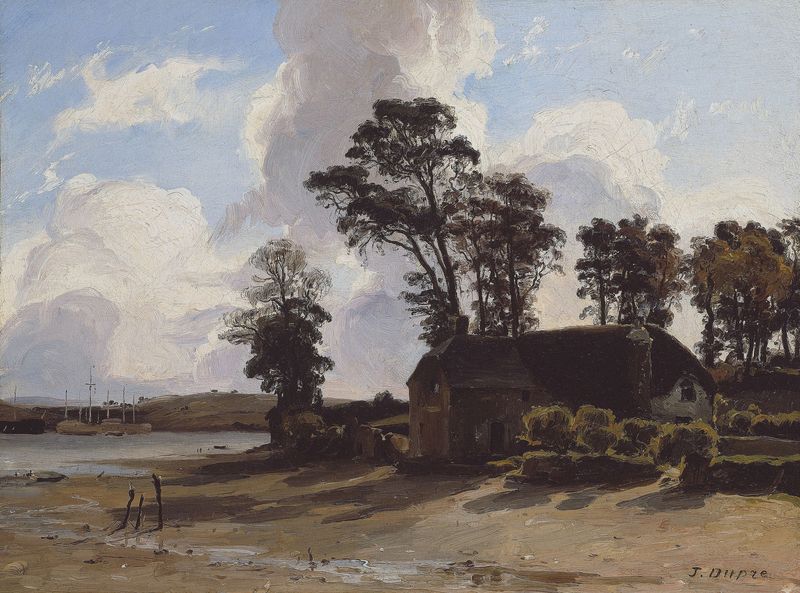 Same era · 1810s–1840s
The Estuary Farm
Léon-Victor Dupré · 1831 · Art Institute of Chicago
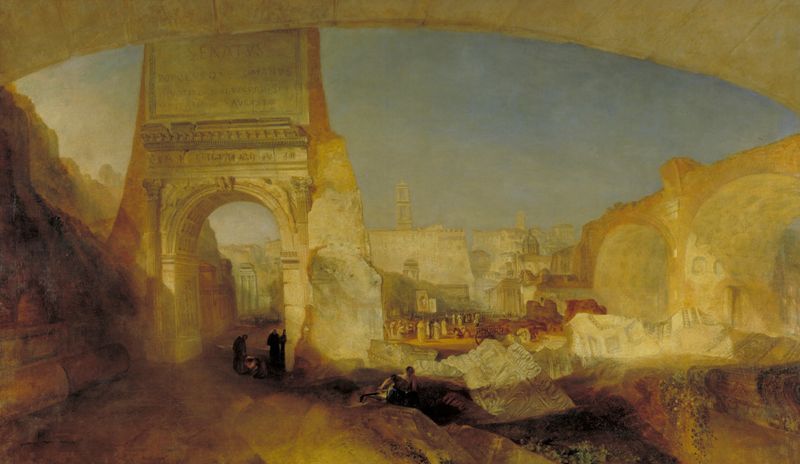 Same era · 1810s–1840s
Forum Romanum, for Mr Soane's Museum
J. M. W. Turner · 1826 · Tate
 Same era · 1810s–1840s
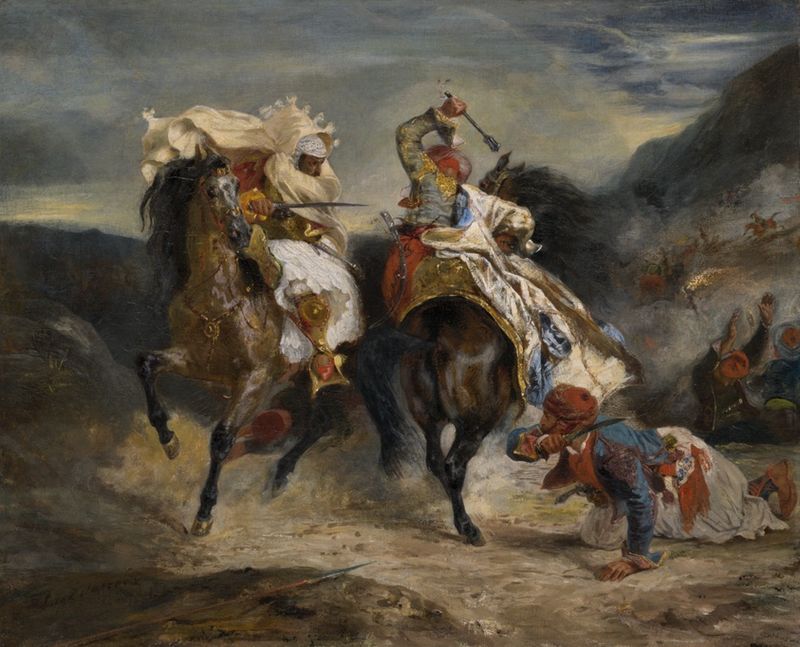
The Combat of the Giaour and Hassan
Eugène Delacroix · 1826 · Art Institute of Chicago
 Same era · 1810s–1840s
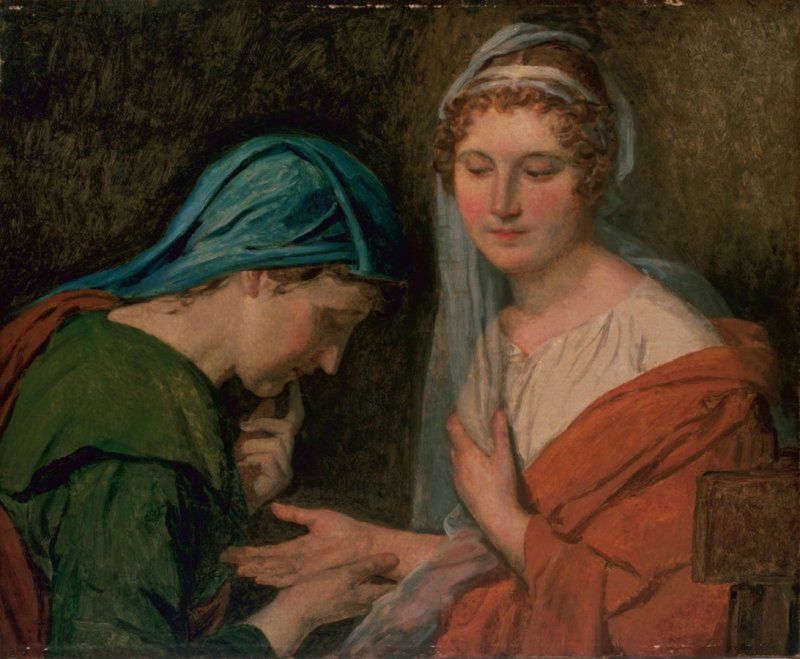
The Fortune Teller (La Bonne Aventure)
Jacques-Louis David · 1824 · Fine Arts Museums of San Francisco
 Same era · 1810s–1840s
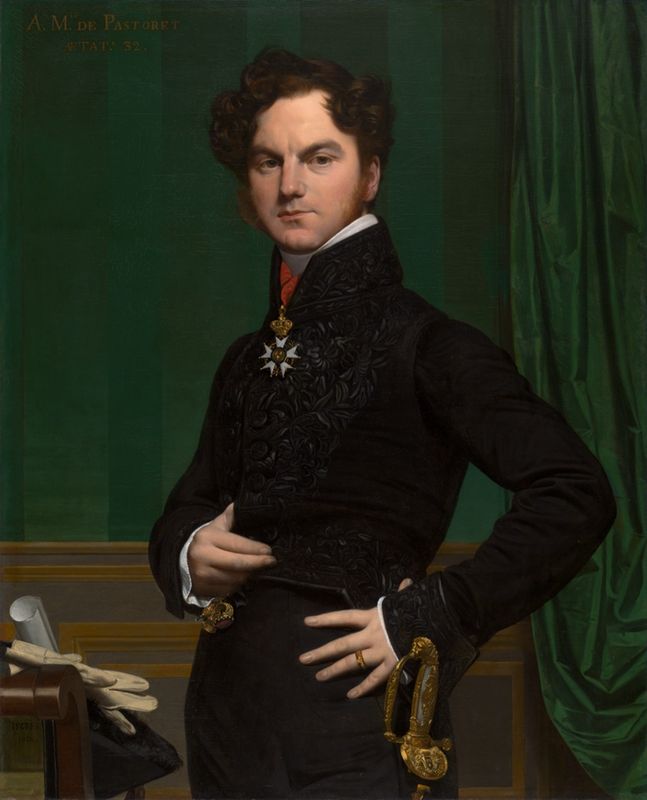
Amédée-David, the Comte de Pastoret
Jean-Auguste-Dominique Ingres · 1823 · Art Institute of Chicago
 Same era · 1810s–1840s
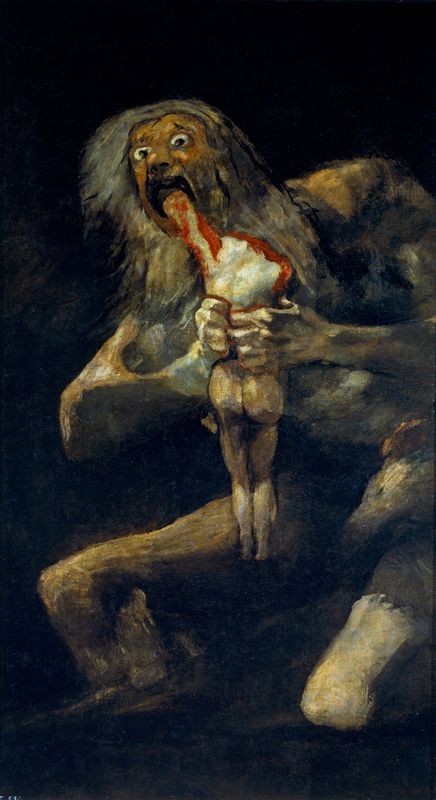
Saturn Devouring His Son
Francisco Goya · 1820 · Museo del Prado
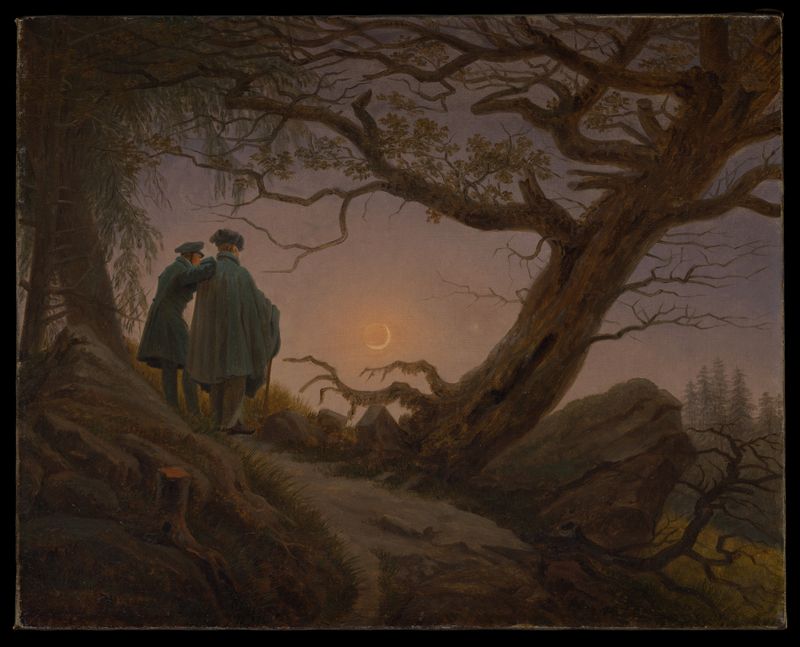 Same era · 1810s–1840s
Two Men Contemplating the Moon
Caspar David Friedrich · 1819 · Staatliche Kunstsammlungen Dresden
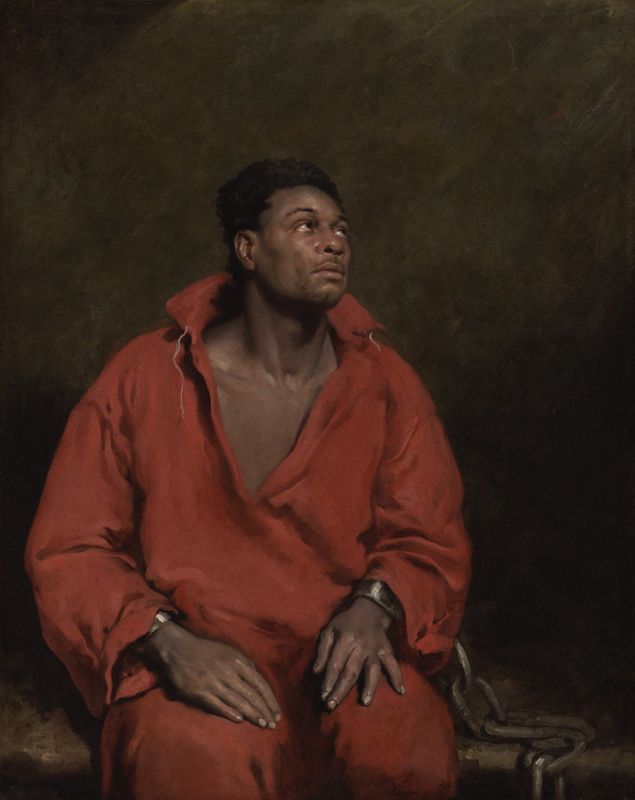 Same era · 1810s–1840s
The Captive Slave (Ira Aldridge)
John Philip Simpson · 1827 · Art Institute of Chicago
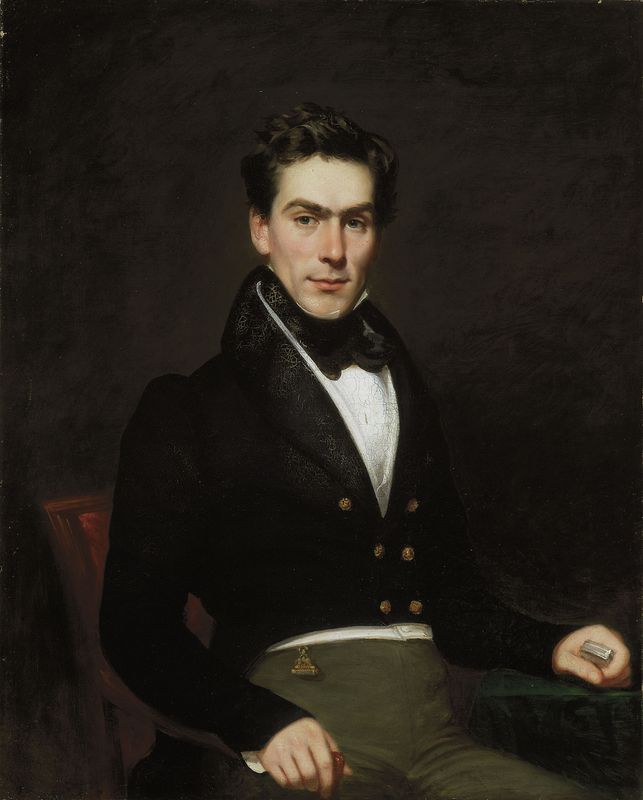 Same era · 1810s–1840s
Mr. James Mackie
Samuel Alcock & Company · 1830 · Art Institute of Chicago
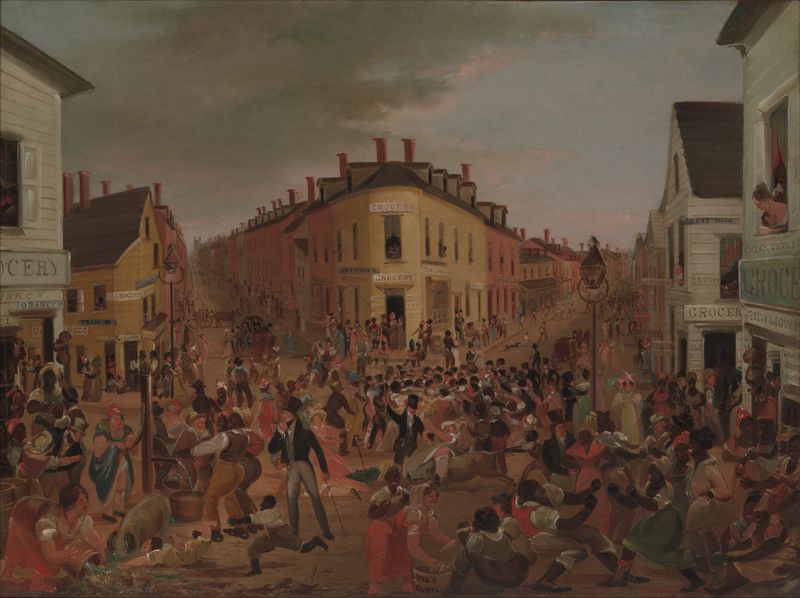 Same era · 1810s–1840s
The Five Points
Artist Unknown - The Mercat Cross, Aberdeen · 1822 · The Metropolitan Museum of Art
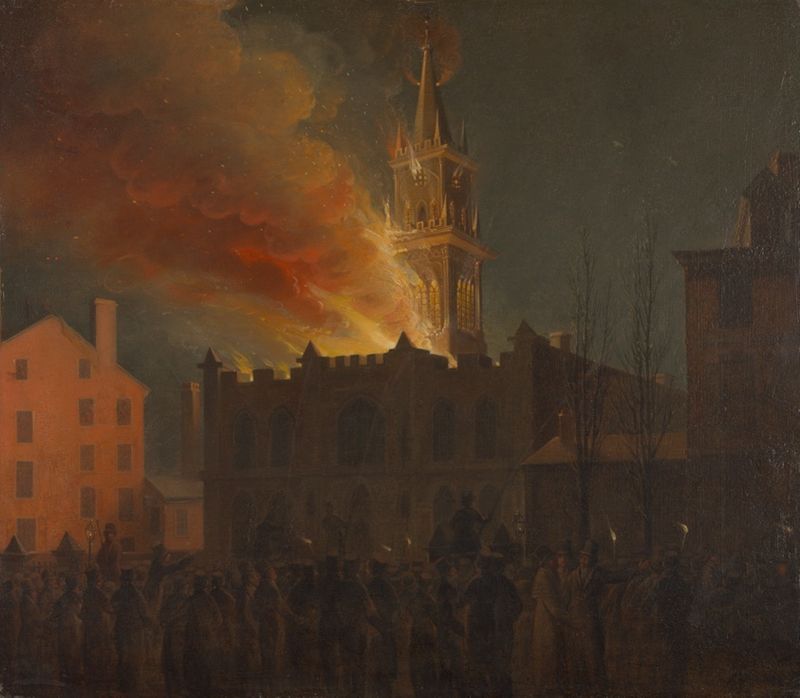 Same era · 1810s–1840s
Conflagration of the Masonic Hall, Chestnut Street, Philadelphia, Pennsylvania
Samuel Jones · 1819 · Art Institute of Chicago
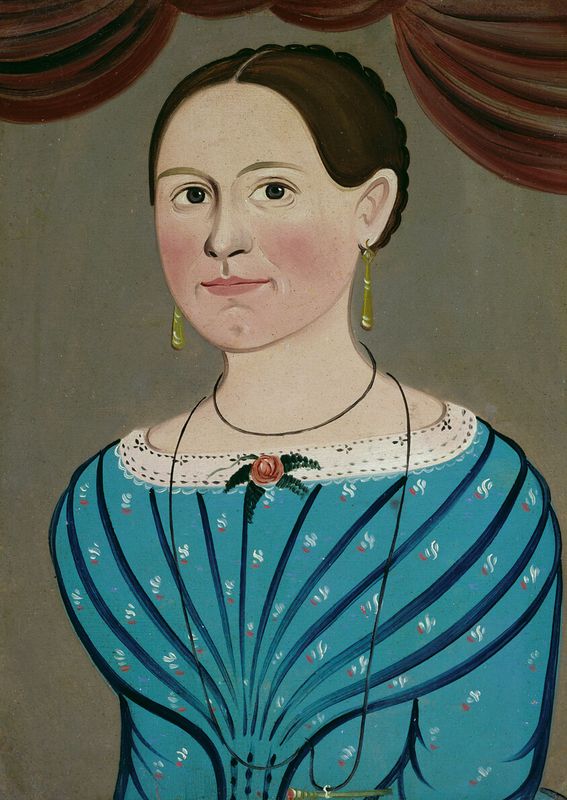 Same era · 1810s–1840s
Woman in a Blue Dress
School of William Matthew Prior · 1840 · Art Institute of Chicago
