
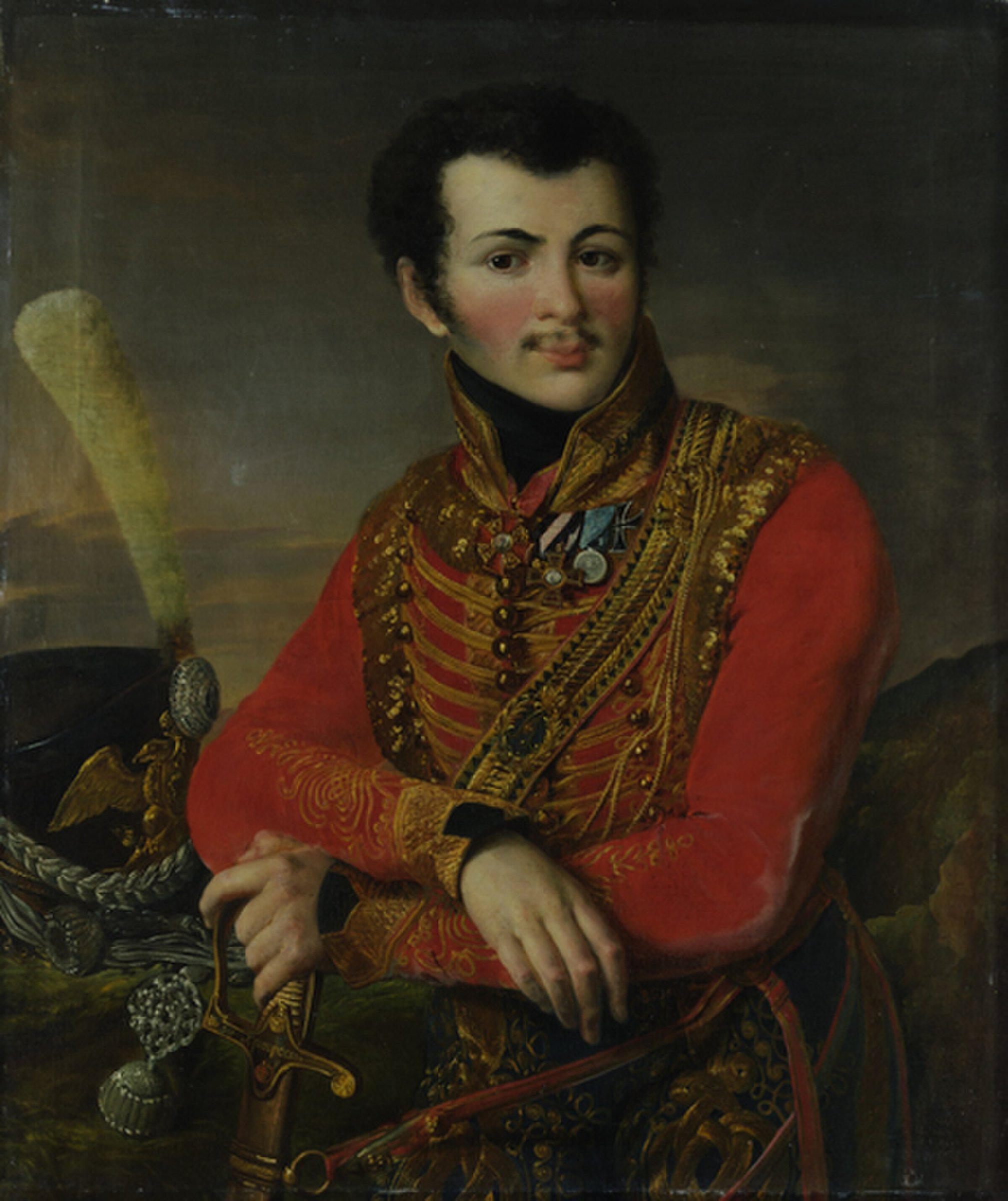
“This striking portrait captures Artemy Lazarev, a young hussar officer, painted posthumously. It offers a glimpse into the military elegance and personal introspection of the early 19th century, a time of grand uniforms and profound loss.”
In this portrait, Artemy Lazarev, a poruchik (lieutenant) in the Life Guards Hussars Regiment, gazes out with a calm, almost wistful expression. Painted in 1819, it captures a moment just six years after his death in battle during the Napoleonic Wars. The artist, Vasily Andreevich Tropinin, creates a sense of both immediacy and remembrance, allowing us to connect with a figure from a turbulent historical period. Lazarev’s uniform, with its intricate details, speaks to his military status and the opulence of the era, yet his posture conveys a quiet dignity. The painting reflects the Romantic ideal of honoring individuals, even as it subtly hints at the brevity of life and the impact of conflict.
- Artist
- Vasily Andreevich Tropinin
- Date
- 1819
- Medium
- Oil on canvas
- Location
- Hermitage Museum
What to Notice
Four details hide in plain sight. Here’s where to look.
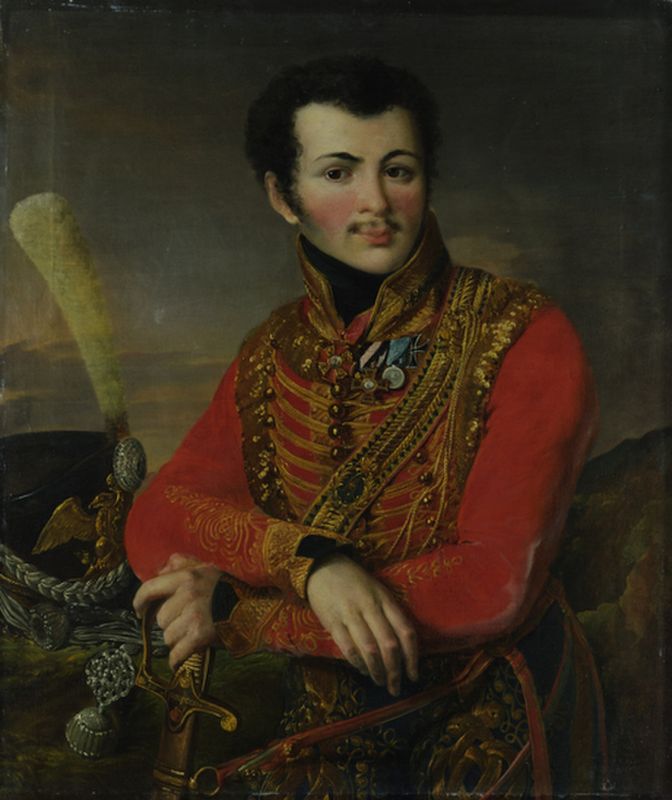
The intricate gold braiding and crimson sash of Lazarev's hussar uniform.
The subtle play of light on his face, highlighting his thoughtful expression.
The delicate rendering of his hair and sideburns.
The way his right hand rests casually on his sword hilt, a symbol of his military role.
Stand in front of it and listen
The full narration walks you through Portrait of Artemy Lazarev (1791-1813), the Poruchik of the Life Guards Hussars Regiment — the story behind it, the details most visitors miss, and why it matters. Free in the Art Whisper app.
Vasily Andreevich Tropinin
1776–1857 · Russian EmpireA serf who secretly studied art and went on to paint over 3,000 portraits — including Russia's greatest poet.
Further Works by Tropinin
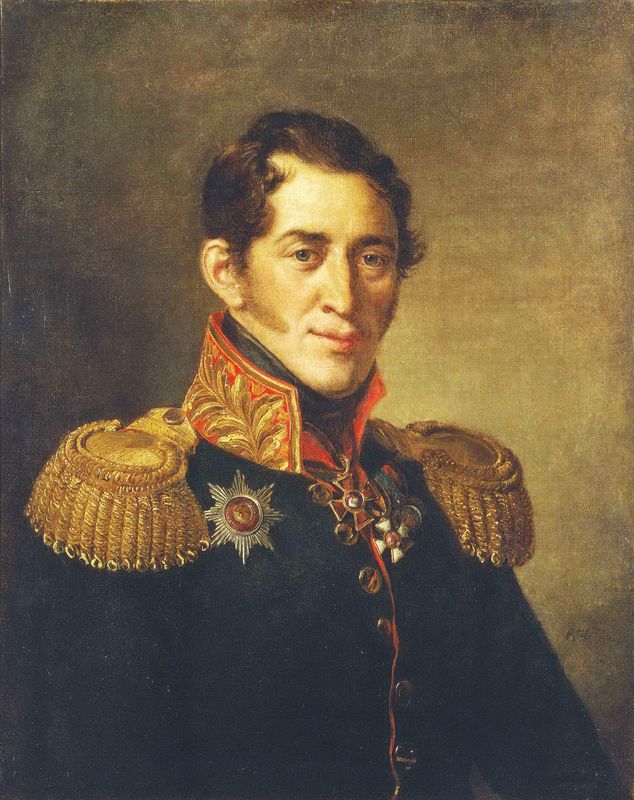 Portrait of Sergei Volkonsky
1824 · Hermitage Museum
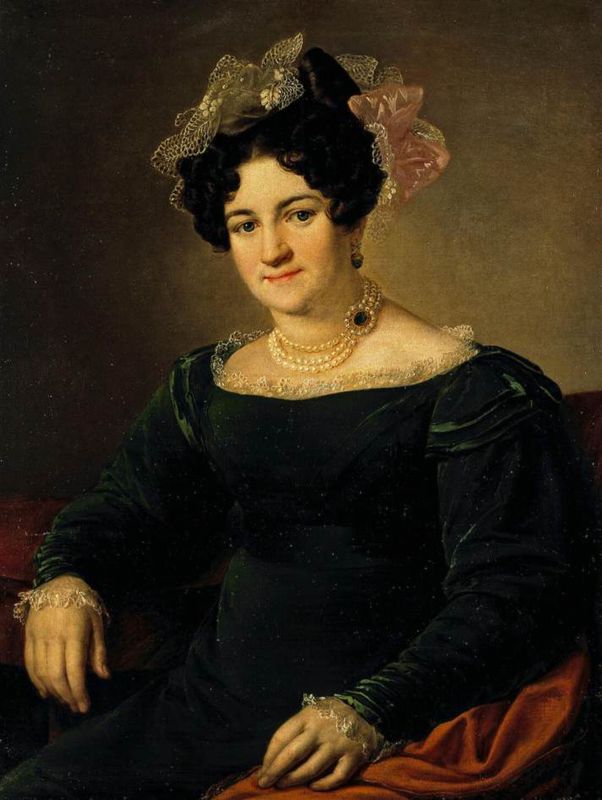 Portrait of P.I. Sapoznikova
1826 · Hermitage Museum
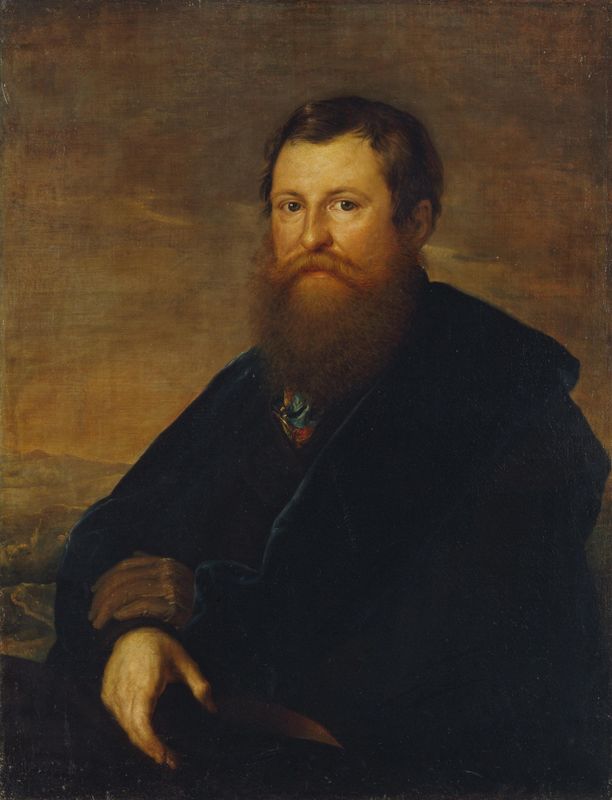 Portrait of the Merchant Alexander Sapozhnikov
1826 · Hermitage Museum
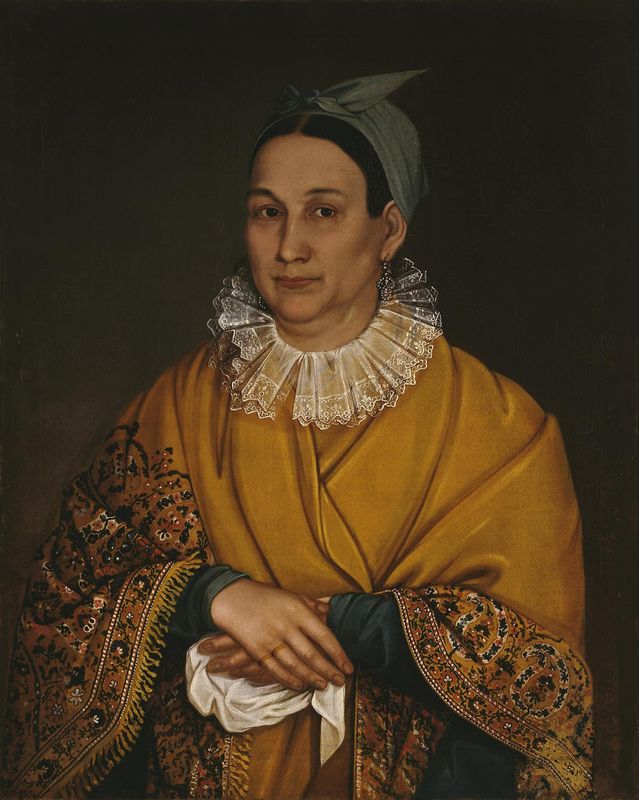 Portrait of a Merchant's Wife
1839 · Hermitage Museum
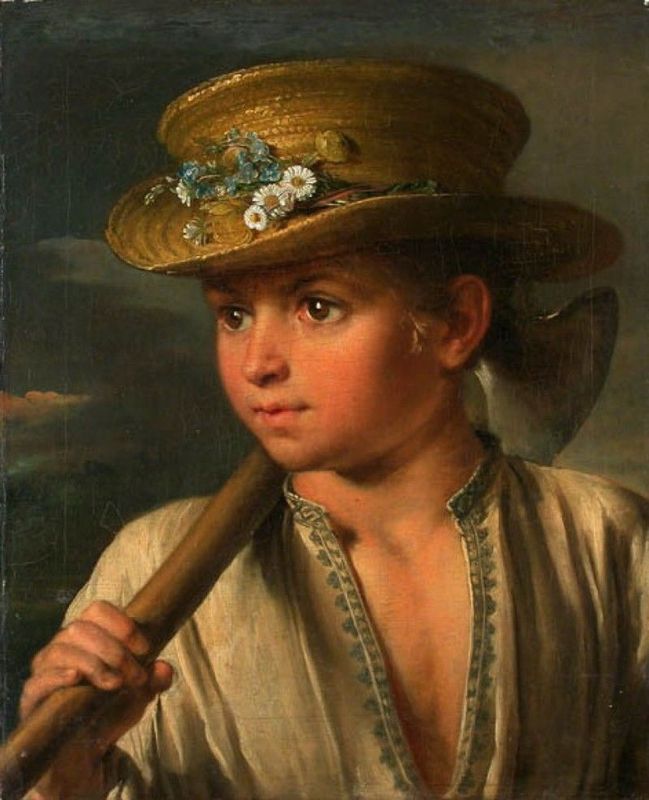 Boy with an axe
1810 · Belarusian National Arts Museum
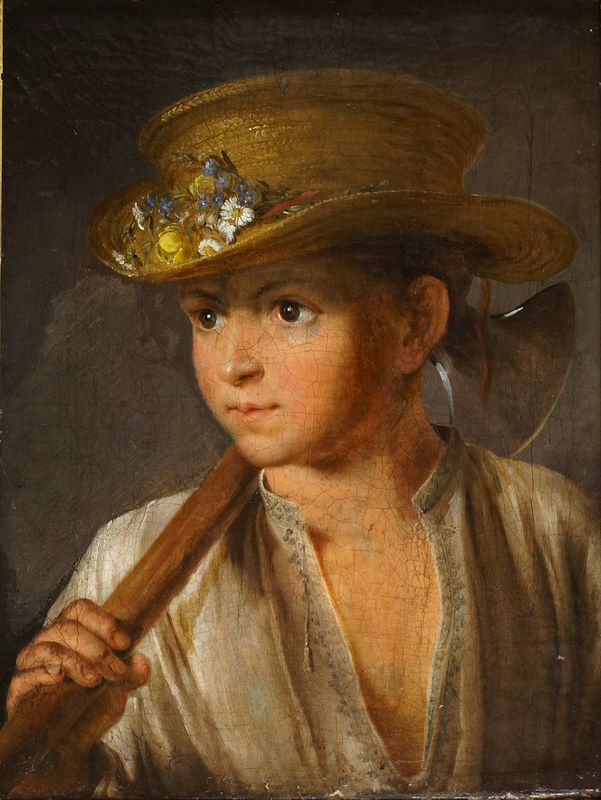 The Peasant Boy with a Hatchet
1810 · Ekaterinburg Museum of Fine Arts
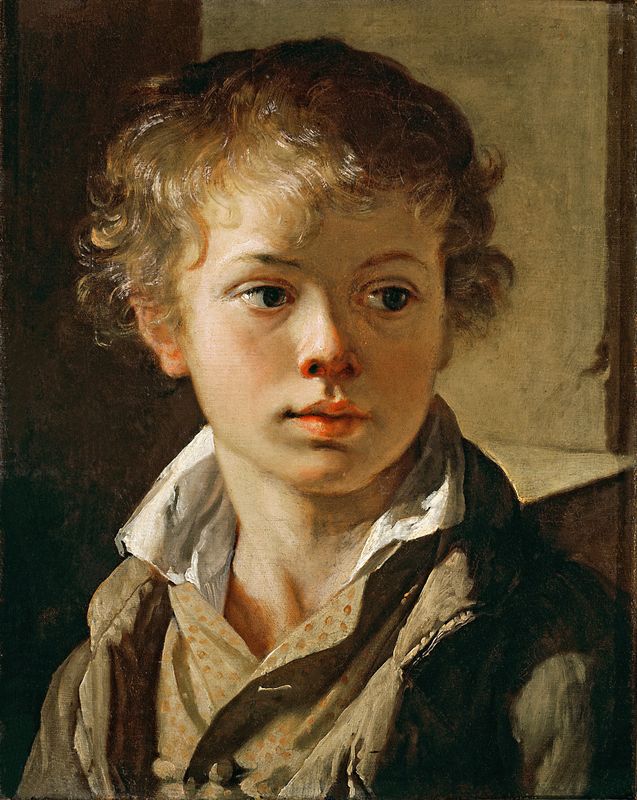 Portrait of A. V. Tropinin
1818 · Tretyakov Gallery
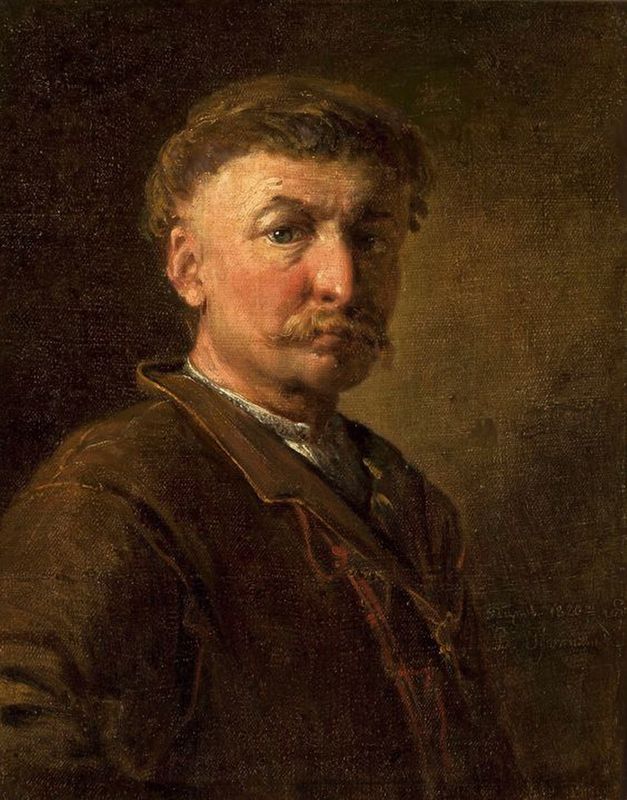 Portrait of an Ukrainian peasant.
1820 · National Museum in Warsaw
More works to explore
Beyond Tropinin: works from the same years.
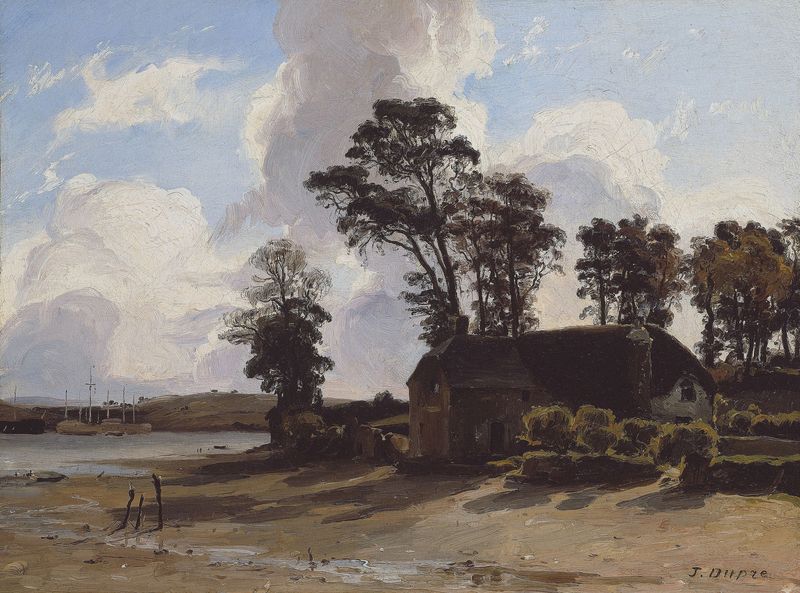 Same era · 1800s–1830s
The Estuary Farm
Léon-Victor Dupré · 1831 · Art Institute of Chicago
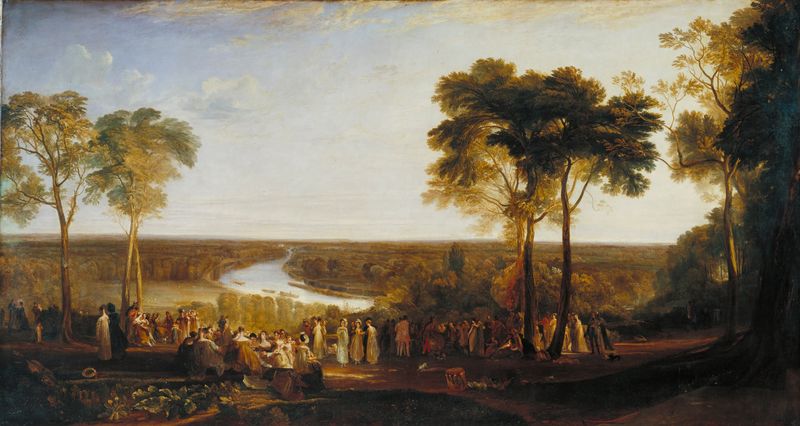 Same era · 1800s–1830s
England: Richmond Hill, on the Prince Regent's Birthday
J. M. W. Turner · 1819 · National Gallery
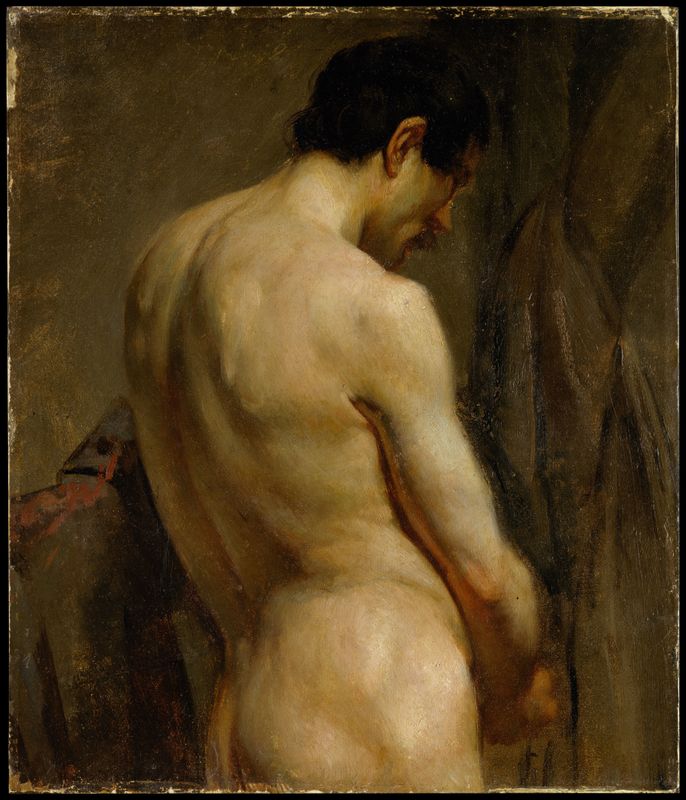 Same era · 1800s–1830s
Male Academy Figure: Half-Length, Side View
Eugène Delacroix · 1819 · Karen B. Cohen Collection
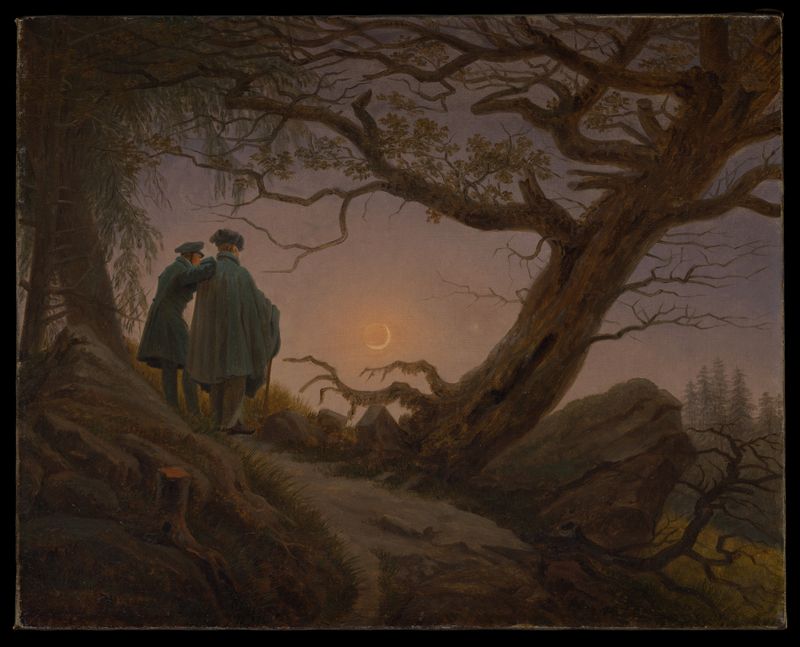 Same era · 1800s–1830s
Two Men Contemplating the Moon
Caspar David Friedrich · 1819 · Staatliche Kunstsammlungen Dresden
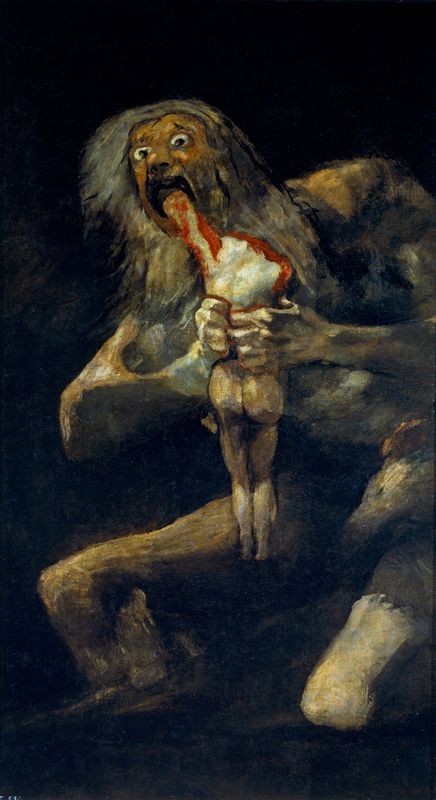 Same era · 1800s–1830s
Saturn Devouring His Son
Francisco Goya · 1820 · Museo del Prado
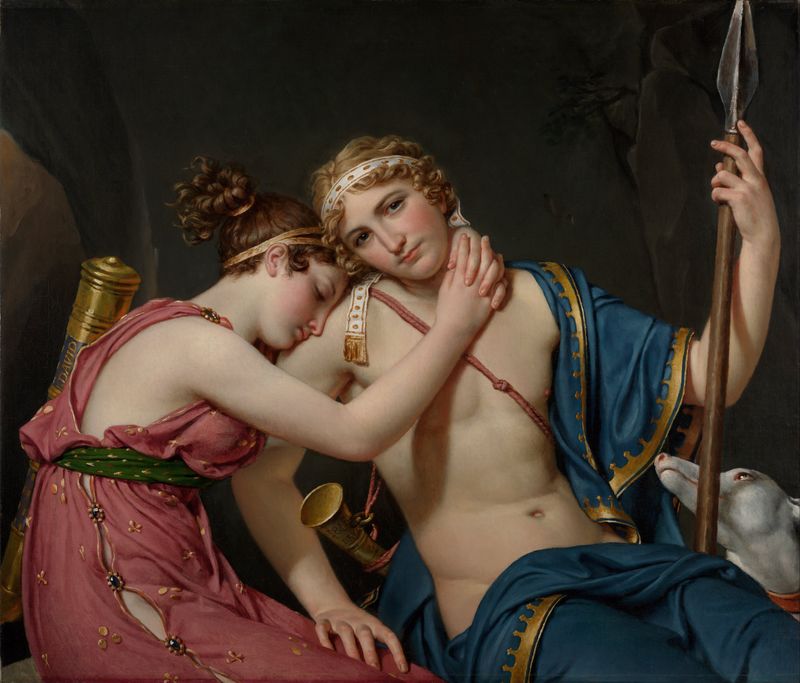 Same era · 1800s–1830s
The Farewell of Telemachus and Eucharis
Jacques-Louis David · 1818 · J. Paul Getty Museum
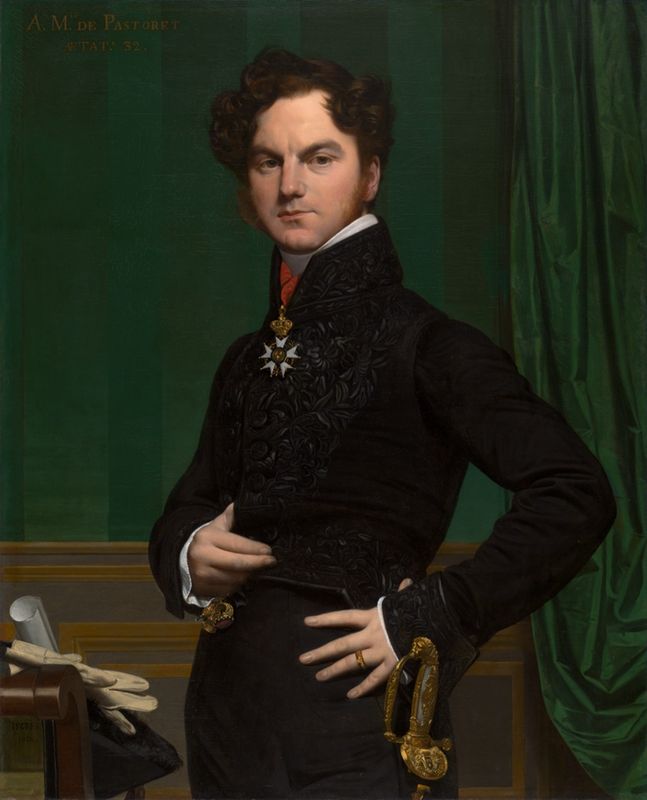 Same era · 1800s–1830s
Amédée-David, the Comte de Pastoret
Jean-Auguste-Dominique Ingres · 1823 · Art Institute of Chicago
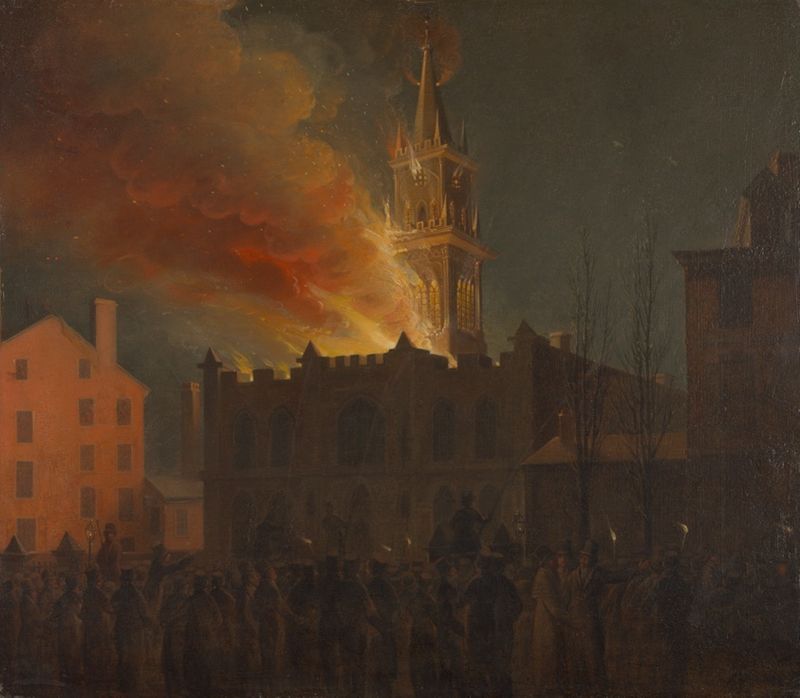 Same era · 1800s–1830s
Conflagration of the Masonic Hall, Chestnut Street, Philadelphia, Pennsylvania
Samuel Jones · 1819 · Art Institute of Chicago
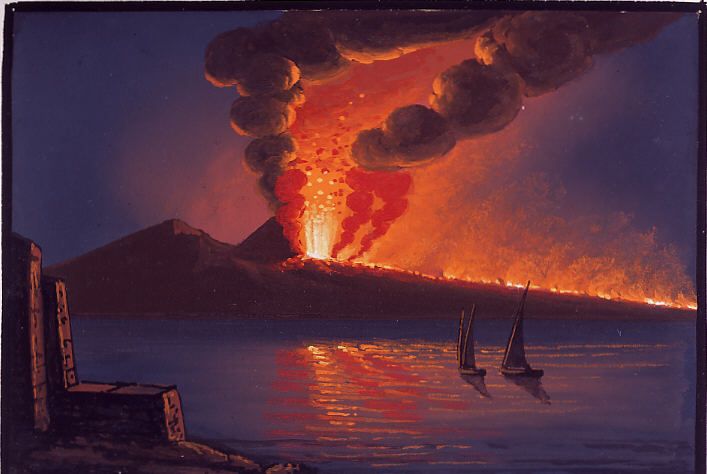 Same era · 1800s–1830s
Sketchbook: Souvenir of Naples
Artist Unknown - The Mercat Cross, Aberdeen · 1821 · The Metropolitan Museum of Art
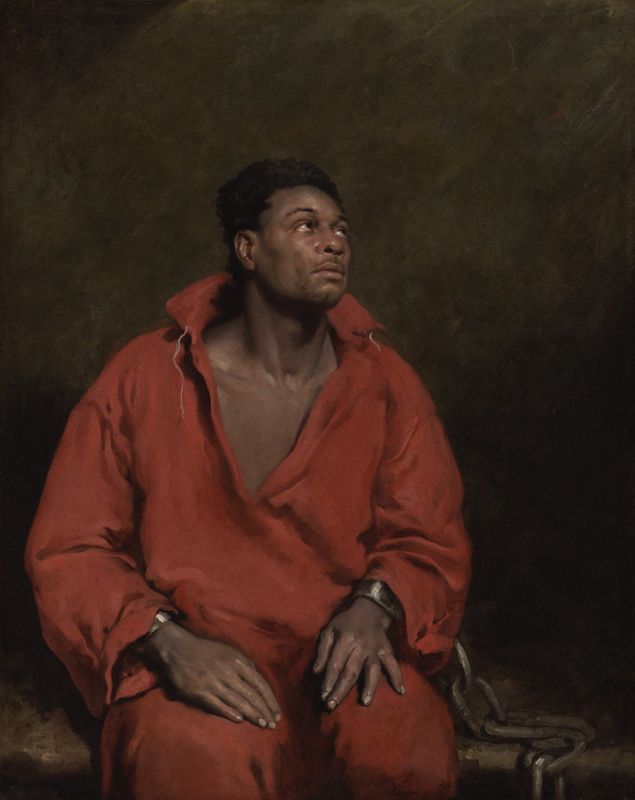 Same era · 1800s–1830s
The Captive Slave (Ira Aldridge)
John Philip Simpson · 1827 · Art Institute of Chicago
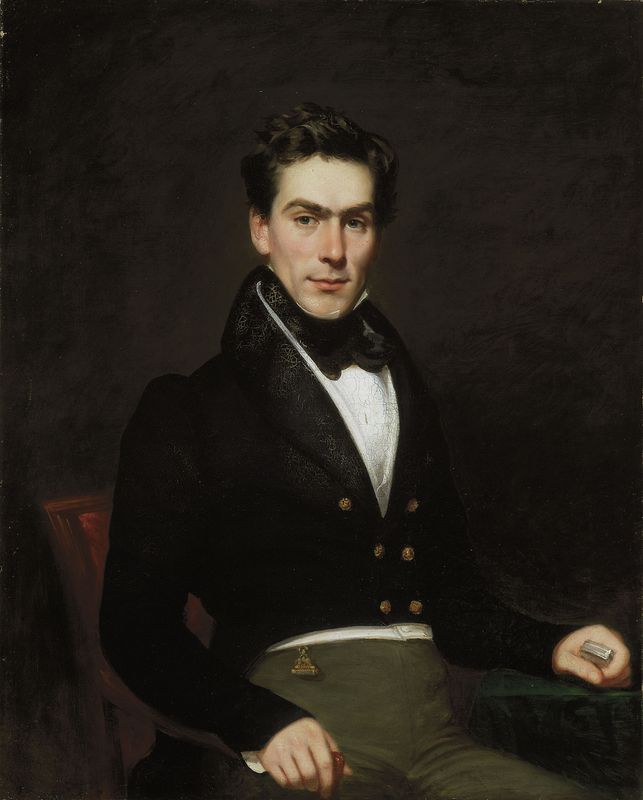 Same era · 1800s–1830s
Mr. James Mackie
Samuel Alcock & Company · 1830 · Art Institute of Chicago
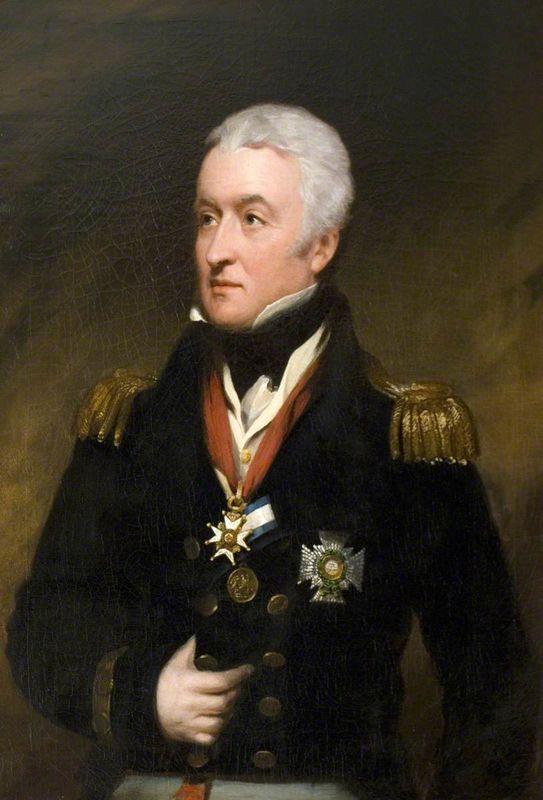 Same era · 1800s–1830s
Admiral Sir Pulteney Malcolm (1768–1838)
Thomas Stewardson · 1819 · Annan Museum