01
Upturned face
Look at the tilted head, parted lips and glancing eyes. The gaze lifts toward the sky and sets the feeling of heartfelt repentance.
1 of 5 on the painting
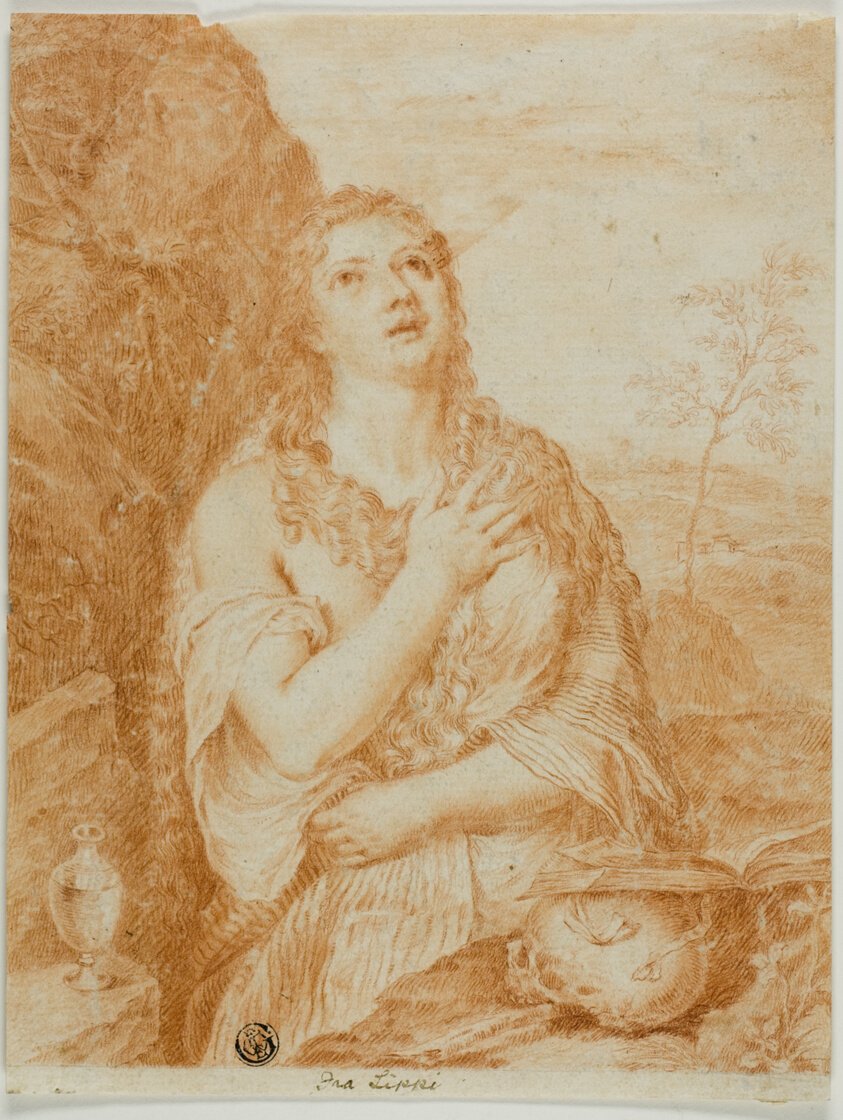
“This powerful painting captures Mary Magdalene in a moment of profound repentance, her raw emotion conveyed through a single tear and her expressive gaze. It's a striking example of the Venetian High Renaissance's mastery of human feeling and dramatic light.”
Mary Magdalene, her eyes red from weeping, gazes heavenward in this intensely emotional painting. Her long, reddish-blonde hair, unbound and flowing, covers much of her body, a visual symbol of her repentance and renunciation of worldly vanity. A single tear rolls down her cheek, catching the light, while her lips are slightly parted as if in prayer or a sigh. The dramatic chiaroscuro (the strong contrast between light and dark) amplifies the spiritual intensity, making her figure almost glow against the dark, indistinct background. This work, created late in the artist's life, captures the raw vulnerability and profound devotion of the Magdalene, a popular subject in the High Renaissance for its exploration of human emotion and divine grace.
Five details hide in plain sight. Pick one and we’ll show you exactly where to look.
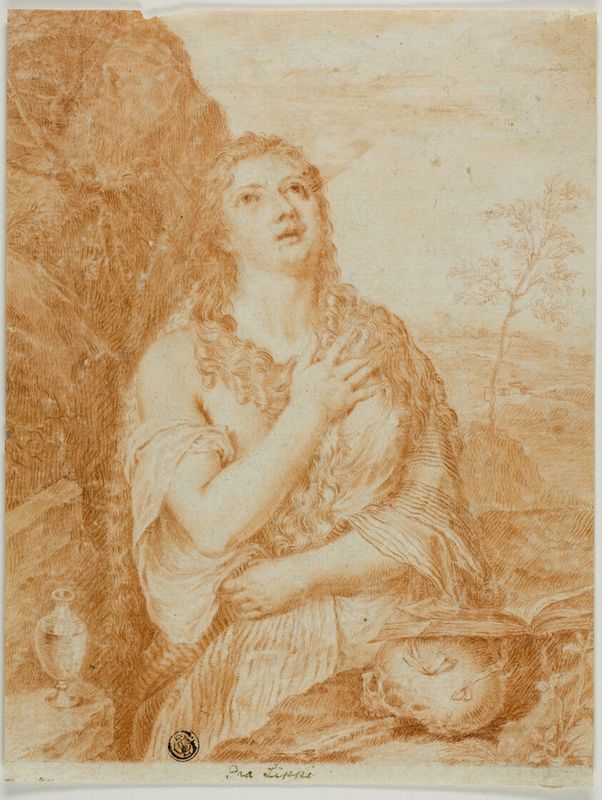
Look at the tilted head, parted lips and glancing eyes. The gaze lifts toward the sky and sets the feeling of heartfelt repentance.
One hand presses to the breast while the other arm folds across the body. The pose reads as a quiet, private gesture of remorse and humility.
Follow the hair down over the shoulder. Fine, curving lines build the ringlets and give them real weight as they fall across her body, as is traditional for a penitent Magdalene.
At lower right, a skull rests beside an open book. Together they traditionally suggest the fleeting nature of life and a penitent's prayer and study.
Tucked into the lower left corner is a slender footed glass jar. It likely recalls the ointment jar associated with Magdalene, and it is easy to miss beside the rock.
The full narration walks you through Penitent Magdalene — the story behind it, the details most visitors miss, and why it matters. Free in the Art Whisper app.
Titian, the Venetian master, revolutionized Renaissance painting with his vibrant use of color and dramatic compositions, leaving behind an immense legacy.
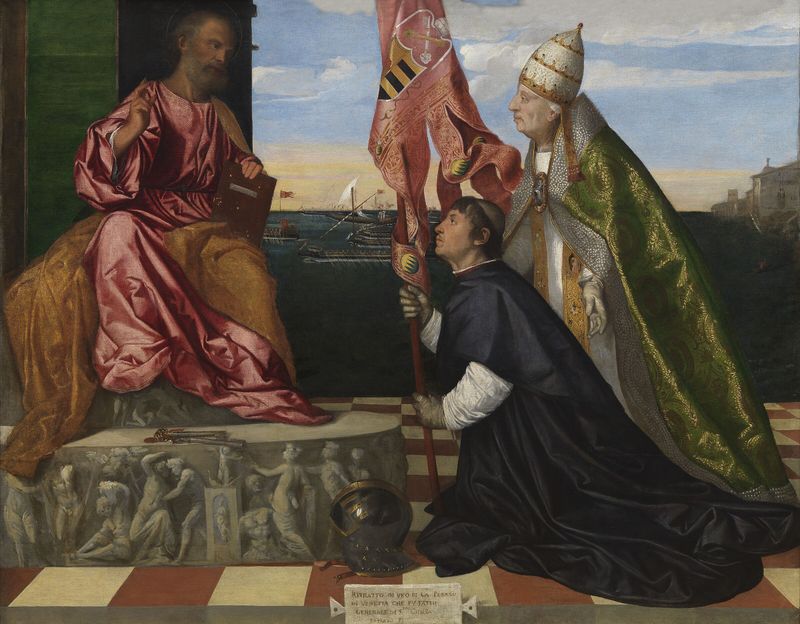 Jacopo Pesaro, Bishop of Paphos, being presented by Pope Alexander VI to Saint Peter
1504 · Royal Museum of Fine Arts Antwerp
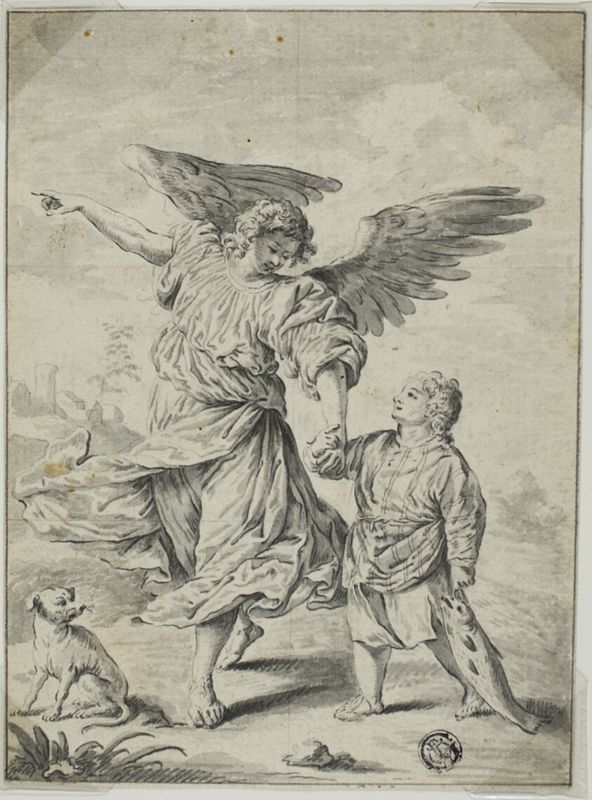 Tobias and the Angel
1530 · Madonna dell'Orto
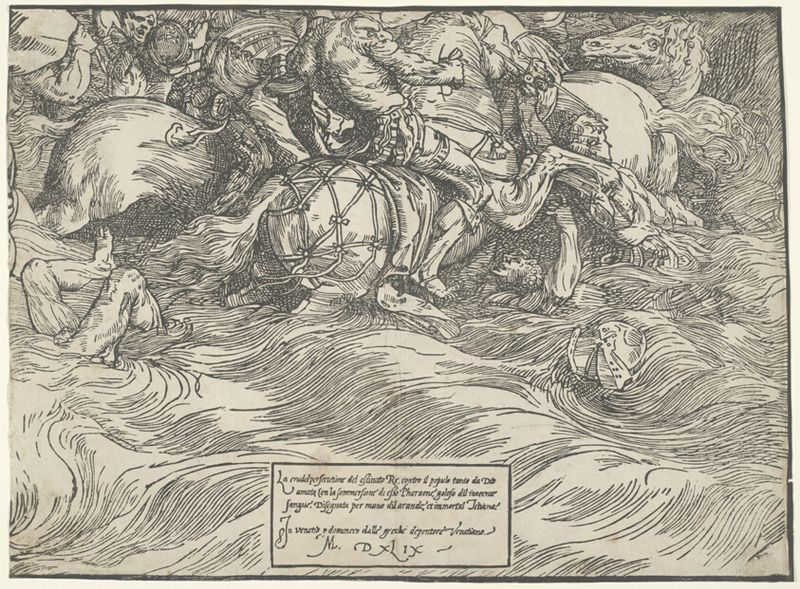 The Submersion of Pharaoh's Army in the Red Sea
1514 · Cleveland Museum of Art
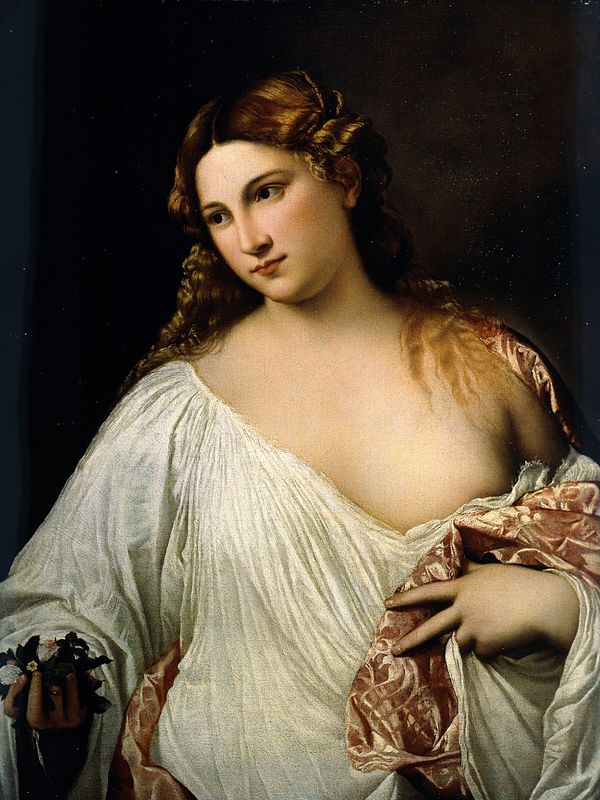 Flora
1517 · Uffizi Gallery
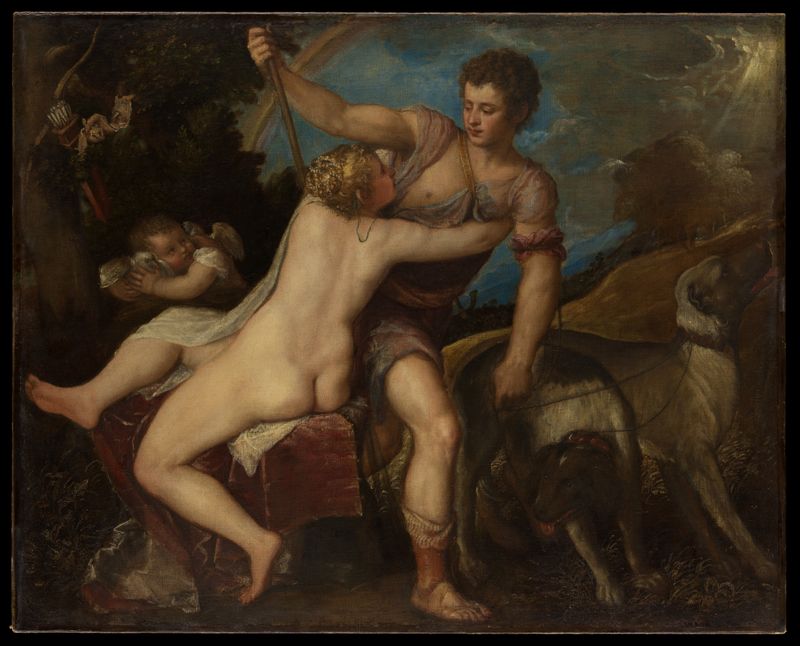 Venus and Adonis
1554 · Museo del Prado
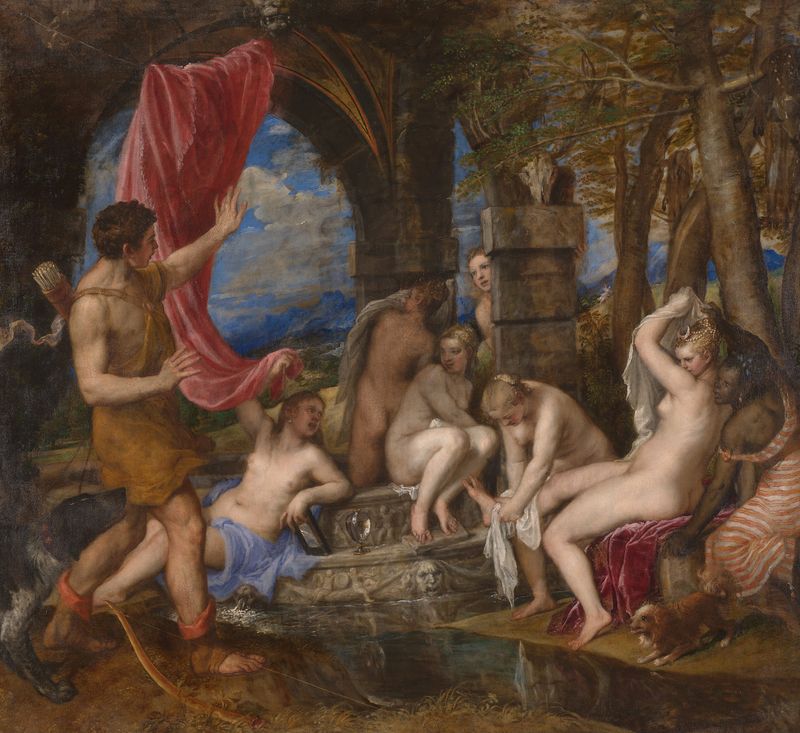 Diana and Actaeon
1557 · National Gallery
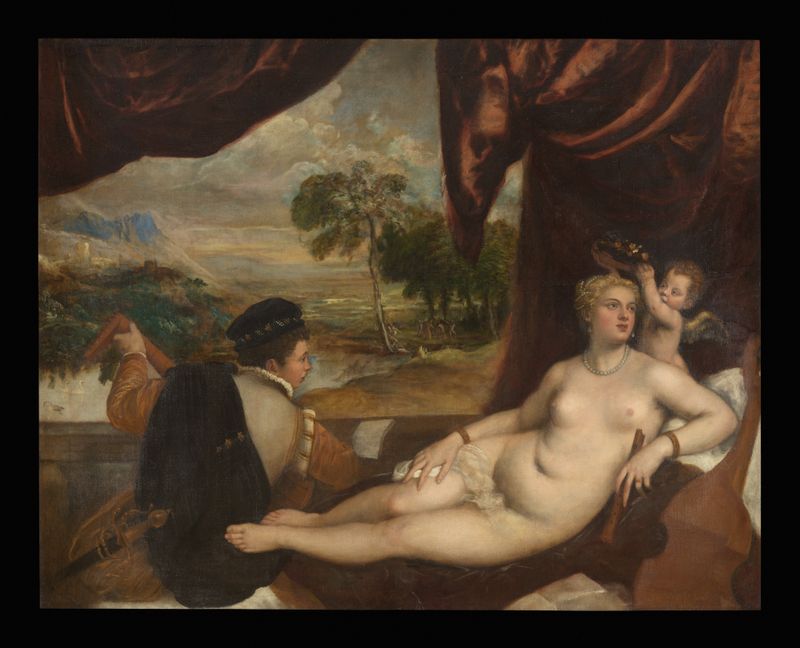 Venus and the Lute Player
1567 · Metropolitan Museum of Art
Beyond Titian and High Renaissance: works from the same years.
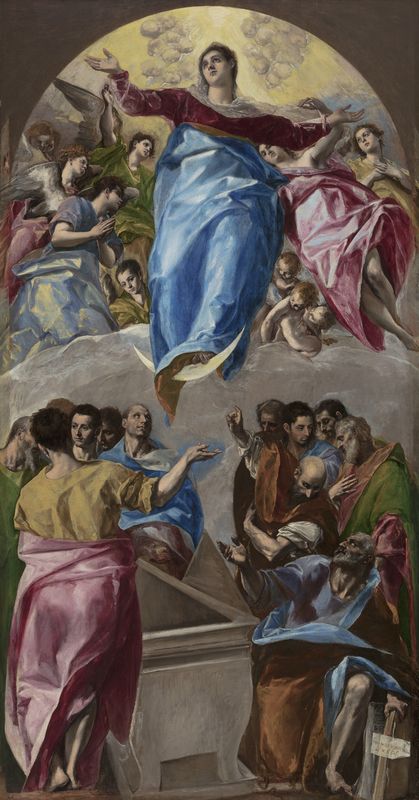 Same era · 1560s–1590s
The Assumption of the Virgin
El Greco · 1577 · Art Institute of Chicago
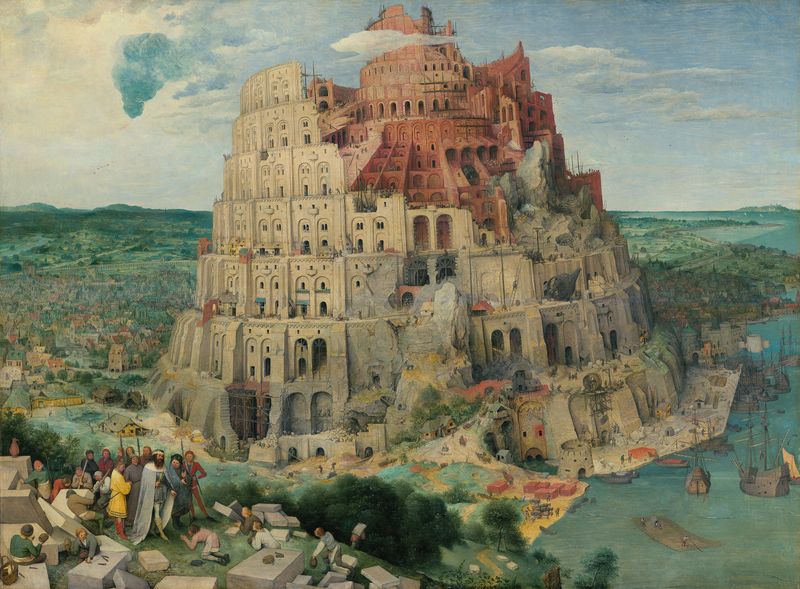 Same era · 1560s–1590s
The Tower of Babel
Pieter Bruegel the Elder · 1563
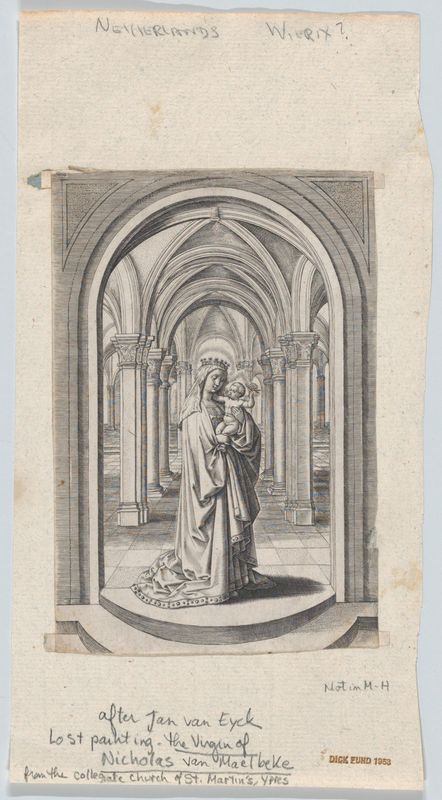 Same era · 1560s–1590s
Virgin and Child in a Church, also known as the Van Maelbeke Virgin
Wierix · 1575 · The Metropolitan Museum of Art
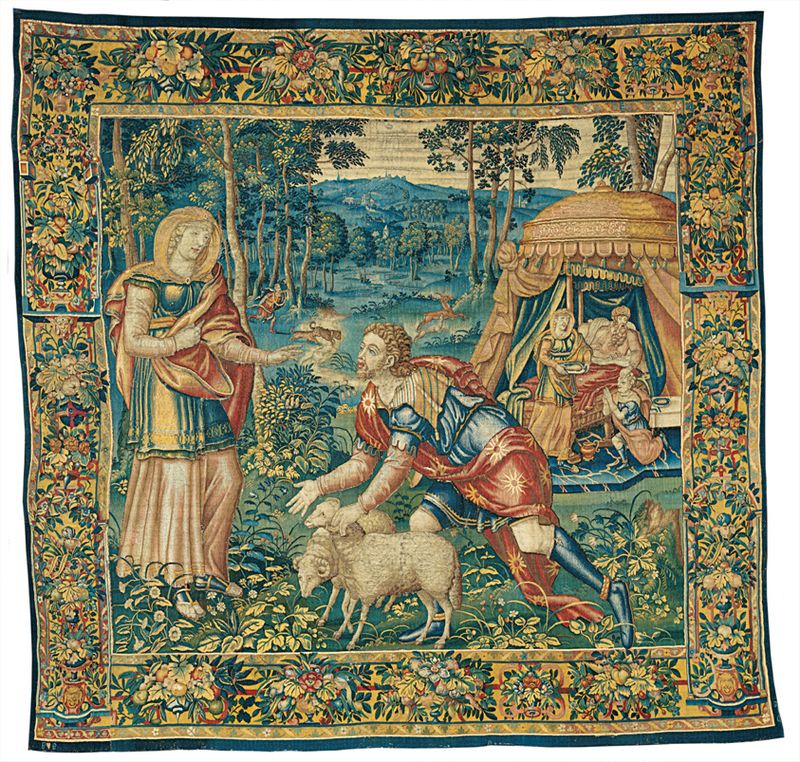 Same era · 1560s–1590s
The Meeting of Jacob and Rebecca, and Isaac Blessing Jacob from The Story of Jacob
Workshop of Jan van Tieghem · 1560 · Art Institute of Chicago
 Same era · 1560s–1590s
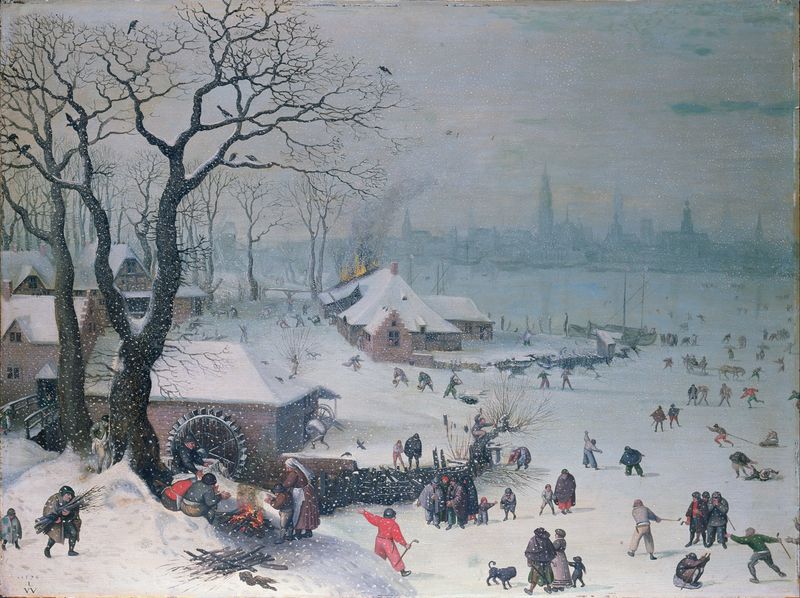
Winter Landscape with Snowfall near Antwerp
Lucas van Valckenborch · 1575 · Städel Museum
 Same era · 1560s–1590s
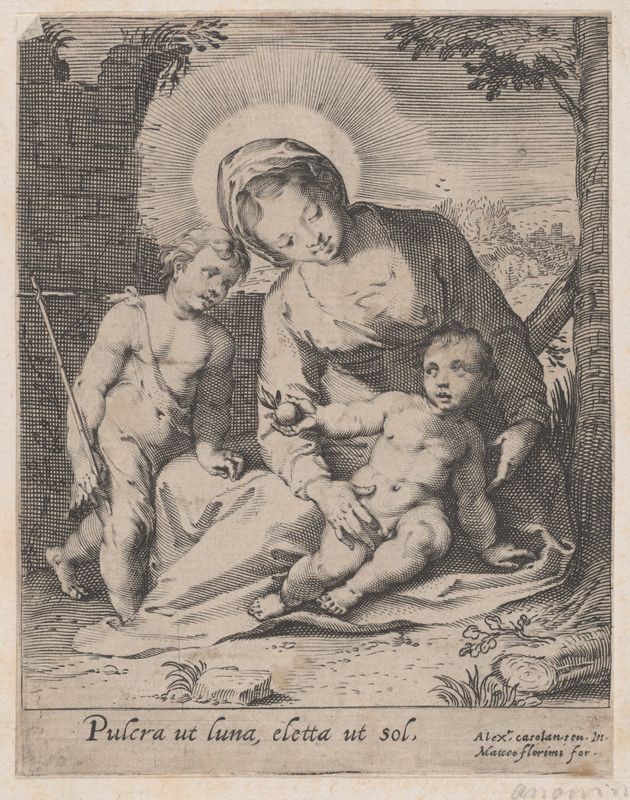
Virgin and Child with the infant Saint John the Baptist
Matteo Florimi · 1576 · The Metropolitan Museum of Art
 Same era · 1560s–1590s
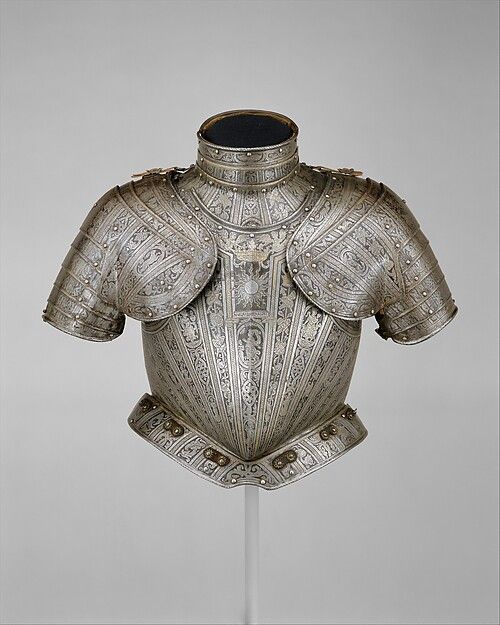
Portions of an Armor for Vincenzo Luigi di Capua (d. 1627)
Pompeo della Cesa · 1570 · The Metropolitan Museum of Art
 Same era · 1560s–1590s
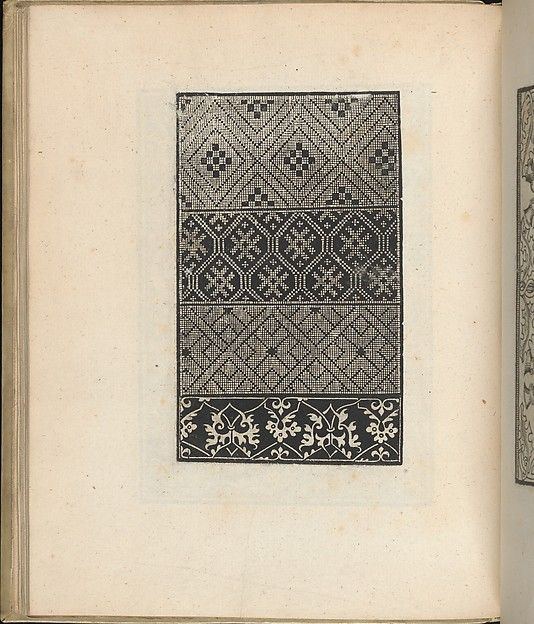
Trionfo Di Virtu. Libro Novo..., page 28 (recto)
Matteo Pagano · 1563 · The Metropolitan Museum of Art