01
Venus clinging on
Venus twists around and throws her arms around Adonis, her bare back turned to us. She is pleading with him not to leave for the hunt.
1 of 5 on the painting
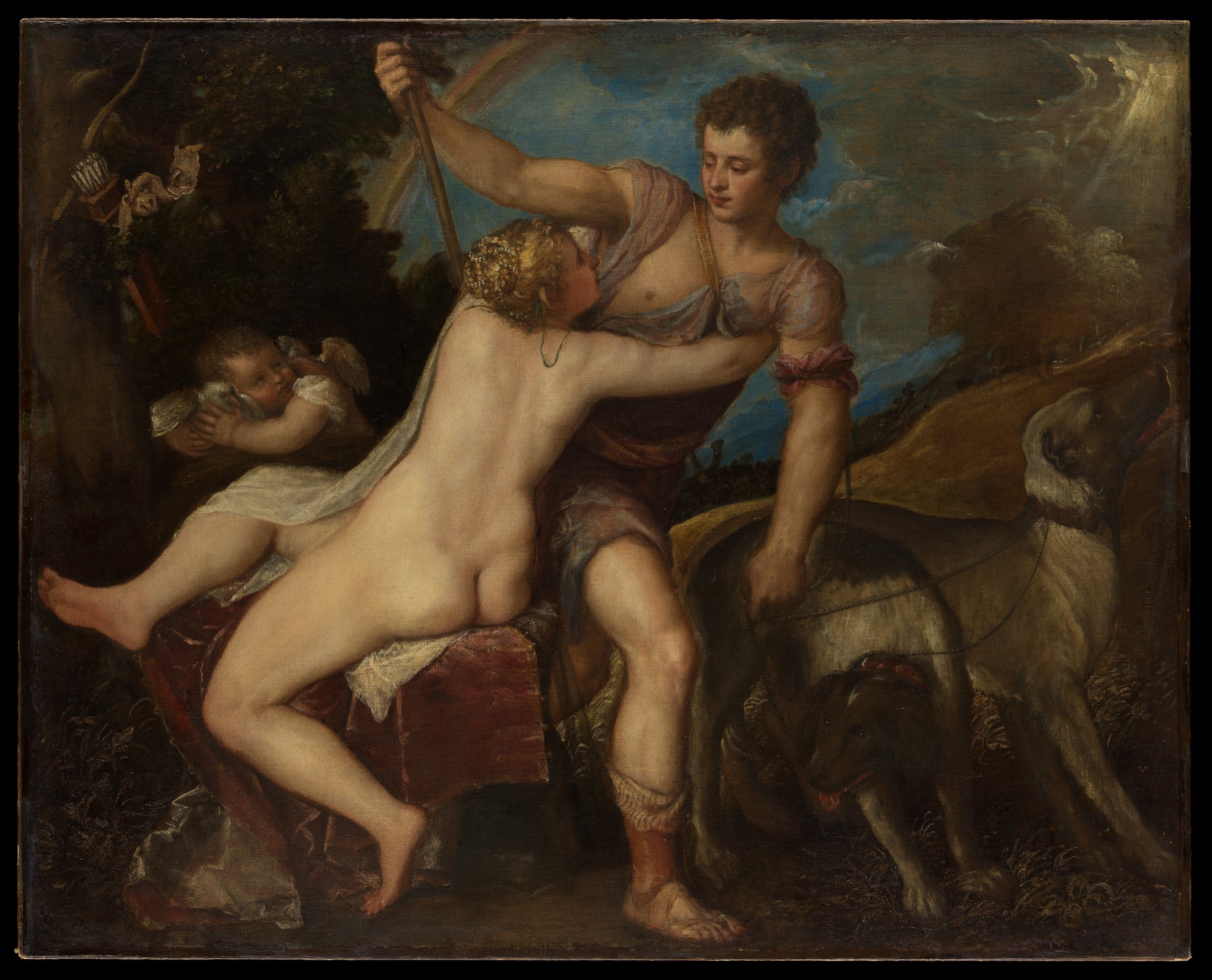
“Stop to witness the powerful emotion in Titian's "Venus and Adonis," a painting that captures Venus's desperate attempt to prevent her lover from a fated hunt, rendered with stunning color and dramatic tension.”
In this dramatic painting, Venus tries to hold back her lover, Adonis, who is eager to go hunting. The goddess, seen from behind, twists her body to implore him, her hand grasping his thigh while he pulls away, already focused on his dogs straining at their leashes. A mischievous Cupid sleeps soundly in the background, unaware of the impending tragedy. The scene unfolds at dawn, with the sky still bruised with the colors of night, hinting at the sorrow to come. This work, created in 1554, captures a moment of intense emotional tension, characteristic of the High Renaissance's fascination with classical mythology and human drama. The rich colors and dynamic composition draw the viewer into the narrative, making Venus's desperate plea palpable.
Five details hide in plain sight. Pick one and we’ll show you exactly where to look.
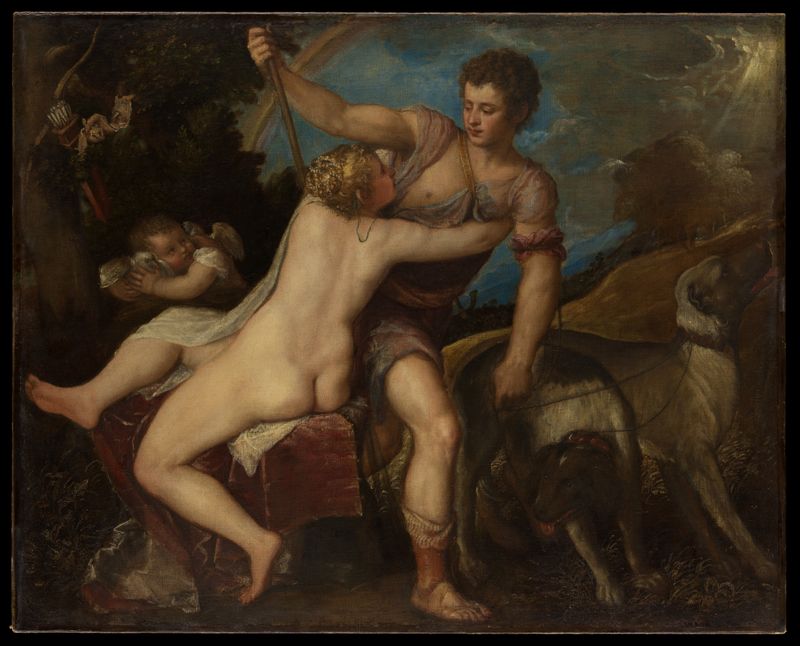
Venus twists around and throws her arms around Adonis, her bare back turned to us. She is pleading with him not to leave for the hunt.
Adonis leans forward with his spear raised and looks down at Venus, but his body and leg are already turning away from her, toward the hunt.
At the left, a winged Cupid rests his head on his arms and looks out toward us, apparently drowsy. Some readers see his absence from the embrace as a hint of the tragedy to come.
On the right, the big hunting dogs pull on their leashes, one looking up and one peering out below. They push the scene toward the hunt.
Behind the lovers, a faint rainbow arcs through blue sky, while dark clouds and a shaft of light gather at the upper right. The sky adds an unsettled mood to the scene.
The full narration walks you through Venus and Adonis — the story behind it, the details most visitors miss, and why it matters. Free in the Art Whisper app.
Titian, the Venetian master, revolutionized Renaissance painting with his vibrant use of color and dramatic compositions, leaving behind an immense legacy.
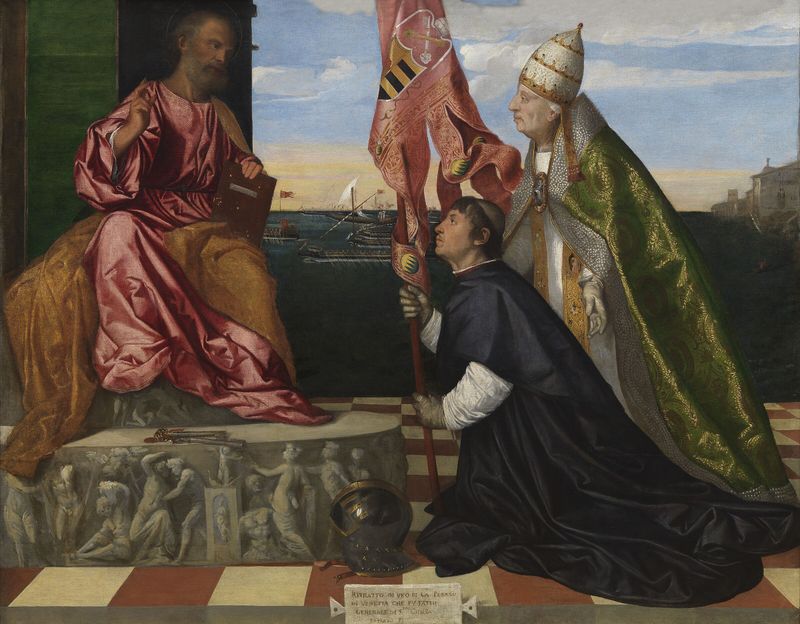 Jacopo Pesaro, Bishop of Paphos, being presented by Pope Alexander VI to Saint Peter
1504 · Royal Museum of Fine Arts Antwerp
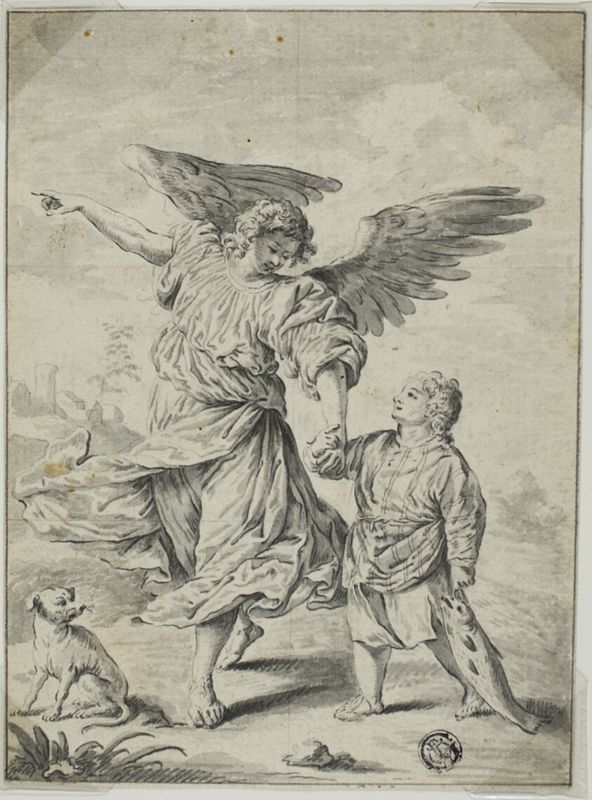 Tobias and the Angel
1530 · Madonna dell'Orto
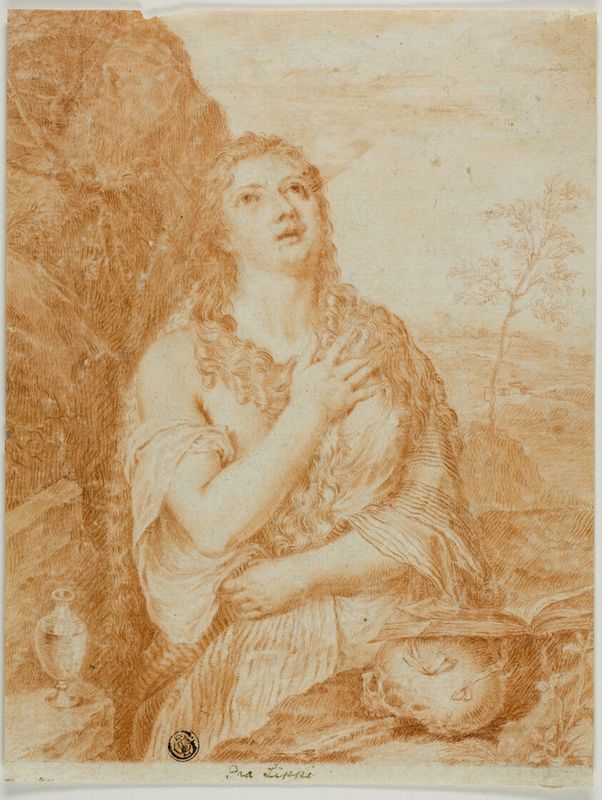 Penitent Magdalene
1575
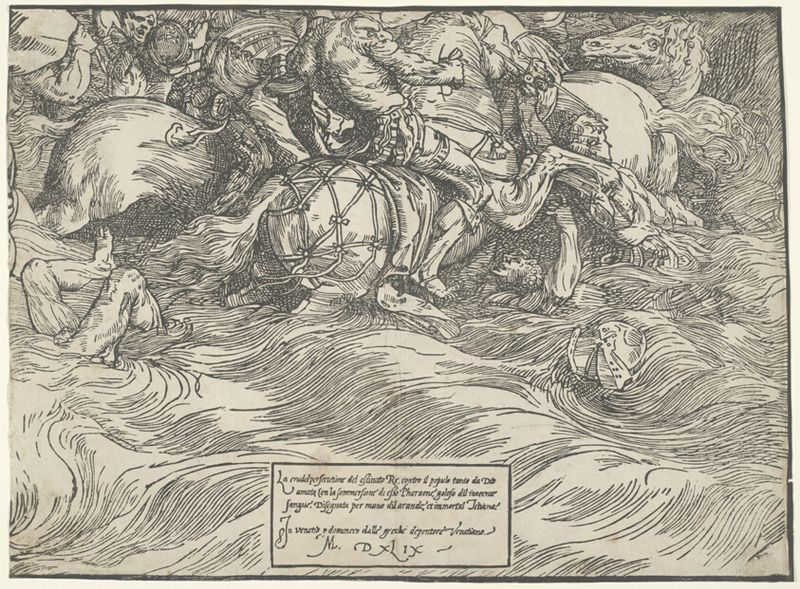 The Submersion of Pharaoh's Army in the Red Sea
1514 · Cleveland Museum of Art
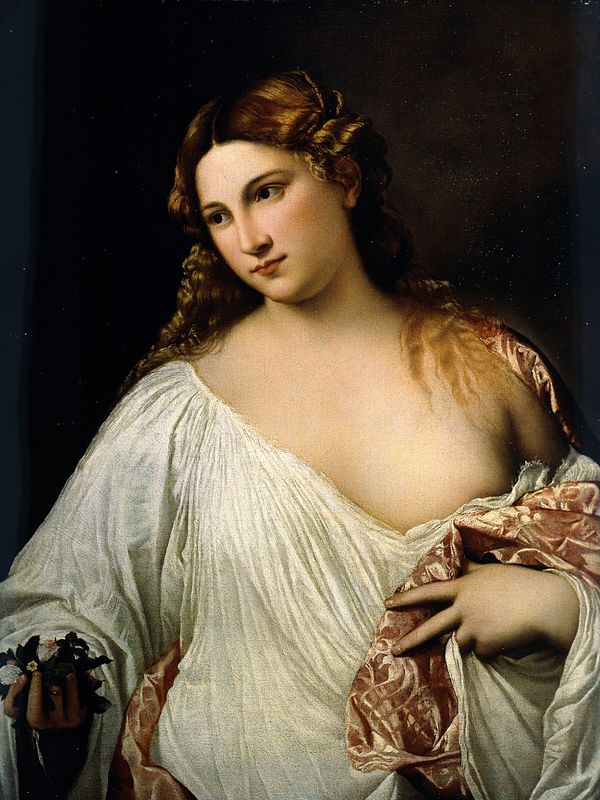 Flora
1517 · Uffizi Gallery
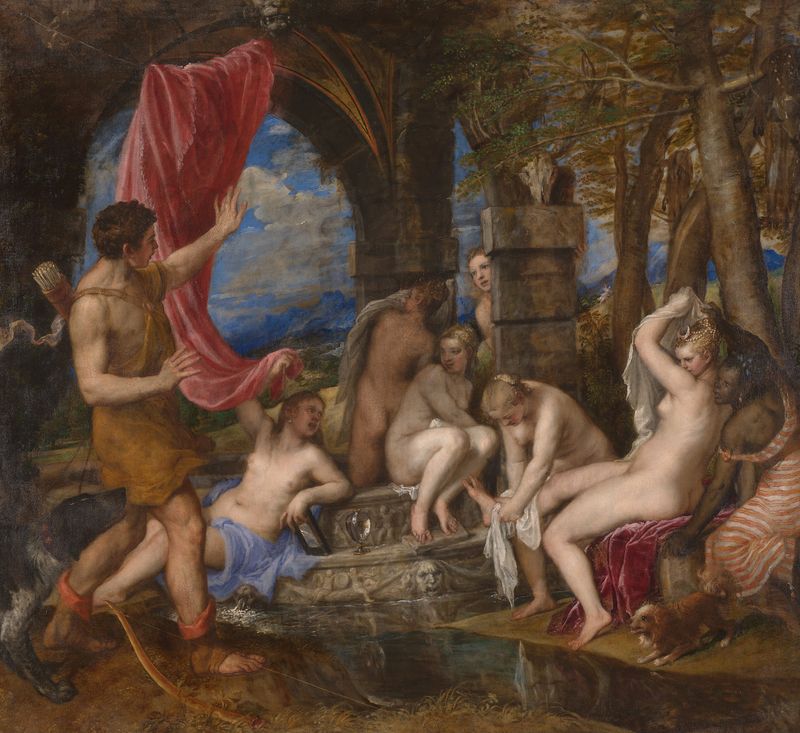 Diana and Actaeon
1557 · National Gallery
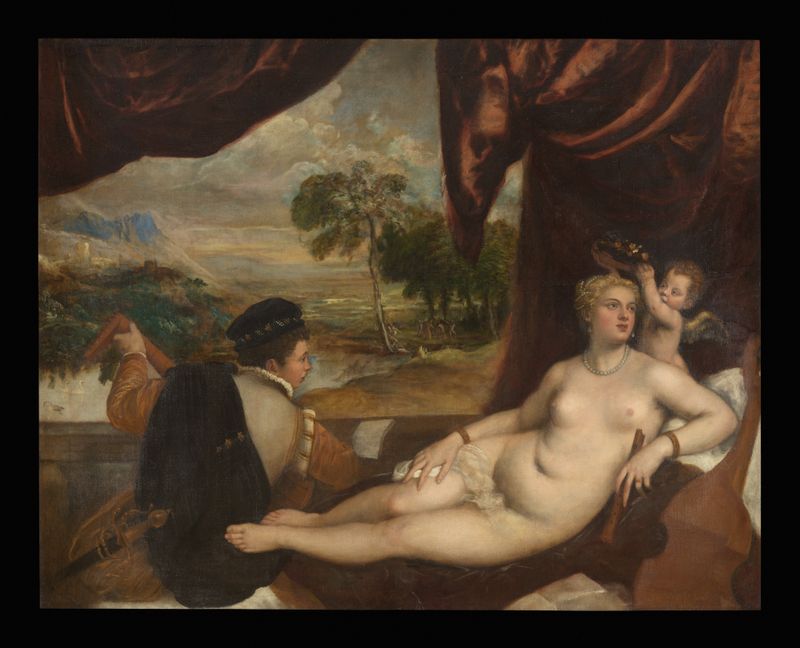 Venus and the Lute Player
1567 · Metropolitan Museum of Art
Beyond Titian and High Renaissance: works from the same years.
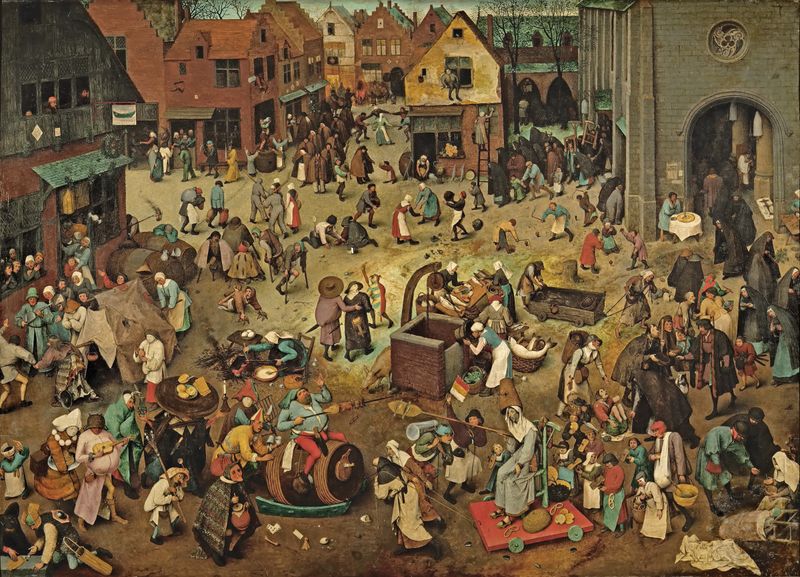 Same era · 1530s–1560s
The Fight Between Carnival and Lent
Pieter Bruegel the Elder · 1559
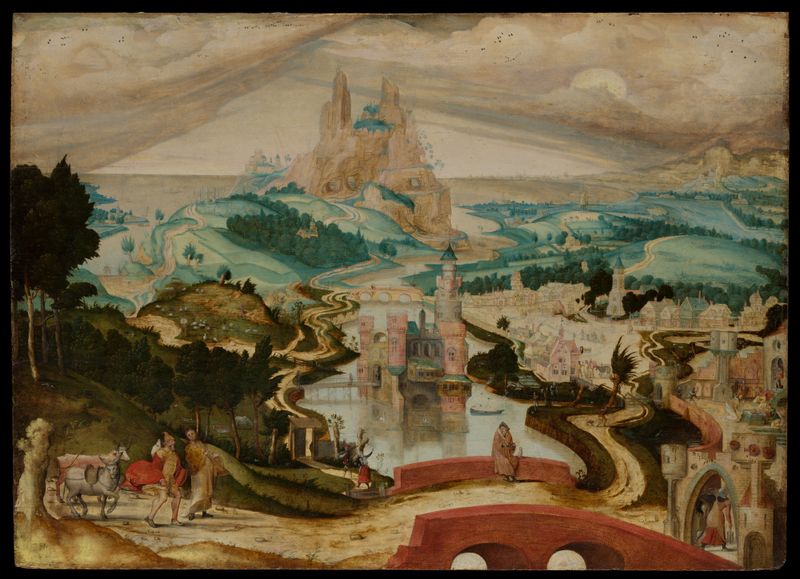 Same era · 1530s–1560s
The Arrival in Bethlehem
Master of the View of Saint Gudula · 1540 · The Metropolitan Museum of Art
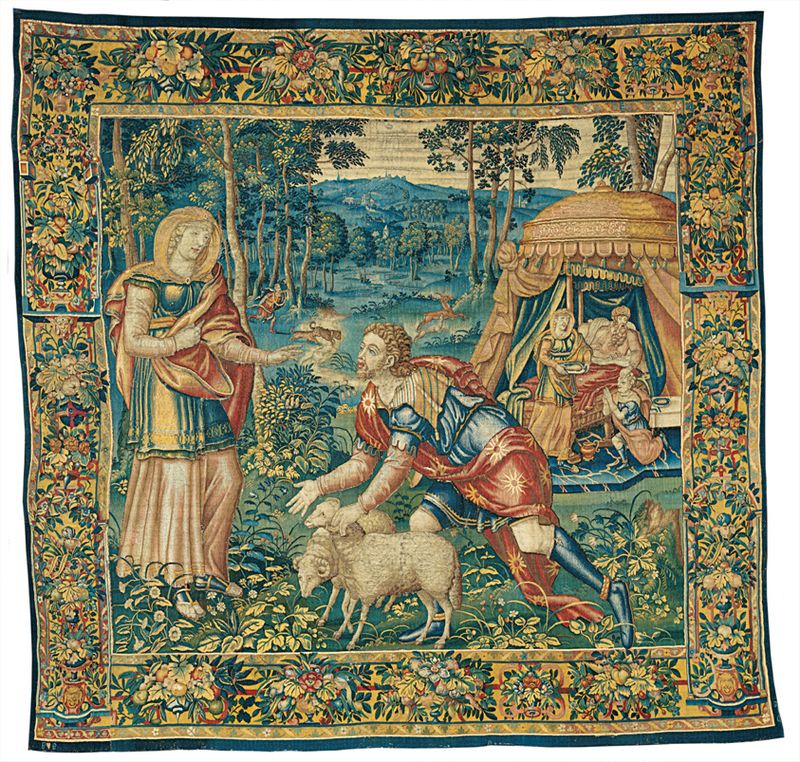 Same era · 1530s–1560s
The Meeting of Jacob and Rebecca, and Isaac Blessing Jacob from The Story of Jacob
Workshop of Jan van Tieghem · 1560 · Art Institute of Chicago
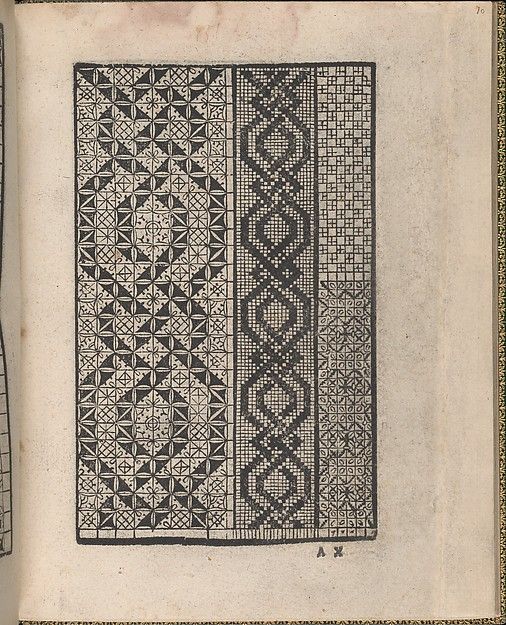 Same era · 1530s–1560s
Ornamento delle belle & virtuose donne, page 6 (recto)
Matteo Pagano · 1554 · The Metropolitan Museum of Art
 Same era · 1530s–1560s
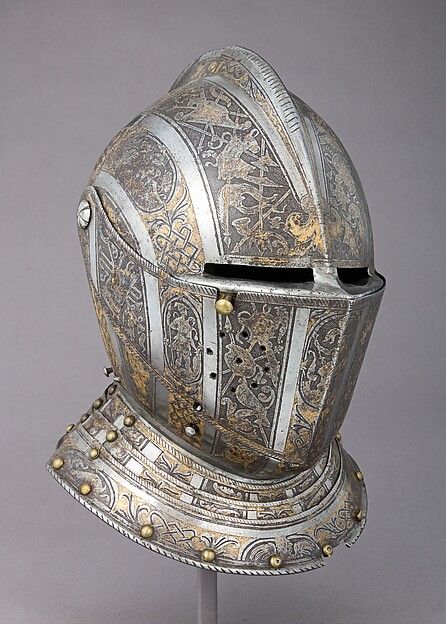
Close Helmet
Pompeo della Cesa · 1560 · The Metropolitan Museum of Art