
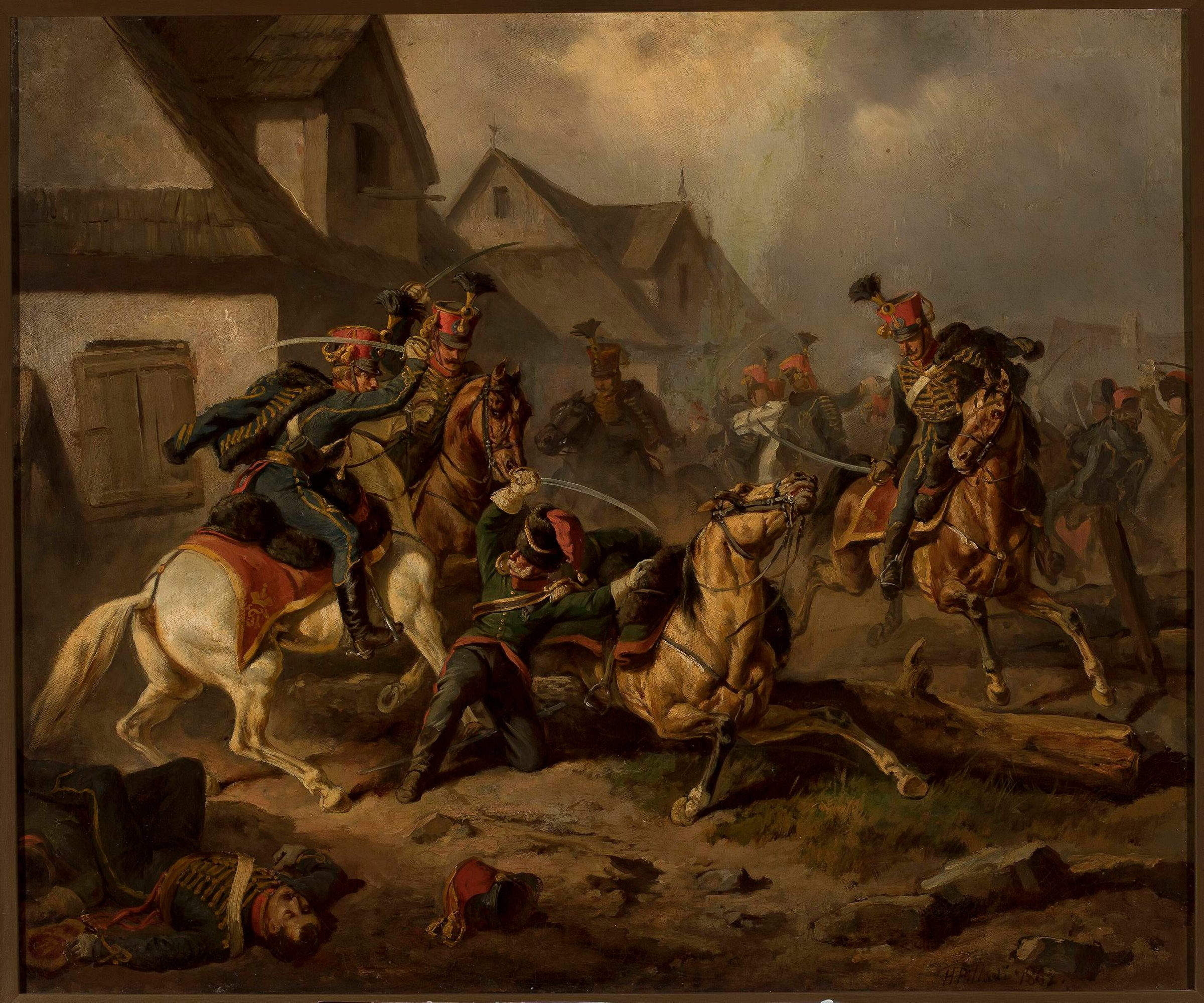
“This powerful history painting captures the dramatic death of Berek Joselewicz, a Polish-Jewish colonel, during a battle for Polish independence. Its intense composition and somber tones highlight a moment of sacrifice.”
In Henryk Pillati's "Death of Berek Joselewicz," a dramatic scene unfolds, capturing the final moments of the Polish-Jewish colonel. The painting plunges us into the chaos of battle, with figures locked in combat and the central hero fallen. Pillati, who often painted historical scenes, brings a palpable sense of urgency to this moment, emphasized by the dynamic composition and the expressions of the surrounding soldiers. The work commemorates Joselewicz, a significant figure in Polish history, who led a Jewish cavalry regiment during the Kościuszko Uprising. His death in 1809 during the Battle of Kock is depicted here, making visible a pivotal, tragic event in the struggle for Polish independence. The dark, somber tones and the focused spotlight on Joselewicz draw our attention to his sacrifice, elevating the scene beyond a mere battle into a poignant historical narrative.
- Artist
- Henryk Pillati
- Date
- 1867
- Medium
- Oil on canvas
- Location
- National Museum in Warsaw
What to Notice
Four details hide in plain sight. Here’s where to look.
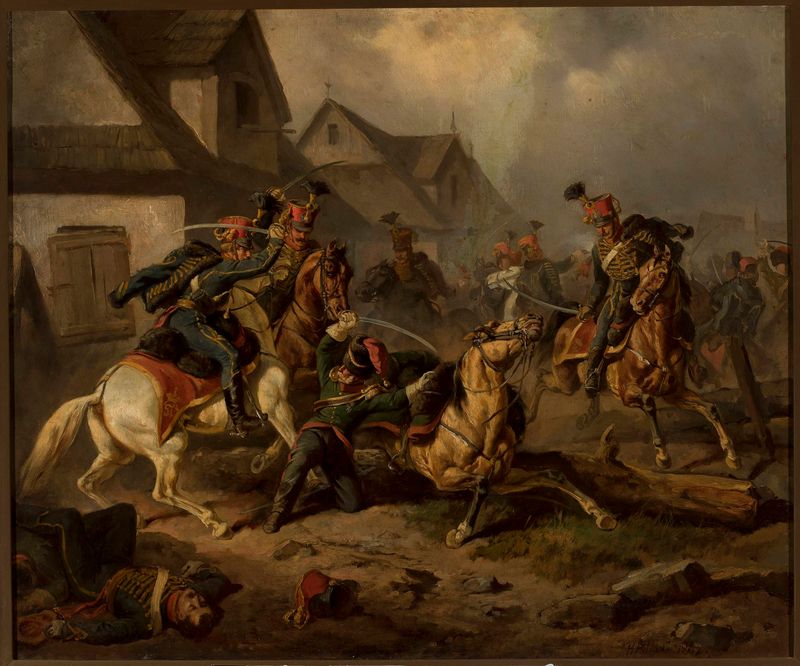
The fallen figure of Berek Joselewicz at the center, surrounded by soldiers.
The dynamic movement of the cavalry in the background.
The somber color palette, emphasizing the gravity of the scene.
The expressions of the soldiers, some engaged in combat, others witnessing the death.
Stand in front of it and listen
The full narration walks you through Death of Berek Joselewicz. — the story behind it, the details most visitors miss, and why it matters. Free in the Art Whisper app.
Henryk Pillati
1832–1894 · Congress PolandHenryk Pillati, a Polish illustrator and history painter, navigated a challenging life to create art, from decorating Vistula River steamships to illustrating literary classics.
Further Works by Pillati
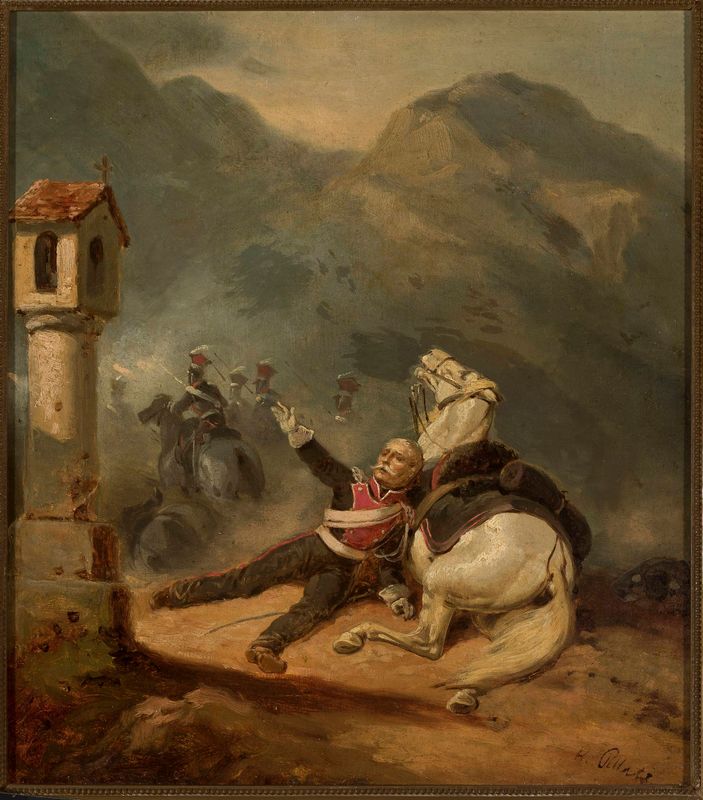 Wounded uhlan by the wayside shrine
1853 · National Museum in Warsaw
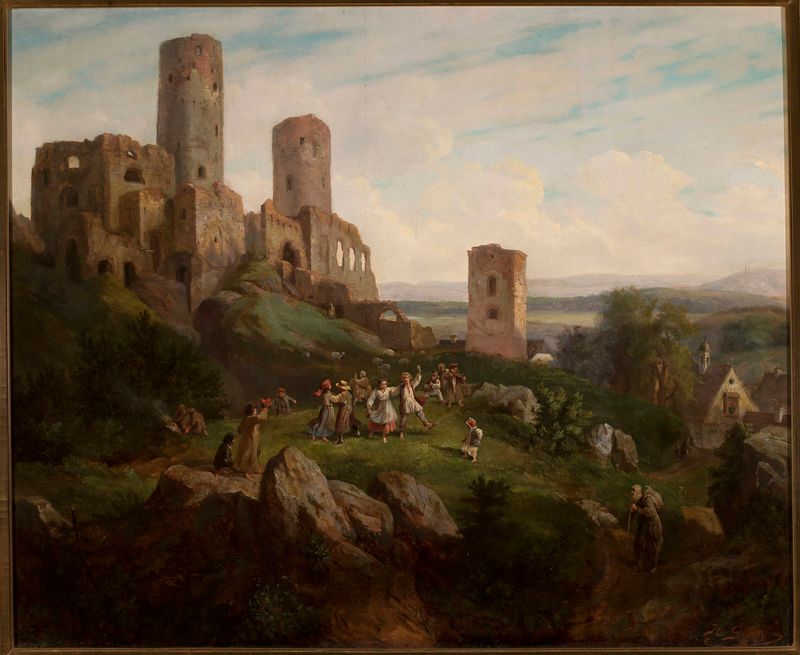 Ruins of the castle – merry-making in Tenczynek
1855 · National Museum in Warsaw
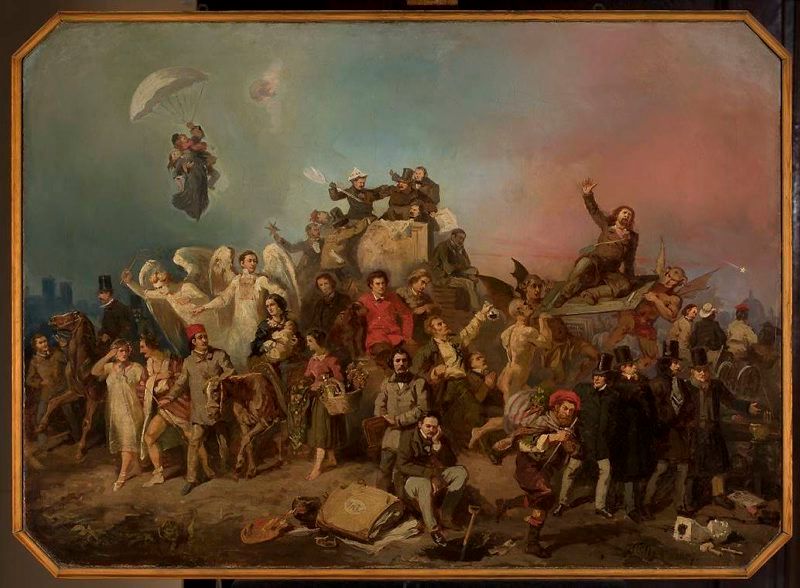 Dispersion of nations
1857 · National Museum in Warsaw
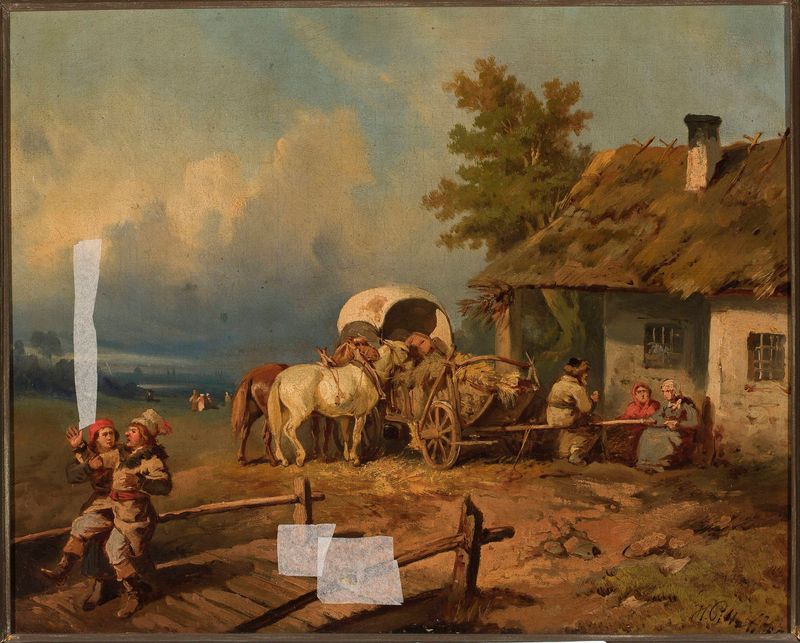 Return from the fair
1857 · National Museum in Warsaw
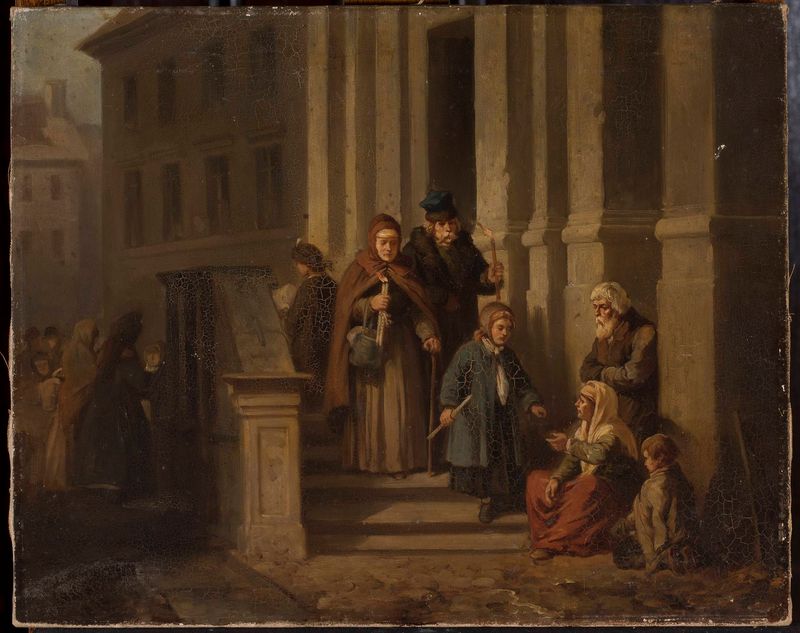 In front of the church
1862 · National Museum in Warsaw
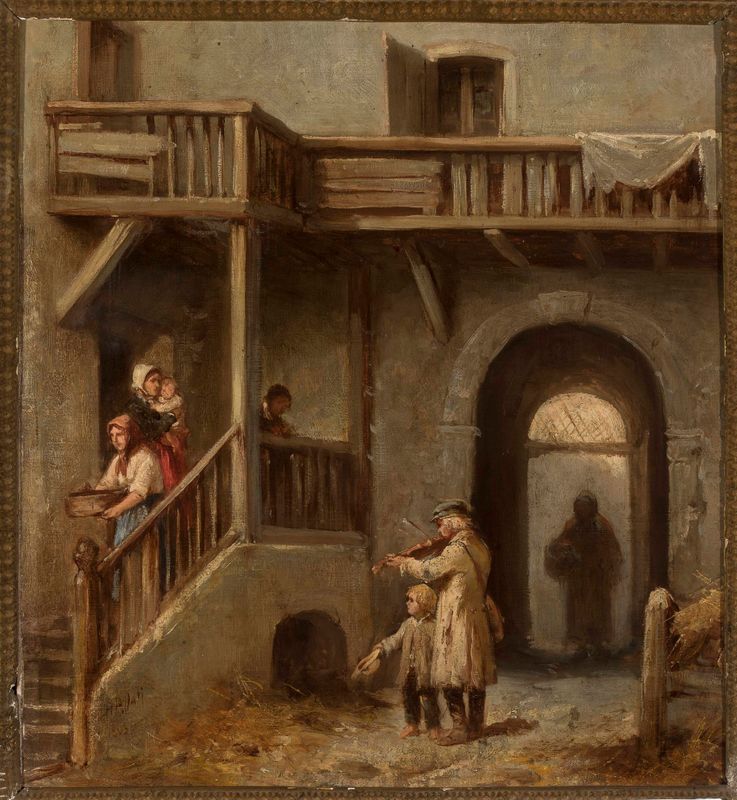 Street fiddler
1863 · National Museum in Warsaw
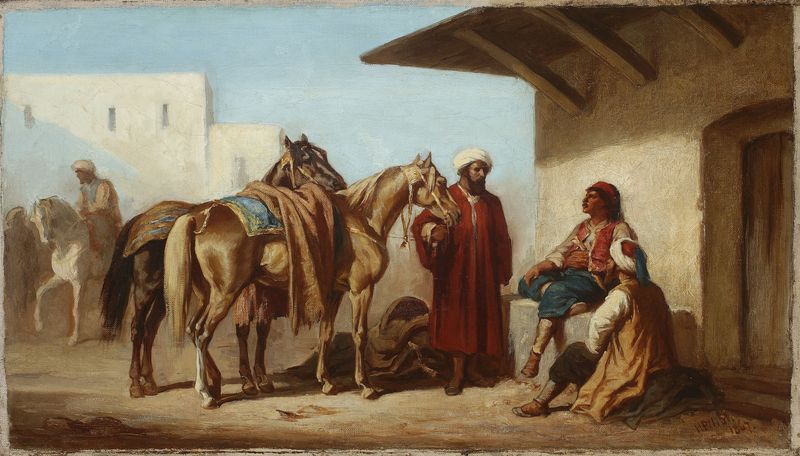 Eastern scene – Selling horses
1867 · National Museum in Warsaw
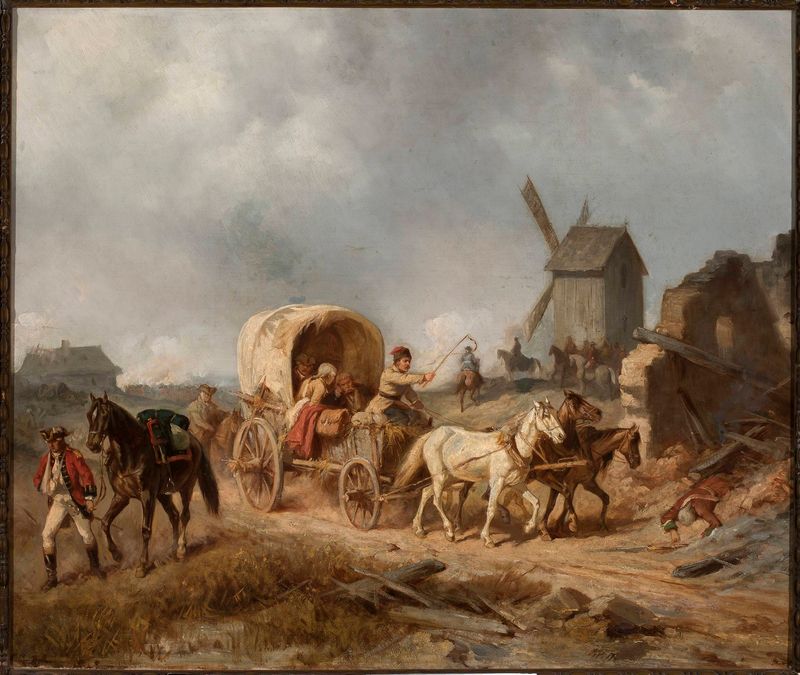 Convoy of the wounded
1868 · National Museum in Warsaw
More works to explore
Beyond Pillati: works from the same years.
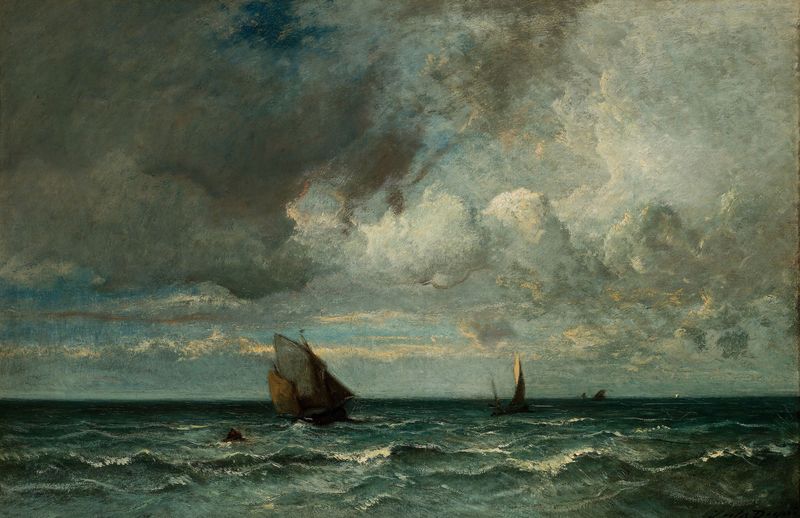 Same era · 1850s–1880s
Barks Fleeing Before the Storm
Léon-Victor Dupré · 1870 · Art Institute of Chicago
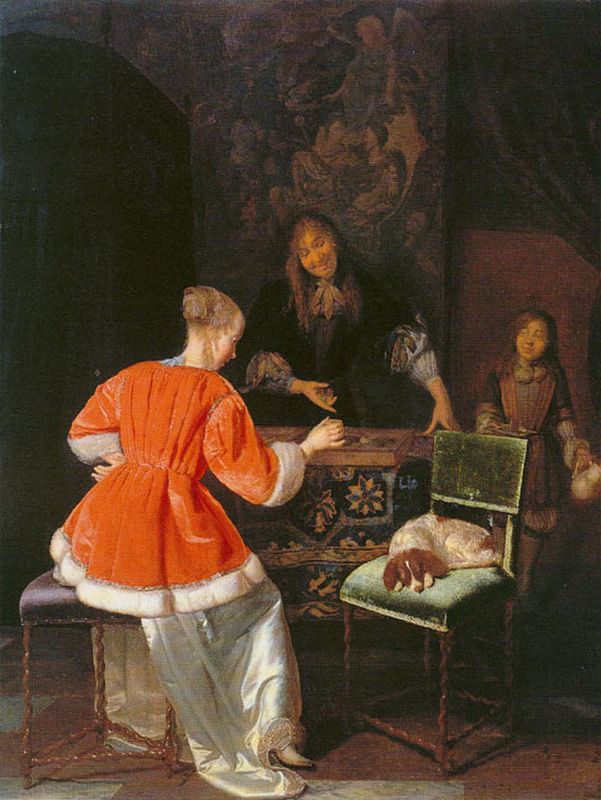 Same era · 1850s–1880s
The Backgammon Players
Philip Webb · 1861 · The Metropolitan Museum of Art
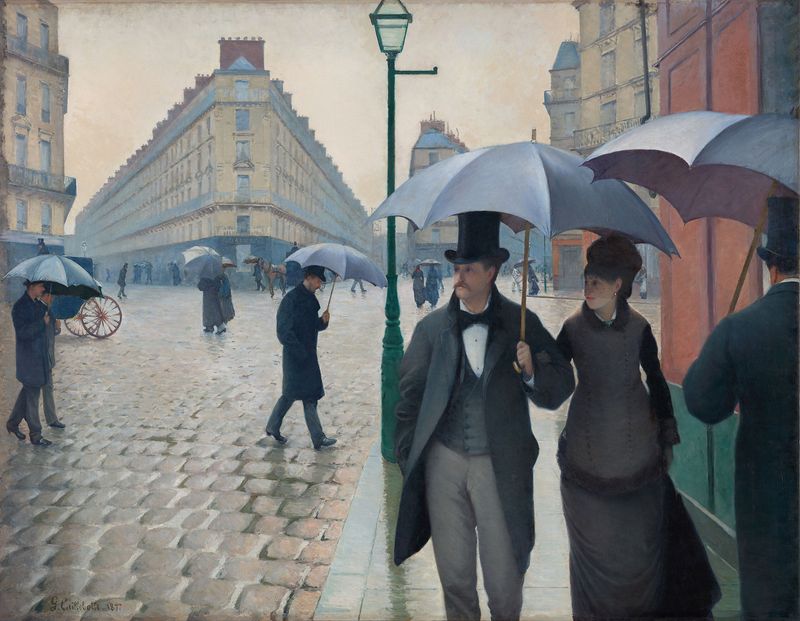 Same era · 1850s–1880s
Paris Street; Rainy Day
Kawabata Gyokushō · 1877 · Art Institute of Chicago
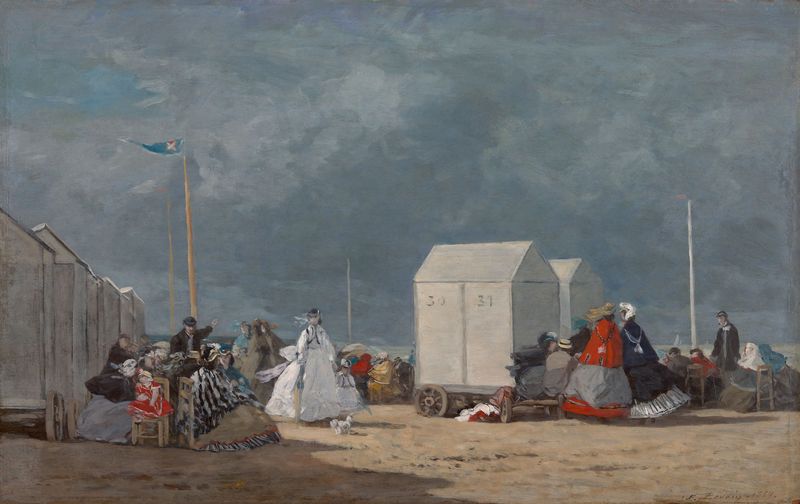 Same era · 1850s–1880s
Approaching Storm
William Hart · 1867 · Gilcrease Museum
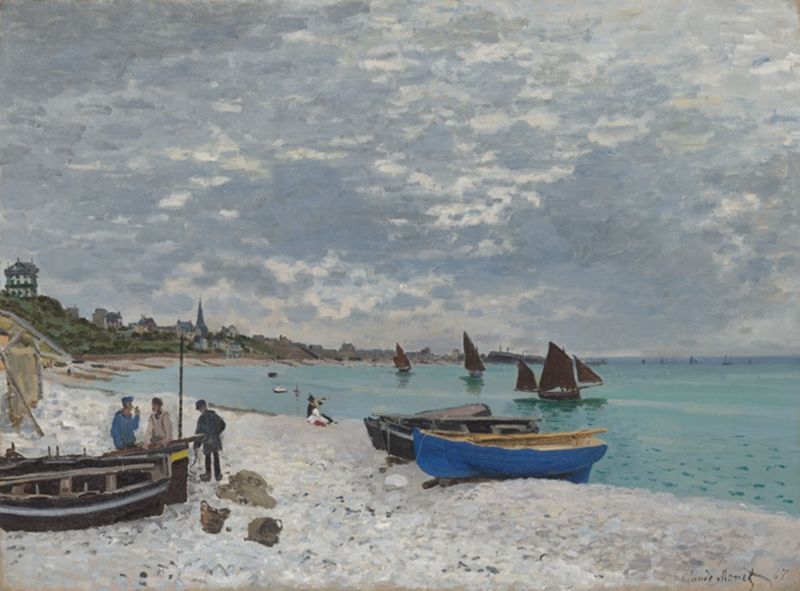 Same era · 1850s–1880s
The Beach at Sainte-Adresse
Claude Monet · 1867 · Art Institute of Chicago
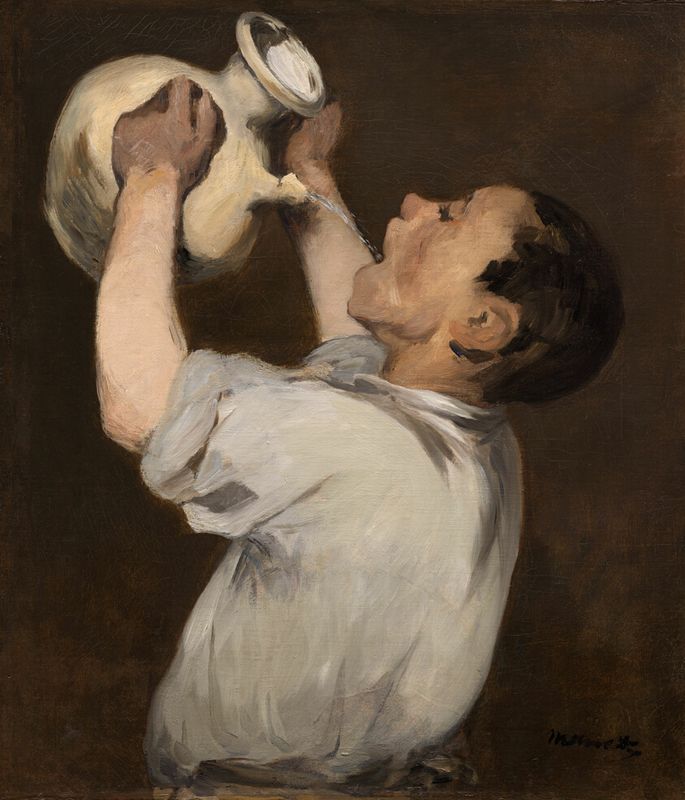 Same era · 1850s–1880s
Boy with Pitcher (La Régalade)
Édouard Manet · 1866 · Art Institute of Chicago
 Same era · 1850s–1880s
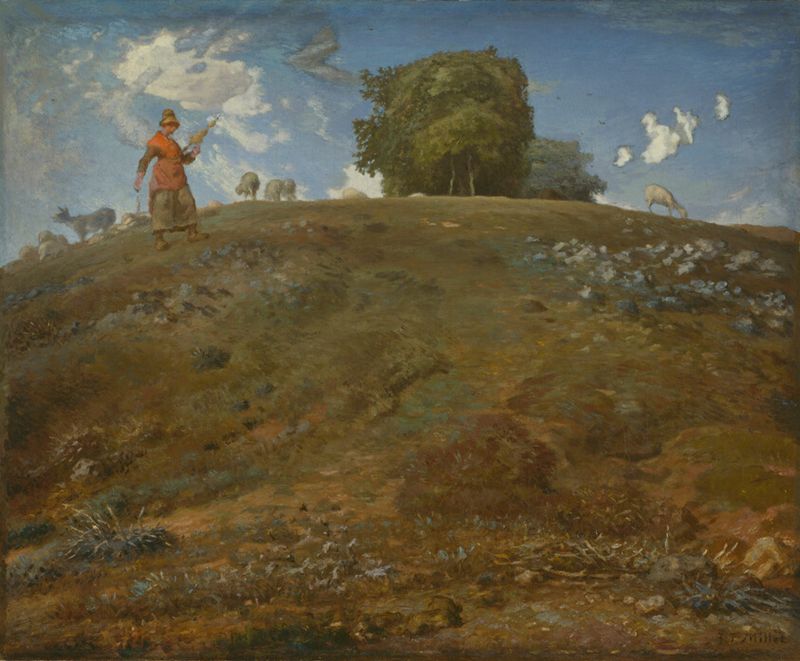
In the Auvergne
Jean-François Millet · 1866 · Art Institute of Chicago
 Same era · 1850s–1880s
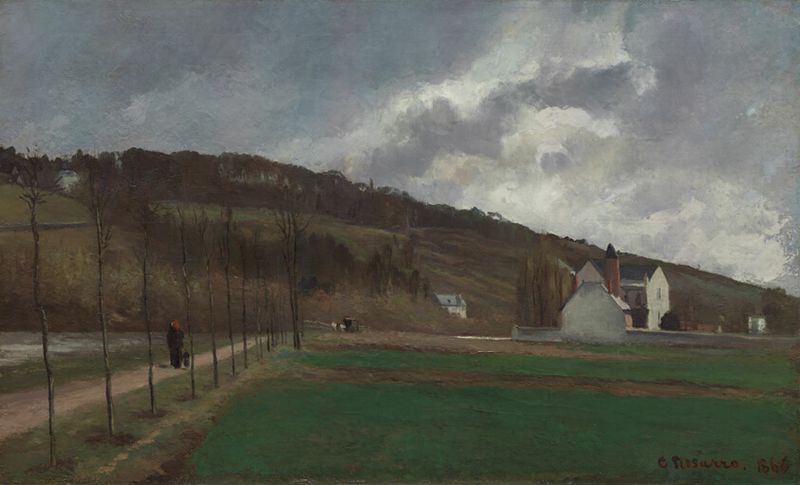
The Banks of the Marne in Winter
Camille Pissarro · 1866 · Art Institute of Chicago
 Same era · 1850s–1880s
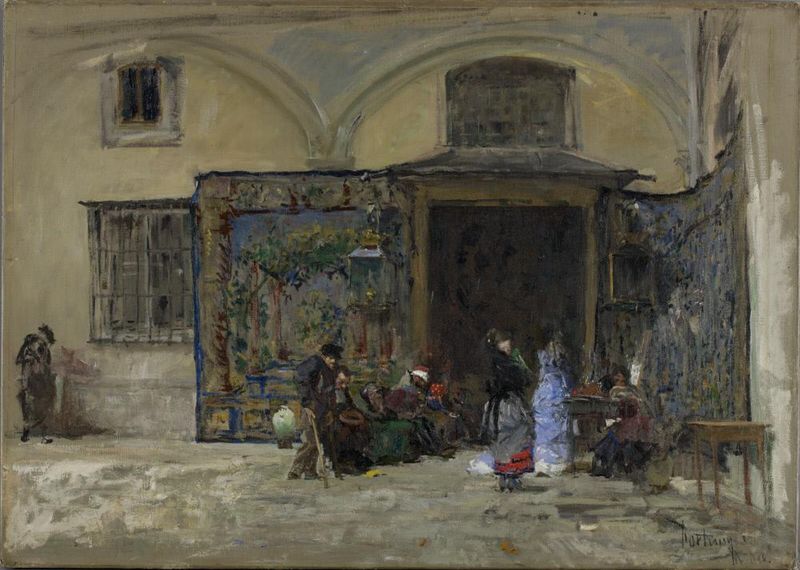
The Portico of the Church of San Ginés, Madrid
Mariano Fortuny Marsal · 1868 · Hispanic Society of America
 Same era · 1850s–1880s
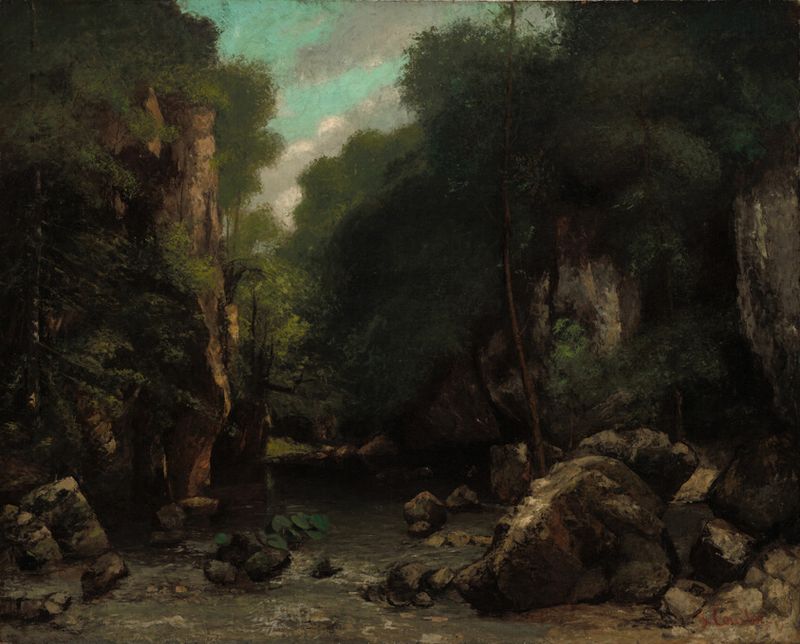
The Valley of Les Puits-Noir
Gustave Courbet · 1868 · Art Institute of Chicago
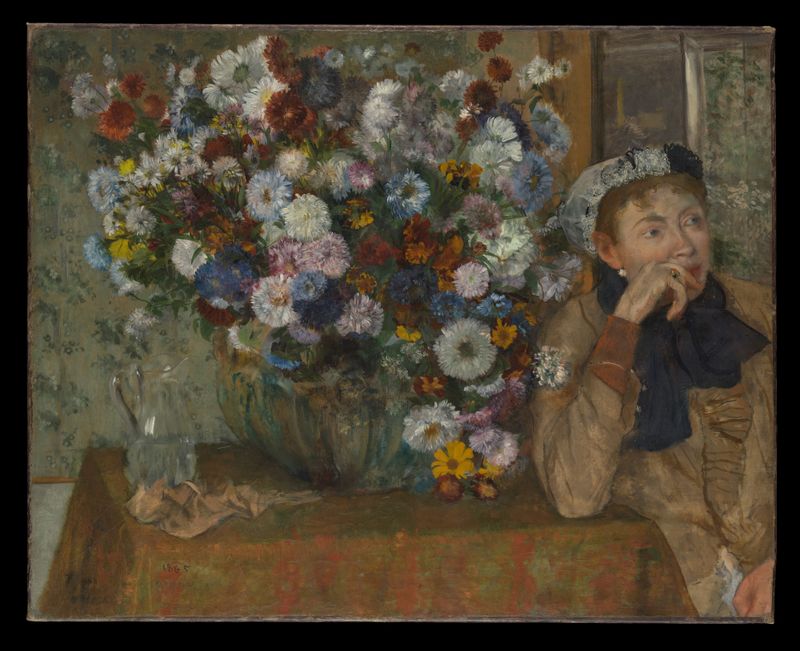 Same era · 1850s–1880s
A Woman Seated beside a Vase of Flowers (Madame Paul Valpinçon?)
Edgar Degas · 1865 · The Metropolitan Museum of Art
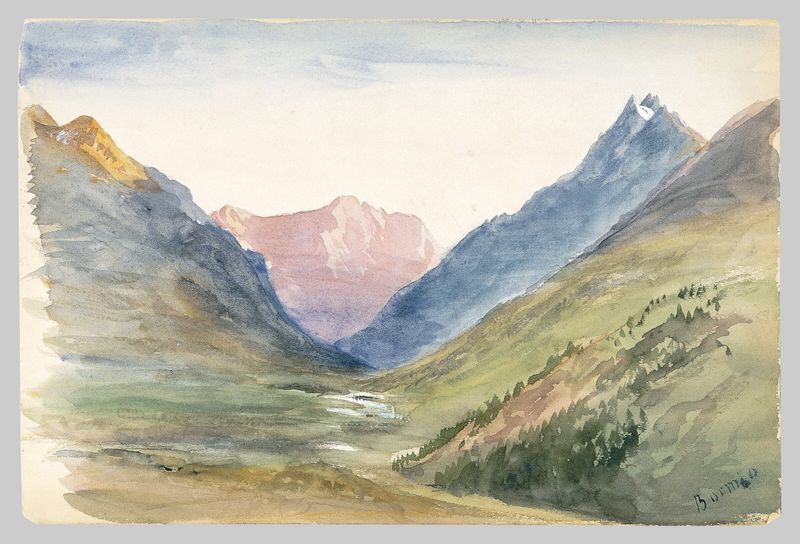 Same era · 1850s–1880s
Mountain View at Bormio (from Switzerland 1869 Sketchbook)
John Singer Sargent · 1869 · The Metropolitan Museum of Art