
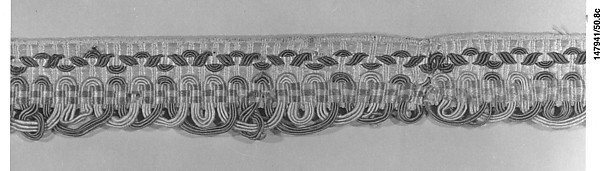
“This luxurious silk passementerie, or decorative trim, from 1750, reveals the exquisite detail and material opulence that defined 18th-century French interior design, transforming everyday furniture into works of art.”
This long, narrow strip of silk passementerie, dating to around 1750, offers a glimpse into the opulent world of 18th-century French interiors. It isn't merely a decorative trim; it's a testament to the era's dedication to elaborate ornamentation, designed to adorn upholstery, curtains, or even fashionable garments. Imagine this rich silk, with its intricate weave and delicate sheen, as part of a grand salon, catching the light and adding a layer of sophisticated detail to a chair or sofa. The artistry lies in the material itself, silk, which was a luxury commodity, and the precise, time-consuming craft of passementerie. While we don't know its exact original placement, its length suggests it likely graced a significant piece of furniture, perhaps outlining the curves of a bergère or framing a window, transforming the functional into something truly extraordinary. The artist, Philippe de la Salle, was a designer known for his textile work, and this piece showcases the refined aesthetic prevalent in the mid-18th century.
- Artist
- Philippe de la Salle
- Date
- 1750
- Medium
- Silk
- Location
- The Metropolitan Museum of Art
- Dimensions
- L. 240 x W. 1 1/4 inches (609.6 x 3.2 cm)
- Collection
- European Sculpture and Decorative Arts
- Culture
- French
- Credit line
- Rogers Fund, 1950
What to Notice
Four details hide in plain sight. Here’s where to look.
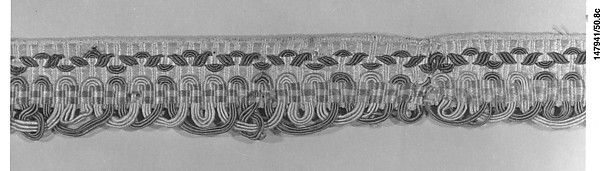
Observe the subtle sheen of the silk, even after centuries.
Look closely at the intricate, repeating pattern within the weave.
Notice the delicate edges, indicating its use as a trim.
Imagine its original vibrant color before time softened it.
Stand in front of it and listen
The full narration walks you through Upholstery passementerie — the story behind it, the details most visitors miss, and why it matters. Free in the Art Whisper app.
Philippe de la Salle
1723–1804 · FrancePhilippe de la Salle was a master of 18th-century Lyon silk weaving, known for luxurious textiles like his 'Branche de Corail'.
Further Works by de la Salle
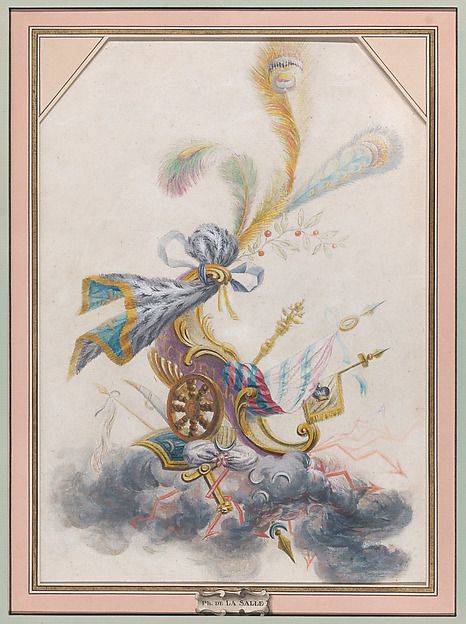 Design for a Lampas Silk with a Triumphal Chariot on a Cloud
1765 · The Metropolitan Museum of Art
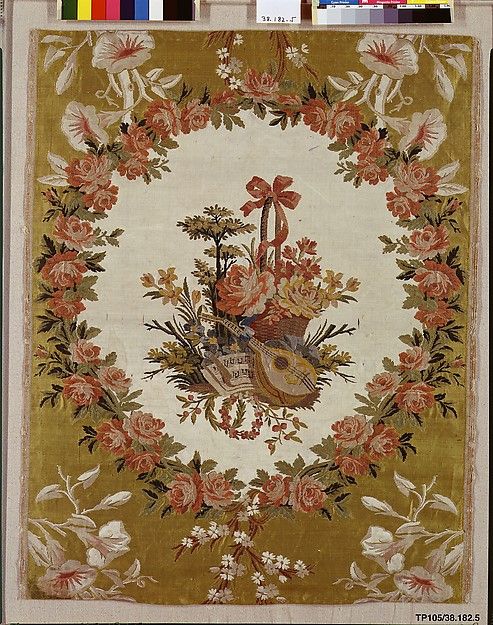 Chair back
1765 · The Metropolitan Museum of Art
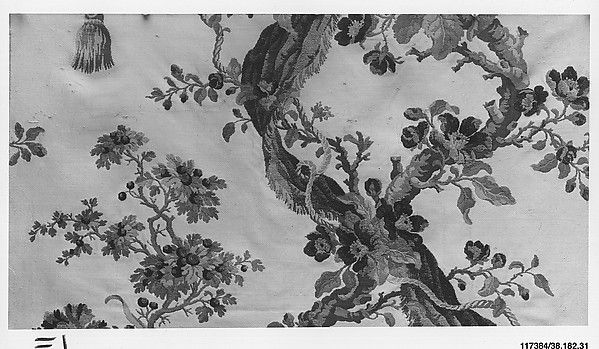 Fragment of woven silk
1760 · The Metropolitan Museum of Art
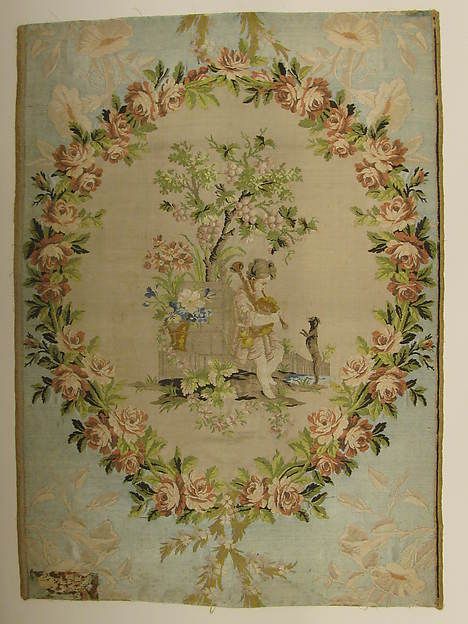 Length of upholstery silk
1760 · The Metropolitan Museum of Art
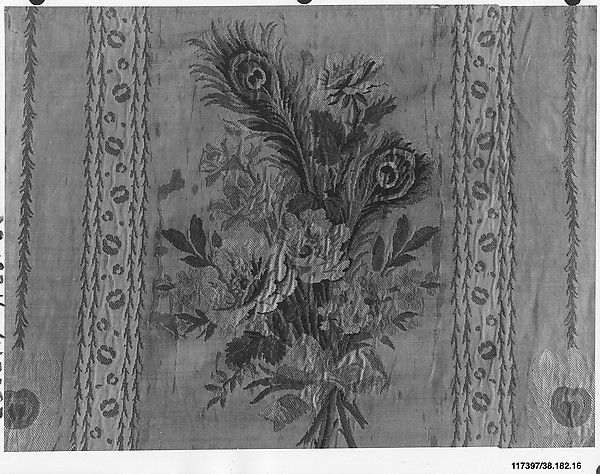 Panel of upholstery silk
1765 · The Metropolitan Museum of Art
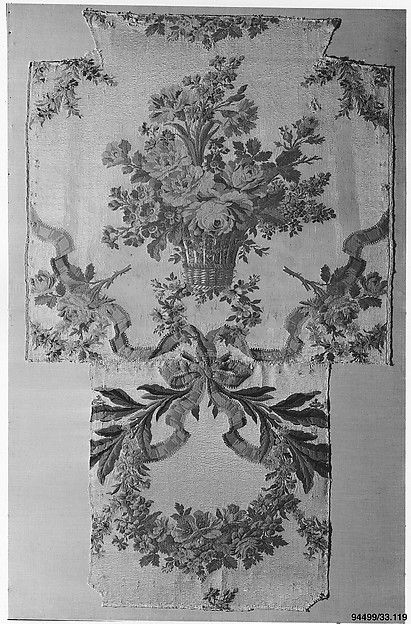 Woven silk upholstery for a chair
1765 · The Metropolitan Museum of Art
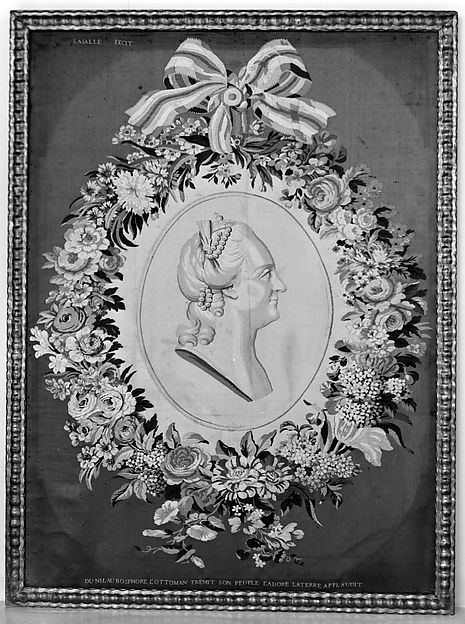 Catherine II of Russia
1766 · The Metropolitan Museum of Art
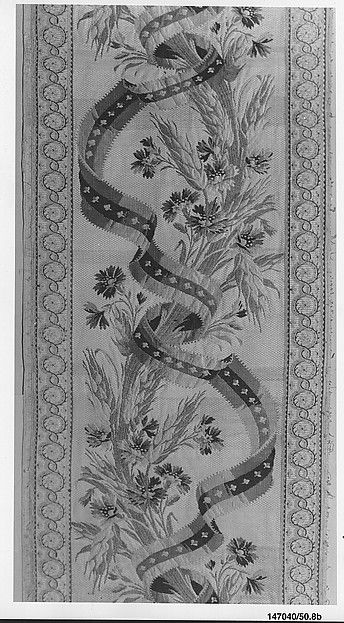 Border of woven silk
1770 · The Metropolitan Museum of Art
More works to explore
Beyond de la Salle: works from the same years.
 Same era · 1730s–1760s
Portrait of Madame Anne-Jeanne Cassanéa de Mondonville, née Boucon (1708-1780)
Maurice Quentin de Latour · 1752 · Art Institute of Chicago
 Same era · 1730s–1760s
Richard Walker (1679–1764), Vice-Master and Horticulturist
John Theodore Heins · 1751 · Trinity College
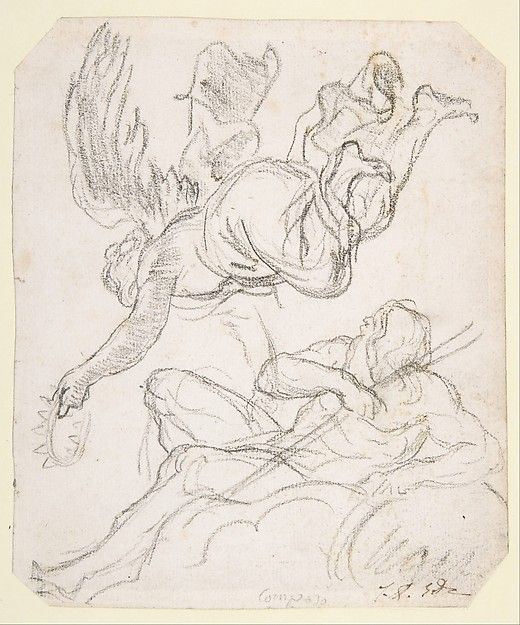 Same era · 1730s–1760s
Flying Figure Holding a Crown, Reclining River God
Jacques-Louis David · 1760 · The Metropolitan Museum of Art
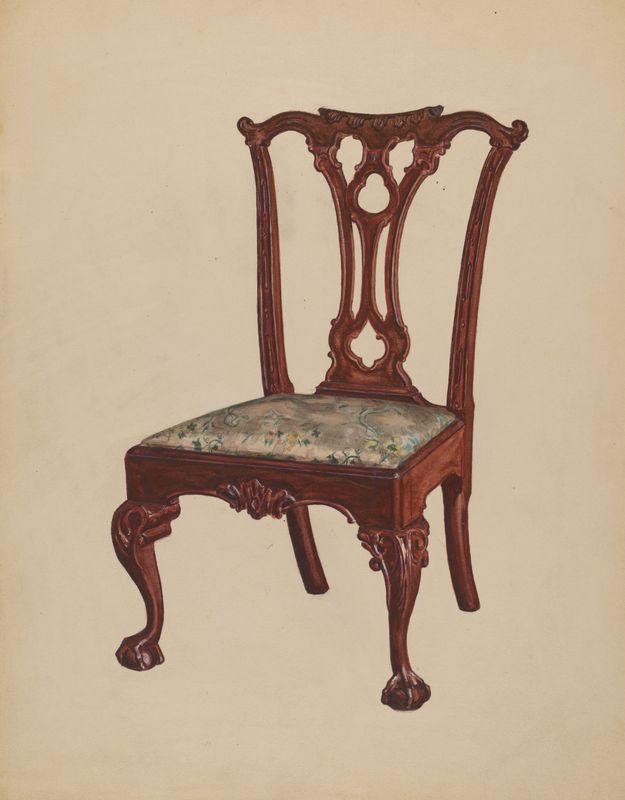 Same era · 1730s–1760s
Side Chair
Artist Unknown - The Mercat Cross, Aberdeen · 1750 · Art Institute of Chicago
 Same era · 1730s–1760s
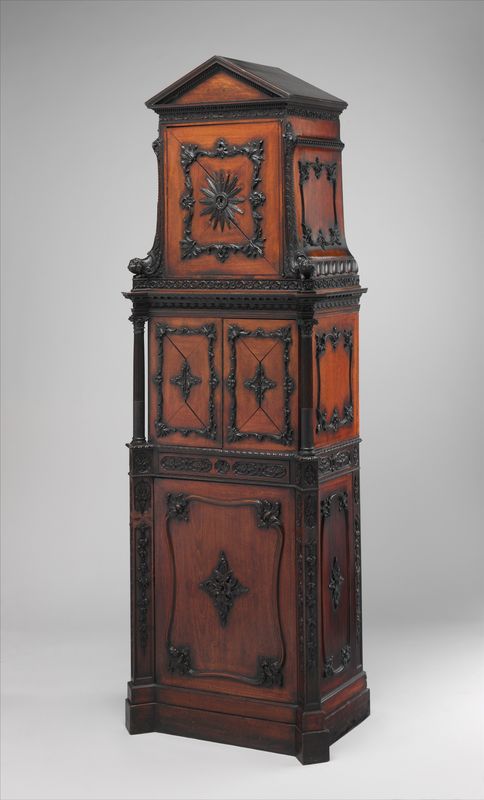
Medal cabinet
William Vile · 1760 · The Metropolitan Museum of Art
 Same era · 1730s–1760s
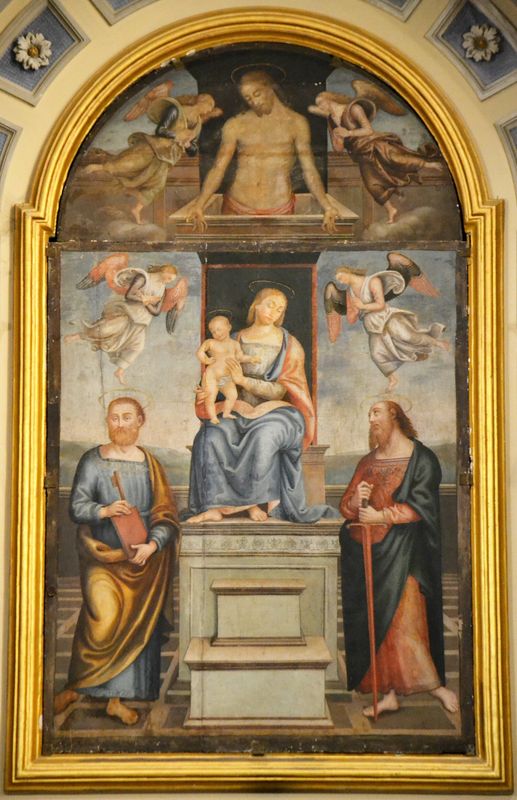
Madonna and Child with Saints Peter and Paul
Stefano Mulinari · 1750 · The Metropolitan Museum of Art
 Same era · 1730s–1760s
Hunter with Hounds
Höchster Porzellan-Manufaktur · 1755 · The Metropolitan Museum of Art
 Same era · 1730s–1760s
Image of an Empire in Peace and Prosperity
Zhou Kun · 1745 · National Palace Museum
 Same era · 1730s–1760s
Landscape
William Wooller · 1763 · Cleveland Museum of Art
 Same era · 1730s–1760s
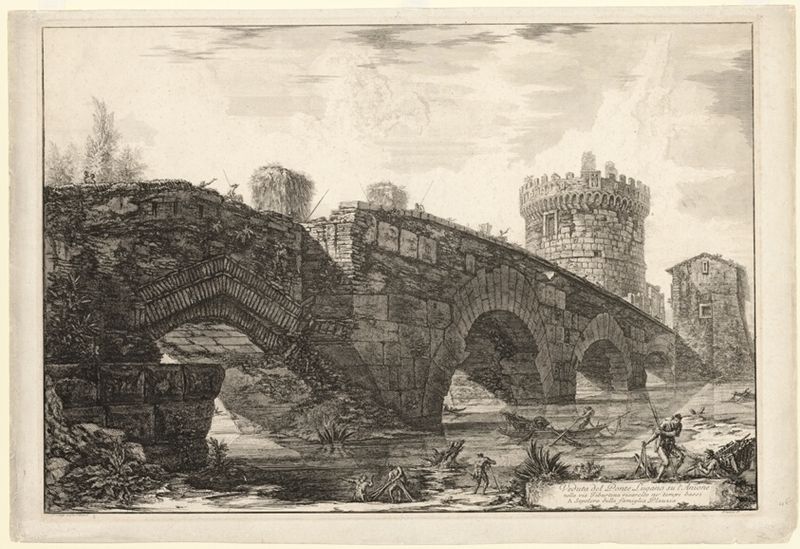
View of Ponte Lugano on the Anio, from Views of Rome
Giovanni Battista Piranesi · 1763 · Art Institute of Chicago