01
Circle of the sun
A large reddish disc, ringed by a pale yellow glow, sits behind the crouching body like a halo. It draws the eye to the figure at its center.
1 of 5 on the painting
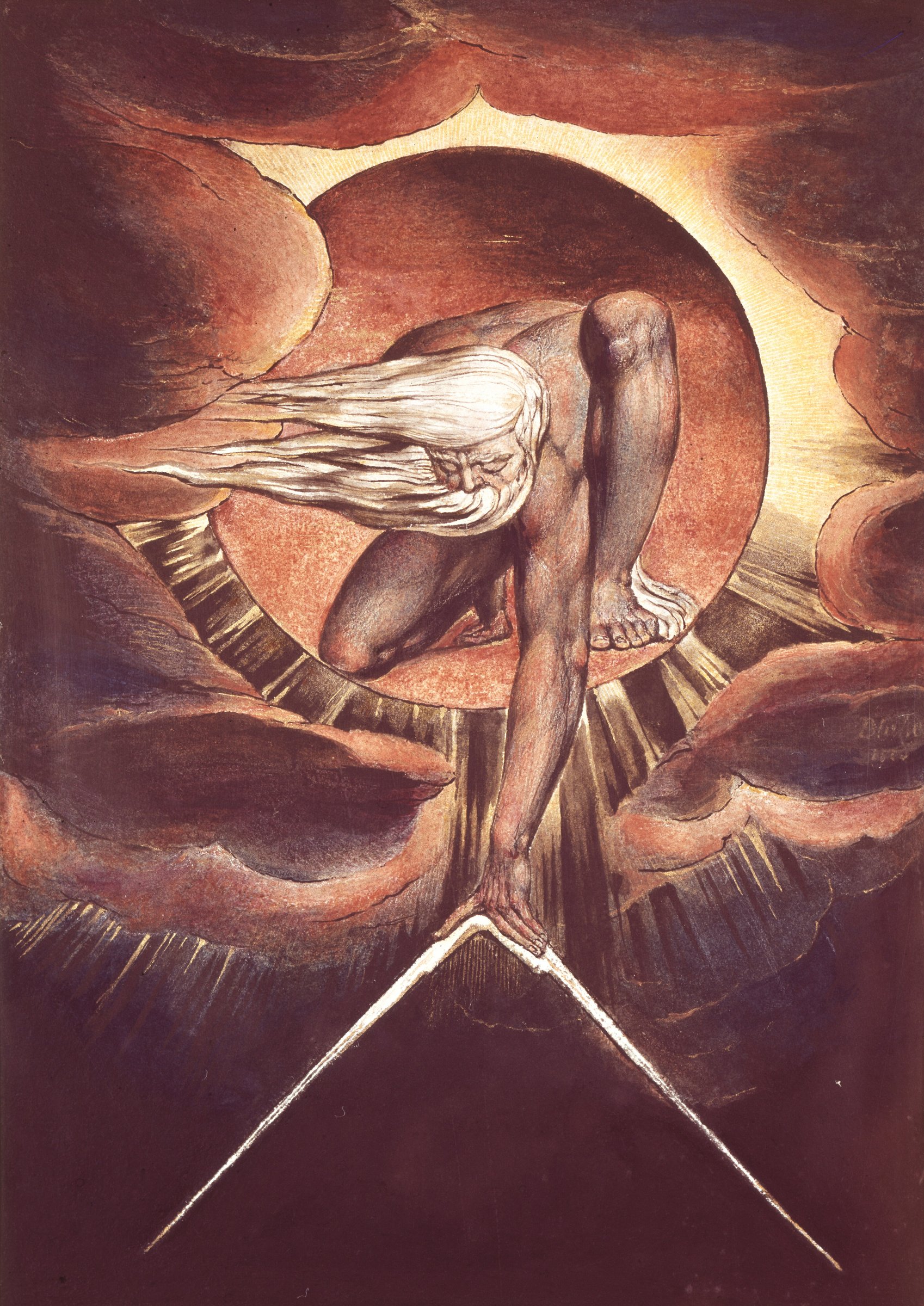
“This dramatic image shows a divine architect, Urizen, using a compass to measure the void, a powerful vision of creation that was a personal favorite of William Blake, made in the final year of his life.”
In "The Ancient of Days," a powerful, aged figure is dramatically poised within a radiant orb, his body intensely flexed. This figure, identified as Urizen (one of God's titles in the Book of Daniel), extends a hand holding a large compass, reaching into the dark, swirling void below. The composition, a striking circular design set against a cloud-like background, emphasizes the act of creation and measurement, suggesting a divine architect bringing order to chaos. This particular version, made in the year of the artist's death, was a personal favorite, a design he returned to repeatedly and found joy in copying. The work captures the visionary intensity of the Romantic era, presenting a mystical interpretation of biblical themes through a unique blend of symbolic imagery and dynamic form.
Five details hide in plain sight. Pick one and we’ll show you exactly where to look.
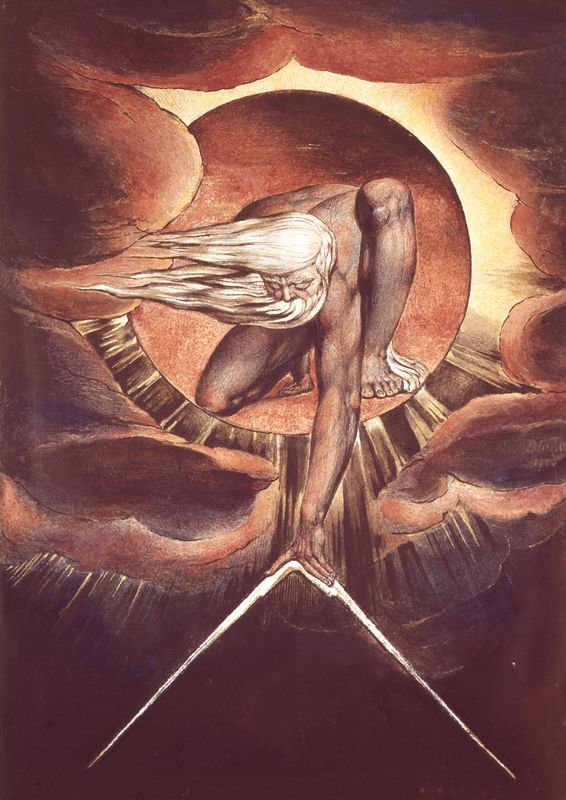
A large reddish disc, ringed by a pale yellow glow, sits behind the crouching body like a halo. It draws the eye to the figure at its center.
The long white hair and beard blow out to the left like a gust of wind. They are the brightest shapes on the figure and add movement.
The muscular figure crouches with one foot braced and a knee tucked, bending to fit inside the circle. The cramped pose adds tension and a sense of effort.
Follow the stretched arm down to the hand pinching the compass hinge. The fingers are small and precise, a tense point of control.
Look at the thin white compass at the bottom, held open over the dark void. It shows the figure measuring out the world, a moment of creation.
The full narration walks you through The Ancient of Days — the story behind it, the details most visitors miss, and why it matters. Free in the Art Whisper app.
William Blake, a visionary English poet, painter, and printmaker, created a symbolically rich body of work that was largely unrecognised in his lifetime.
Beyond Blake: works from the same years.
 Same era · 1810s–1840s
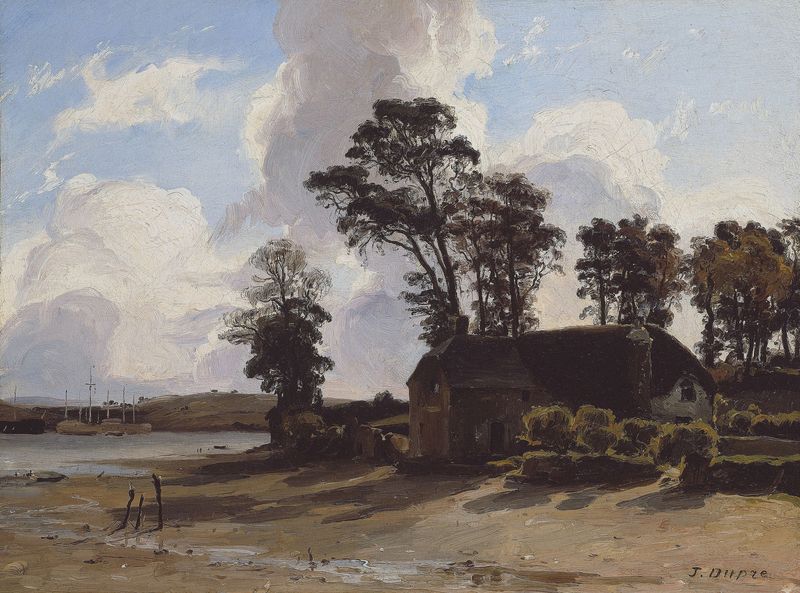
The Estuary Farm
Léon-Victor Dupré · 1831 · Art Institute of Chicago
 Same era · 1810s–1840s
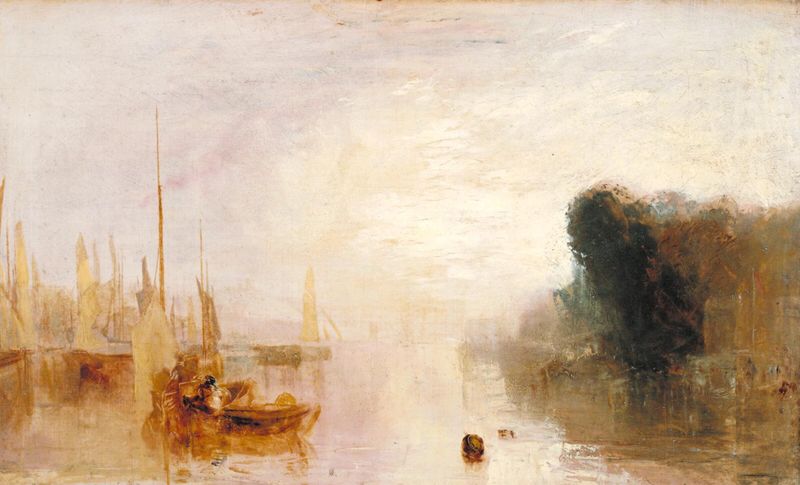
Sketch for ‘East Cowes Castle, the Regatta Starting for Their Moorings’ No. 2
J. M. W. Turner · 1827 · National Gallery
 Same era · 1810s–1840s
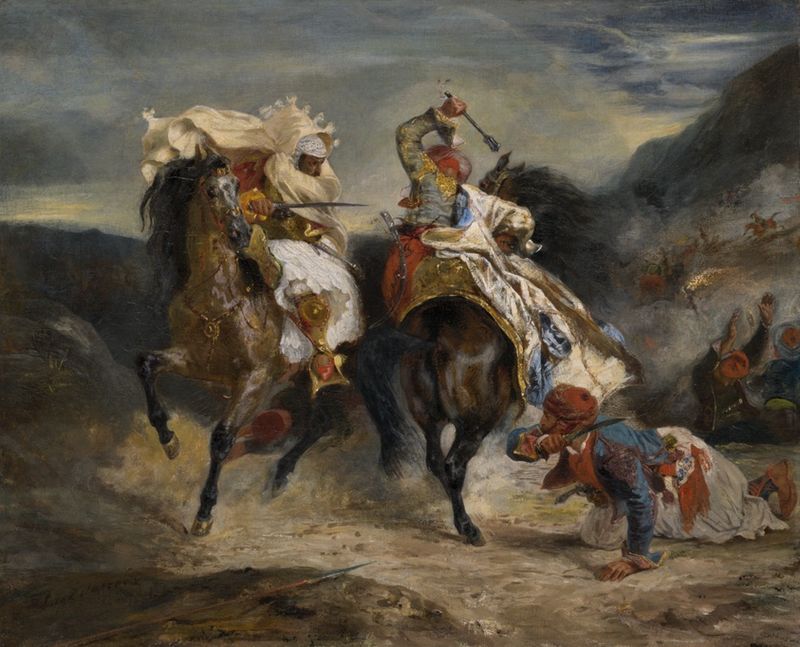
The Combat of the Giaour and Hassan
Eugène Delacroix · 1826 · Art Institute of Chicago
 Same era · 1810s–1840s
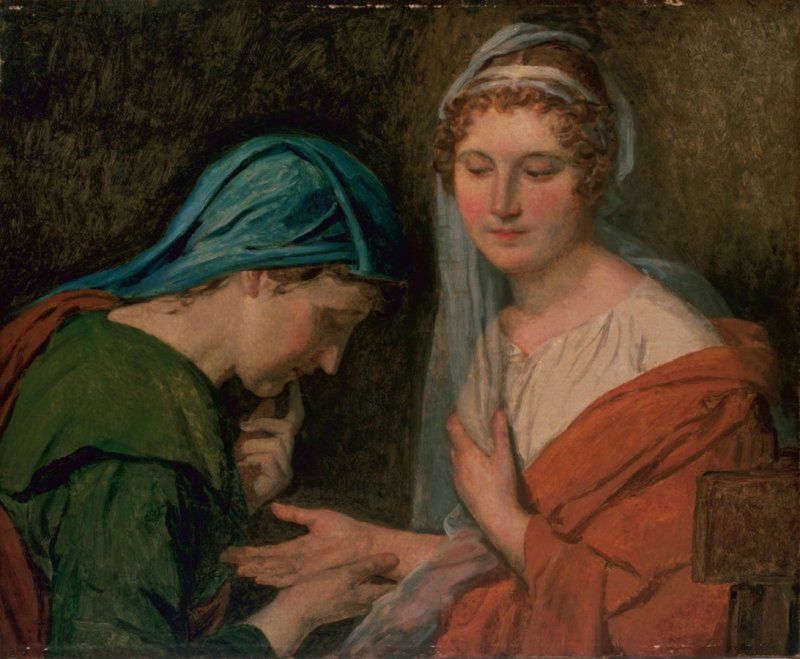
The Fortune Teller (La Bonne Aventure)
Jacques-Louis David · 1824 · Fine Arts Museums of San Francisco
 Same era · 1810s–1840s
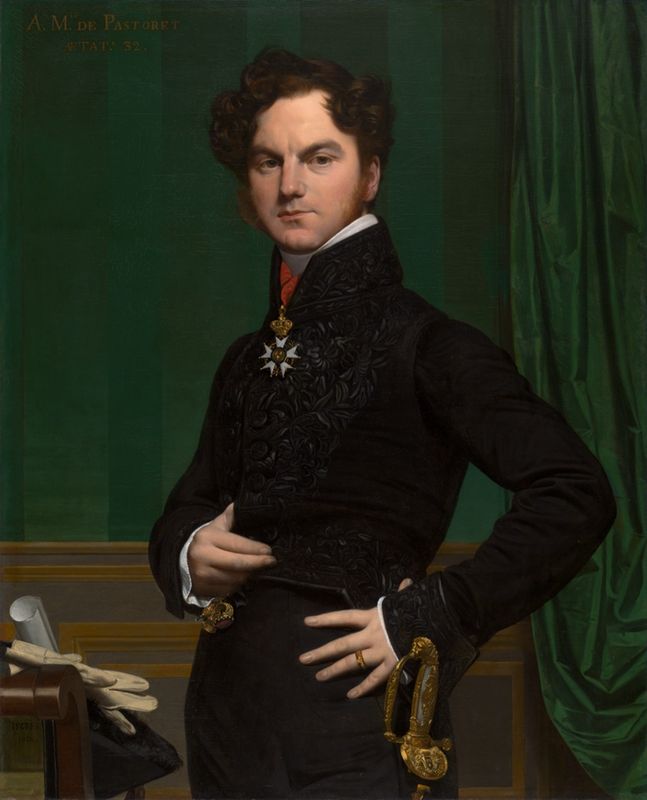
Amédée-David, the Comte de Pastoret
Jean-Auguste-Dominique Ingres · 1823 · Art Institute of Chicago
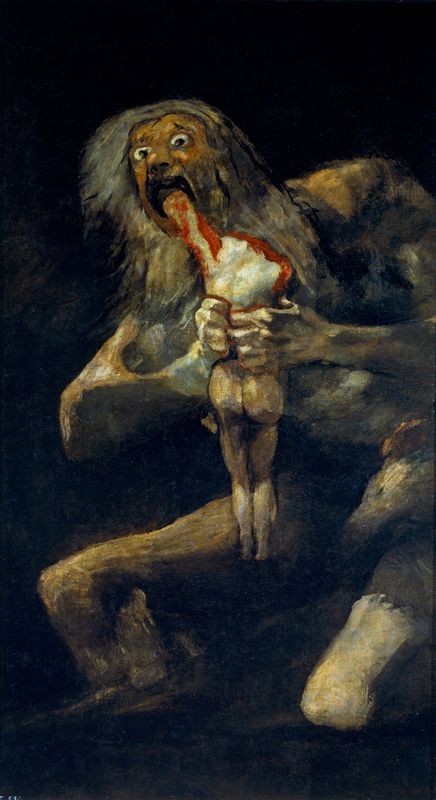 Same era · 1810s–1840s
Saturn Devouring His Son
Francisco Goya · 1820 · Museo del Prado
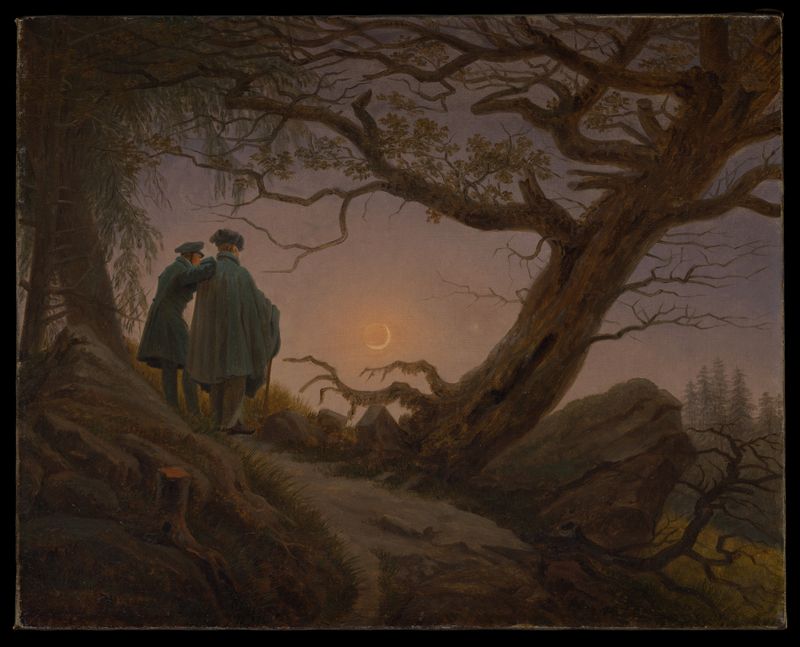 Same era · 1810s–1840s
Two Men Contemplating the Moon
Caspar David Friedrich · 1819 · Staatliche Kunstsammlungen Dresden
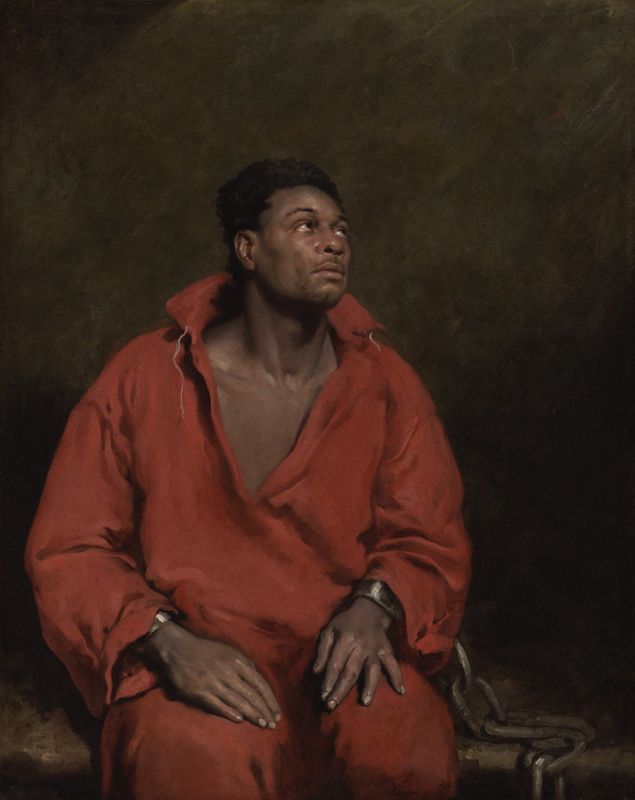 Same era · 1810s–1840s
The Captive Slave (Ira Aldridge)
John Philip Simpson · 1827 · Art Institute of Chicago
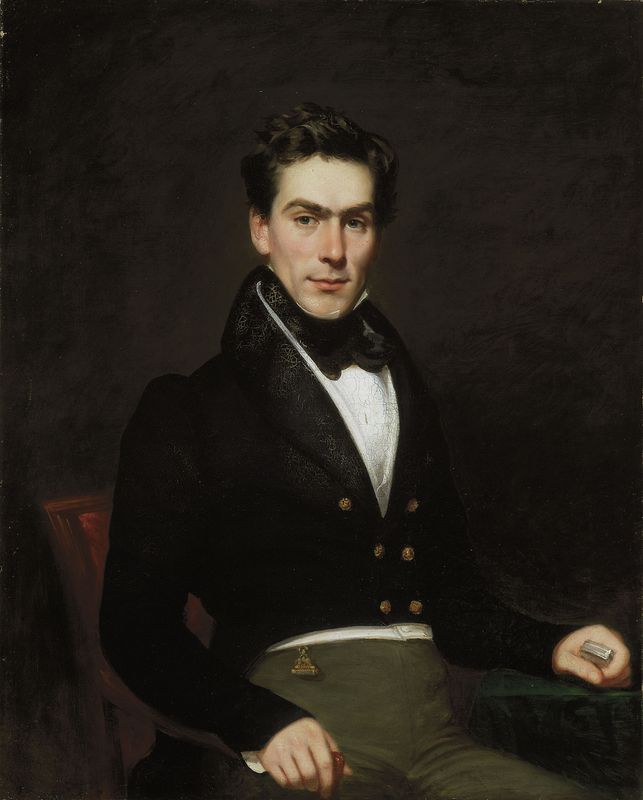 Same era · 1810s–1840s
Mr. James Mackie
Samuel Alcock & Company · 1830 · Art Institute of Chicago
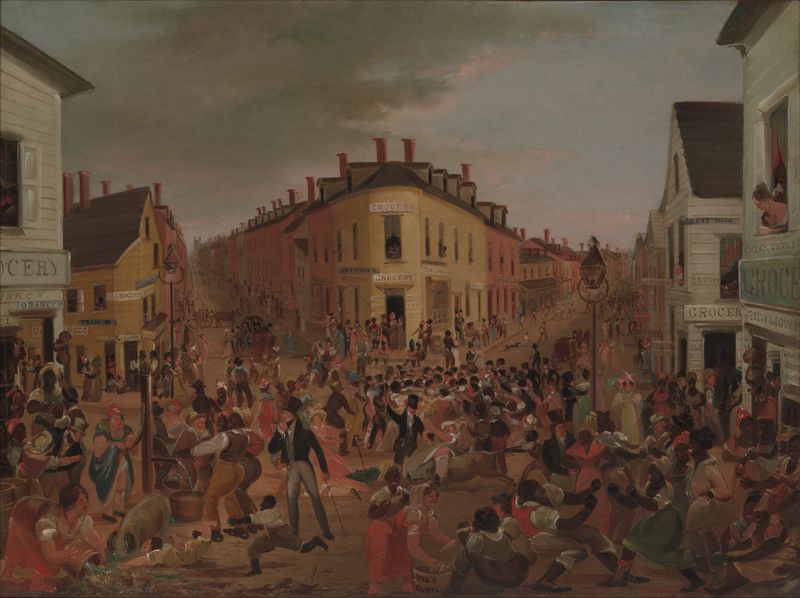 Same era · 1810s–1840s
The Five Points
Artist Unknown - The Mercat Cross, Aberdeen · 1822 · The Metropolitan Museum of Art
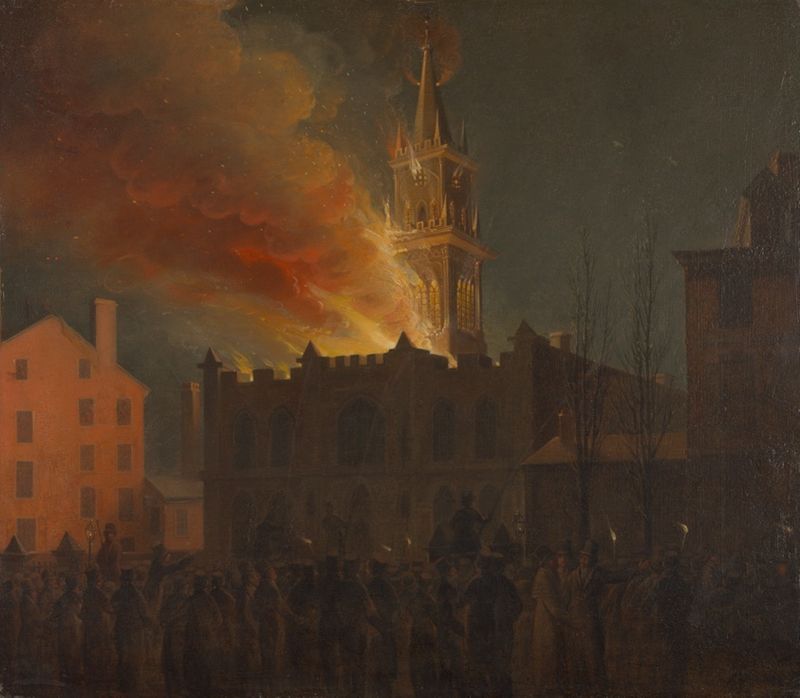 Same era · 1810s–1840s
Conflagration of the Masonic Hall, Chestnut Street, Philadelphia, Pennsylvania
Samuel Jones · 1819 · Art Institute of Chicago
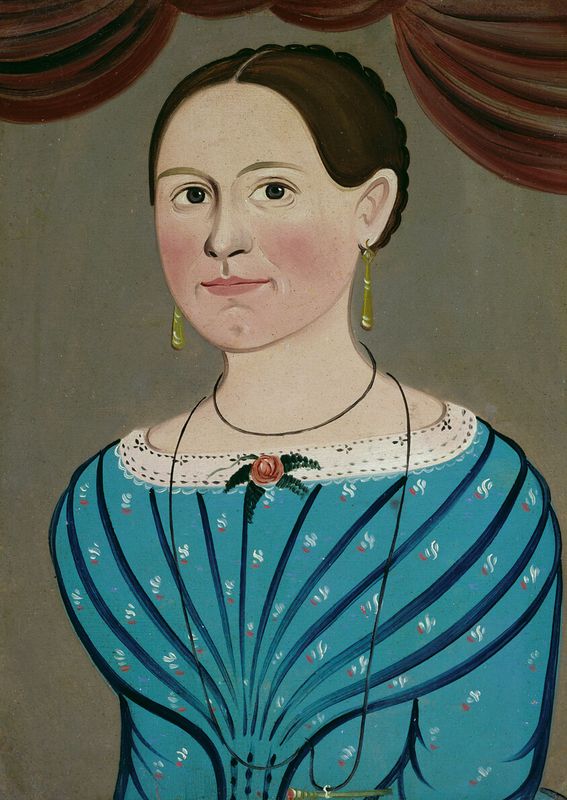 Same era · 1810s–1840s
Woman in a Blue Dress
School of William Matthew Prior · 1840 · Art Institute of Chicago