01
Flag bearer
At upper right, a kneeling soldier clutches a tall staff with a large starred flag. The banner's heavy folds rise over the battle scene and anchor the whole top half.
1 of 5 on the painting
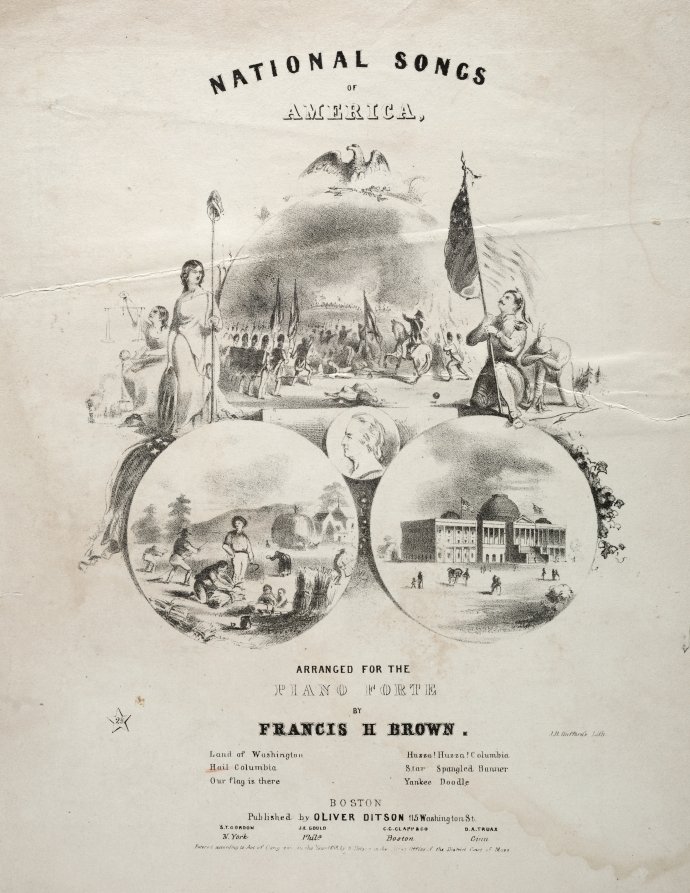
“Stop and admire this early work by Winslow Homer, a vibrant sheet music cover from 1856 that captures a patriotic moment with Lady Liberty and the American flag, reflecting a growing national identity.”
This sheet music cover, titled "National Songs of America," showcases a dynamic patriotic scene. A woman, personifying Lady Liberty, stands at the center, surrounded by symbols of American pride. She holds a flag, its stars and stripes billowing around her, while a bald eagle, a powerful national emblem, perches at her side. The lithograph's composition, with its clear outlines and dramatic contrast of light and dark, draws the eye to these iconic figures. Created around 1856, this work reflects a period when the market for illustrations was rapidly expanding, and such imagery helped to shape a burgeoning national identity through popular culture. This early work by Winslow Homer, made during his apprenticeship, offers a glimpse into his foundational years as a commercial illustrator, a role he would hold for nearly two decades before turning primarily to painting.
Five details hide in plain sight. Pick one and we’ll show you exactly where to look.
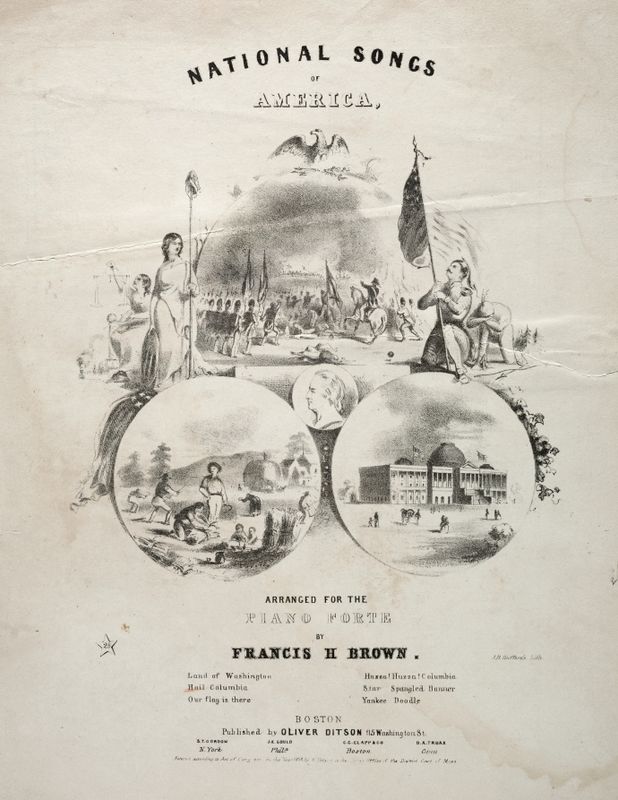
At upper right, a kneeling soldier clutches a tall staff with a large starred flag. The banner's heavy folds rise over the battle scene and anchor the whole top half.
On the left, a robed woman stands holding a tall staff topped with an ornament. She reads as an allegorical figure, perhaps a personification of the nation, and she stands calmly beside the soldiers' action.
Between the two figures, tiny soldiers march and fight beneath banners, with smoke fading into the pale paper. Look closely, because the drama is far smaller than the frame suggests.
In the lower left circle, laborers bend over crops in a hilly farm scene with haystacks. It offers a peaceful, working-life counterpart to the war scene above.
The right circle shows a large domed building with small figures and a horse in front. It looks like a government building, possibly a capitol, and its orderly lines contrast with the farm scene opposite.
The full narration walks you through National Songs of America - Sheet Music Cover — the story behind it, the details most visitors miss, and why it matters. Free in the Art Whisper app.
Winslow Homer, a largely self-taught American master, captured the raw power of the sea and the everyday lives of 19th-century America.
Beyond Homer: works from the same years.
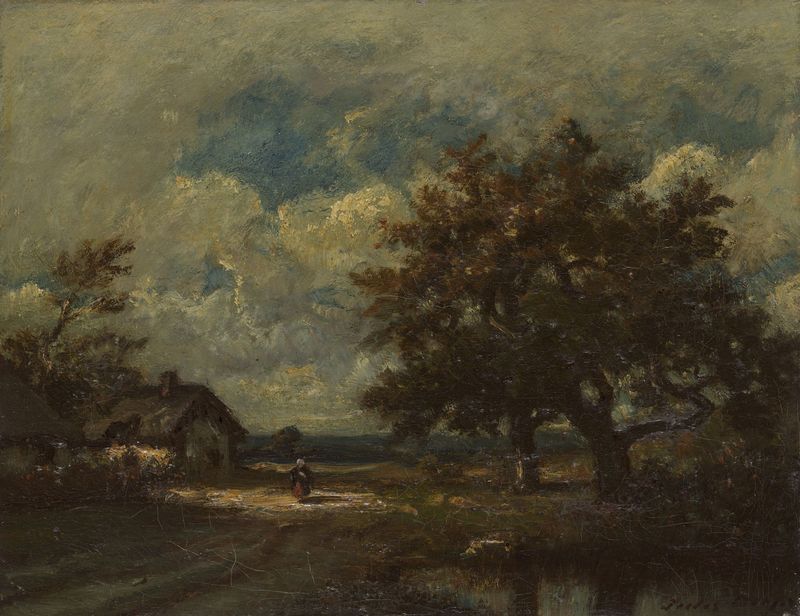 Same era · 1830s–1860s
The Cottage by the Roadside, Stormy Sky
Léon-Victor Dupré · 1855 · Art Institute of Chicago
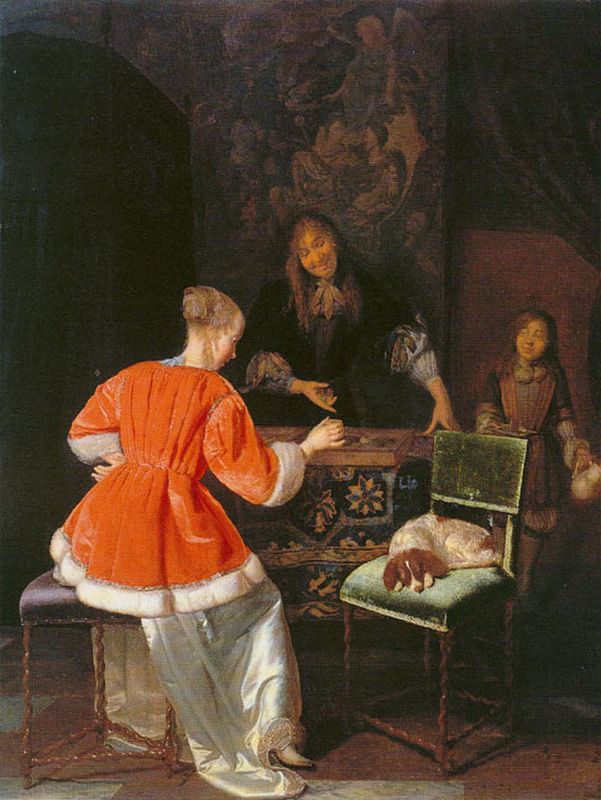 Same era · 1830s–1860s
The Backgammon Players
Philip Webb · 1861 · The Metropolitan Museum of Art
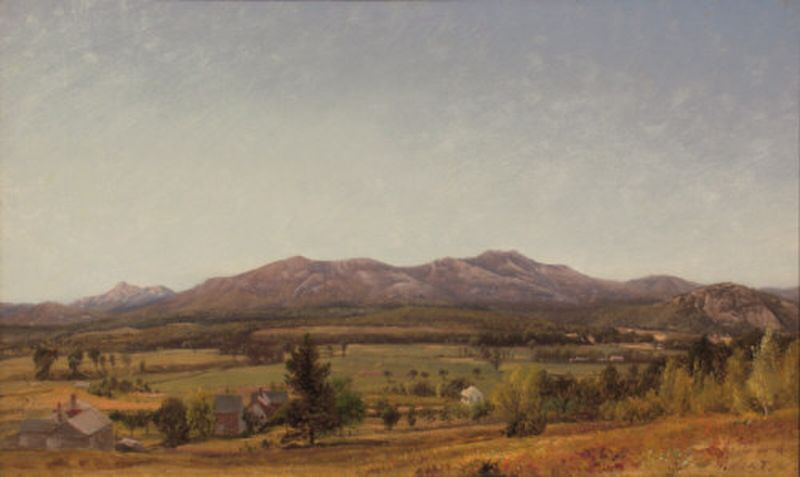 Same era · 1830s–1860s
Mount Chocorua and Moat Mountain from North Conway
William Hart · 1850
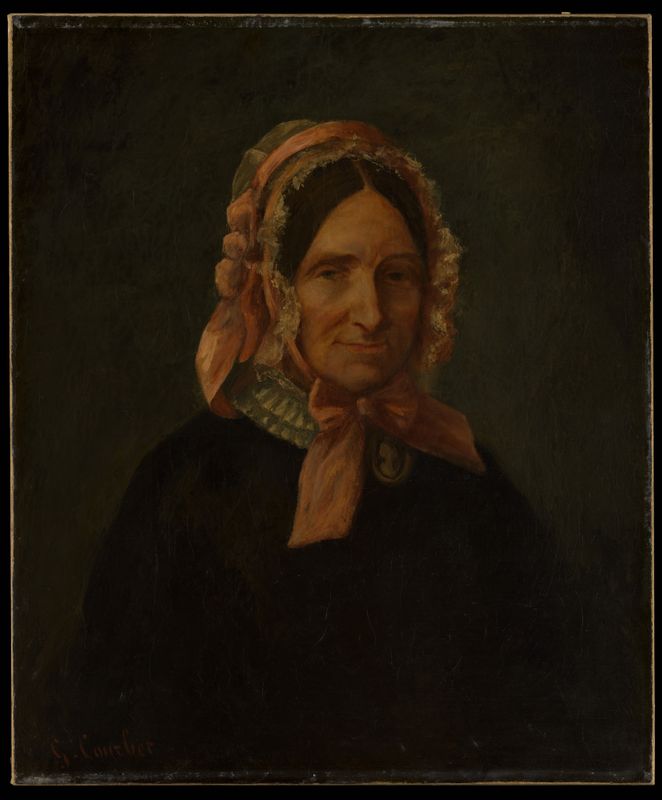 Same era · 1830s–1860s
Portrait of a Woman, Called Héloïse Abélard
Gustave Courbet · 1850 · The Metropolitan Museum of Art
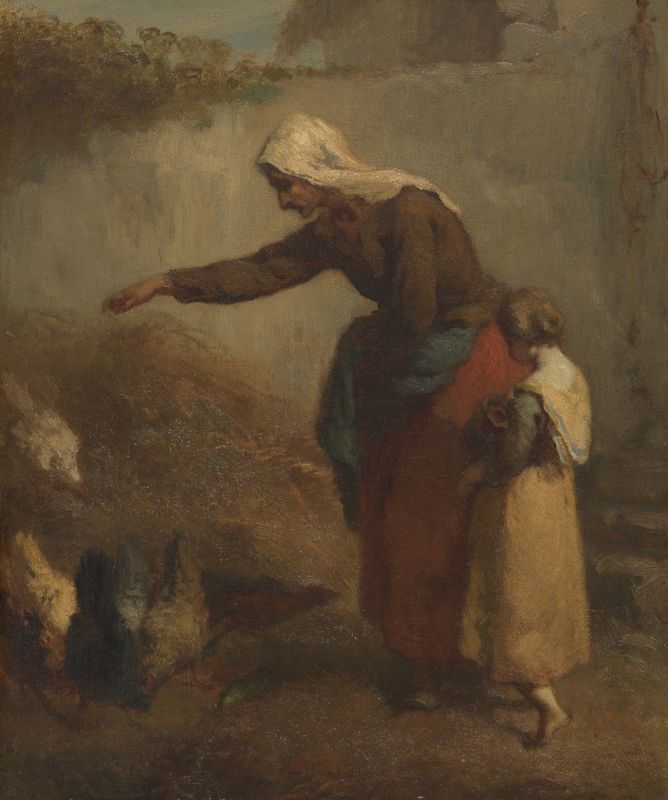 Same era · 1830s–1860s
Woman Feeding Chickens
Jean-François Millet · 1850 · Art Institute of Chicago
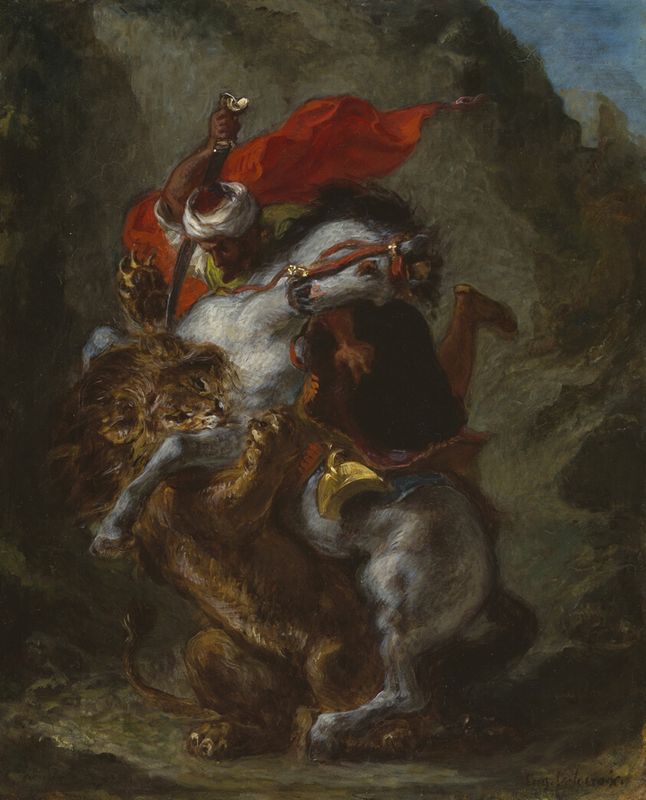 Same era · 1830s–1860s
Arab Horseman Attacked by a Lion
Eugène Delacroix · 1849 · Art Institute of Chicago
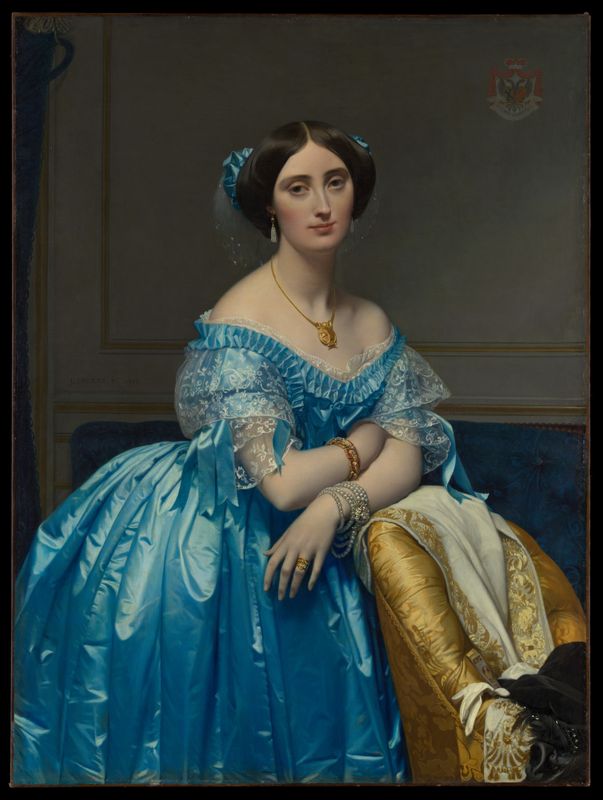 Same era · 1830s–1860s
Joséphine-Éléonore-Marie-Pauline de Galard de Brassac de Béarn (1825–1860), Princesse de Broglie
Jean-Auguste-Dominique Ingres · 1853 · Metropolitan Museum of Art
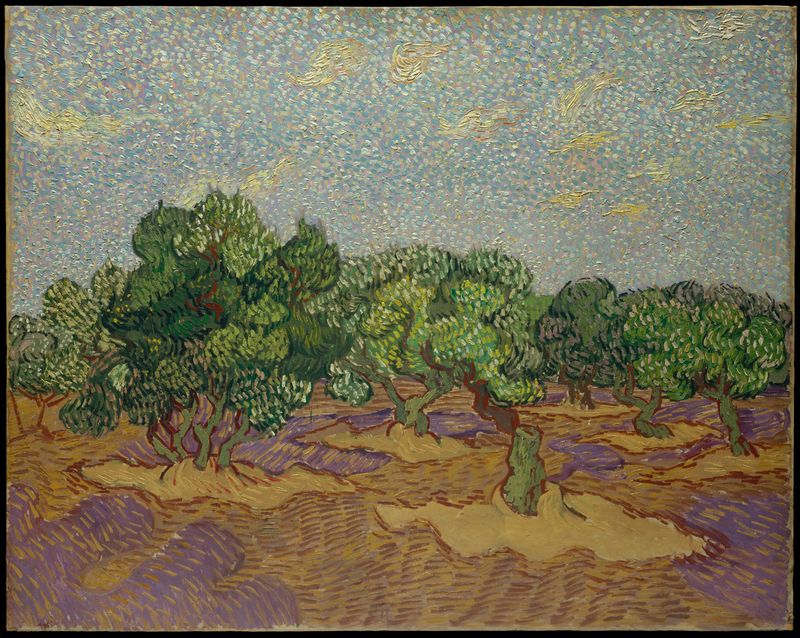 Same era · 1830s–1860s
Olive Trees
Vincent van Gogh · 1853 · The Metropolitan Museum of Art
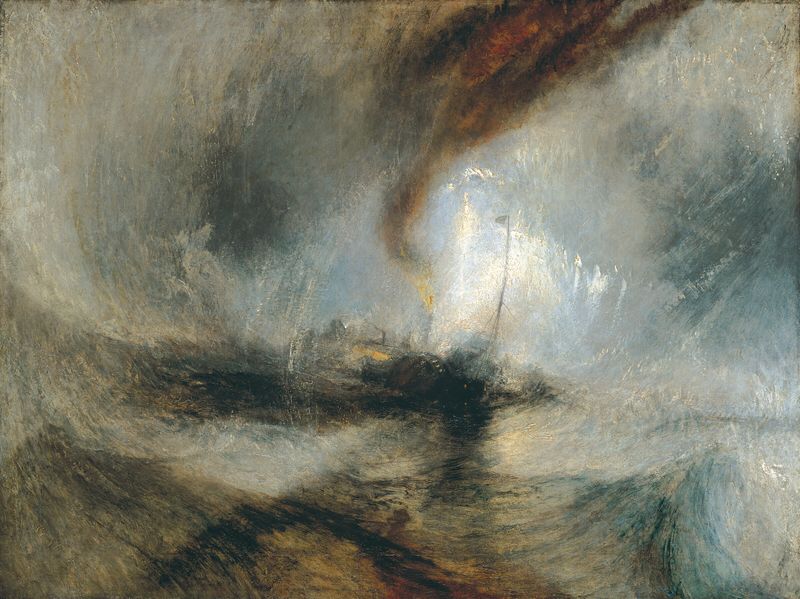 Same era · 1830s–1860s
Snow Storm: Steam-Boat off a Harbour's Mouth
J. M. W. Turner · 1842 · National Gallery
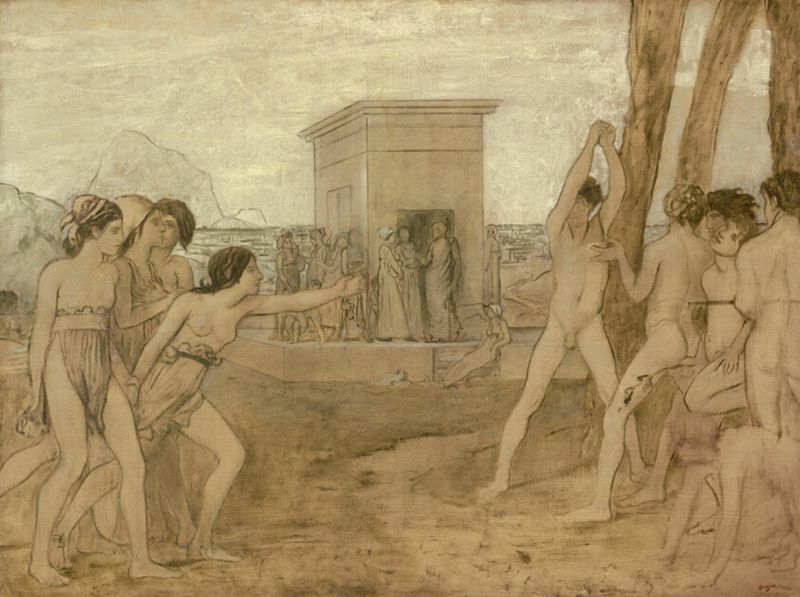 Same era · 1830s–1860s
Young Spartan Girls Challenging Boys
Edgar Degas · 1860 · Art Institute of Chicago
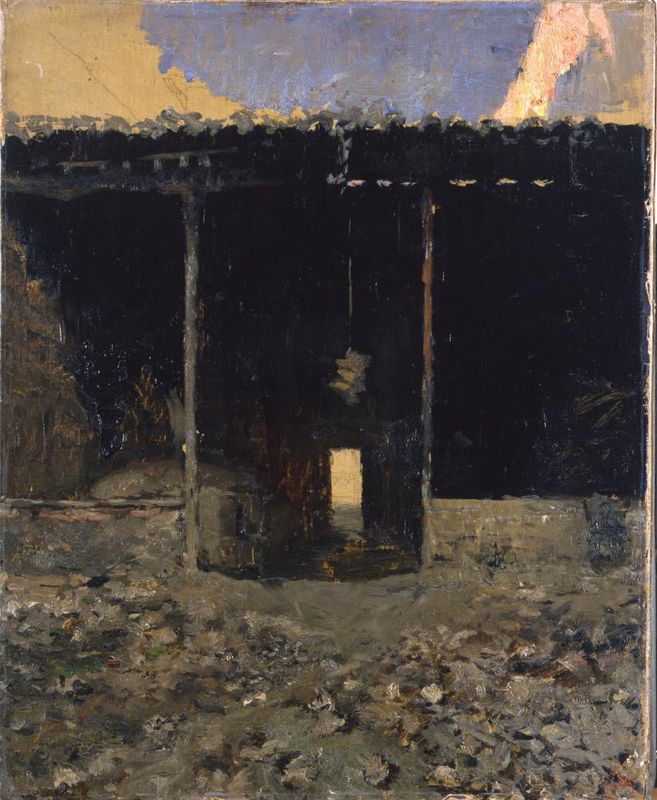 Same era · 1830s–1860s
A Sketch
Mariano Fortuny Marsal · 1862 · Hispanic Society of America
 Same era · 1830s–1860s
Alfred Sisley
Pierre-Auguste Renoir · 1864 · Foundation E.G. Bührle Collection