01
The red fez
Find the red cap with its dark tassel at the top. Its deep red stands out against the olive and blue sky and marks the man's dress.
1 of 4 on the painting
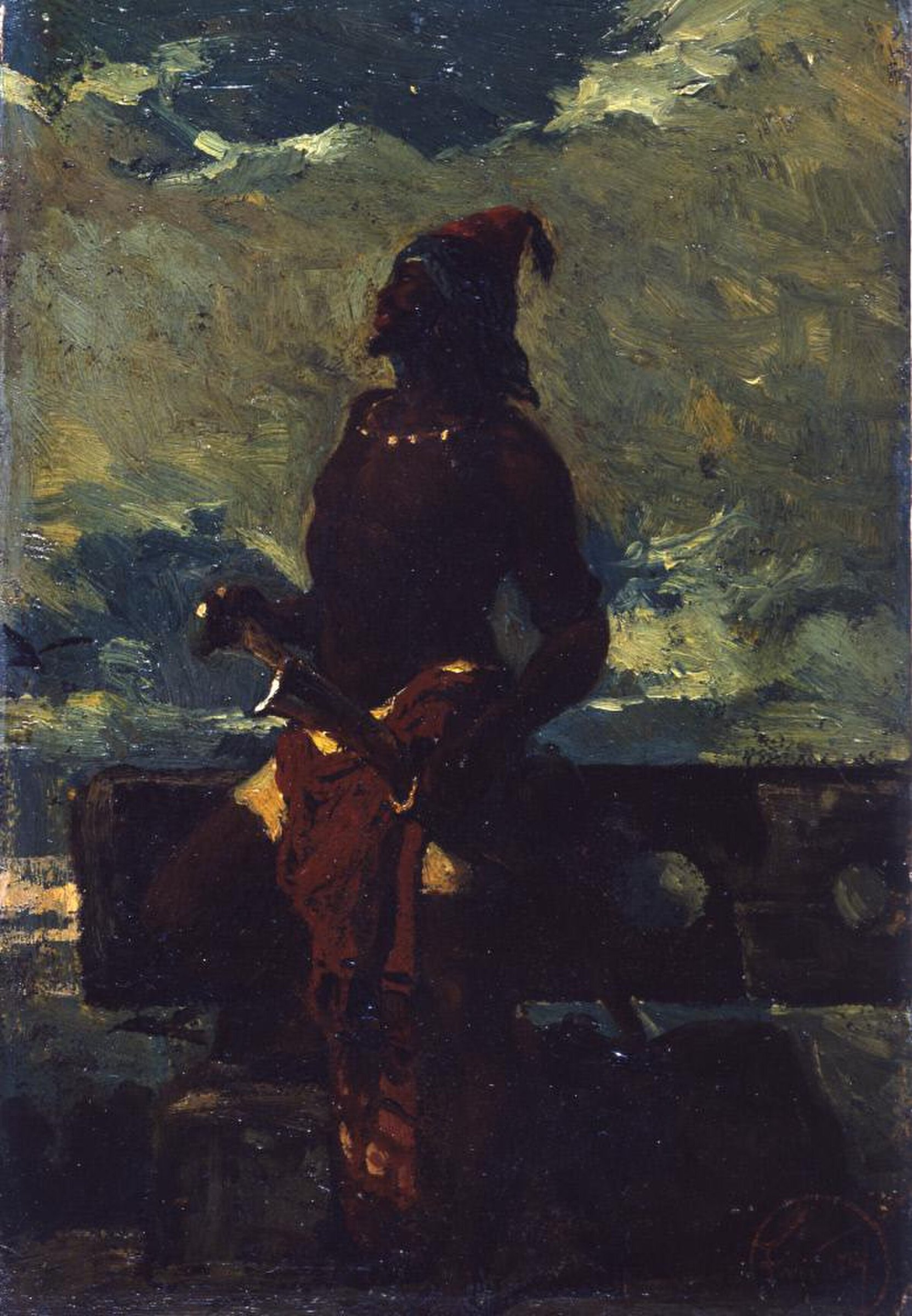
“Stop and look at this striking portrait of a North African soldier, painted by Mariano Fortuny Marsal. It's a vivid example of 19th-century Orientalist art, capturing a moment of quiet dignity and introspection.”
A lone figure dominates this canvas, a North African soldier, or askari, captured in a moment of quiet contemplation. His gaze is direct, yet distant, inviting us to wonder about his thoughts. Fortuny painted this work during a period when he was deeply immersed in the culture and landscapes of Morocco, having traveled there to document the Spanish-Moroccan War. While that experience led to grand battle scenes, here he focuses on an intimate portrait, highlighting the individual rather than the conflict. The artist’s fascination with Orientalist themes is evident in the detailed rendering of the askari's traditional attire and the rich, earthy tones that evoke the North African setting. This painting offers a glimpse into the diverse populace of 19th-century Morocco, presented with a sense of dignity and human connection.
Five details hide in plain sight. Pick one and we’ll show you exactly where to look.
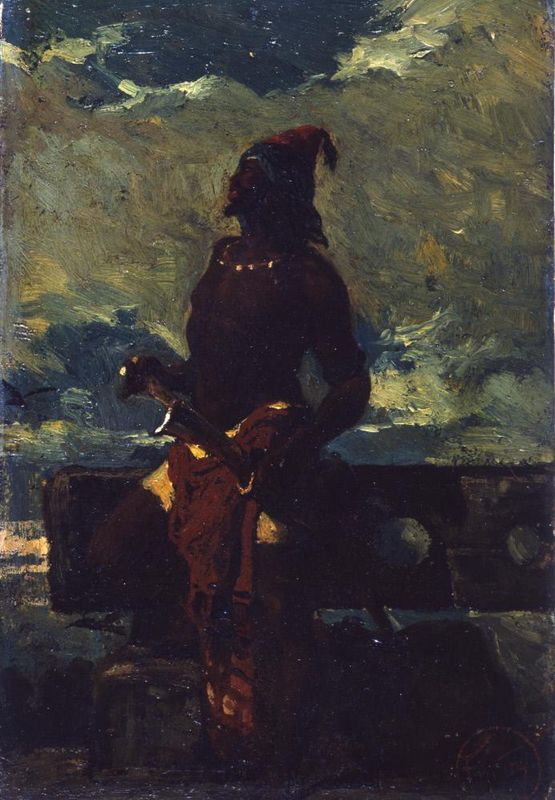
Find the red cap with its dark tassel at the top. Its deep red stands out against the olive and blue sky and marks the man's dress.
His face is turned in profile and lifted toward the sky, with a little warm light on the cheek and beard. It gives the figure a moment of quiet watchfulness.
On the left, his hand holds a short blade, with a flash of white at its edge. It adds a hint of readiness to an otherwise still pose.
Look at the thick, scrubbed strokes of olive, yellow and blue in the clouds. Their energy makes the sky feel almost as alive as the figure.
The figure is a heavy dark shape set against a lighter, restless sky. This contrast pushes him forward and gives him a quiet, watchful monumentality.
The full narration walks you through A Moor (Askari) — the story behind it, the details most visitors miss, and why it matters. Free in the Art Whisper app.
Spanish painter who died at 36 from malaria caught while painting outdoors, leaving behind shimmering Orientalist scenes.
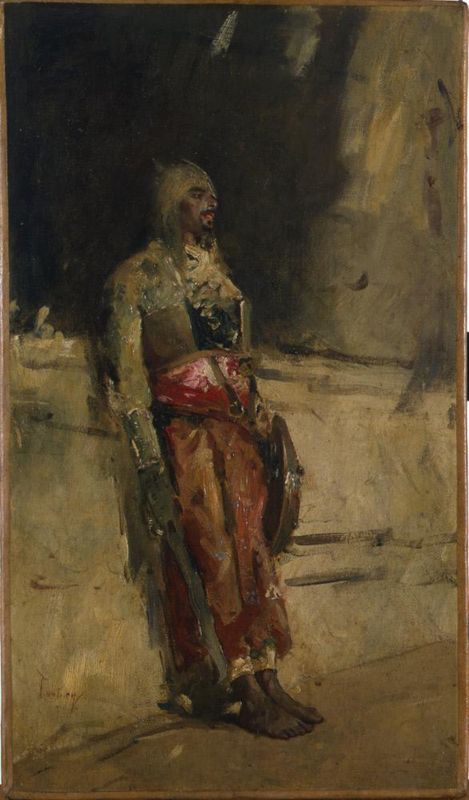 An Arab Warrior
1862 · Hispanic Society of America
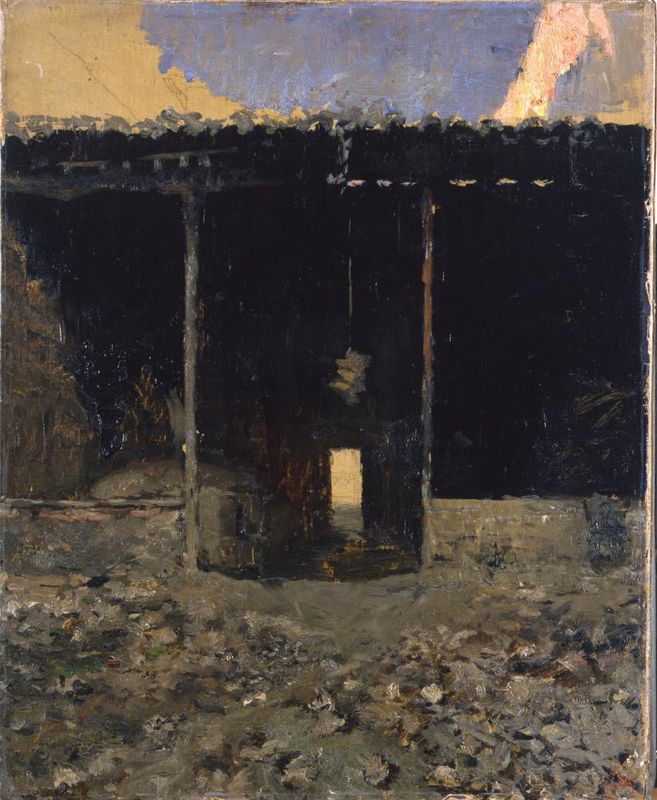 A Sketch
1862 · Hispanic Society of America
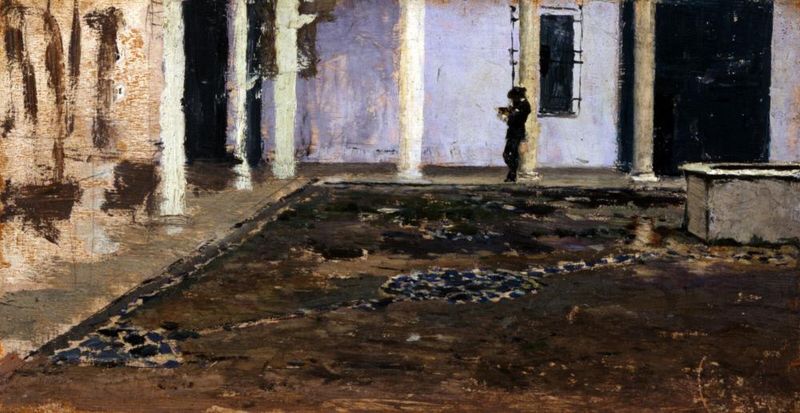 Patio of the Palace of the Duke of Alba, Seville: Raimundo de Madrazo y Garreta painting
1868 · Hispanic Society of America
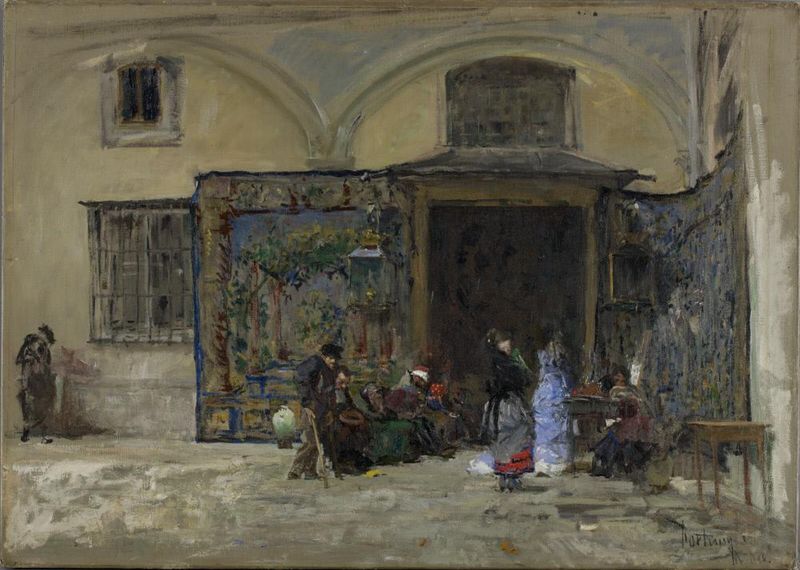 The Portico of the Church of San Ginés, Madrid
1868 · Hispanic Society of America
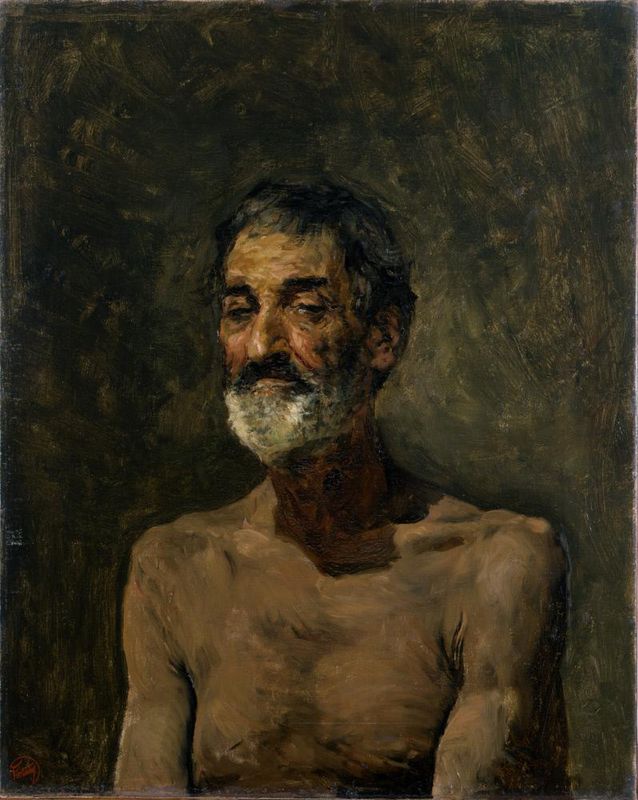 Bearded Man
1871 · Hispanic Society of America
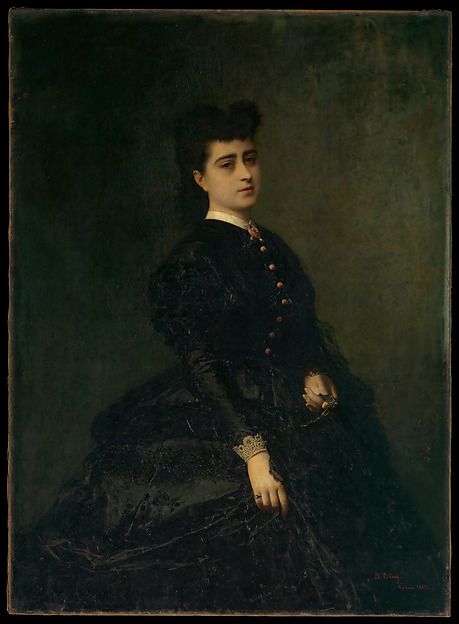 Mirope Savati Gaye
1865 · The Metropolitan Museum of Art
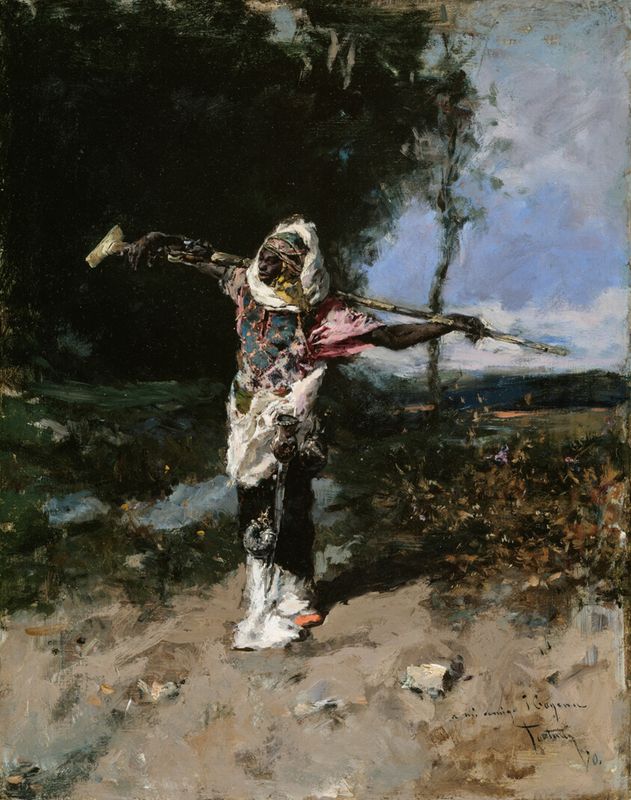 African Chief
1870 · Art Institute of Chicago
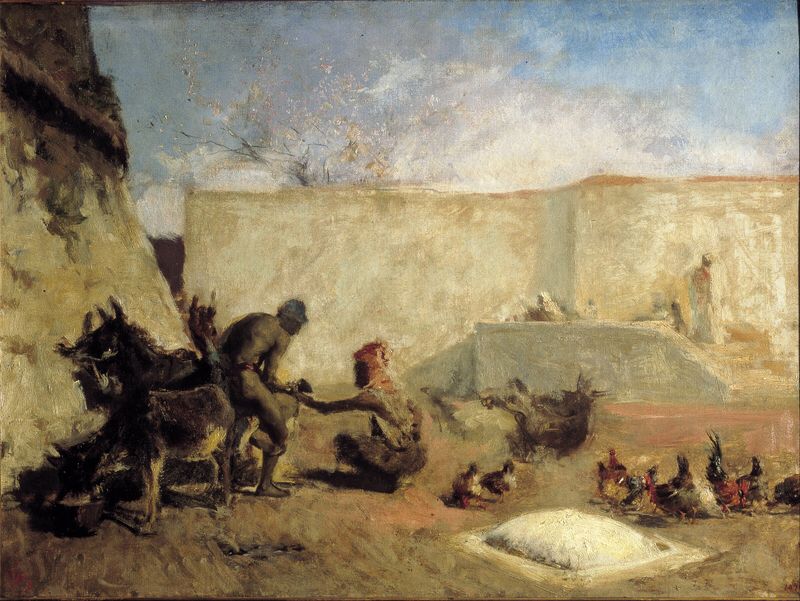 Moroccan Horseshoer
1870 · Museu Nacional d'Art de Catalunya
Beyond Marsal and Romanticism: works from the same years.
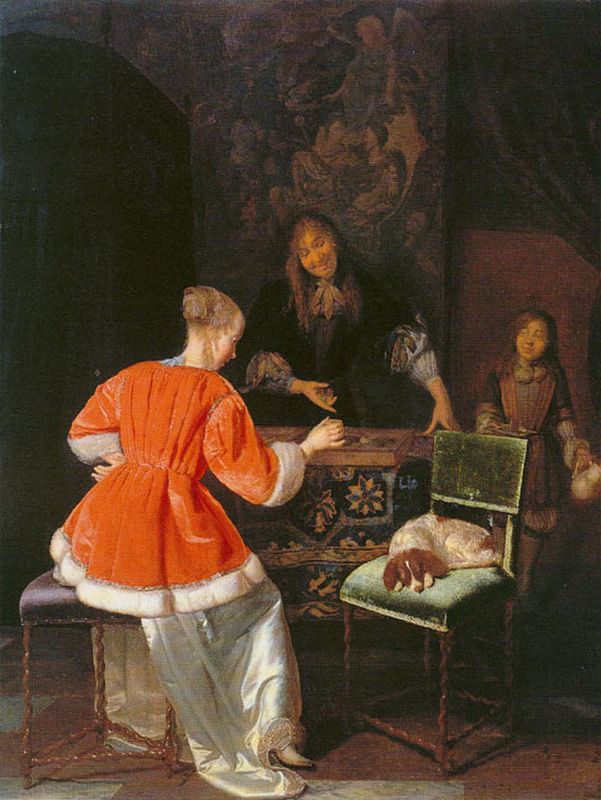 Same era · 1840s–1870s
The Backgammon Players
Philip Webb · 1861 · The Metropolitan Museum of Art
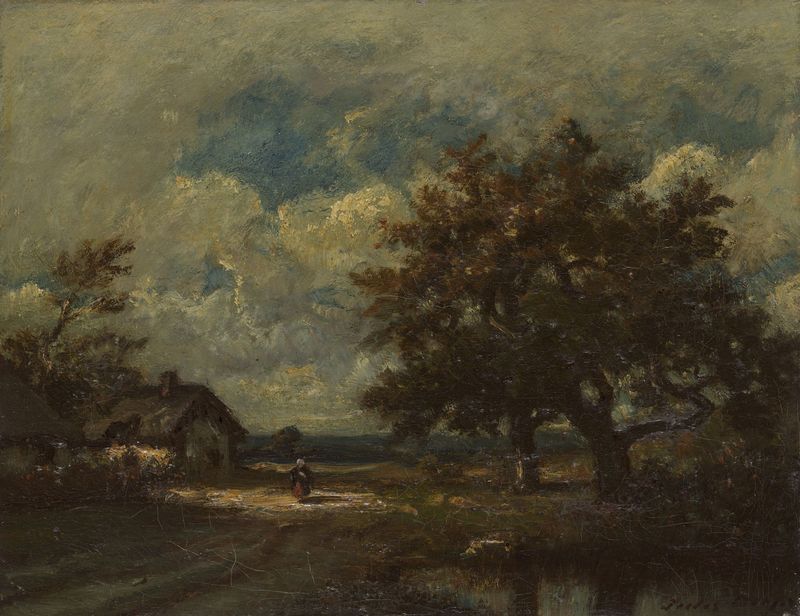 Same era · 1840s–1870s
The Cottage by the Roadside, Stormy Sky
Léon-Victor Dupré · 1855 · Art Institute of Chicago
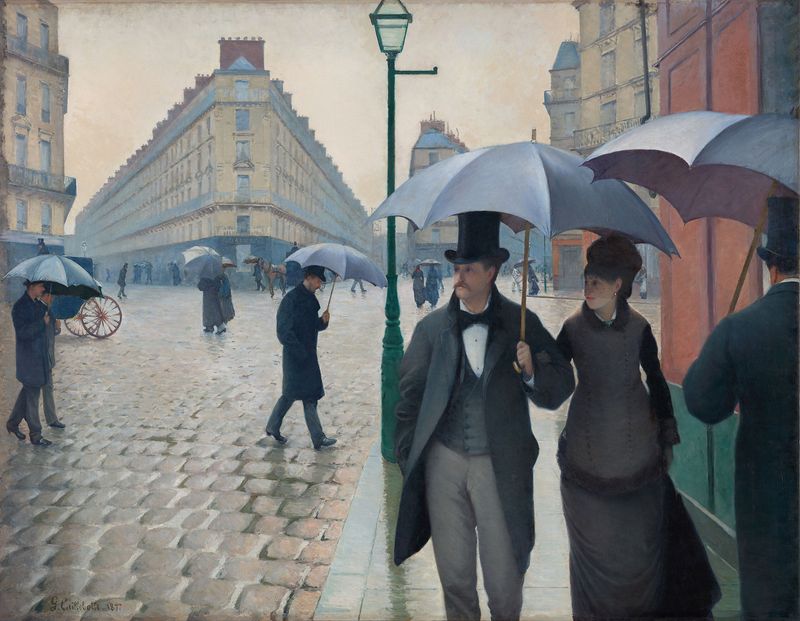 Same era · 1840s–1870s
Paris Street; Rainy Day
Kawabata Gyokushō · 1877 · Art Institute of Chicago
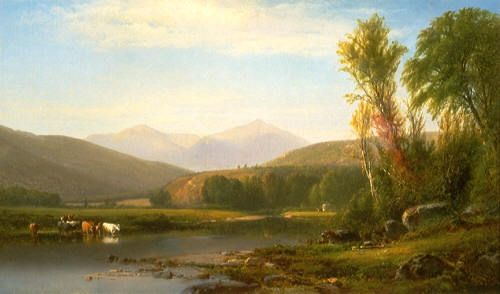 Same era · 1840s–1870s
Mount Madison from the Androscoggin River
William Hart · 1862
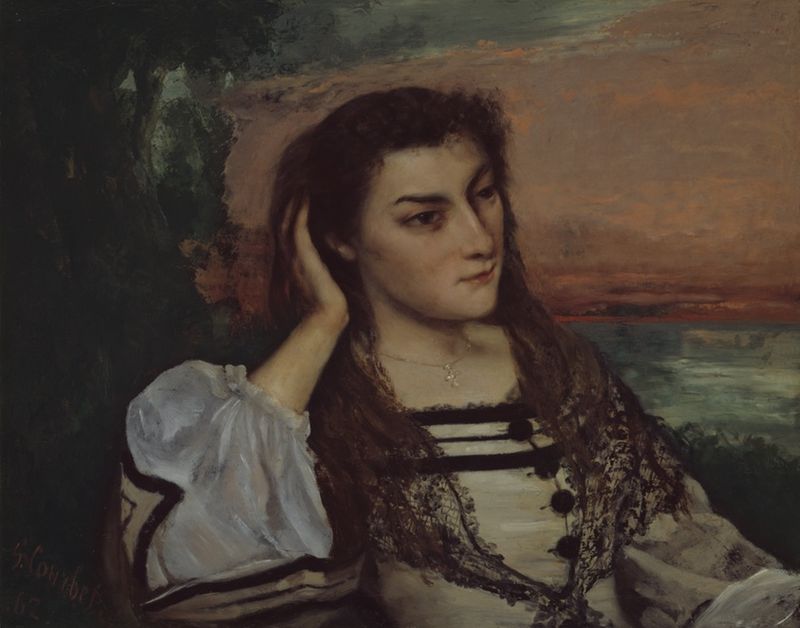 Same era · 1840s–1870s
Rêverie (Portrait of Gabrielle Borreau)
Gustave Courbet · 1862 · Art Institute of Chicago
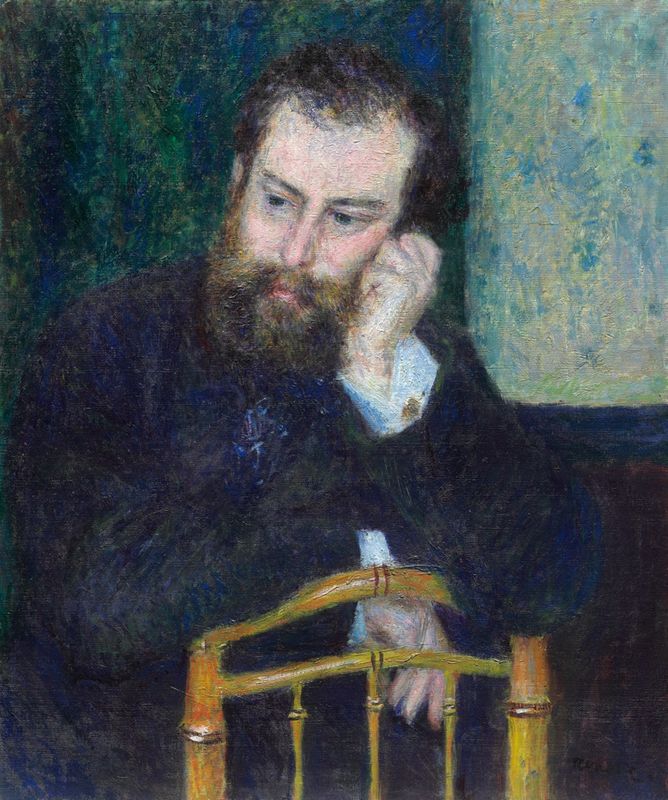 Same era · 1840s–1870s
Alfred Sisley
Pierre-Auguste Renoir · 1864 · Foundation E.G. Bührle Collection
 Same era · 1840s–1870s
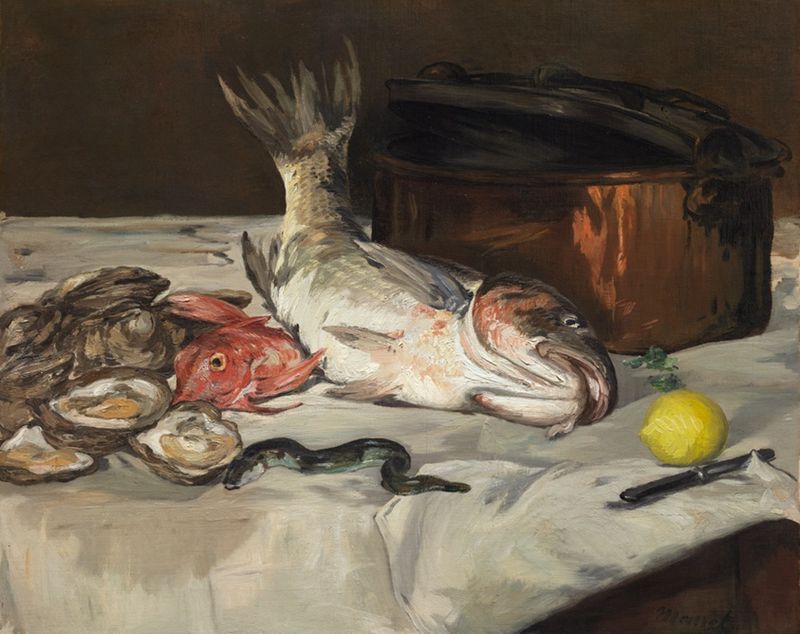
Fish (Still Life)
Édouard Manet · 1864 · Art Institute of Chicago
 Same era · 1840s–1870s
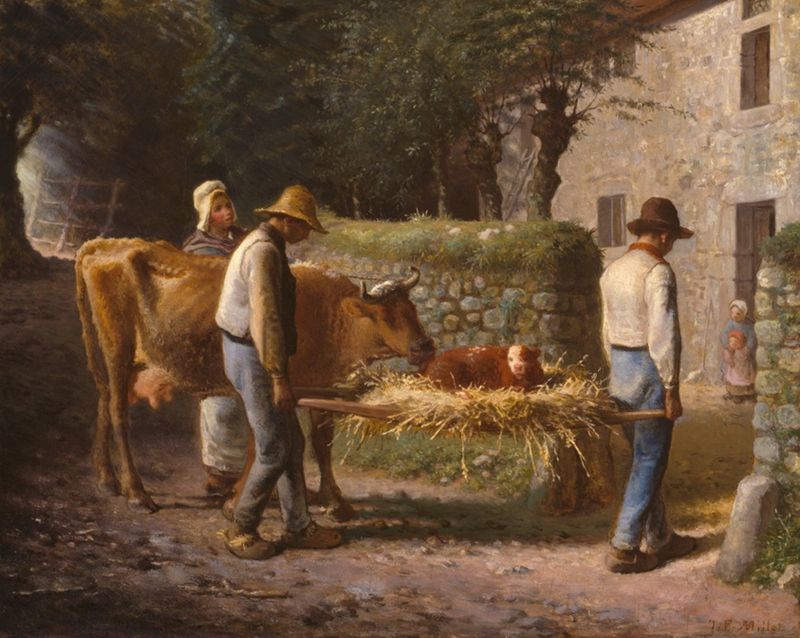
Peasants Bringing Home a Calf Born in the Fields
Jean-François Millet · 1864 · Art Institute of Chicago
 Same era · 1840s–1870s
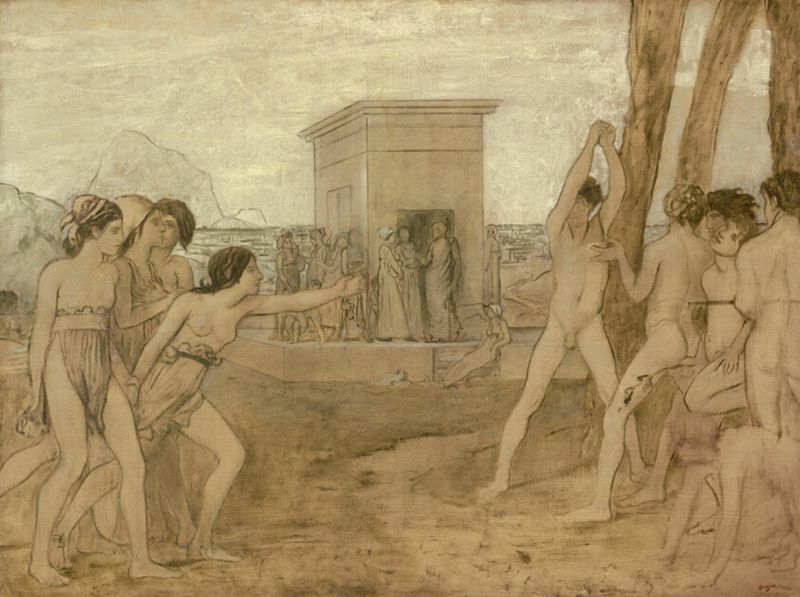
Young Spartan Girls Challenging Boys
Edgar Degas · 1860 · Art Institute of Chicago
 Same era · 1840s–1870s
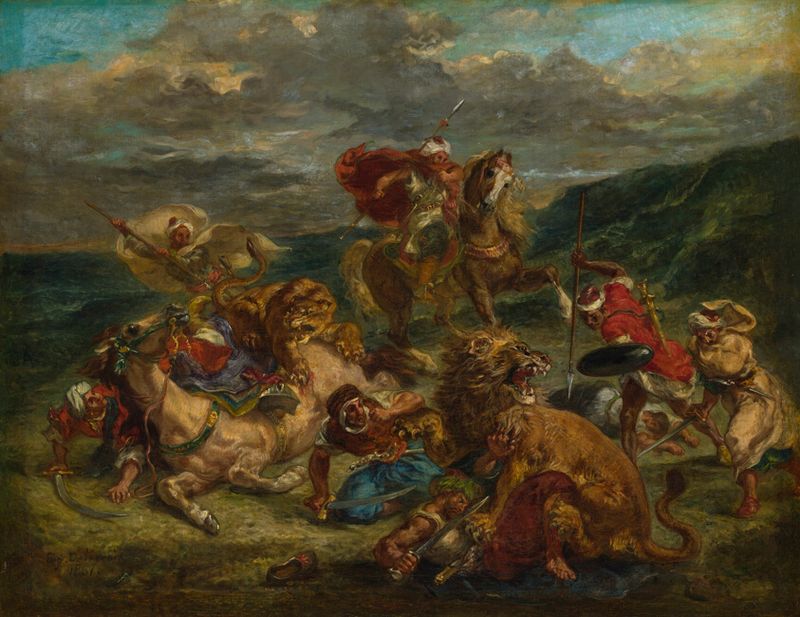
Lion Hunt
Eugène Delacroix · 1858 · Museum of Fine Arts Boston
 Same era · 1840s–1870s
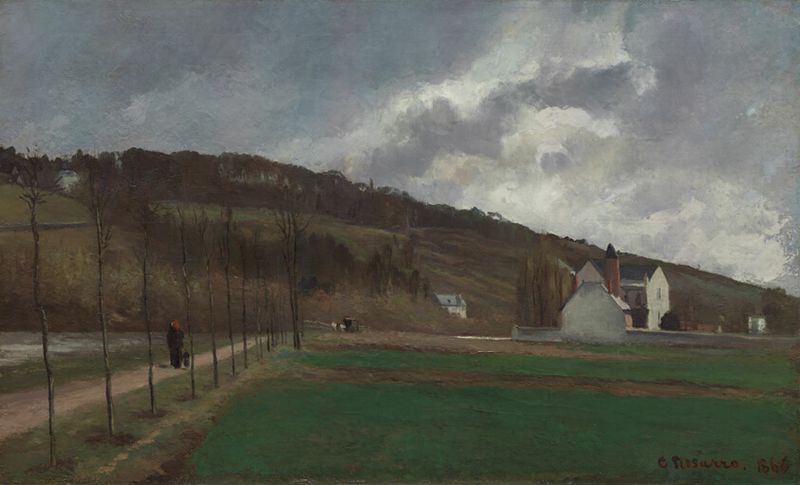
The Banks of the Marne in Winter
Camille Pissarro · 1866 · Art Institute of Chicago
 Same era · 1840s–1870s
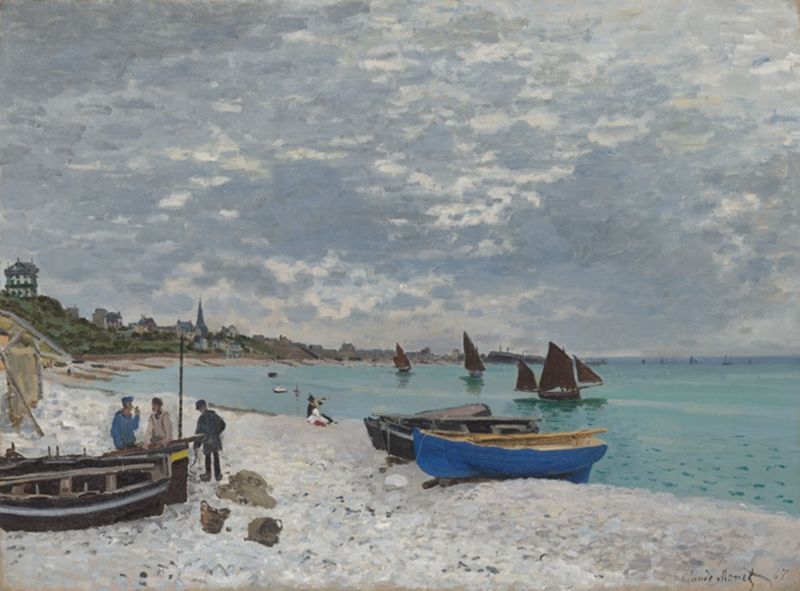
The Beach at Sainte-Adresse
Claude Monet · 1867 · Art Institute of Chicago