01
The Diana under sail
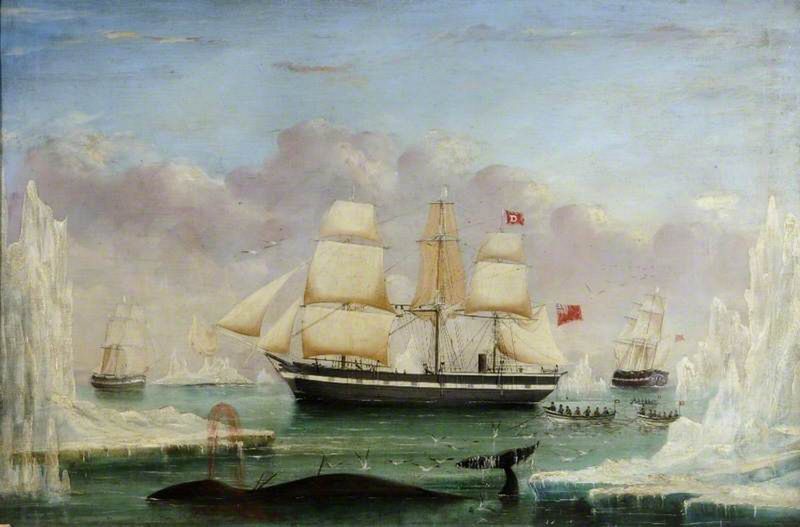
The three-masted ship dominates the center. Its pale sails and dark hull stand out against the hazy sky, and a funnel shows it also had steam power.
1 of 5 on the painting
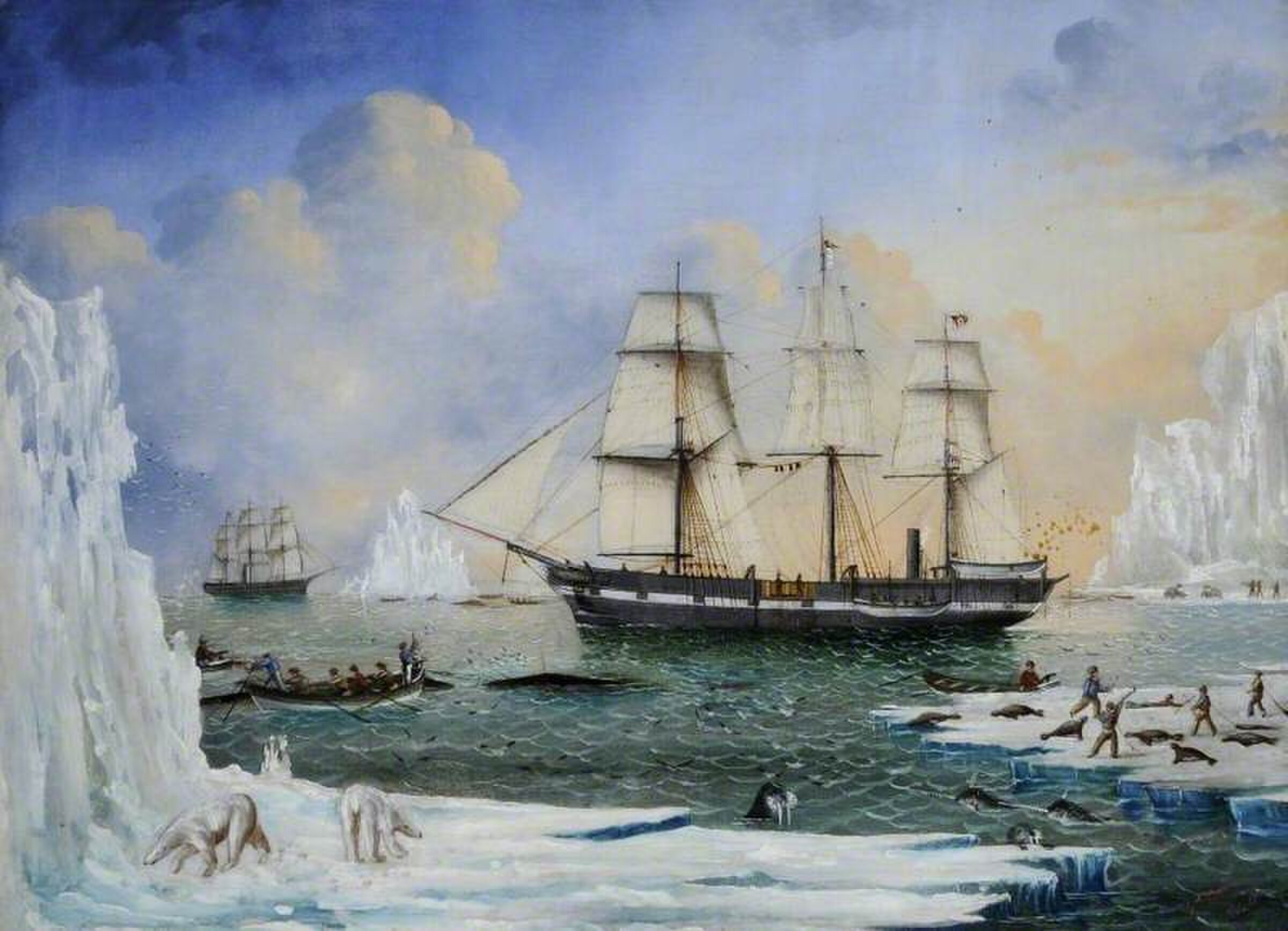
“Stop to consider this captivating painting of two whaling ships trapped in the Arctic ice. It's a striking depiction of 19th-century maritime adventure and the raw power of nature.”
In this dramatic Arctic scene, two whaling ships, the 'Diana' and the 'Chase,' are locked in a perilous embrace with the ice. The painting captures a moment of both beauty and extreme danger, with towering icebergs dominating the background under a pale, vast sky. Notice the way the light, likely from a low Arctic sun, illuminates the icy surfaces, creating a spectrum of blues and whites that suggest immense cold and scale. The ships, though central, appear dwarfed by their environment, emphasizing the formidable challenges faced by whalers in this remote region. This work, painted in 1857, offers a vivid glimpse into the harsh realities of 19th-century Arctic exploration and industry, a period when such expeditions were both vital for resources and incredibly hazardous.
Five details hide in plain sight. Pick one and we’ll show you exactly where to look.
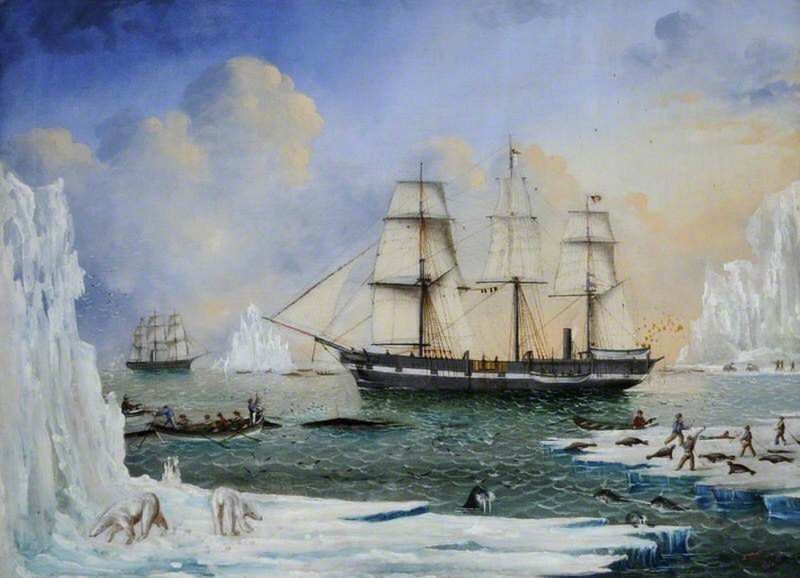
The three-masted ship dominates the center. Its pale sails and dark hull stand out against the hazy sky, and a funnel shows it also had steam power.
A huge, pale iceberg fills the left edge. It frames the scene like a stage curtain and makes the ships and men look very small.
On the floe at right, men stand among resting seals, some with arms raised as if holding clubs or poles. The scene points to sealing as part of the voyage's work.
Two white bears pad across the ice at lower left. They are almost the same color as the ice, and they give the foreground a sense of wild, untouched land.
A crowded rowing boat pulls across the water at left, with a man standing in the bow. A dark shape near it may be a whale's back, so the chase is easy to miss.
The full narration walks you through 'Diana' and 'Chase' in the Arctic — the story behind it, the details most visitors miss, and why it matters. Free in the Art Whisper app.
James H. Wheldon, a British painter active in the late 19th century, is known for his etching of 'Saint James the Greater'.
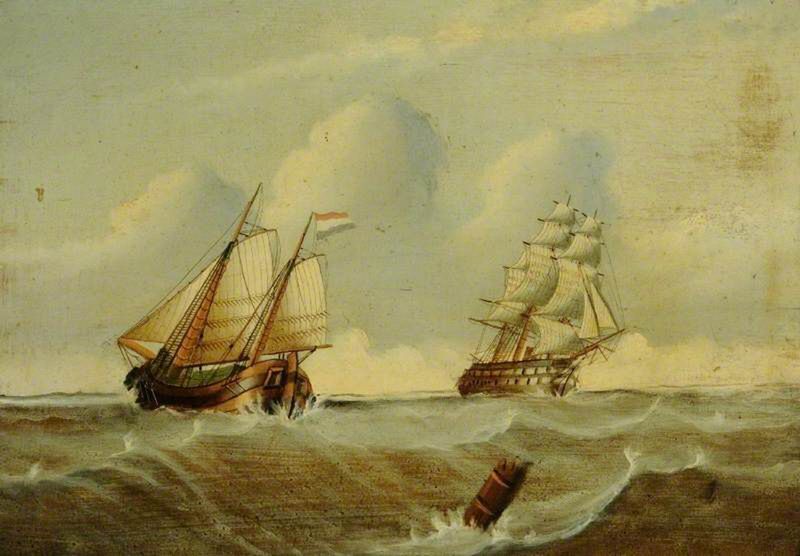 Dutch Buss and Man of War
1870 · Hull Maritime Museum
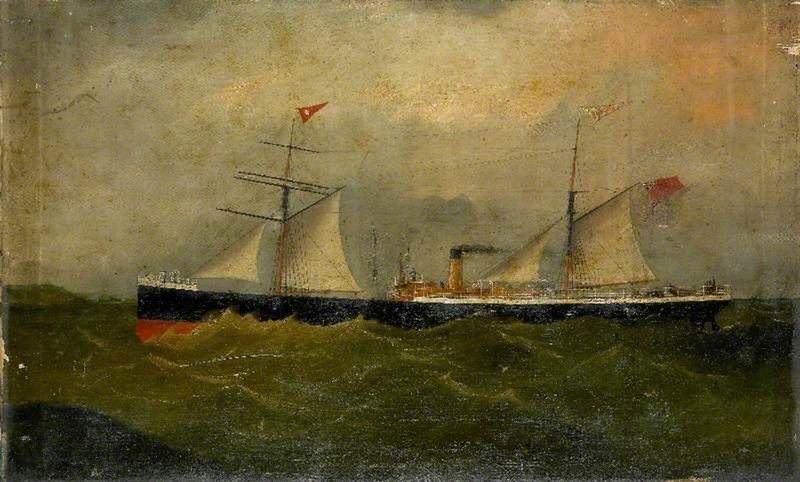 SS 'Burgos'
1871 · Hull Maritime Museum
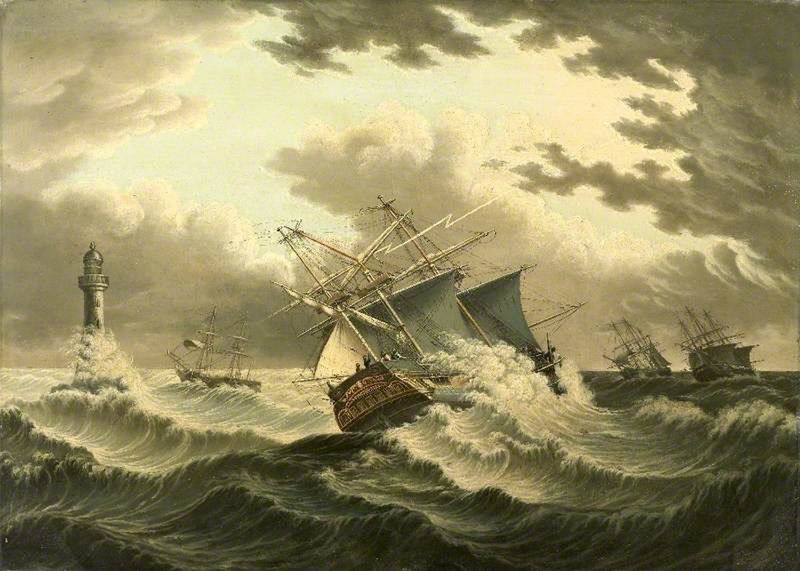 A Barque Struck by Lightning off Eddystone Lighthouse, Cornwall
Hull Maritime Museum
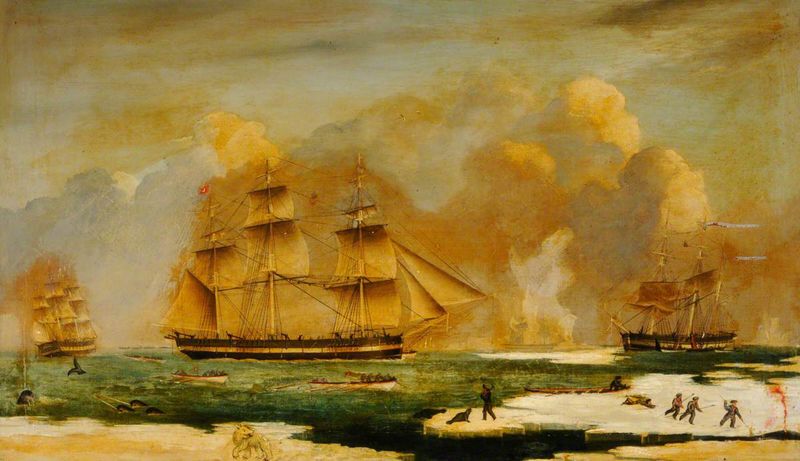 Hull Whaler 'Abram'
Hull Maritime Museum
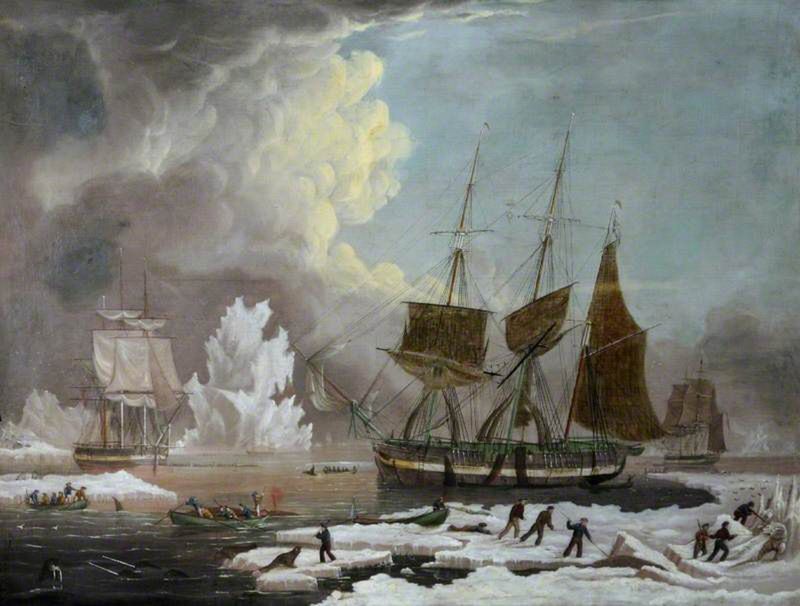 Hull Whaler 'Harmony' (after William John Huggins)
Hull Maritime Museum
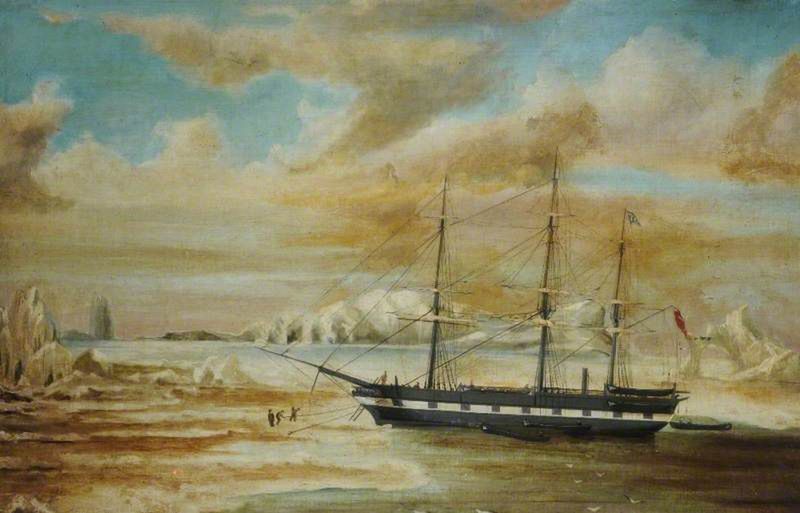 The 'Diana' in an Ice Dock
Hull Maritime Museum
 Whaler 'Diana'
Hull Maritime Museum
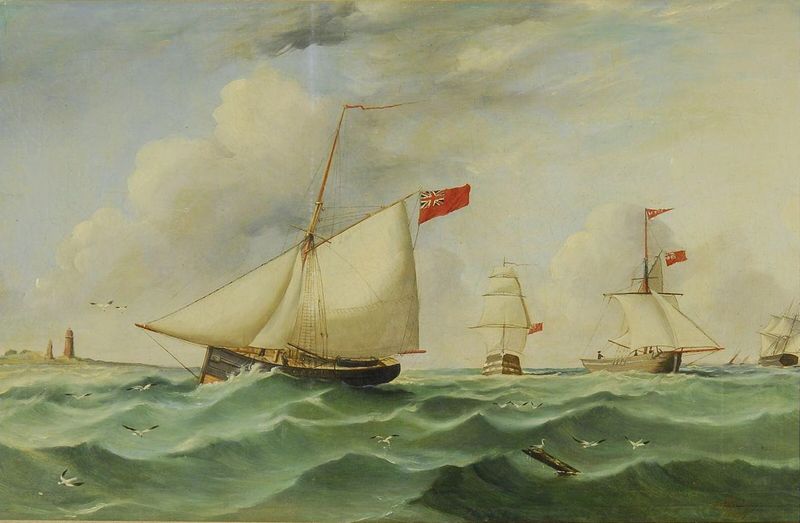 Ships navigating a busy channel
Beyond Wheldon: works from the same years.
 Same era · 1840s–1870s
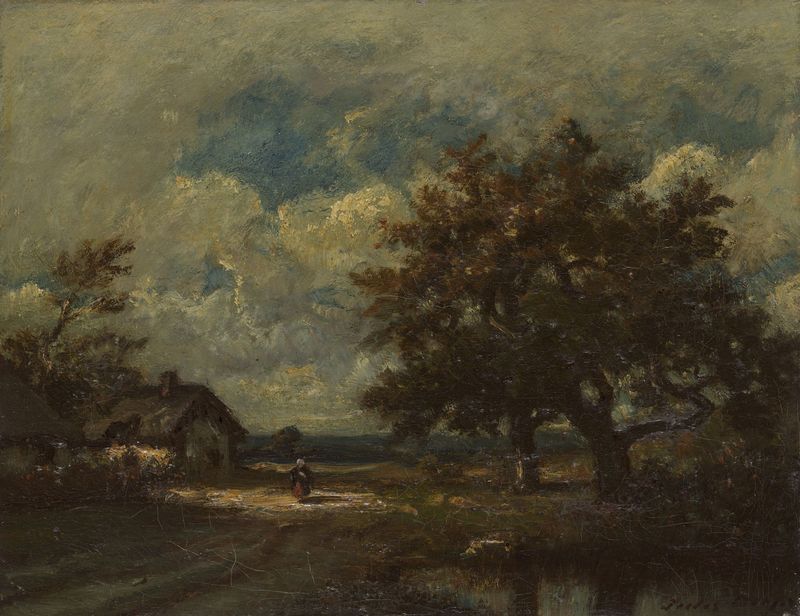
The Cottage by the Roadside, Stormy Sky
Léon-Victor Dupré · 1855 · Art Institute of Chicago
 Same era · 1840s–1870s
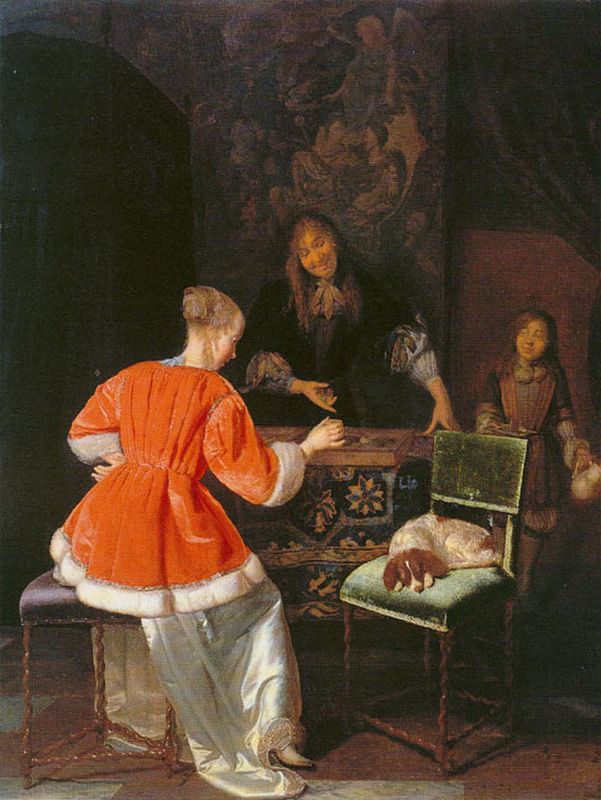
The Backgammon Players
Philip Webb · 1861 · The Metropolitan Museum of Art
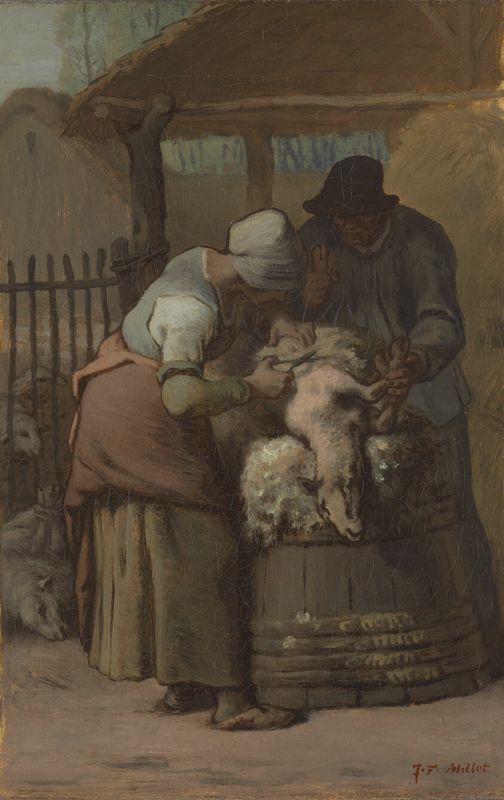 Same era · 1840s–1870s
The Sheepshearers
Jean-François Millet · 1857 · Art Institute of Chicago
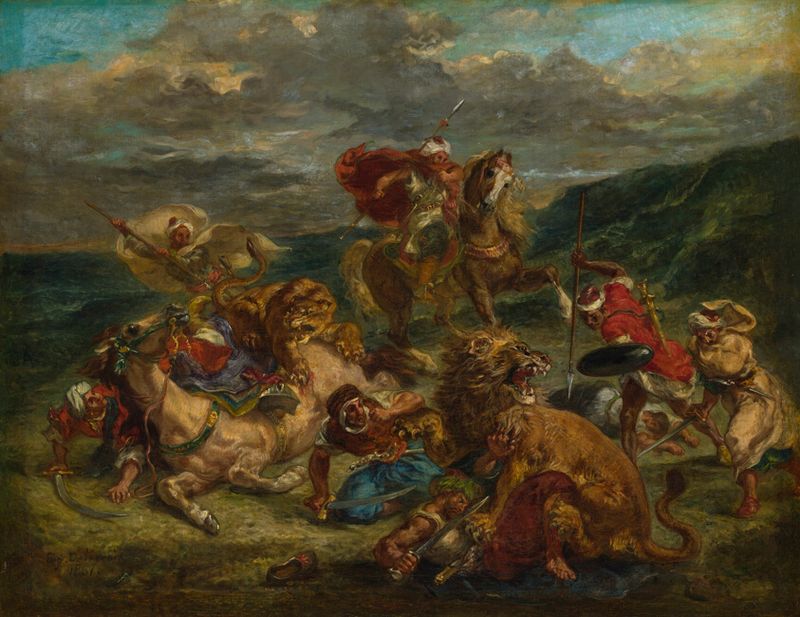 Same era · 1840s–1870s
Lion Hunt
Eugène Delacroix · 1858 · Museum of Fine Arts Boston
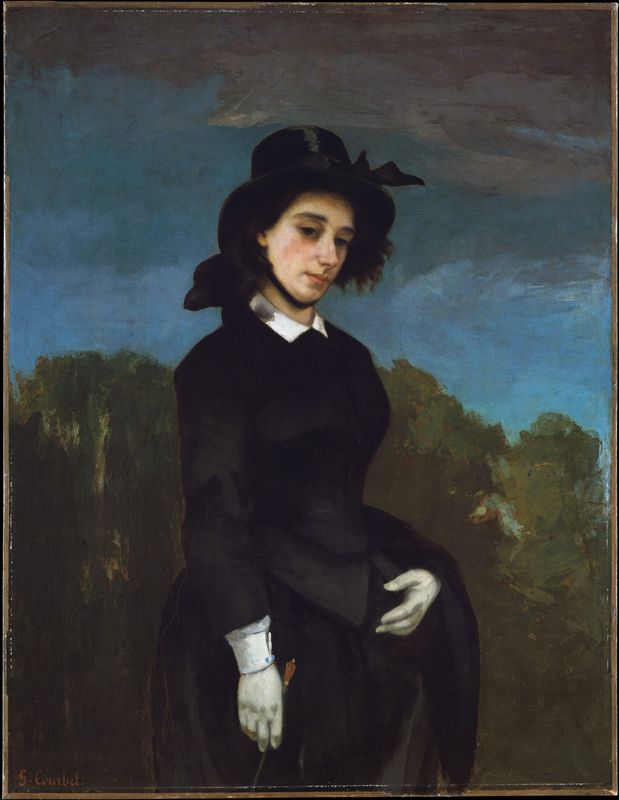 Same era · 1840s–1870s
Woman in a Riding Habit (L'Amazone)
Gustave Courbet · 1856 · Metropolitan Museum of Art
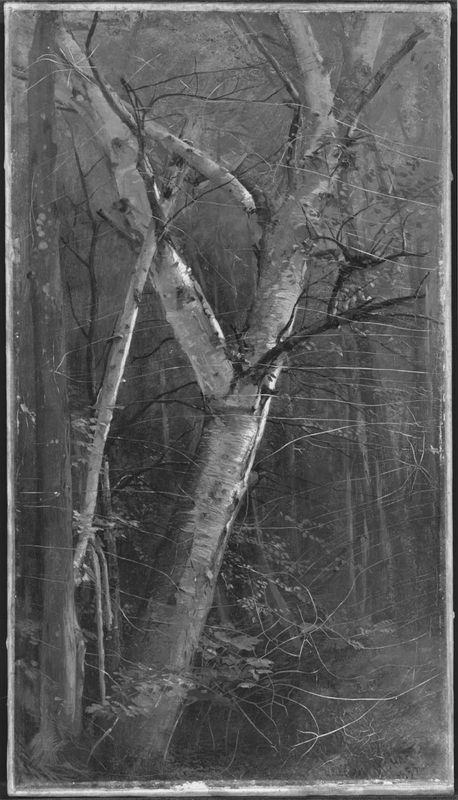 Same era · 1840s–1870s
Birches
William Hart · 1855 · Museum of Fine Arts Boston
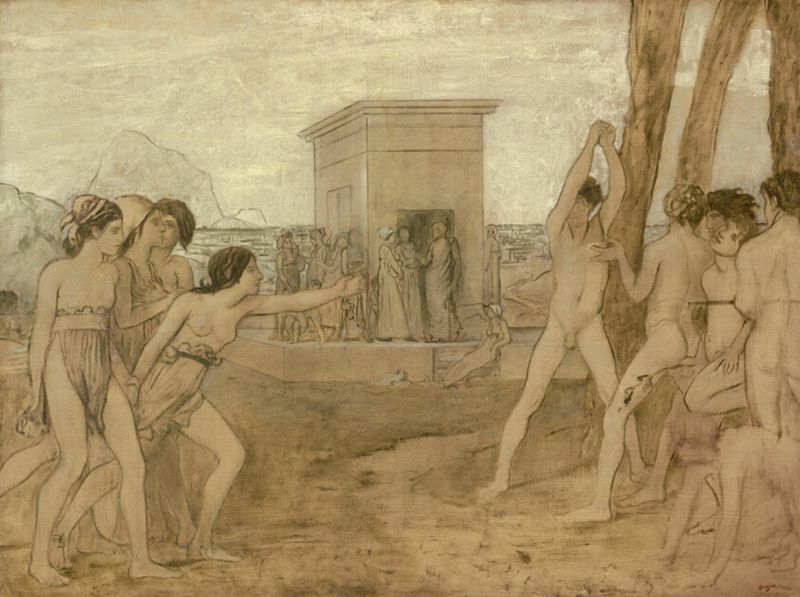 Same era · 1840s–1870s
Young Spartan Girls Challenging Boys
Edgar Degas · 1860 · Art Institute of Chicago
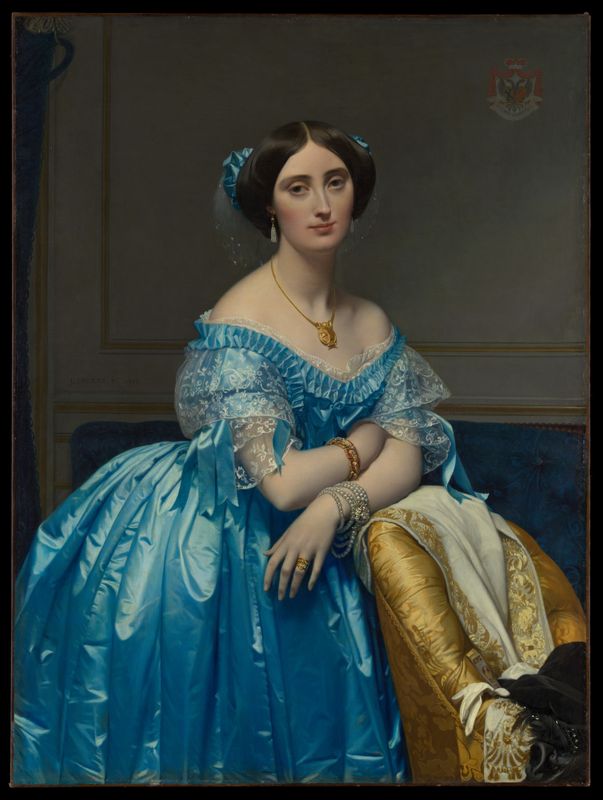 Same era · 1840s–1870s
Joséphine-Éléonore-Marie-Pauline de Galard de Brassac de Béarn (1825–1860), Princesse de Broglie
Jean-Auguste-Dominique Ingres · 1853 · Metropolitan Museum of Art
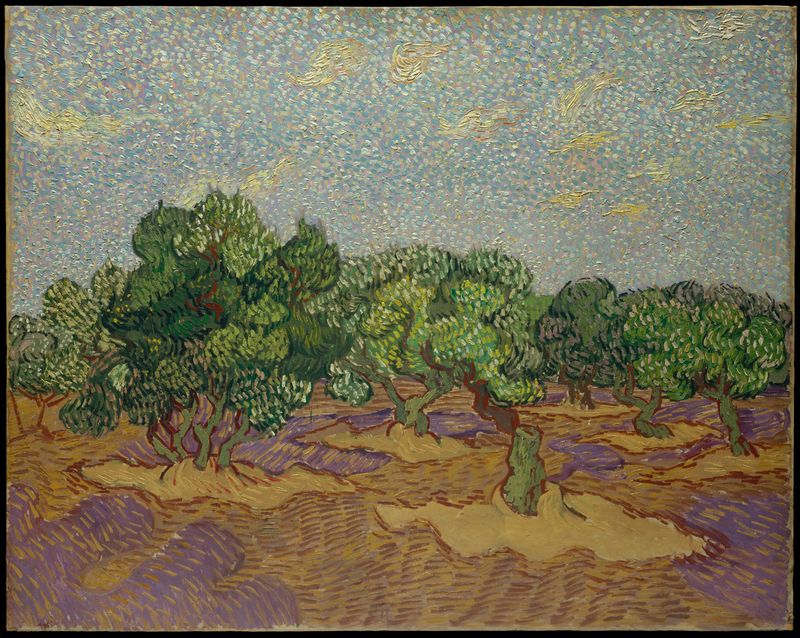 Same era · 1840s–1870s
Olive Trees
Vincent van Gogh · 1853 · The Metropolitan Museum of Art
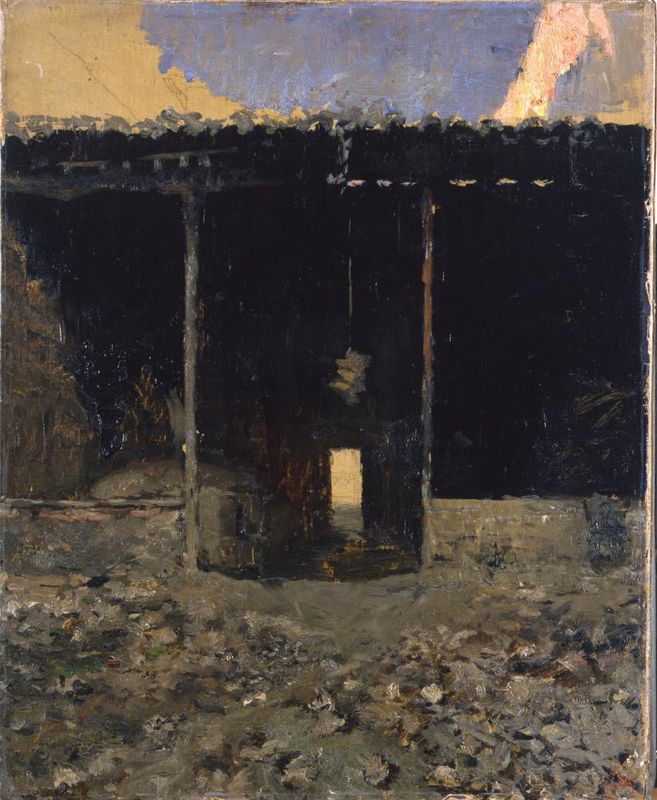 Same era · 1840s–1870s
A Sketch
Mariano Fortuny Marsal · 1862 · Hispanic Society of America
 Same era · 1840s–1870s
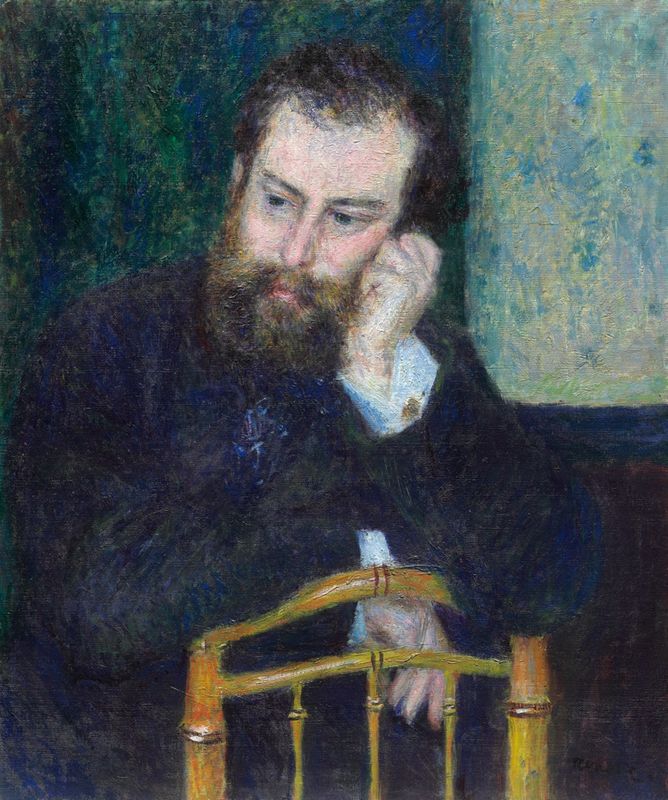
Alfred Sisley
Pierre-Auguste Renoir · 1864 · Foundation E.G. Bührle Collection
 Same era · 1840s–1870s
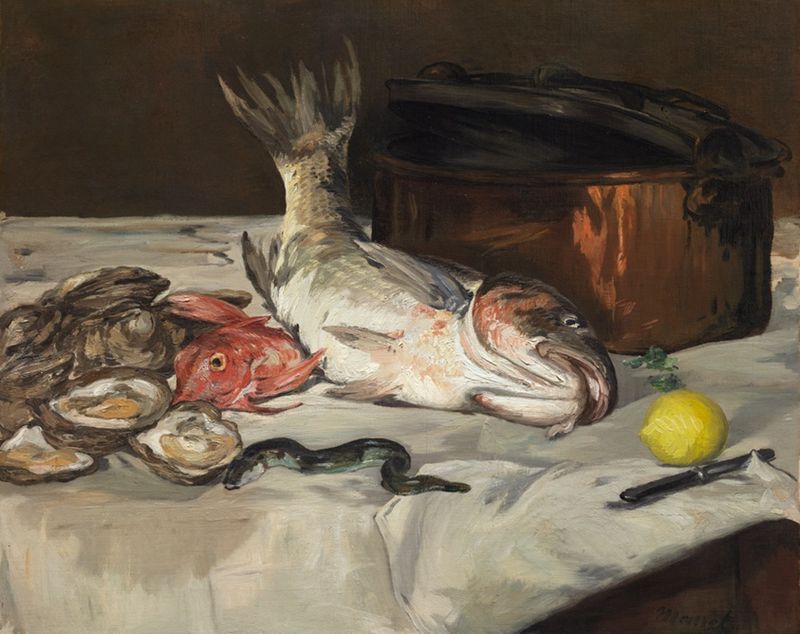
Fish (Still Life)
Édouard Manet · 1864 · Art Institute of Chicago
