
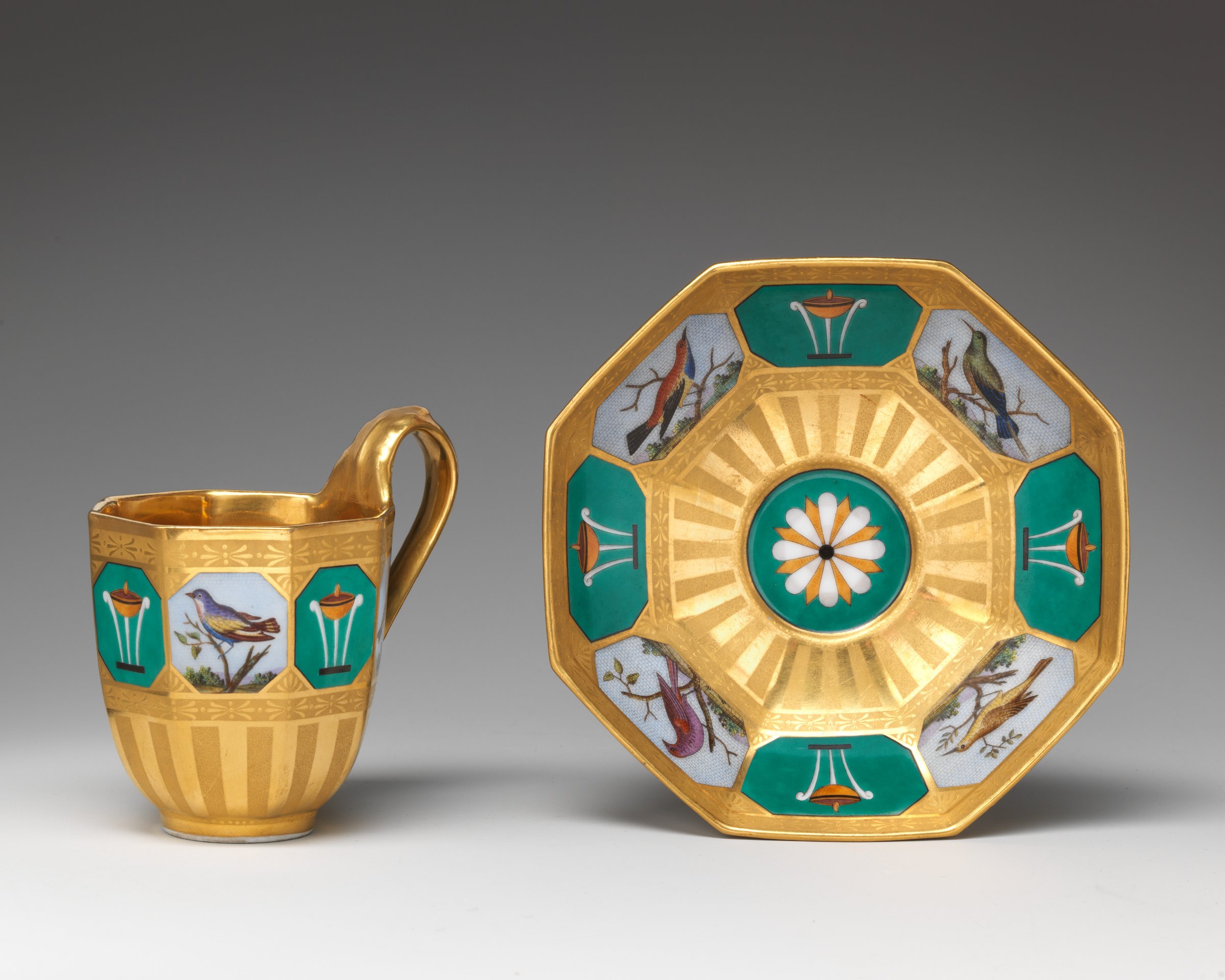
“Stop to admire this cup and saucer, a stunning example of micromosaic art. Tiny porcelain pieces create incredibly detailed birds, transforming a functional object into a miniature marvel.”
This delicate cup and saucer, created by Höchster Porzellan-Manufaktur in 1812, showcases an extraordinary level of detail. The surfaces are adorned with meticulously rendered birds, each feather and posture captured in a technique known as micromosaic. Look closely, and you’ll see that the birds aren't painted in broad strokes; instead, they are composed of countless tiny, colored porcelain pieces, fitted together with incredible precision. This intricate method mimics the ancient Roman art of mosaic, but on a miniature scale suited for tableware. The choice of hard-paste porcelain, a durable and refined material, allowed for such fine artistry, creating a sense of luxury and exoticism. This piece wasn't just for drinking tea; it was a conversation starter, a miniature world of natural beauty to be admired.
- Artist
- Höchster Porzellan-Manufaktur
- Date
- 1812
- Medium
- Hard-paste porcelain
- Location
- The Metropolitan Museum of Art
- Dimensions
- confirmed, cup: 3 3/4 × 3 3/4 × 2 1/2 in. (9.5 × 9.5 × 6.4 cm) confirmed, saucer: 1 1/4 × 5 1/4 × 5 1/4 in. (3.2 × 13.3 × 13.3 cm)
- Collection
- European Sculpture and Decorative Arts
- Culture
- German, Berlin
- Credit line
- Gift of Richard Baron Cohen, 2019
What to Notice
Four details hide in plain sight. Here’s where to look.
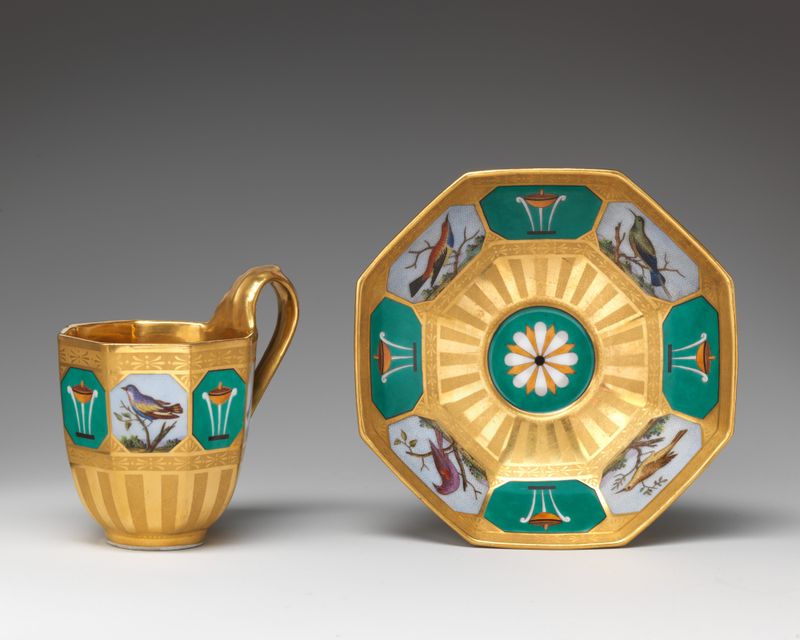
Observe the hundreds of tiny porcelain tesserae forming each bird.
Notice the subtle variations in color and shade within the micromosaic birds.
See how the birds are depicted in natural, dynamic poses.
Examine the delicate gold rim, framing the intricate bird scenes.
Stand in front of it and listen
The full narration walks you through Cup and saucer with birds in micromosaic decoration — the story behind it, the details most visitors miss, and why it matters. Free in the Art Whisper app.
Höchster Porzellan-Manufaktur
Germany's second-oldest porcelain maker, crafting delicate wares from 1746 with their iconic wheel trademark.
Further Works by Porzellan-Manufaktur
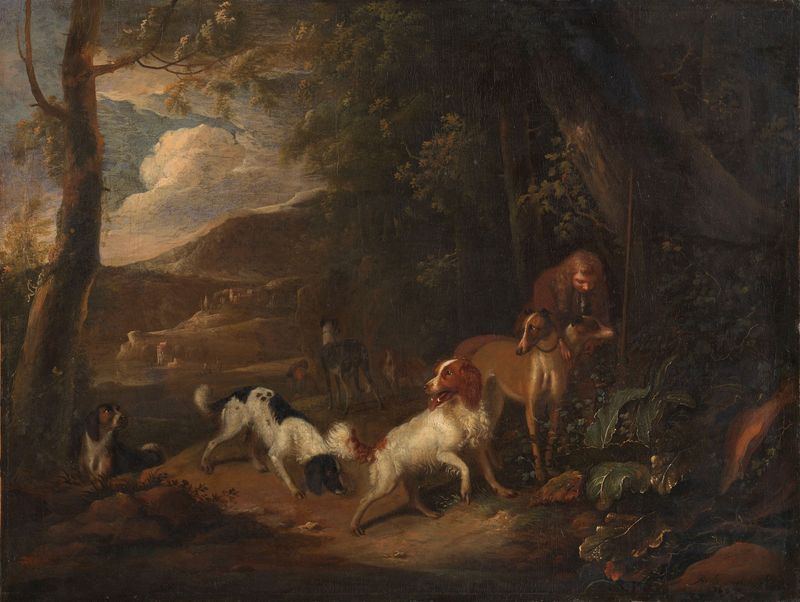 Hunter with Hounds
1755 · The Metropolitan Museum of Art
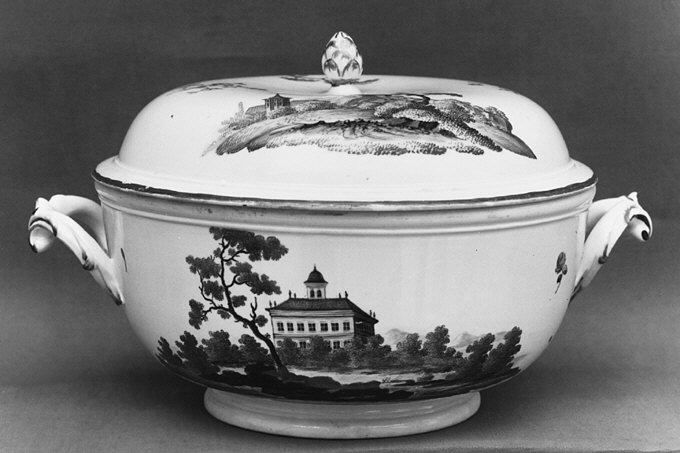 Bouillon bowl with cover
1760 · The Metropolitan Museum of Art
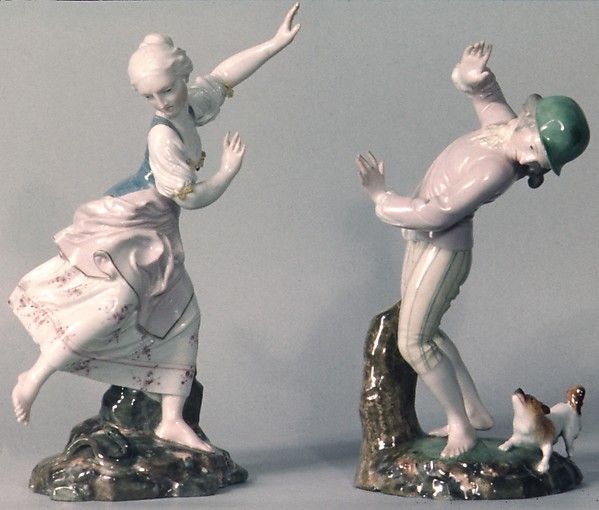 Girl fleeing from a snake (one of a pair)
1760 · The Metropolitan Museum of Art
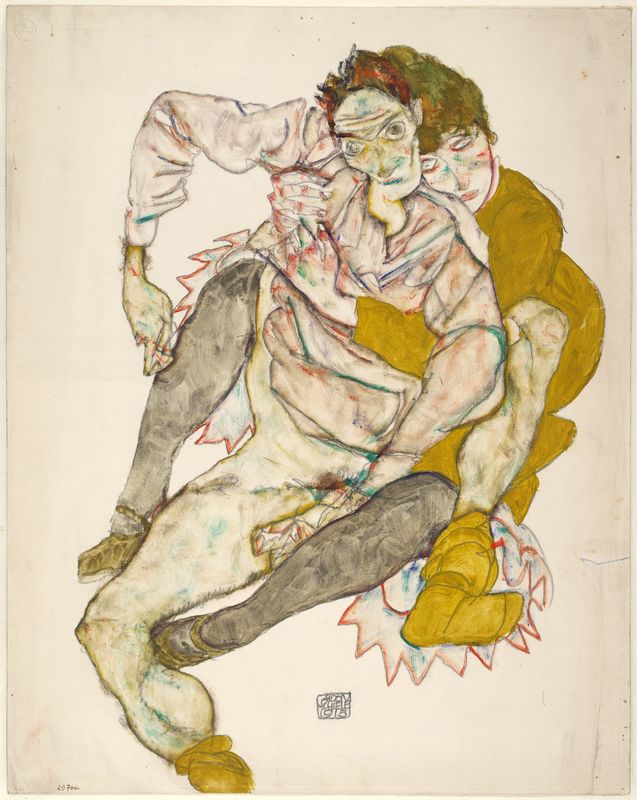 Seated couple
1760 · The Metropolitan Museum of Art
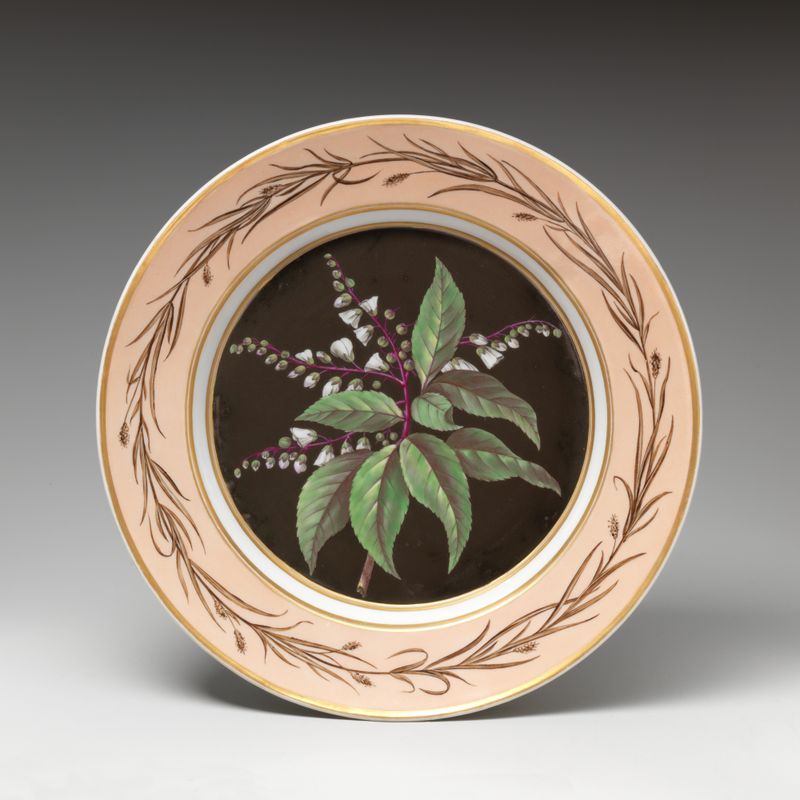 Plate with Lily of the Valley Tree (Clethra arborea)
1806 · The Metropolitan Museum of Art
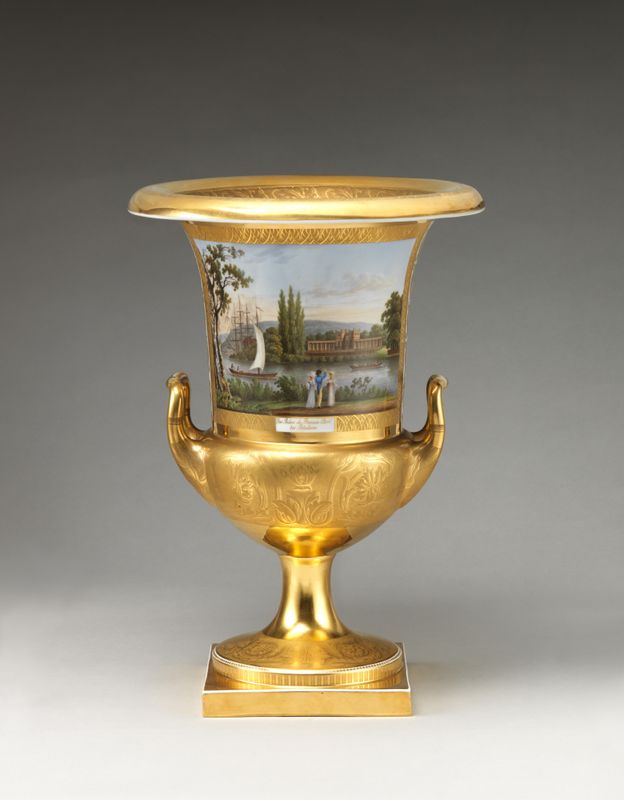 Krater vase with a signed view of Potsdam
1820 · The Metropolitan Museum of Art
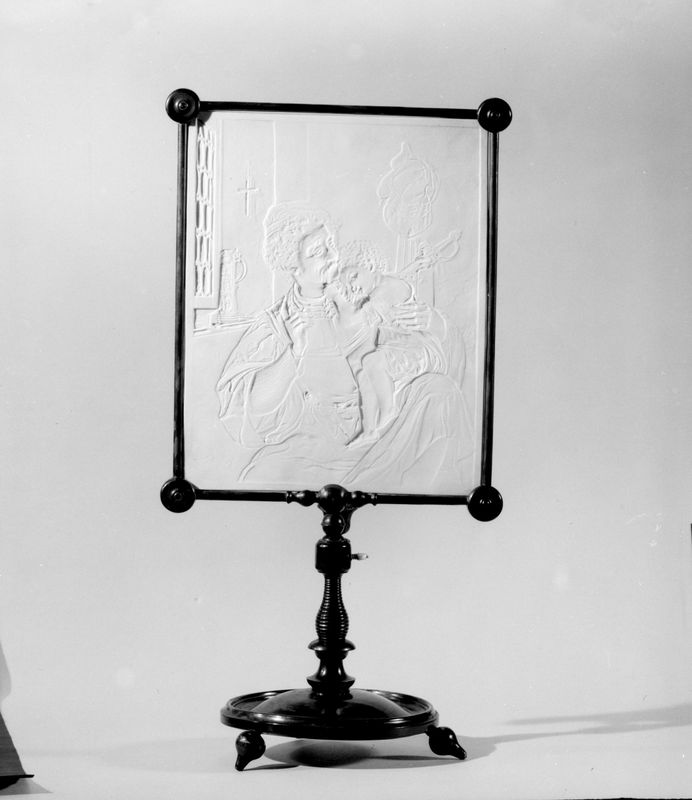 Lithophane
1837 · The Metropolitan Museum of Art
More works to explore
Beyond Porzellan-Manufaktur: works from the same years.
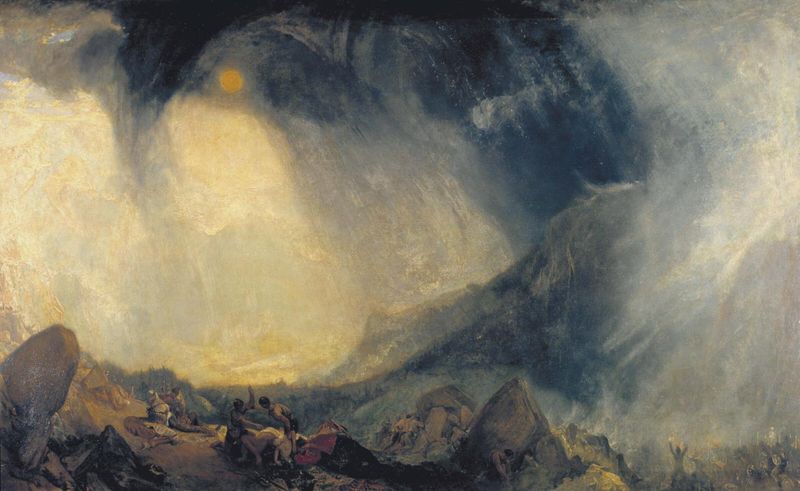 Same era · 1790s–1820s
Snow Storm: Hannibal and his Army Crossing the Alps
J. M. W. Turner · 1812 · National Gallery
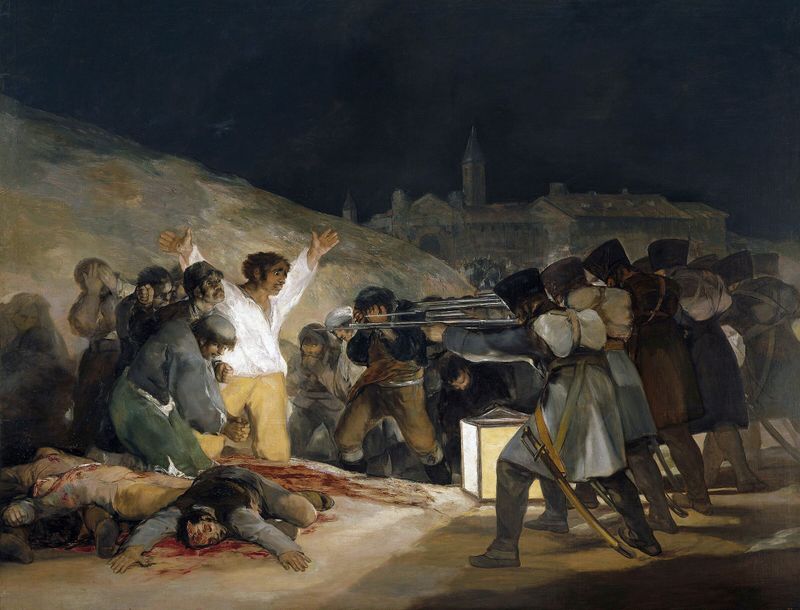 Same era · 1790s–1820s
The Third of May 1808
Francisco Goya · 1814 · Museo del Prado
 Same era · 1790s–1820s
Wanderer above the Sea of Fog
Caspar David Friedrich · 1818 · Hamburger Kunsthalle
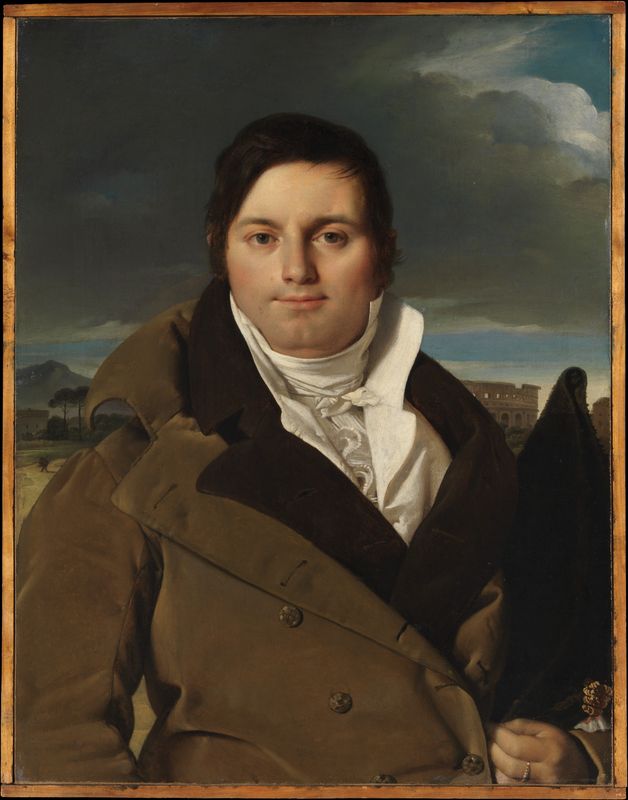 Same era · 1790s–1820s
Joseph-Antoine Moltedo (born 1775)
Jean-Auguste-Dominique Ingres · 1805 · The Metropolitan Museum of Art
 Same era · 1790s–1820s
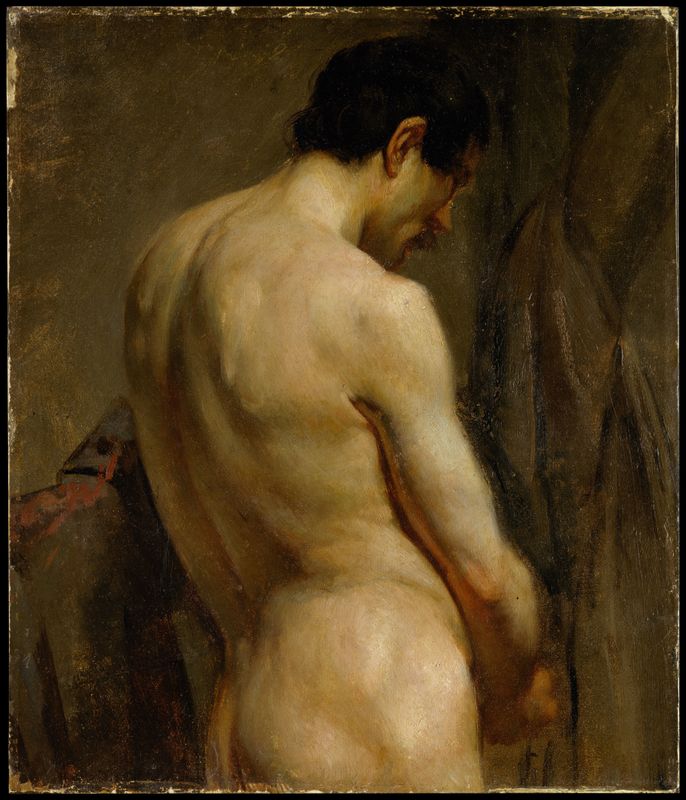
Male Academy Figure: Half-Length, Side View
Eugène Delacroix · 1819 · Karen B. Cohen Collection
 Same era · 1790s–1820s
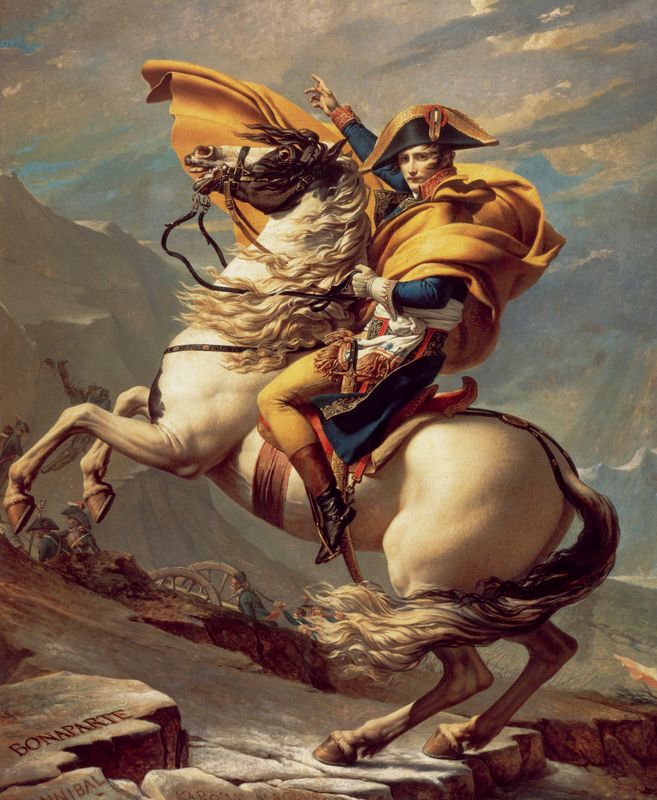
Napoleon Crossing the Alps
Jacques-Louis David · 1800 · Musée national de Malmaison et Bois-Préau
 Same era · 1790s–1820s
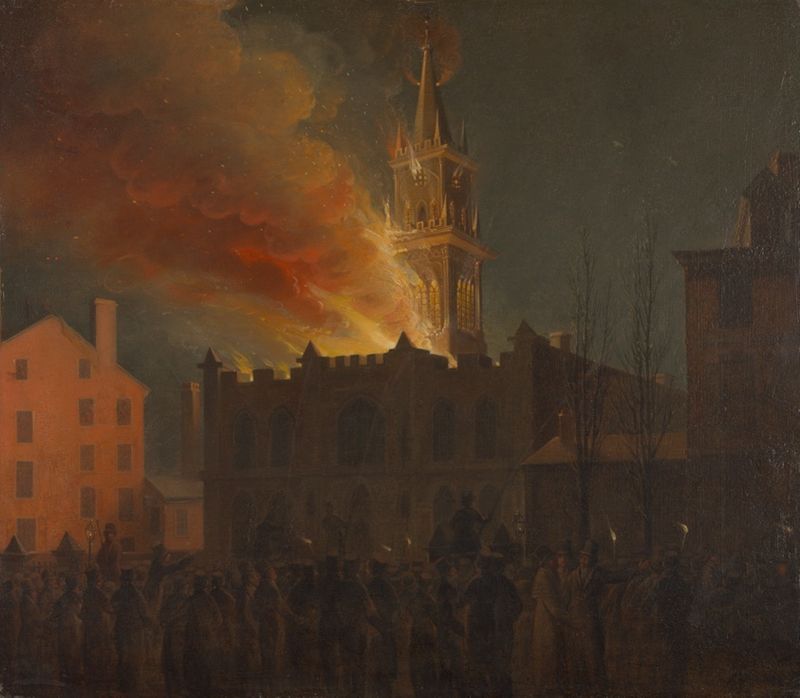
Conflagration of the Masonic Hall, Chestnut Street, Philadelphia, Pennsylvania
Samuel Jones · 1819 · Art Institute of Chicago
 Same era · 1790s–1820s
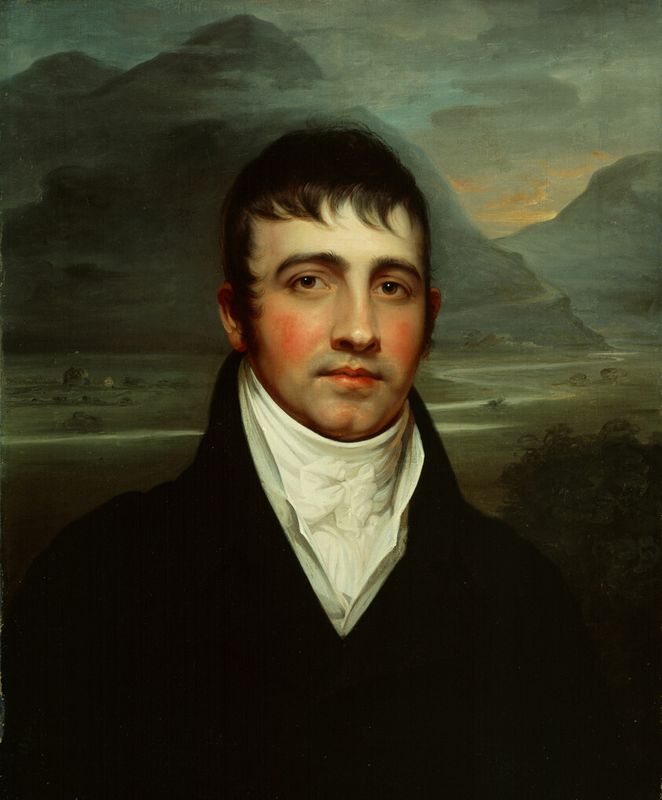
Samuel Fisher Bradford
Rembrandt Peale · 1803 · Art Institute of Chicago
 Same era · 1790s–1820s
Sketchbook: Souvenir of Naples
Artist Unknown - The Mercat Cross, Aberdeen · 1821 · The Metropolitan Museum of Art
 Same era · 1790s–1820s
The Captive Slave (Ira Aldridge)
John Philip Simpson · 1827 · Art Institute of Chicago
 Same era · 1790s–1820s
The Children of the 13th Marquess
Thomas Stewardson · 1812 · Winchester Guildhall
 Same era · 1790s–1820s
James Asperne (1737–1820)
Samuel Drummond · 1813 · Museum of Freemasonry