01
The satin gown
Look at the woman's pale skirt. Its folds catch light in long, glossy streaks, and ter Borch makes the fabric feel slippery and cool.
1 of 4 on the painting
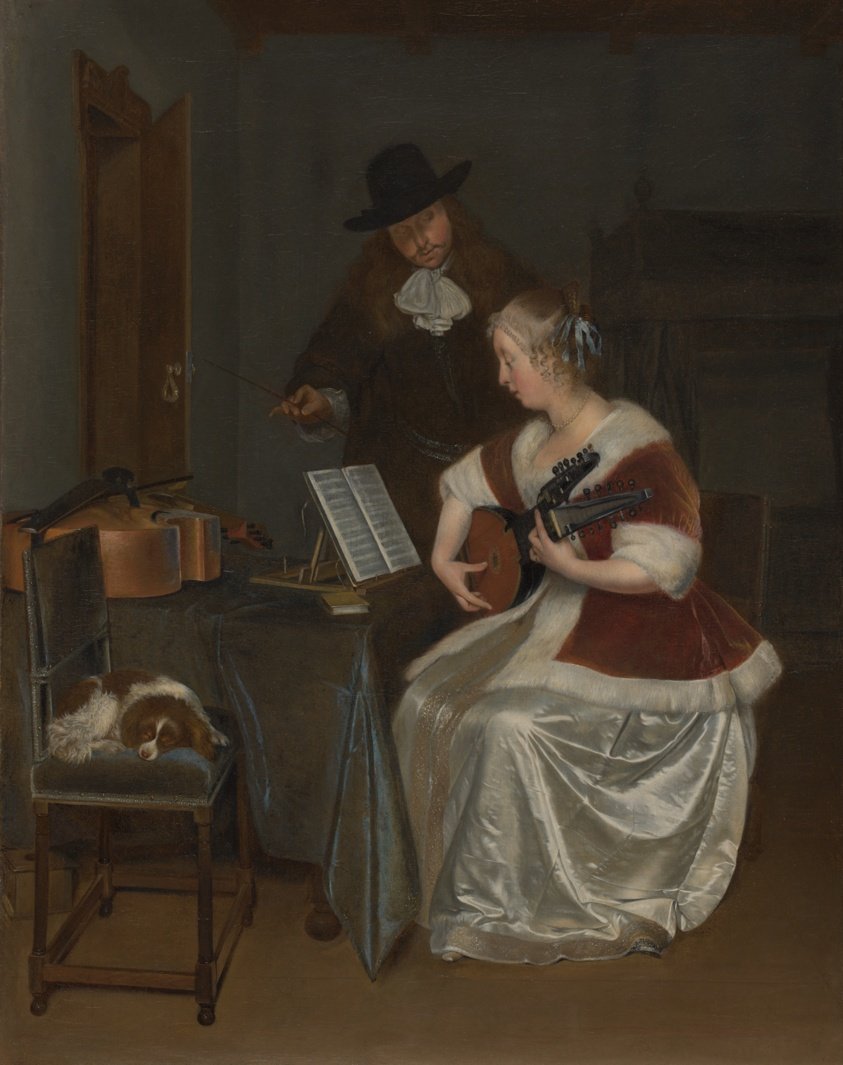
“Step into a hushed 17th-century interior where a music lesson unfolds, masterfully capturing a moment of quiet focus and the interplay of light and shadow.”
A young woman, bathed in soft light, focuses intently on her music lesson in this intimate painting. Her back is to us, drawing our gaze to the sheet music on the table and the instrument she holds. The artist captures a quiet moment, inviting us into a private world of domestic life. The scene unfolds with a subtle elegance, from the rich textures of the fabrics to the gentle expressions of concentration. The way the light falls across the room, illuminating specific details while leaving others in shadow, creates a sense of depth and atmosphere, making the viewer feel like an unseen observer.
Five details hide in plain sight. Pick one and we’ll show you exactly where to look.
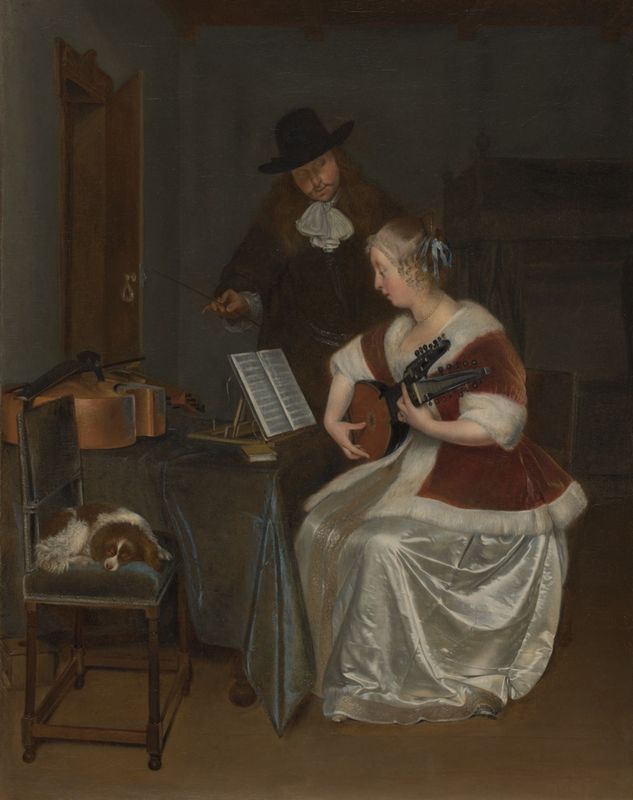
Look at the woman's pale skirt. Its folds catch light in long, glossy streaks, and ter Borch makes the fabric feel slippery and cool.
The woman's fingers pluck the strings of her lute, which has a rounded wooden body and a long neck with pegs. Her lowered gaze suggests concentration on the music.
The standing man holds a slim bow in his raised hand and leans toward the seated woman as she plays. His pose suggests he is guiding her lesson, and the bow links him to the viol on the table.
Down on the blue velvet chair, a small brown and white dog is curled up asleep. It adds a quiet, homey note while the humans are busy with music.
The muted gray-brown room pushes the bright dress forward. The man's dark figure leans in above the woman, and the line down through her shoulders to the pale skirt ties the two together in a calm, private moment.
The full narration walks you through The Music Lesson — the story behind it, the details most visitors miss, and why it matters. Free in the Art Whisper app.
Gerard ter Borch was a Dutch Golden Age painter who masterfully captured the quiet intimacies and subtle emotions within domestic scenes.
Beyond ter Borch the Younger: works from the same years.
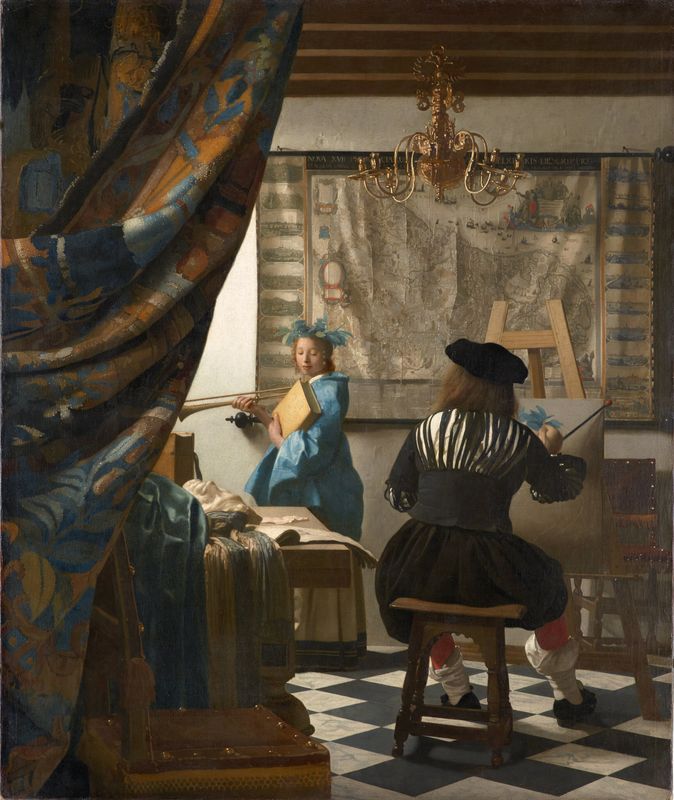 Same era · 1650s–1680s
The Art of Painting
Johannes Vermeer · 1667 · Kunsthistorisches Museum
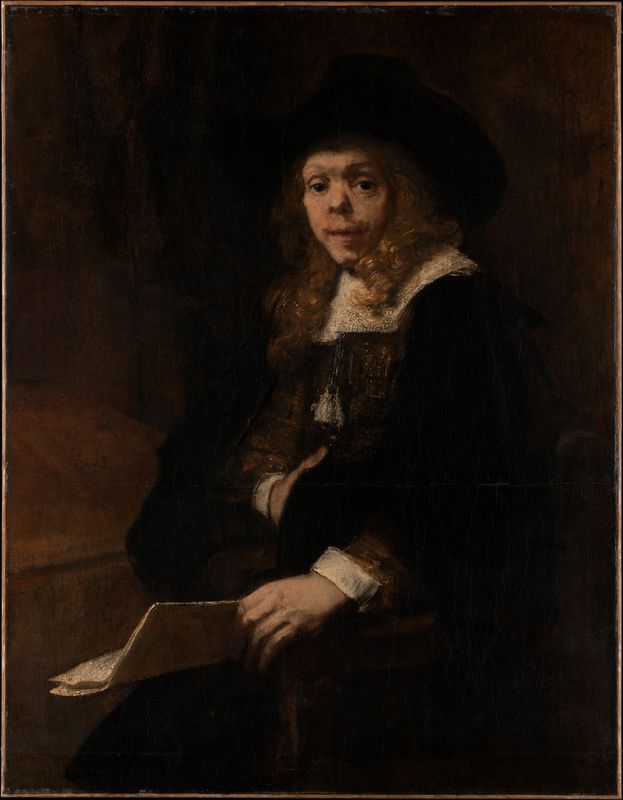 Same era · 1650s–1680s
Portrait of Gerard de Lairesse
Rembrandt · 1663 · The Metropolitan Museum of Art
 Same era · 1650s–1680s
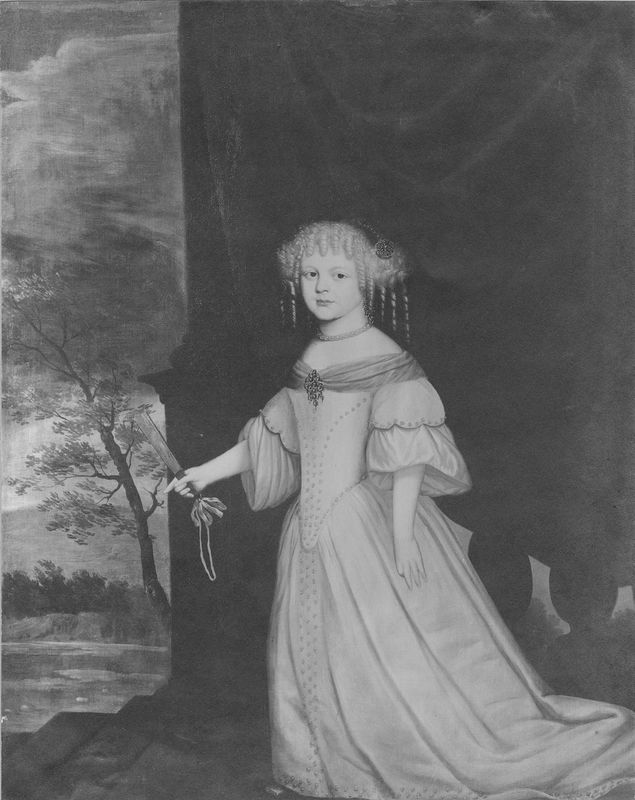
Sofia Augusta, 1663-1694, prinsessa av Anhalt-Zerbst hertiginna av Sachsen-Weimar
Salomon Duarte · 1670 · Nationalmuseum
 Same era · 1650s–1680s
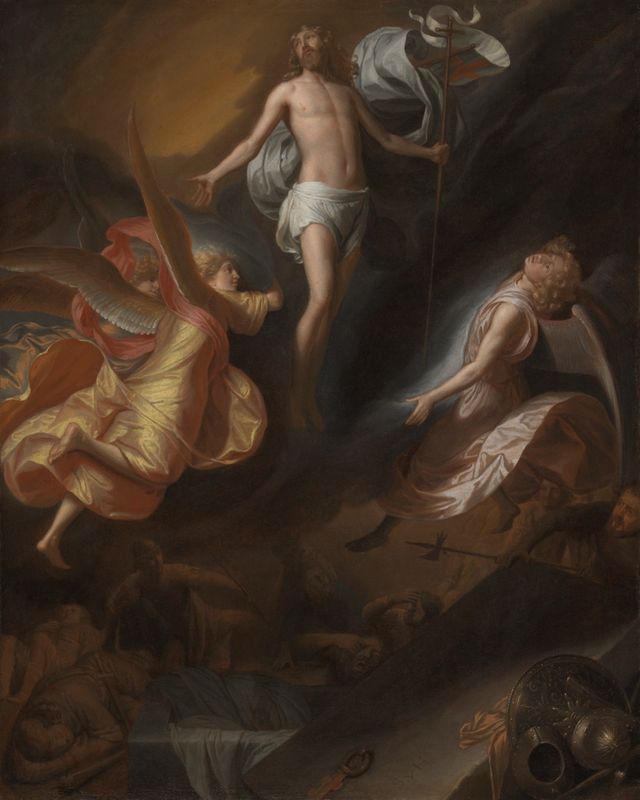
Resurrection of Christ
Samuel van Hoogstraten · 1665 · Art Institute of Chicago
 Same era · 1650s–1680s
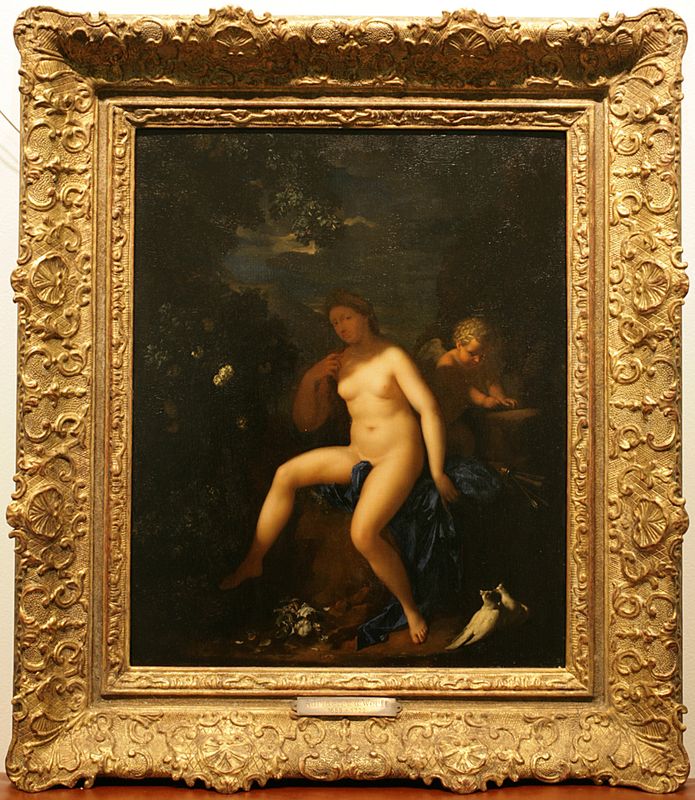
Venus and Cupid
Adriaen van der Werff · 1684 · Vizcaya Museum and Gardens
 Same era · 1650s–1680s
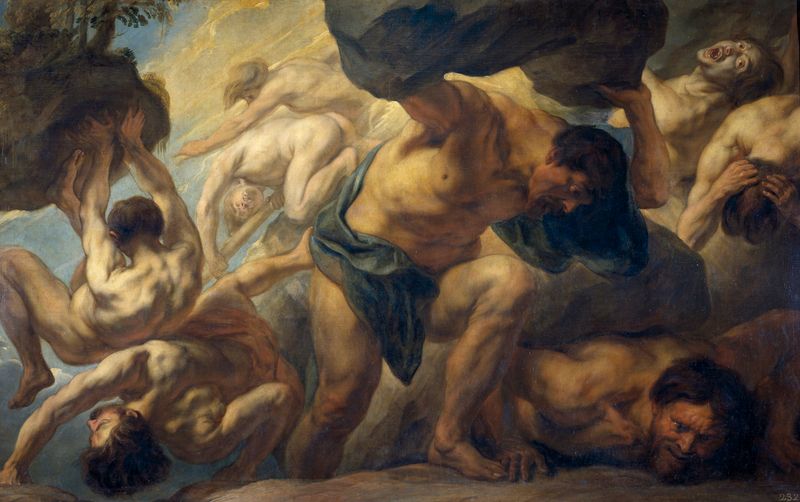
The Fall of the Giants
Jacob Jordaens · 1663 · Art Institute of Chicago
 Same era · 1650s–1680s
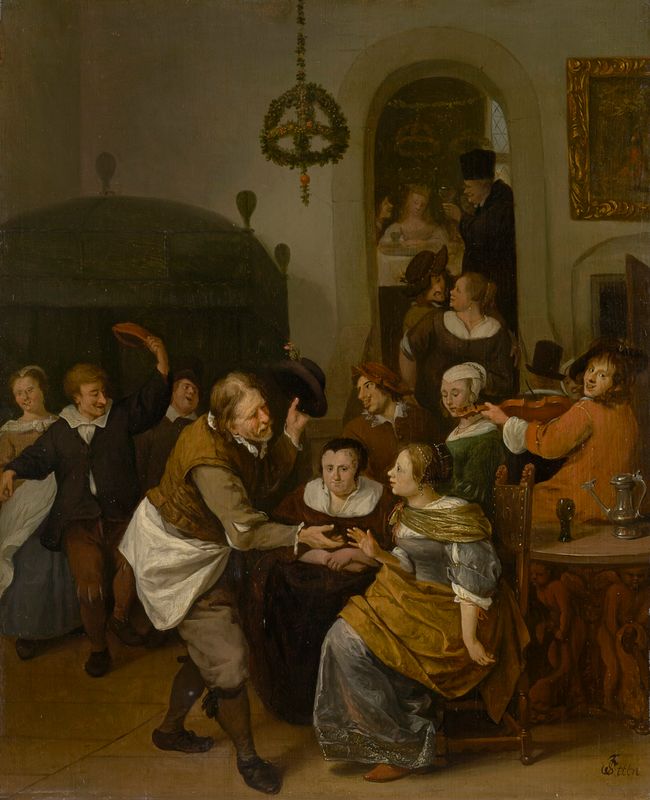
The wedding party
Jan Steen · 1660 · Museum Boijmans Van Beuningen
 Same era · 1650s–1680s
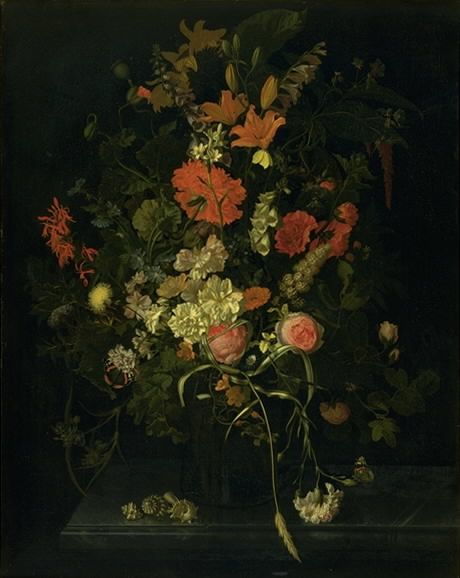
Bouquet of flowers in a glass vase
Jan van Kessel the Elder · 1659 · Suermondt-Ludwig-Museum
 Same era · 1650s–1680s
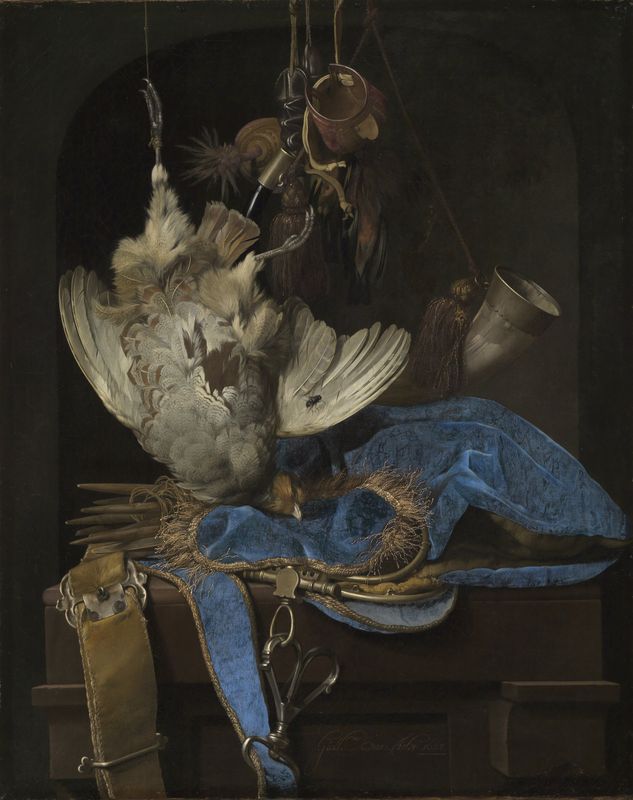
Still-Life with Hunting Equipment and Dead Birds
Willem van Aelst · 1668 · Staatliche Kunsthalle Karlsruhe
 Same era · 1650s–1680s
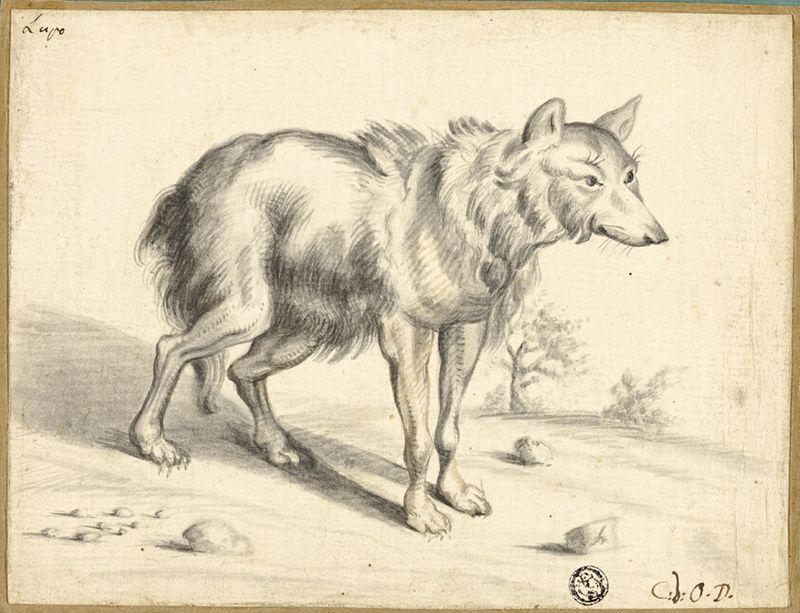
Wolf
Jan van Os · 1655 · Art Institute of Chicago
