01
The tall birch
Find the tall birch left of center. Its golden, lacy crown is the warmest note, so the whole scene seems to glow from this one tree.
1 of 5 on the painting
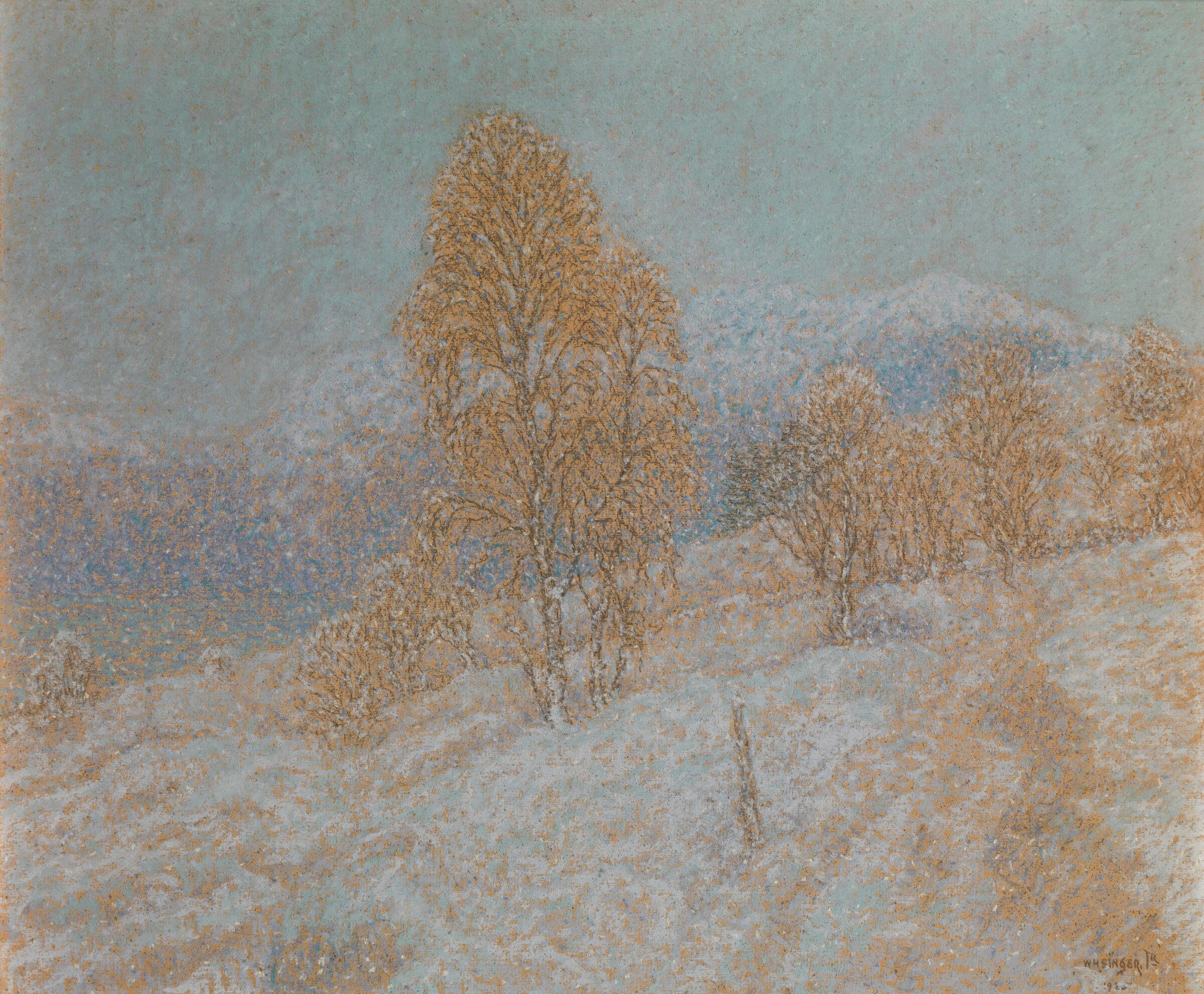
“Stop and immerse yourself in the serene beauty of a winter landscape. This painting captures the hushed magic of a snowy day, inviting you to feel the stillness and quietude of nature.”
A quiet winter scene unfolds in William Henry Singer's "Snowy Day," painted in 1915. The canvas is dominated by soft, muted tones, capturing the hushed atmosphere of fresh snowfall. Bare trees, their branches laden with white, frame a winding path that disappears into the distance. The artist emphasizes the stillness of the landscape, using subtle variations in light and shadow to suggest the gentle undulations of the snow-covered ground. This painting evokes a sense of solitude and the quiet beauty found in nature during the colder months, inviting contemplation rather than dramatic action. It is a classic example of landscape painting, focusing on the serene power of the natural world.
Five details hide in plain sight. Pick one and we’ll show you exactly where to look.
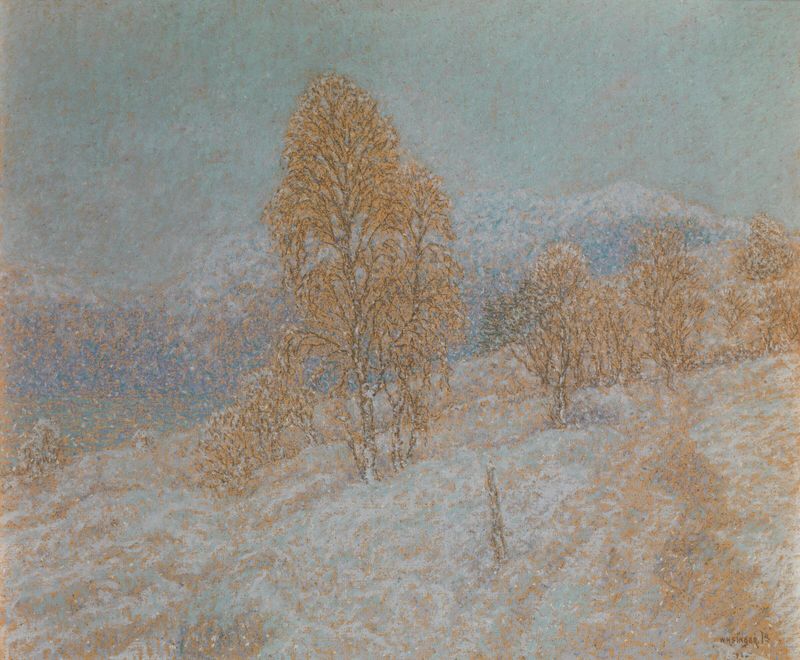
Find the tall birch left of center. Its golden, lacy crown is the warmest note, so the whole scene seems to glow from this one tree.
Look at the sky. Tiny flecks of orange and blue are scattered over the pale green-grey ground, so the air seems to be filled with falling snow. The work looks like pastel, with a grainy, dotted texture.
Past the trees, pale blue mountains fade into the haze. Cool distance against the warm foreground pushes the hillside forward and adds depth.
Low in the middle, a thin weathered post leans out of the snow. It is easy to miss, but it adds a quiet human trace in empty land.
In the lower right, a soft orange track seems to curve through the snow. It is faintly drawn, but it invites you to wander up the hill.
The full narration walks you through Snowy Day — the story behind it, the details most visitors miss, and why it matters. Free in the Art Whisper app.
William Henry Singer, Jr. captured the serene beauty of Norwegian landscapes and the vibrant life of European cities.
Beyond Singer: works from the same years.
 Same era · 1900s–1930s
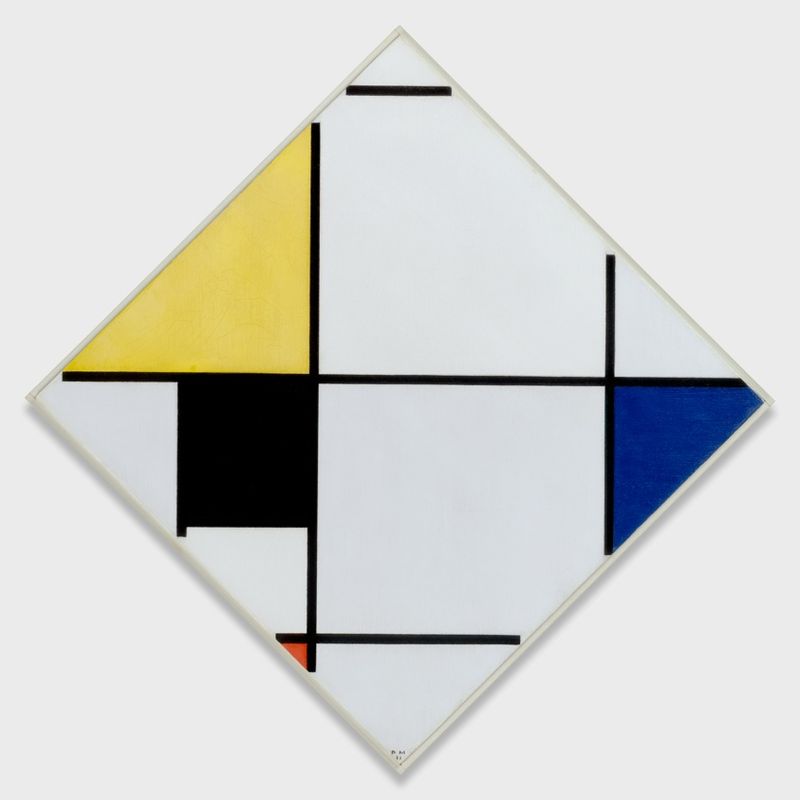
Lozenge Composition with Yellow, Black, Blue, Red, and Gray
Piet Mondrian · 1921 · Art Institute of Chicago
 Same era · 1900s–1930s
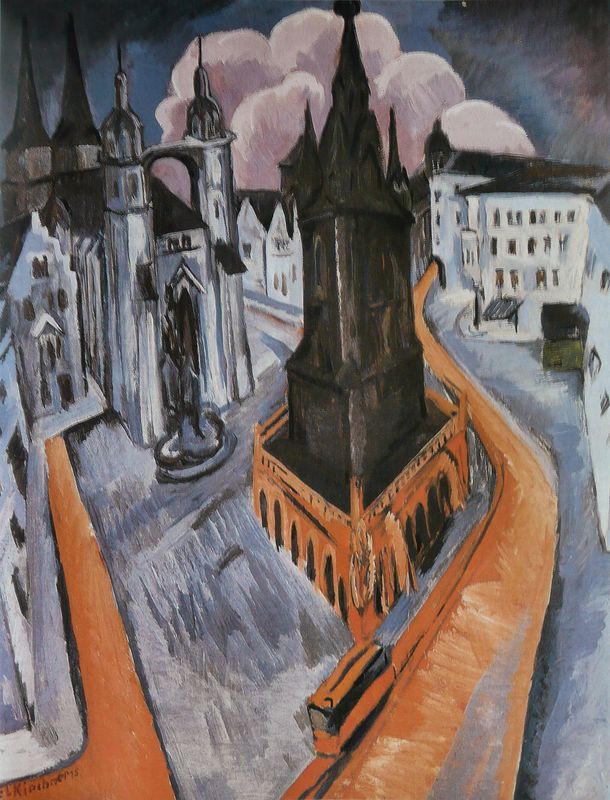
The Red Tower in Halle
Ernst Ludwig Kirchner · 1915 · Museum Folkwang
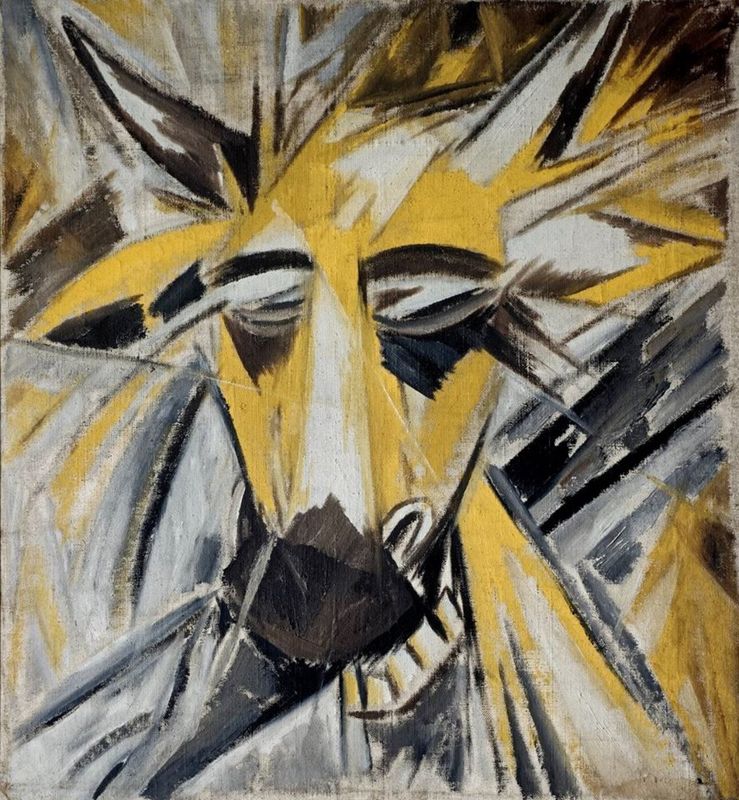 Same era · 1900s–1930s
Bull's Head
Mikhail Larionov · 1913 · Tretyakov Gallery
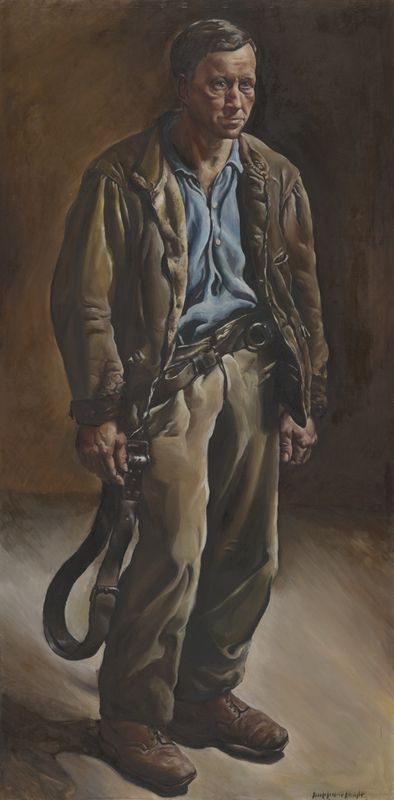 Same era · 1900s–1930s
The Lineman
Ivan Puni · 1927 · Art Institute of Chicago
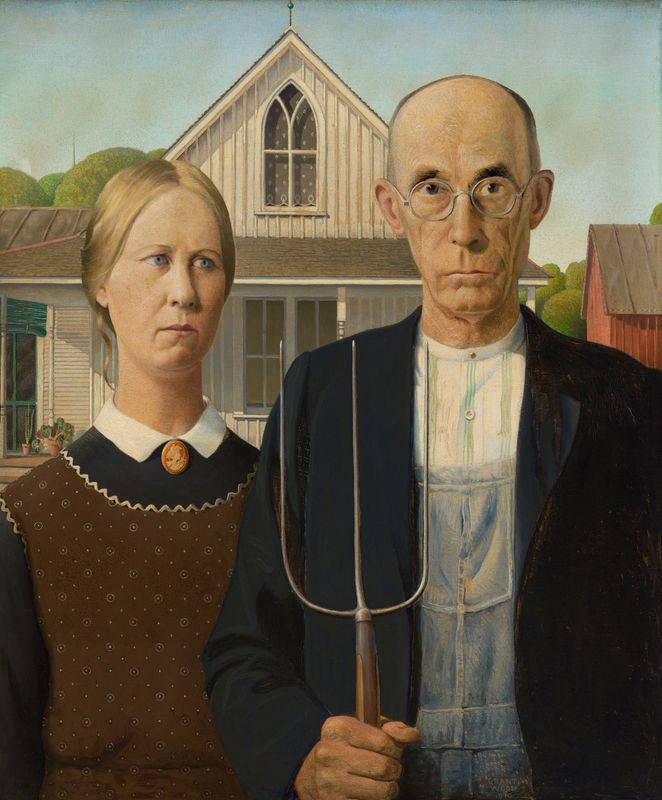 Same era · 1900s–1930s
American Gothic
Okada Saburosuke · 1930 · Art Institute of Chicago
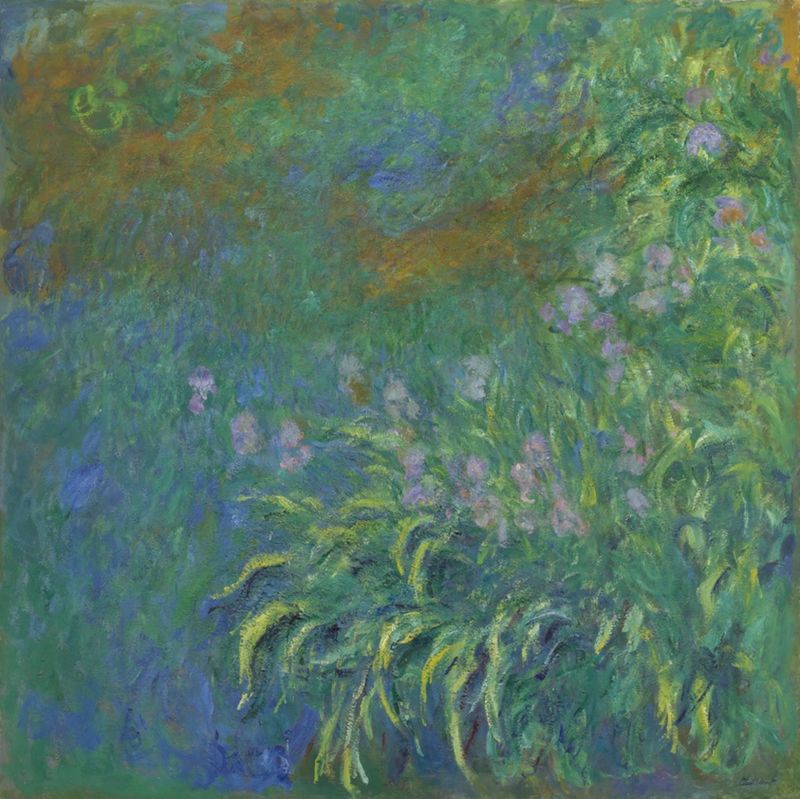 Same era · 1900s–1930s
Irises
Claude Monet · 1915 · National Gallery
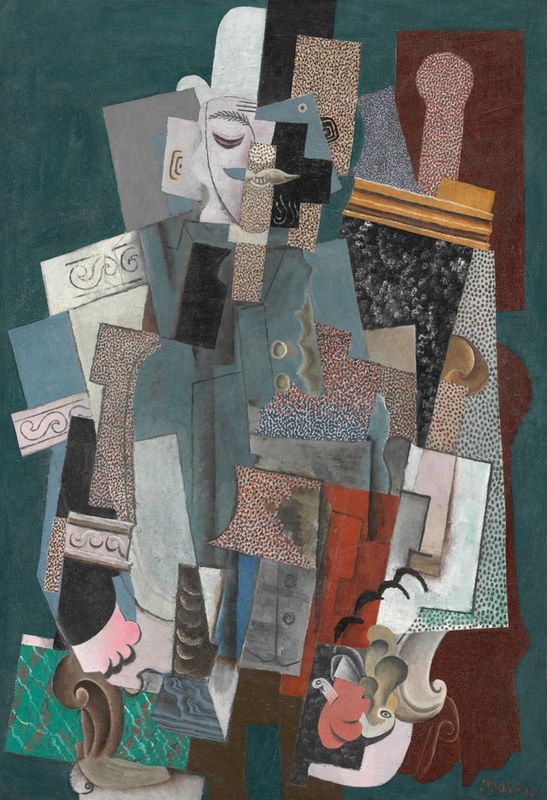 Same era · 1900s–1930s
Man with a Pipe
Pablo Picasso · 1915 · Art Institute of Chicago
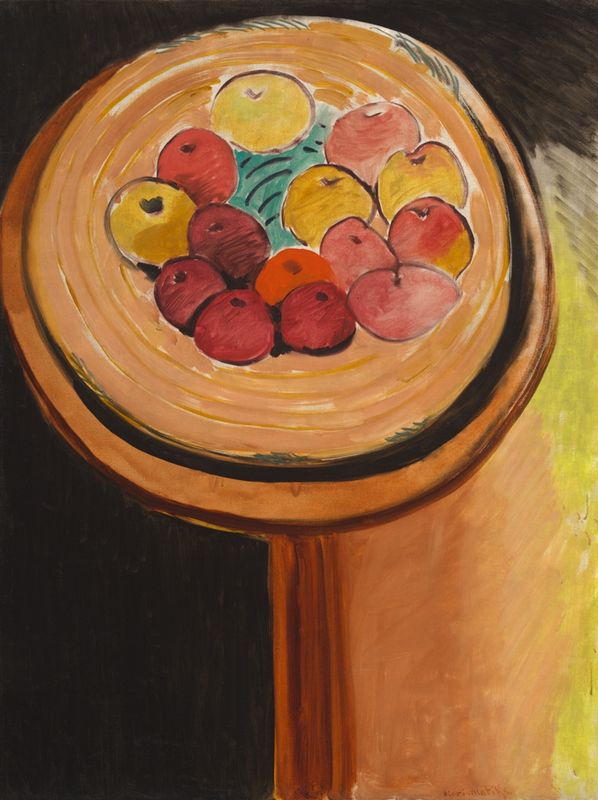 Same era · 1900s–1930s
Apples
Henri Matisse · 1916 · Art Institute of Chicago
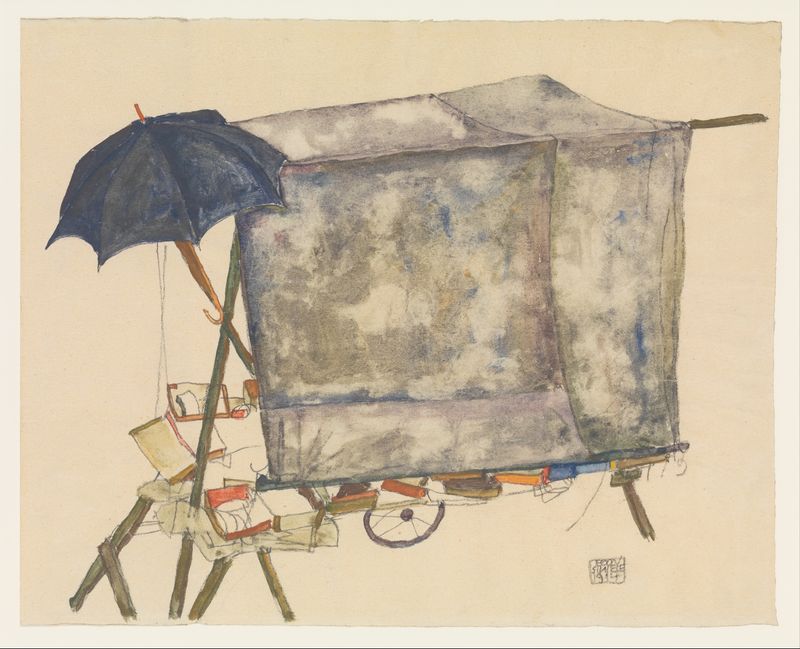 Same era · 1900s–1930s
Street Cart
Egon Schiele · 1914 · The Metropolitan Museum of Art
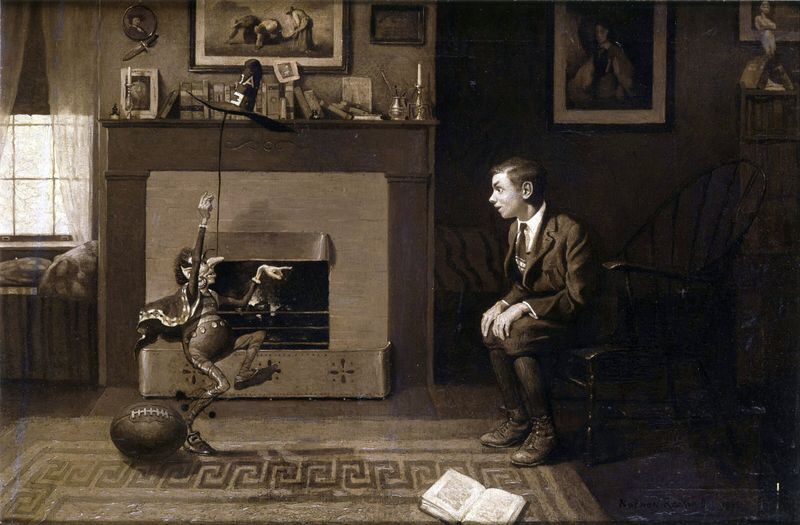 Same era · 1900s–1930s
The Magic Foot-ball, 'I thought you were wrong,' he said in triumph. 'You said it was nine! Stupid!'
Norman Rockwell · 1914 · Norman Rockwell Museum
 Same era · 1900s–1930s
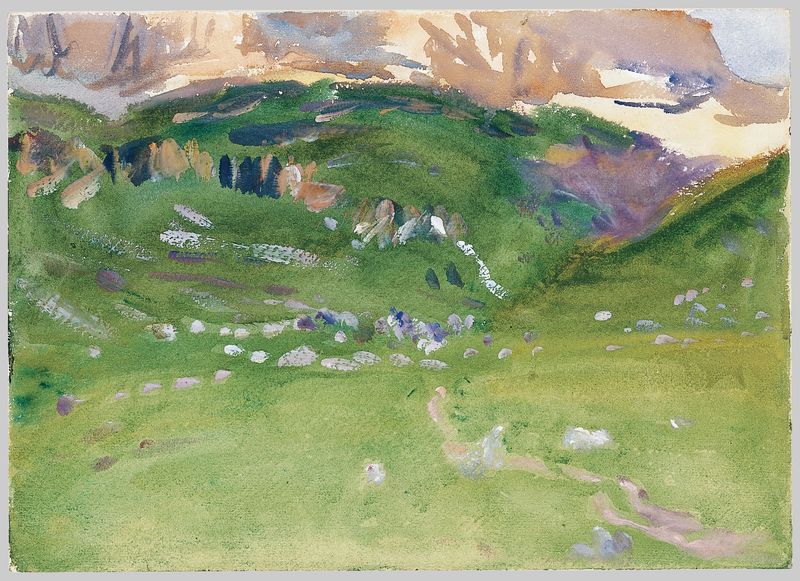
Sellar Alp, Dolomites
John Singer Sargent · 1913 · The Metropolitan Museum of Art
 Same era · 1900s–1930s
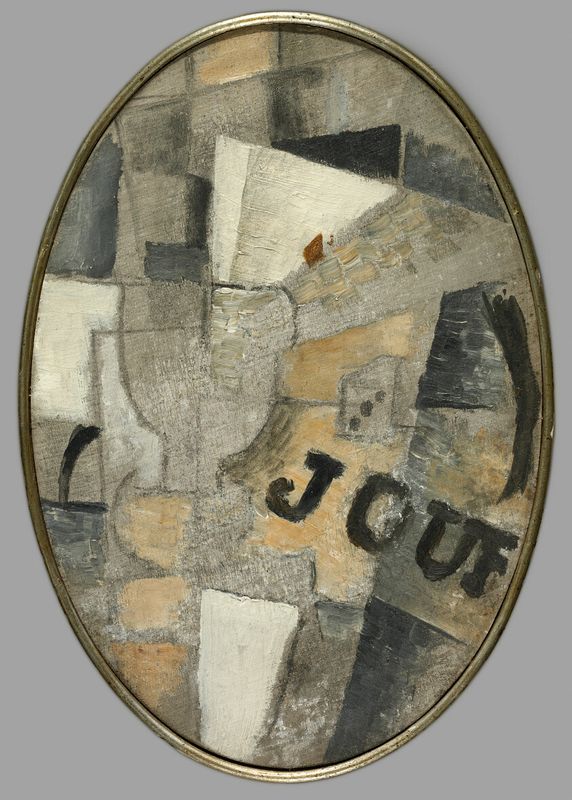
Still Life with Glass, Dice, Newspaper and Playing Card
Georges Braque · 1913 · Art Institute of Chicago
