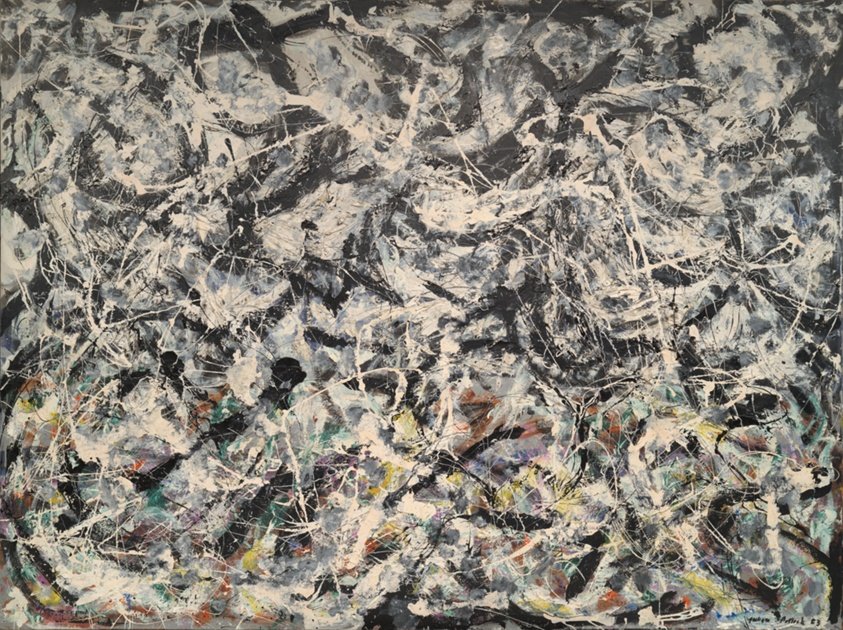

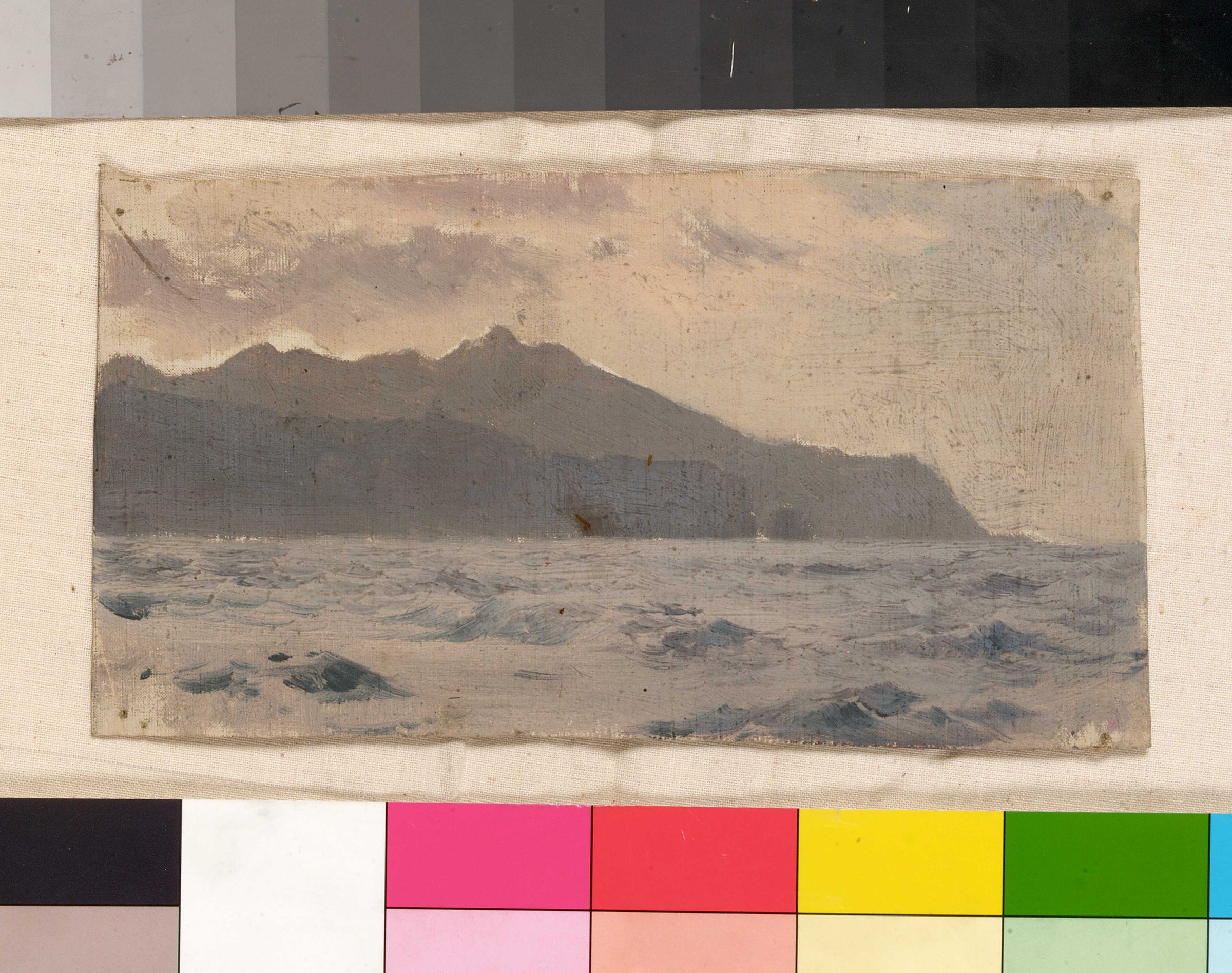
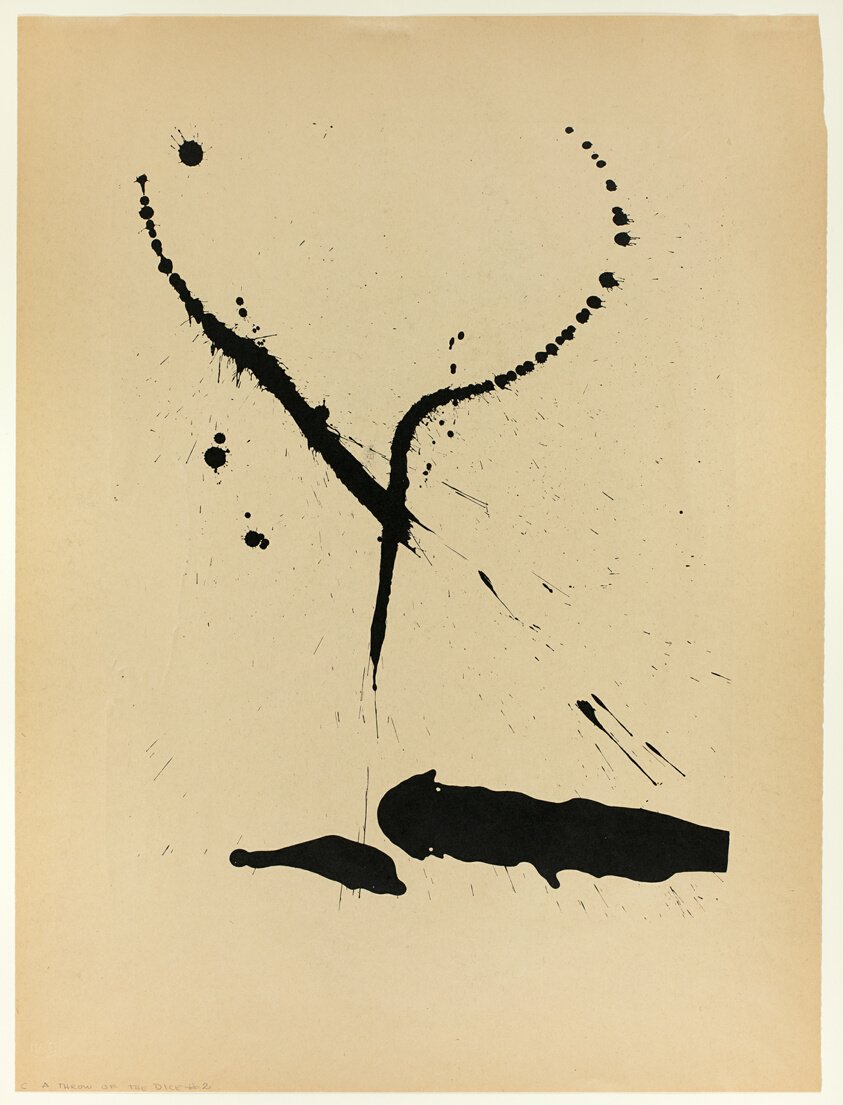

“Picture this: you walk into a gallery and see a massive canvas that looks like the artist threw, dripped, and splattered paint in what seems like controlled chaos.”
That's Action Painting, and it's not about what the painting shows—it's about what the artist *did*. Born in 1940s New York City, this movement transformed the canvas into an arena where the physical act of painting became the art itself.
Action Painting emerged when artists like Jackson Pollock decided that standing at an easel was too restrictive. They laid canvases on the floor, walked around them, danced over them, and let paint fly from sticks, brushes, and directly from the can. The resulting works capture raw energy and spontaneity—you can almost see the artist's movements frozen in time. There's no preliminary sketch, no careful planning, just immediate, gestural expression. The drips, splatters, and sweeping lines record the artist's physical presence and emotional state in real time.
What makes Action Painting revolutionary is this shift from painting as representation to painting as pure action and experience. Critics called it 'gestural abstraction' because every brushstroke, every splash, is a gesture—a physical trace of the artist's body moving through space. When you stand before an Action Painting, you're not looking at a scene or a subject; you're witnessing the evidence of an artistic performance, a kind of choreographed spontaneity that changed art forever.
- Period
- c. 1947–1965
- Peak
- around 1952
- Born in
- New York City, USA
- Key artists
- Helen Frankenthaler, Jackson Pollock, Robert Motherwell, Willem de Kooning
- Came before
- Surrealism and Automatism
- Came after
- Minimalism and Color Field Painting
When it happened
- CAME BEFORESurrealism and Automatism
- ~1947 · STARTED
- ~1952 · PEAKED
- ~1965 · ENDED
- CAME AFTERMinimalism and Color Field Painting
What makes it Action painting
Visible Drips and Splatters
Paint applied by dripping, pouring, or flinging—creating webs of overlapping lines that record the artist's movements.
e.g. Number 1A, 1948 by Jackson PollockAll-Over Composition
No single focal point; the entire canvas is activated equally, edges to edges, with no traditional center.
e.g. Autumn Rhythm (Number 30) by Jackson PollockGestural Brushwork
Bold, sweeping strokes that reveal the speed and force of application—you can feel the artist's arm moving.
e.g. Painting by Willem de KooningLarge Scale Canvases
Monumental sizes that immerse viewers and required the artist to move their whole body during creation.
e.g. Vir Heroicus Sublimis by Barnett NewmanLayered, Dense Surfaces
Multiple layers of paint built up over time, creating texture and depth that changes as you move around it.
e.g. Excavation by Willem de KooningHow to spot Action painting
Three signs you’re standing in front of one — all easy to see in Untitled.
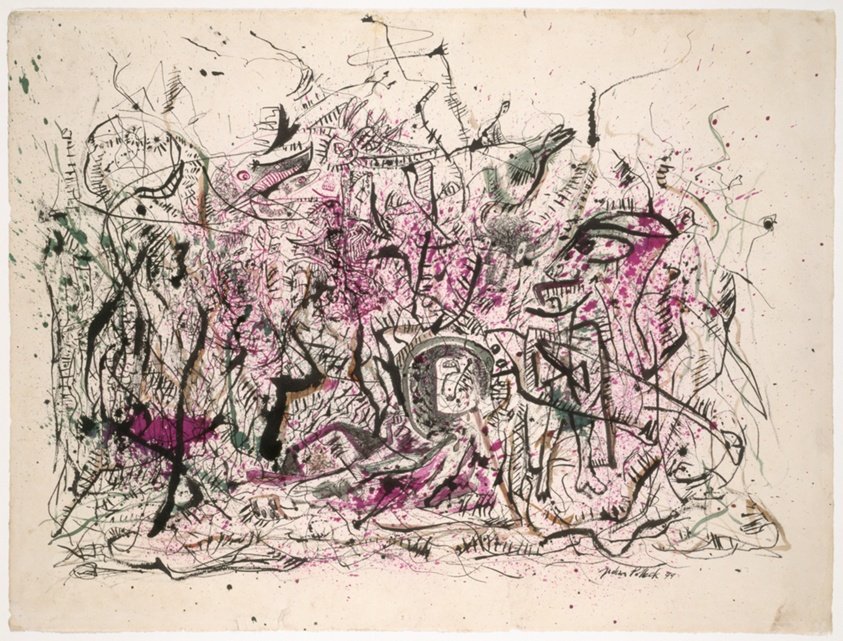
Look for evidence of the artist's physical movement—drips running downward, directional splatters, and sweeping arcs that show body motion.
Check if there's a traditional 'subject'—if you can't identify what it depicts and instead see pure paint and gesture, you're likely looking at it.
Step back and see if the composition feels equally active everywhere rather than focused on a center—that all-over quality is a signature.
Jackson Pollock's studio floor became so encrusted with layers of paint that it's now preserved as a artwork itself at his Long Island home.
Life magazine asked in 1949: 'Is he the greatest living painter in the United States?' making Pollock America's first celebrity artist.
Action Painting got its name from critic Harold Rosenberg, who described the canvas as 'an arena in which to act' rather than a space to reproduce.
The artists who defined it
Works to know
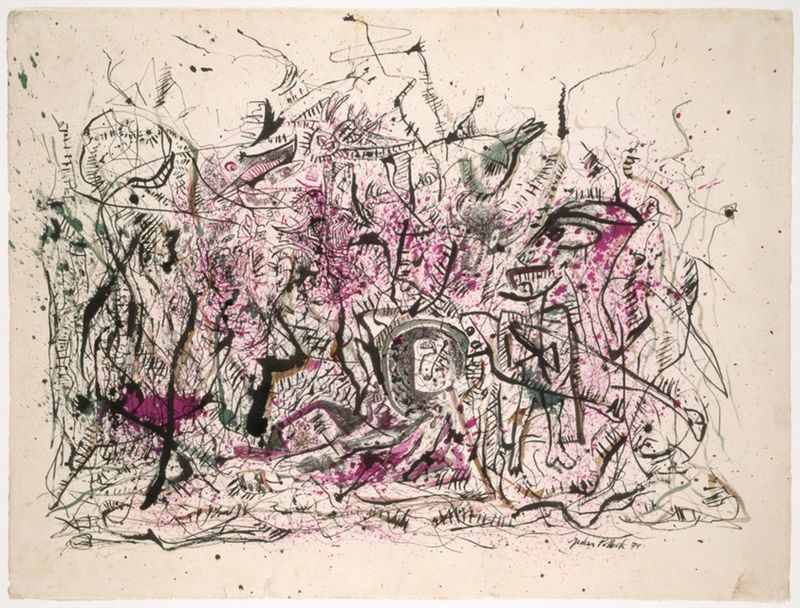 Untitled
1939 · Art Institute of Chicago
 Excavation
1950 · Art Institute of Chicago
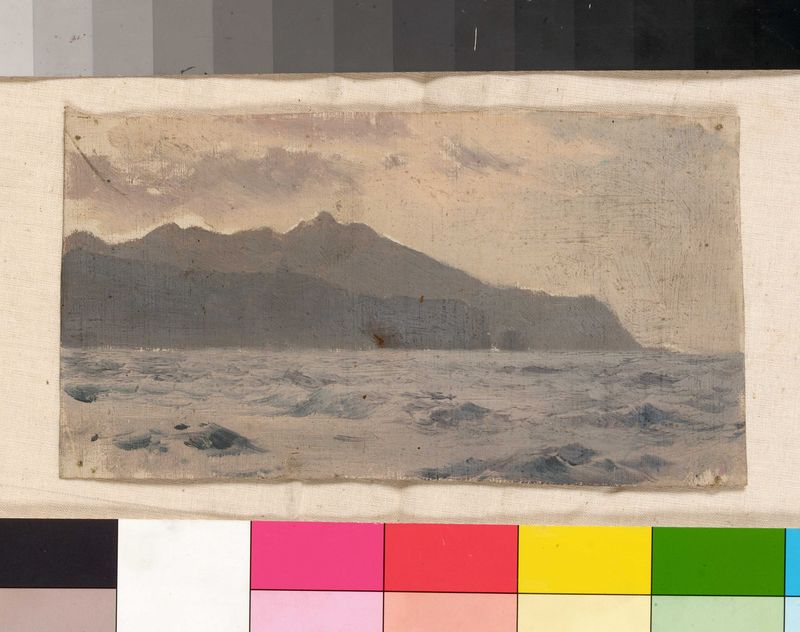 Mountains and Sea
1952 · Q131929916
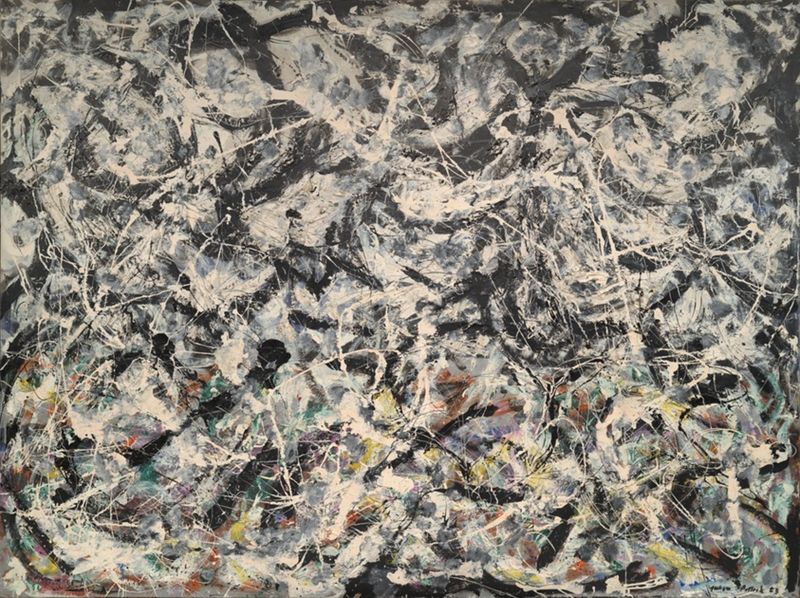 Greyed Rainbow
1953 · Art Institute of Chicago
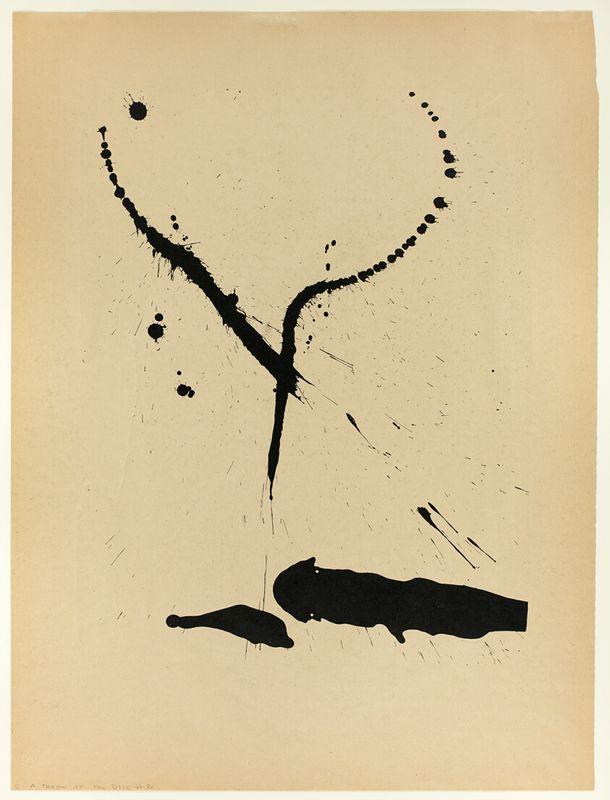 A Throw of the Dice #2
1962 · Art Institute of Chicago
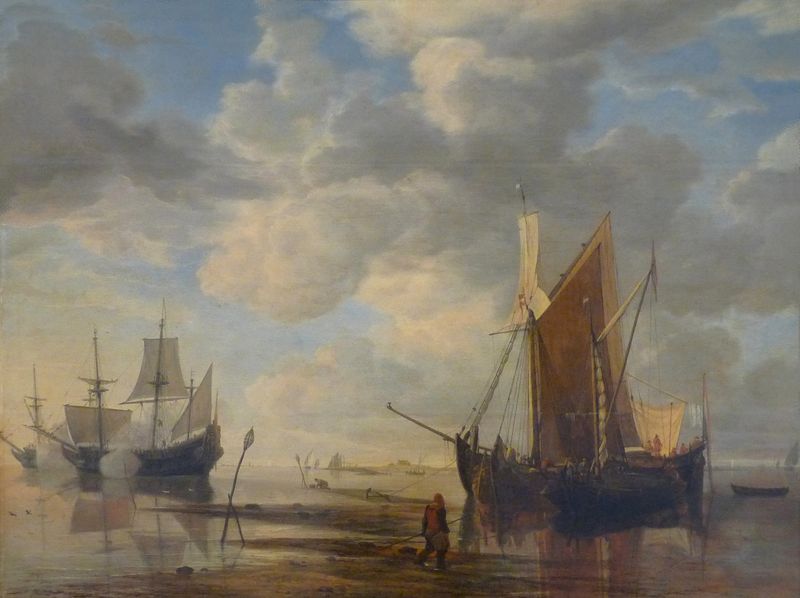 Low Tide
1963 · Yale University Art Gallery
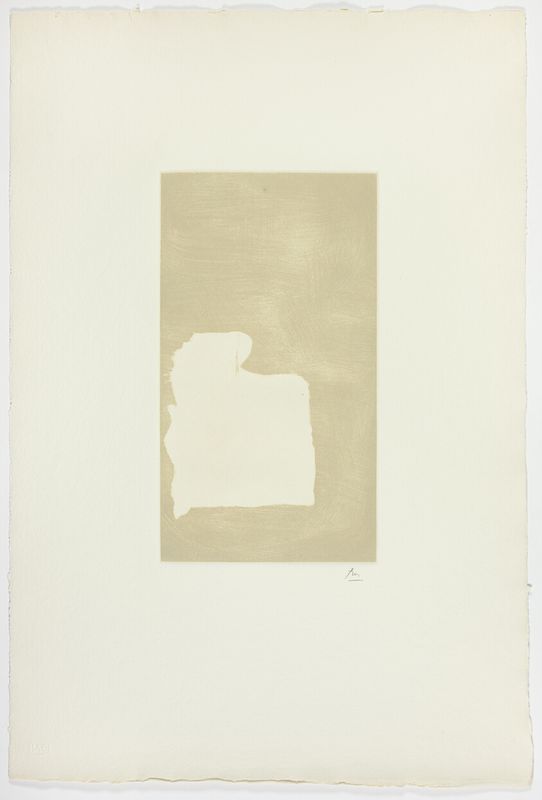 Gauloises Bleues
1968 · Art Institute of Chicago
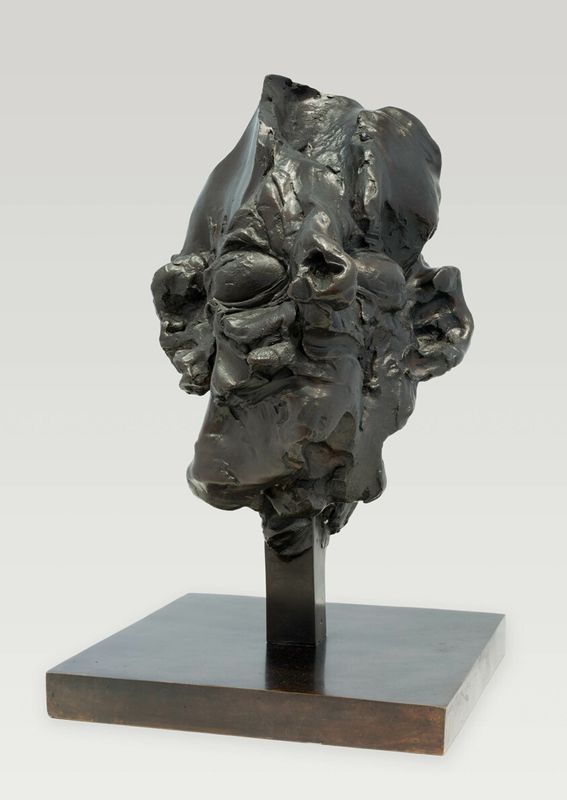 Head #3
1973 · Art Institute of Chicago
 Portrait of the Artist
Art Institute of Chicago
Take Action painting to the museum
Point your phone at any painting and Art Whisper tells you its story — who made it, what to notice, and why it matters. Free to start.