01
Hollow tree torso
A hollow, broken tree trunk forms the body, with a stern face peering out beneath the hat brim. Bosch builds a human figure out of a ruined tree.
1 of 5 on the painting
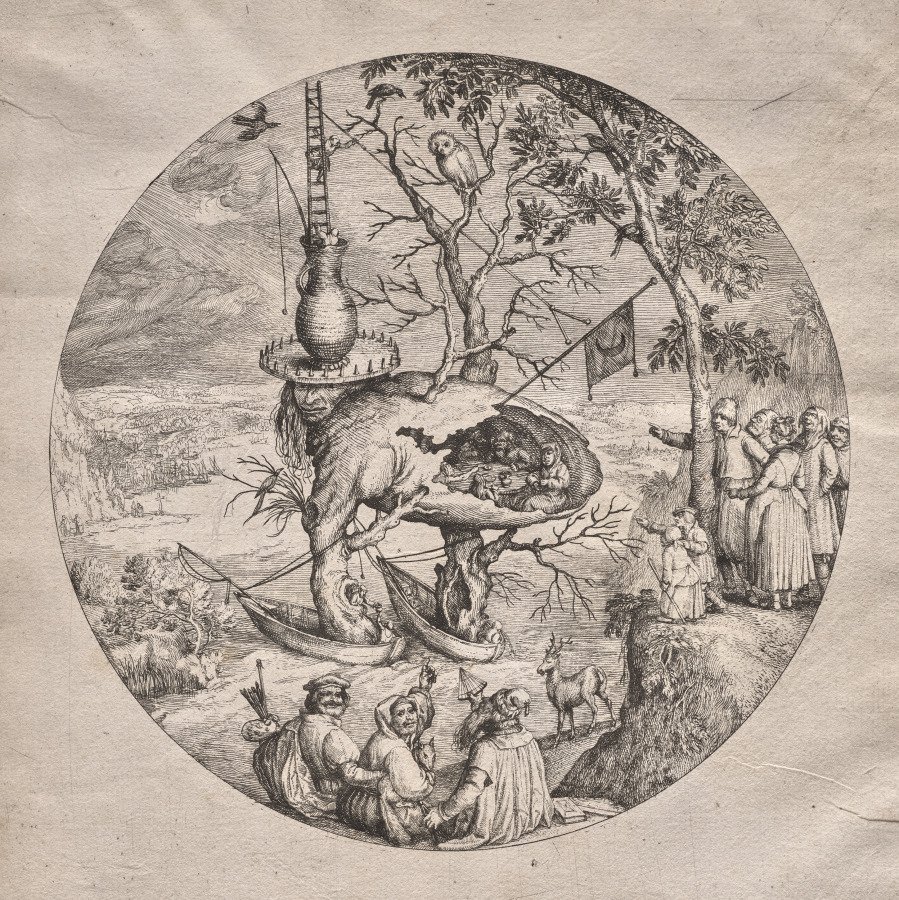
“Step into a surreal world where a tree-man's body becomes a tavern. This Hieronymus Bosch print is a bizarre, imaginative landscape filled with strange creatures and human folly, inviting you to unravel its mysterious narrative.”
A fantastical creature, half-man and half-tree, dominates the center of this etching and engraving. Its hollowed-out torso forms a tavern, complete with a ladder leading up to its head, which supports a bagpipe-playing figure and a flag. Below, the tree-man’s spindly legs, broken and stuck in boats, wade through icy water populated by skaters and a monstrous fish. Bosch's distinctive vision, filled with unsettling details and bizarre hybrid forms, reflects the anxieties and moral concerns prevalent in the Northern Renaissance. This print, likely derived from a lost drawing, captures the artist's unique ability to transform familiar elements into a nightmarish, yet strangely compelling, landscape of human folly and temptation. It invites viewers to decipher its complex symbolism, which often critiques human vice and the perils of worldly pleasures.
Five details hide in plain sight. Pick one and we’ll show you exactly where to look.

A hollow, broken tree trunk forms the body, with a stern face peering out beneath the hat brim. Bosch builds a human figure out of a ruined tree.
A big jug sits on a round spiked brim like a hat, with a ladder leaning up its side. It is an absurd crown on a strange figure.
Look into the broken opening of the trunk. Tiny figures sit at a table in there, as if the body were a cramped inn.
An owl perches on a bare branch above the figure, looking out at us. Owls often carry associations with folly or hidden wickedness in Bosch's imagery, though the exact meaning here is open to interpretation.
A group of villagers stands on the rise at right, and one figure stretches an arm out toward the strange tree. They act as stand-ins for us as onlookers.
The full narration walks you through The Tree Man — the story behind it, the details most visitors miss, and why it matters. Free in the Art Whisper app.
Hieronymus Bosch, a Dutch painter from the Northern Low Countries, filled his oak panels with fantastic illustrations of religious concepts, from the Garden of Eden to macabre depictions of hell.
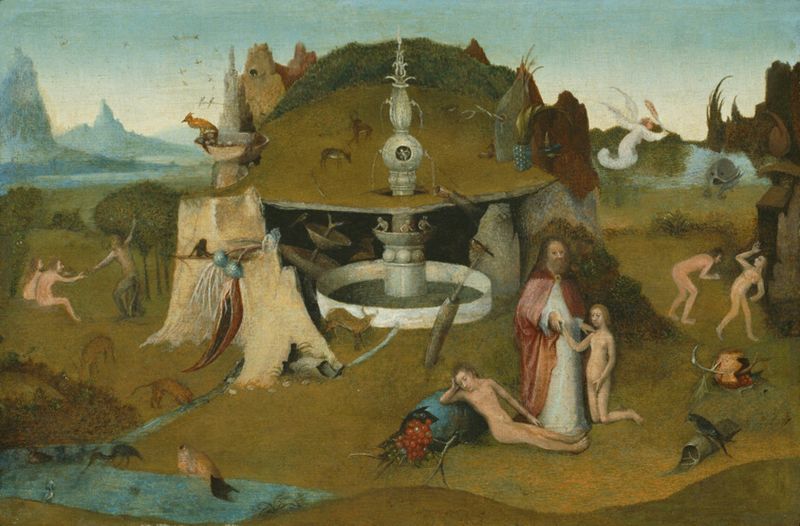 The Garden of Paradise
1495 · Art Institute of Chicago
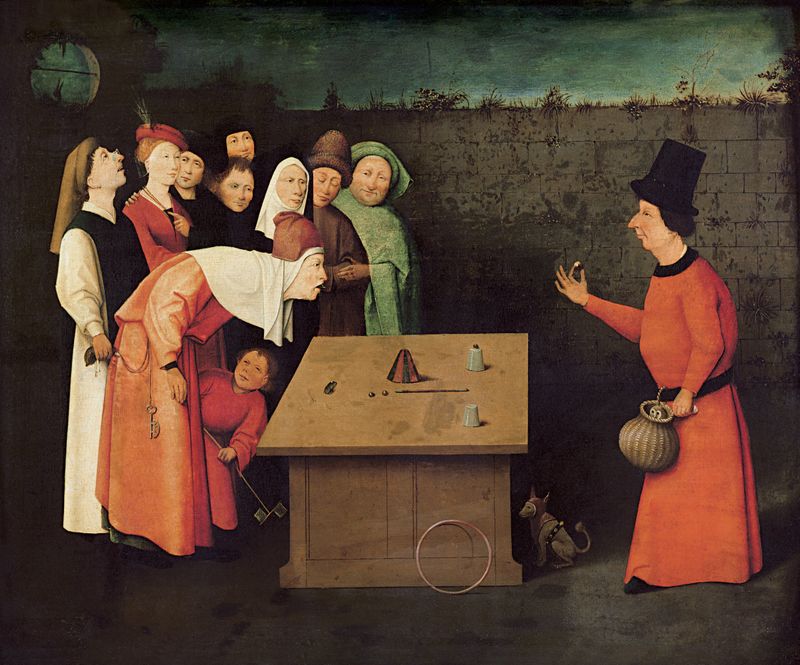 The Conjurer (The Juggler)
1502
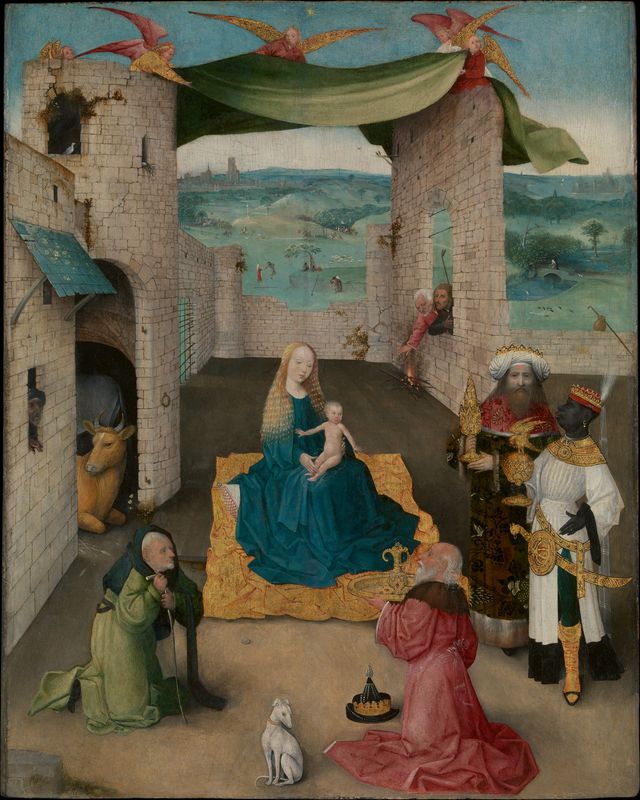 The Adoration of the Magi
Noordbrabants Museum
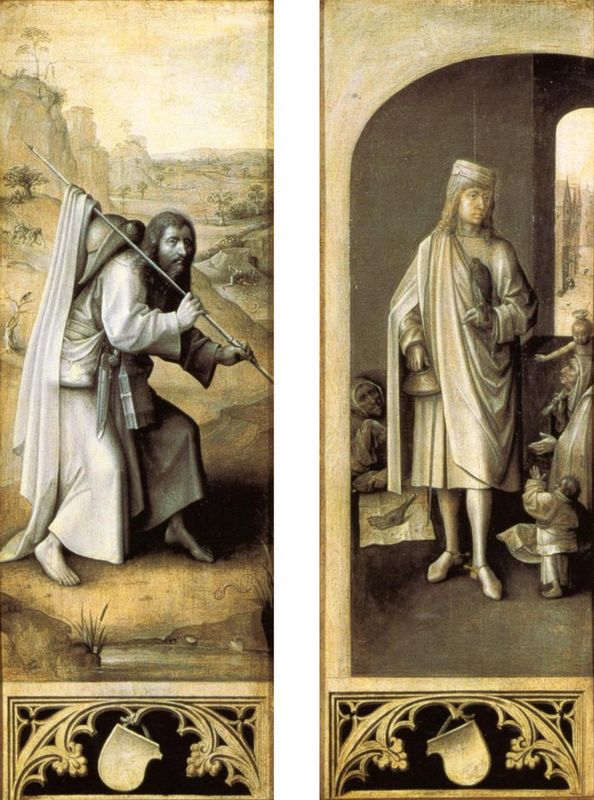 The Last Judgment
1478 · Art Institute of Chicago
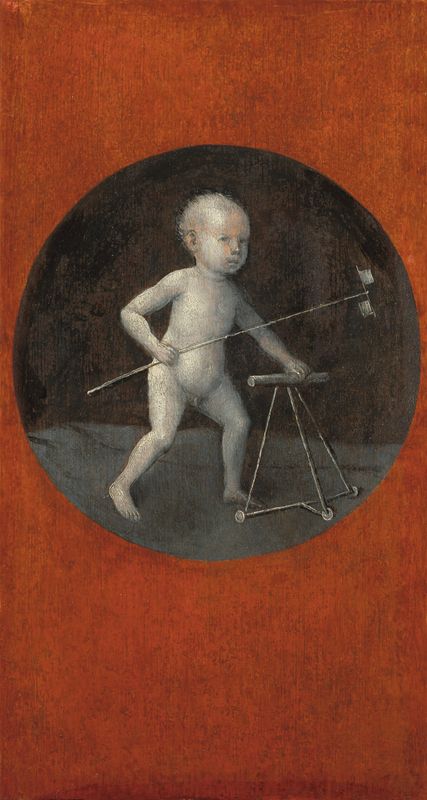 Christ Child with a Walking Frame
1480 · Kunsthistorisches Museum
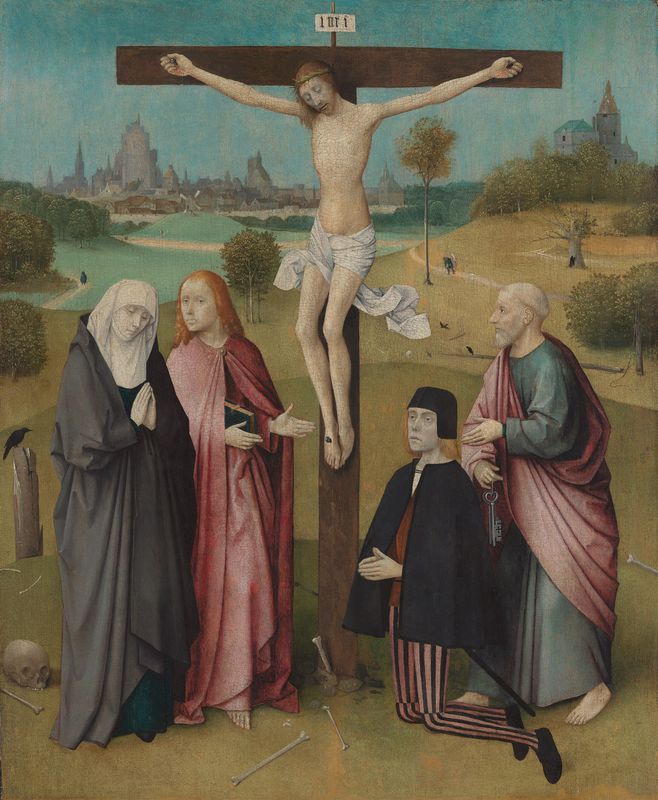 Crucifixion with a Donor
1485 · Royal Museums of Fine Arts of Belgium
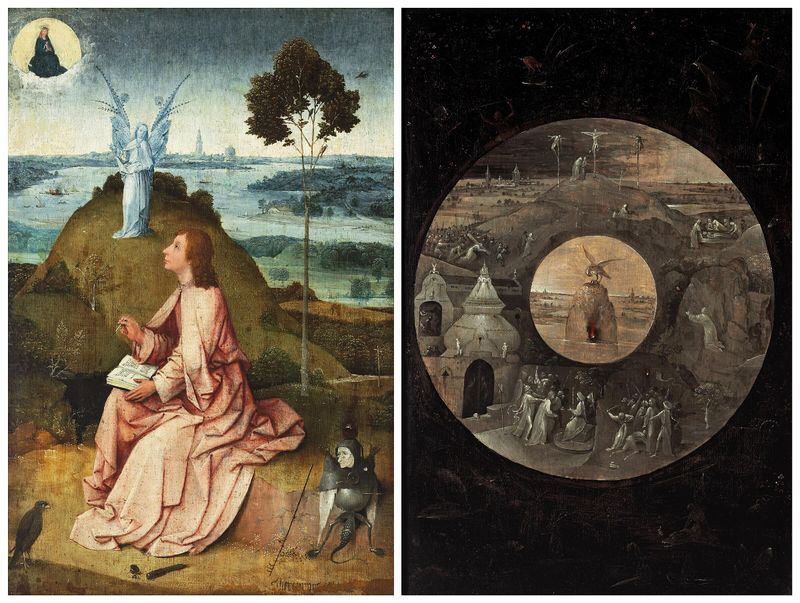 St. John on Patmos
1489 · Gemäldegalerie Berlin
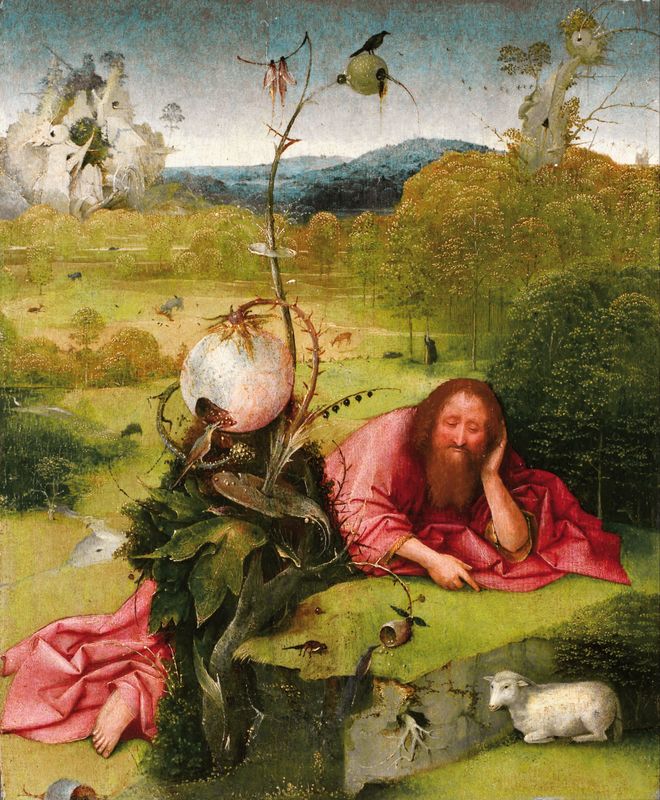 St. John the Baptist in the Wilderness
1489 · Lázaro Galdiano Museum