01
The grey wig
Look at the stiff rolls of the full-bottomed wig framing the face. Each curl is picked out in grey and white, and it signals legal authority at once.
1 of 4 on the painting
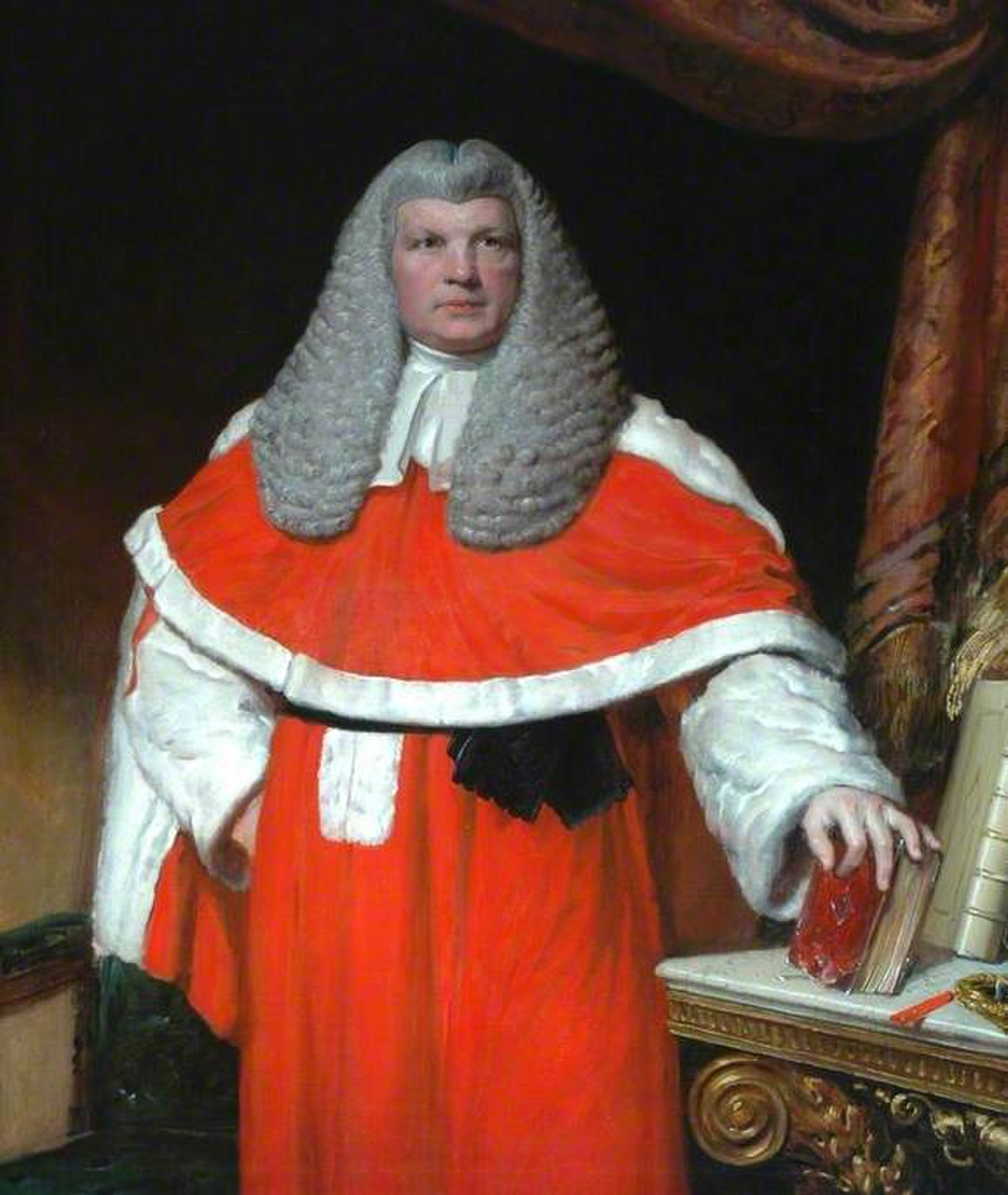
“Stop and observe the commanding presence of Sir John Hullock, a judge whose portrait captures the dignity and intellectual weight of his profession through a focused gaze and formal attire.”
This formal portrait captures Sir John Hullock, a British judge, with a thoughtful, almost stern expression. He is depicted in the traditional attire of his profession, emphasizing his gravitas and standing. The artist has focused on the sitter's face, highlighting the subtle lines of experience around his eyes and mouth, suggesting a life dedicated to legal reasoning. The subdued palette, dominated by rich browns and deep reds, creates a serious and dignified atmosphere, befitting a man of law. This painting serves not just as a likeness but as a visual record of a prominent figure in early 19th-century British society, reflecting the importance placed on individual achievement and public service during the period. The work exemplifies the kind of commissioned portraiture that documented the leading personalities of the day.
Five details hide in plain sight. Pick one and we’ll show you exactly where to look.
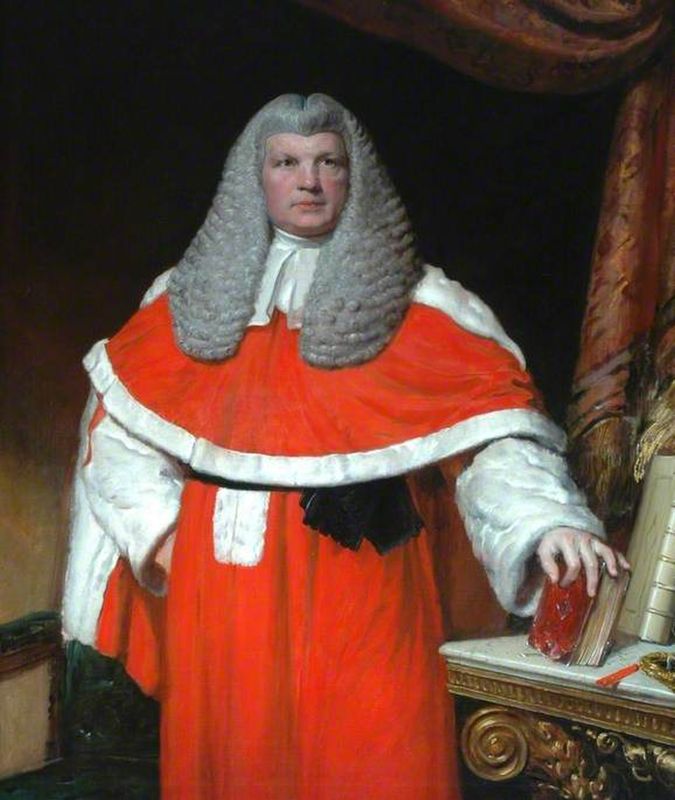
Look at the stiff rolls of the full-bottomed wig framing the face. Each curl is picked out in grey and white, and it signals legal authority at once.
Find the calm, direct face, pale against the dark background. The level stare and closed mouth give him a composed, serious air.
The big scarlet robe forms a solid triangle against the near-black background. It pulls the eye straight to the face at the top.
His hand rests on a small red book at the right, with larger volumes stacked behind it. Books like these suggest the law his office rests on.
Follow the thick white band across the shoulders and down the sleeves. Soft, creamy brushwork makes it look like fur against the hard red.
The full narration walks you through Sir John Hullock (1767–1829) — the story behind it, the details most visitors miss, and why it matters. Free in the Art Whisper app.
Samuel Drummond, a British painter, captured the likenesses of notable figures like Walter Scott and documented maritime history with grand oil paintings.
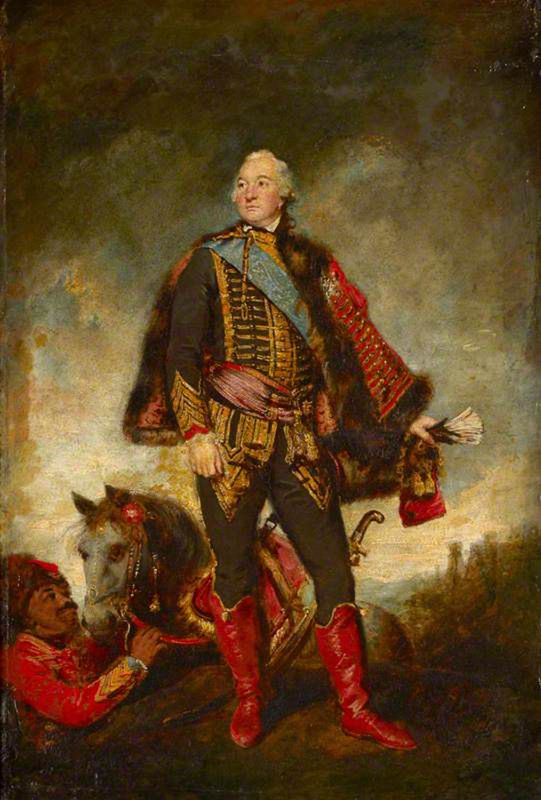 Louis-Philippe-Joseph, Duke of Orleans 'Philippe Egalité' (1747-1793) (after Sir Joshua Reynolds)
1785 · National Trust
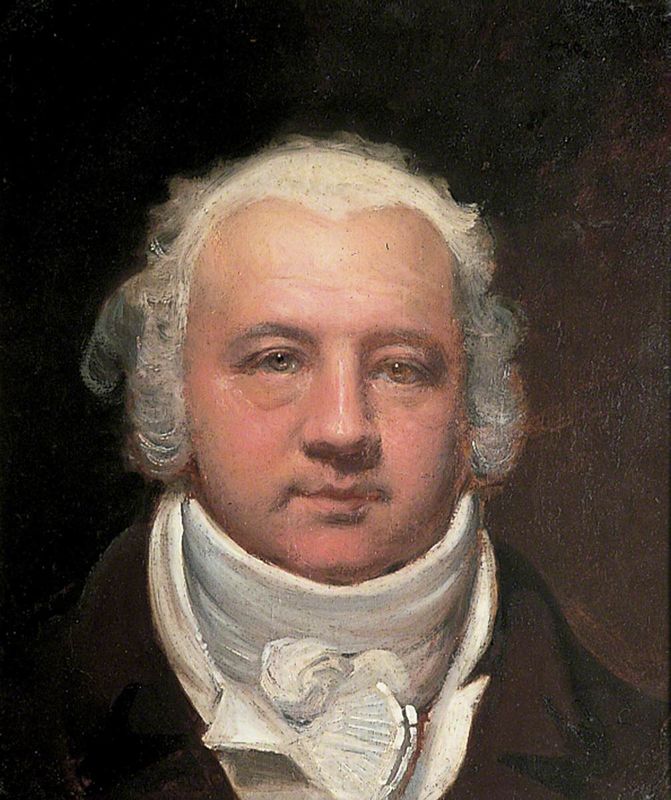 John Blake (1770–1810), Mayor of Maidstone (1799)
1799 · Maidstone Museum and Bentlif Art Gallery
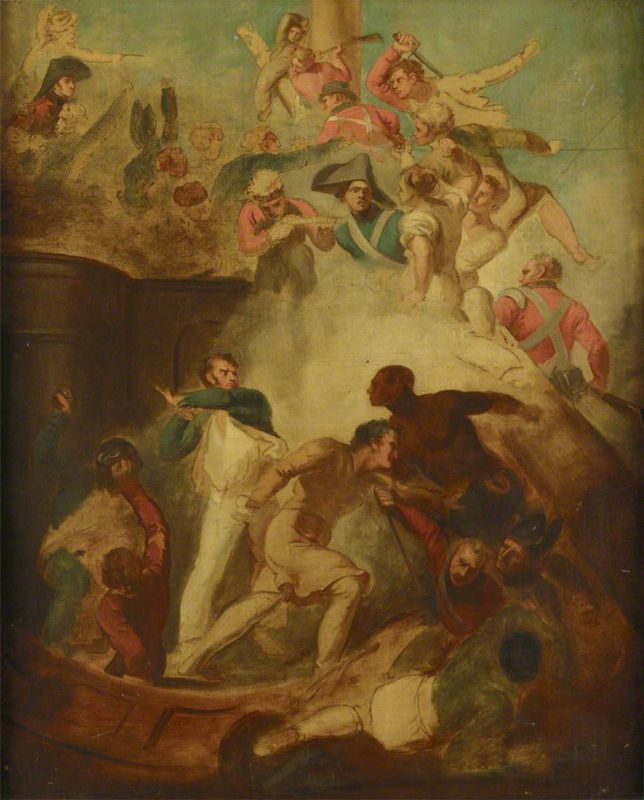 Repulsing a boarding party
1805 · Royal Museums Greenwich
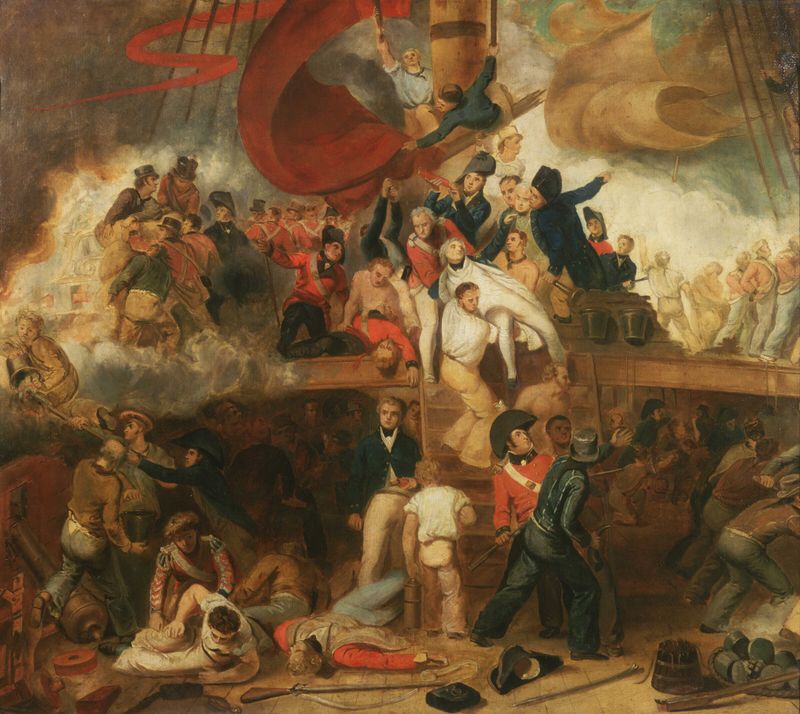 The Death of Nelson at the Battle of Trafalgar, 21 October 1805
1806 · Royal Museums Greenwich
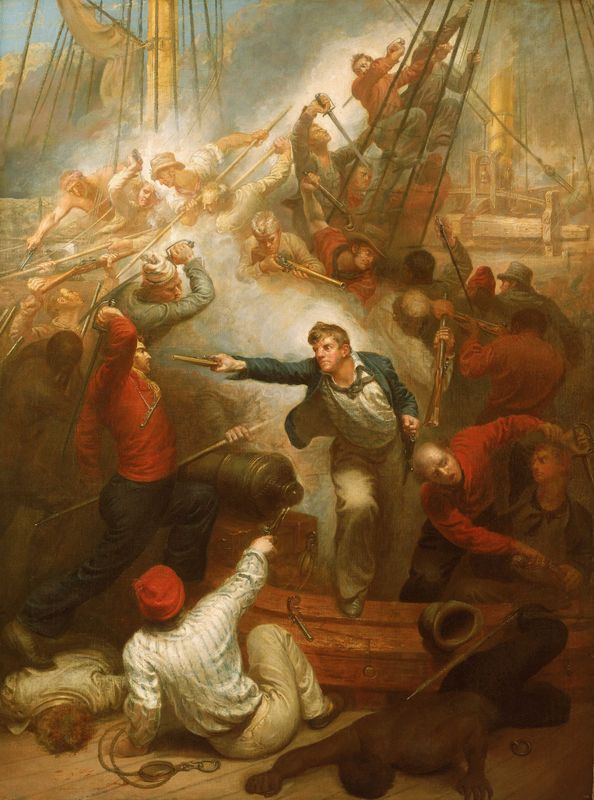 Captain William Rogers capturing the 'Jeune Richard', 1 October 1807
1808 · Royal Museums Greenwich
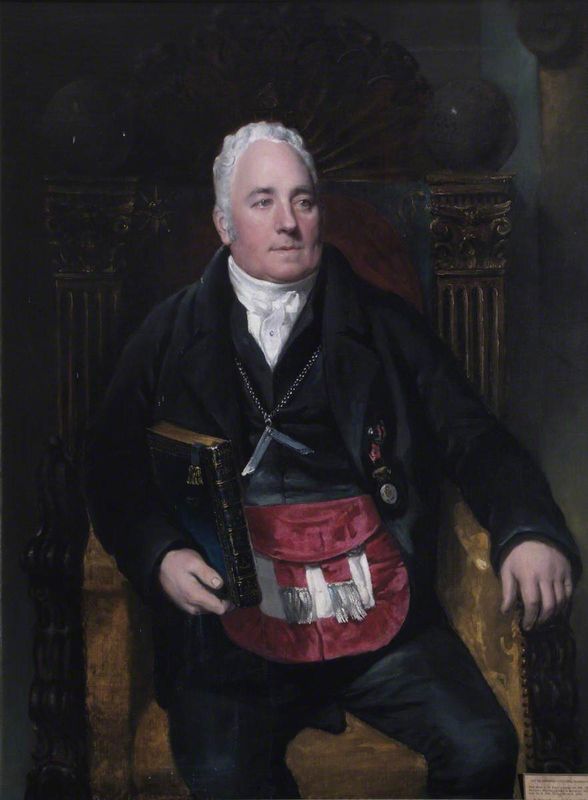 James Asperne (1737–1820)
1813 · Museum of Freemasonry
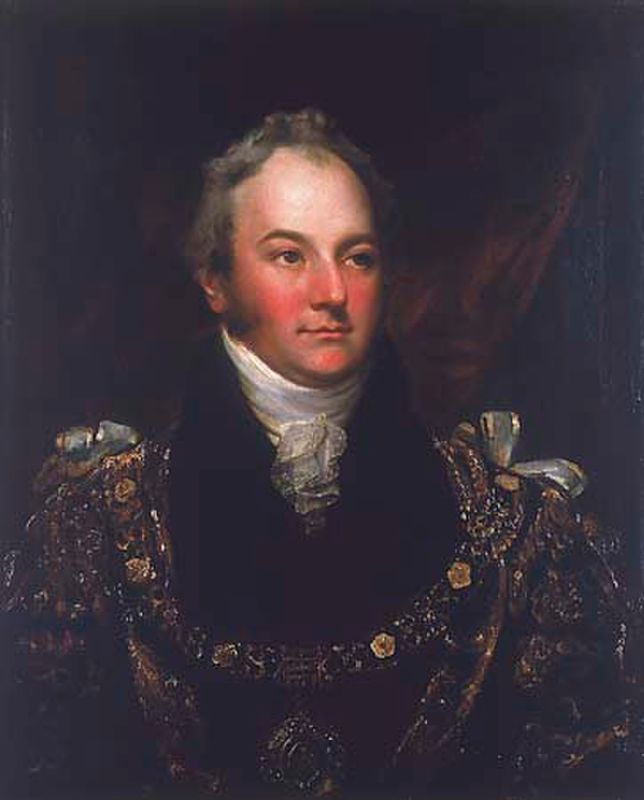 Sir Claudius Stephen Hunter (1775–1851), Lord Mayor of London (1811)
1813 · Guildhall Art Gallery
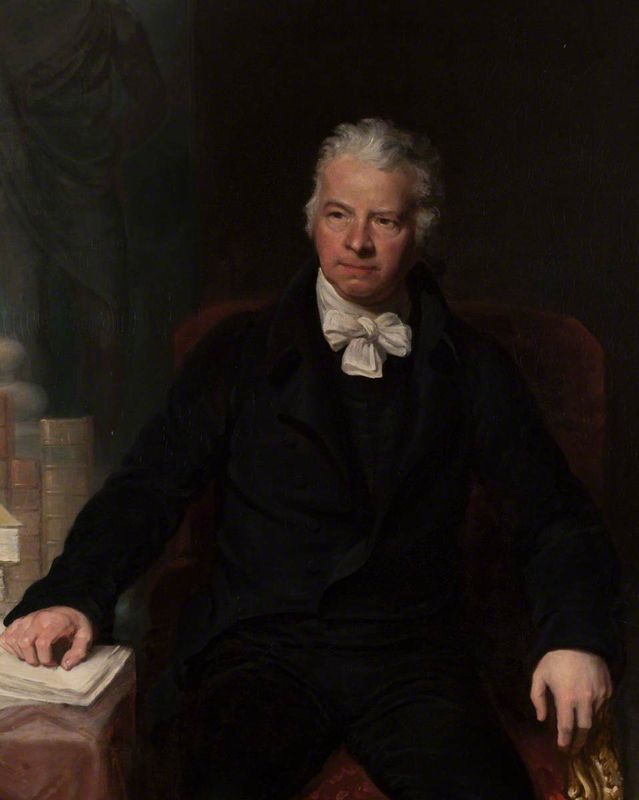 John Reeves (1752–1829)
1814 · Eton College
