01
The queen in red
Philippa sits sideways on the white horse in a red gown and a red crown, her upright figure standing out while the fighting surges around her.
1 of 5 on the painting
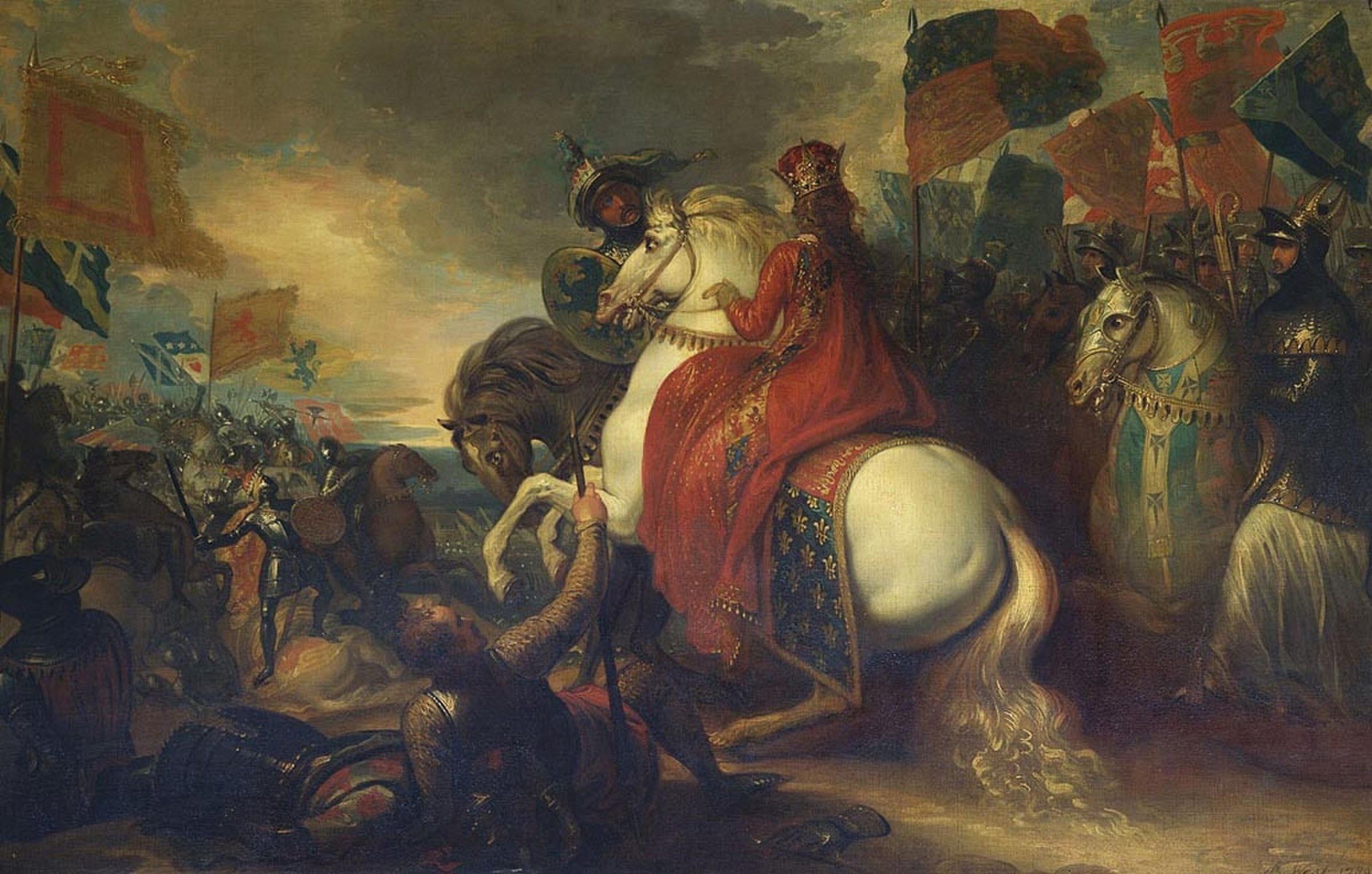
“Step into a moment of medieval drama: Queen Philippa fearlessly leads her troops in battle, a striking image of royal power and a key scene from the Hundred Years' War. This painting was commissioned for Windsor Castle to celebrate English history.”
In this dramatic history painting, Queen Philippa, astride a powerful white horse, commands the center of a chaotic battlefield. She is shown rallying her English forces during the Battle of Neville's Cross in 1346, a pivotal moment in the Hundred Years' War. Her gesture, with an outstretched arm and determined gaze, projects authority and courage amidst the clash of swords and the fallen. To her left, the Scottish monarch David II is depicted fighting on foot, moments before his capture, highlighting the turning tide of the battle. This work was one of eight commissioned by King George III for Windsor Castle, specifically to adorn the audience chamber, celebrating key moments in English history, particularly those tied to Edward III's reign.
Five details hide in plain sight. Pick one and we’ll show you exactly where to look.
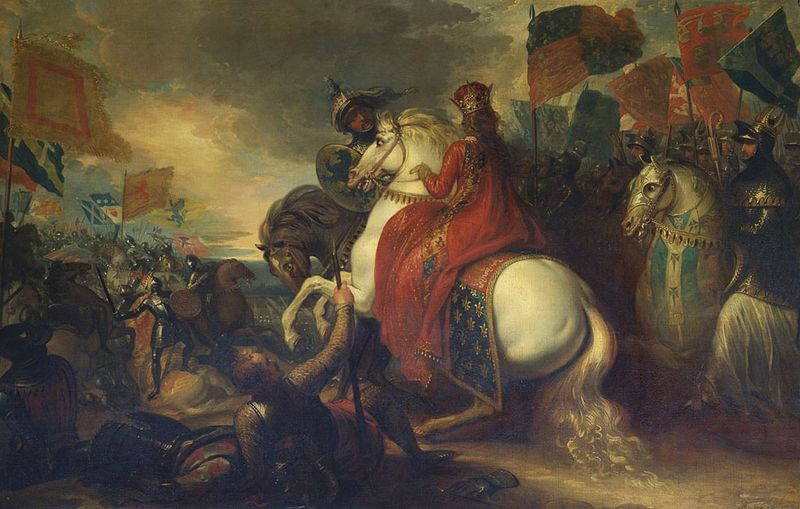
Philippa sits sideways on the white horse in a red gown and a red crown, her upright figure standing out while the fighting surges around her.
The white horse lifts its front legs high over the fallen soldier, giving the scene its most dramatic burst of motion.
Gold fleur-de-lis on deep blue cover the horse's saddlecloth. The emblem is associated with the French crown, and English kings used it in their royal arms to assert a claim to France.
Low in the foreground, a wounded knight in mail raises an arm toward the horse, a human cost set right at the queen's feet.
On the left, small figures clash under a glowing, hazy sky. The battle itself is pushed far back, behind the queen's moment.
The full narration walks you through Queen Philippa at the Battle of Neville's Cross — the story behind it, the details most visitors miss, and why it matters. Free in the Art Whisper app.
William Edward West, an American portrait painter, captured the likenesses of wealthy families and collaborated with author Washington Irving.
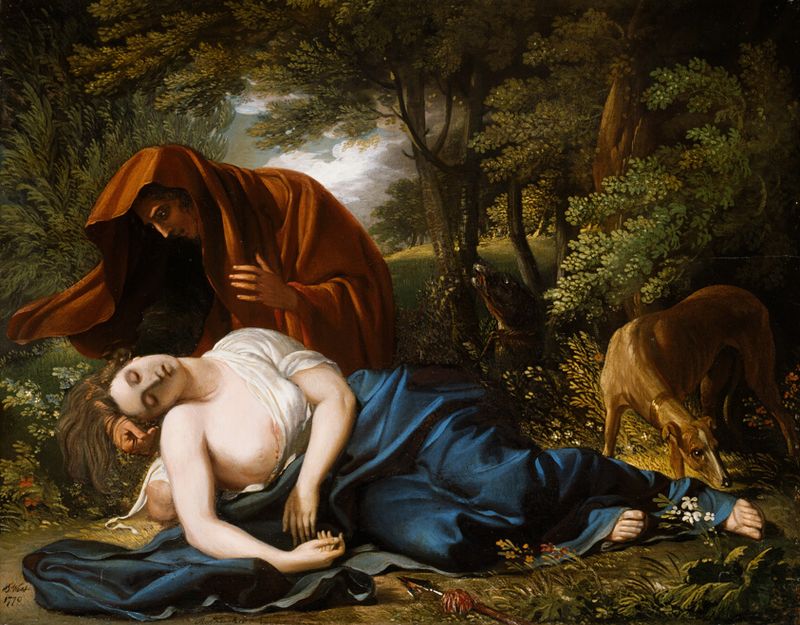 The Death of Procris
Art Institute of Chicago
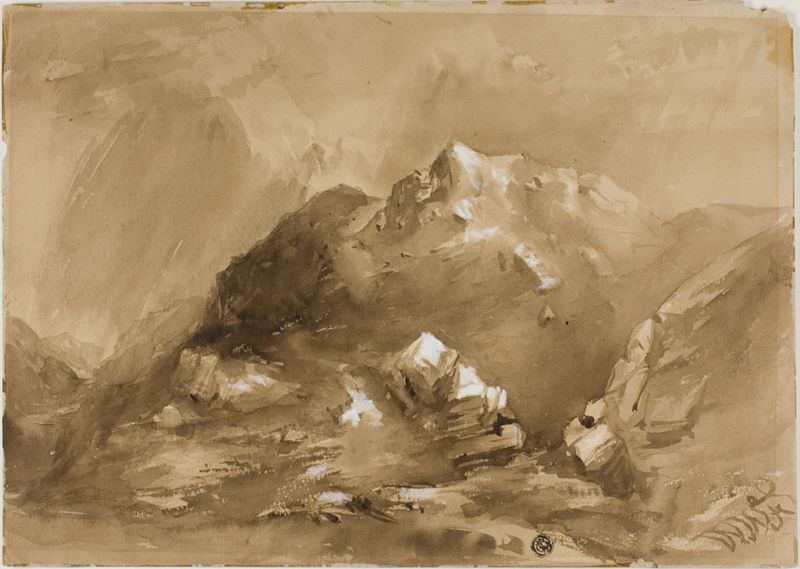 Misty Mountains
1821 · Art Institute of Chicago
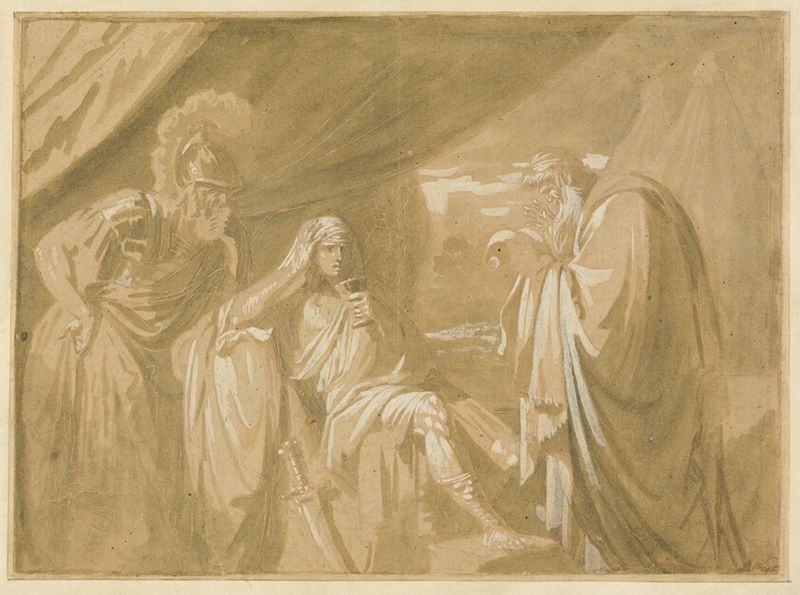 Alexander's Confidence with his Physician Philip
Art Institute of Chicago
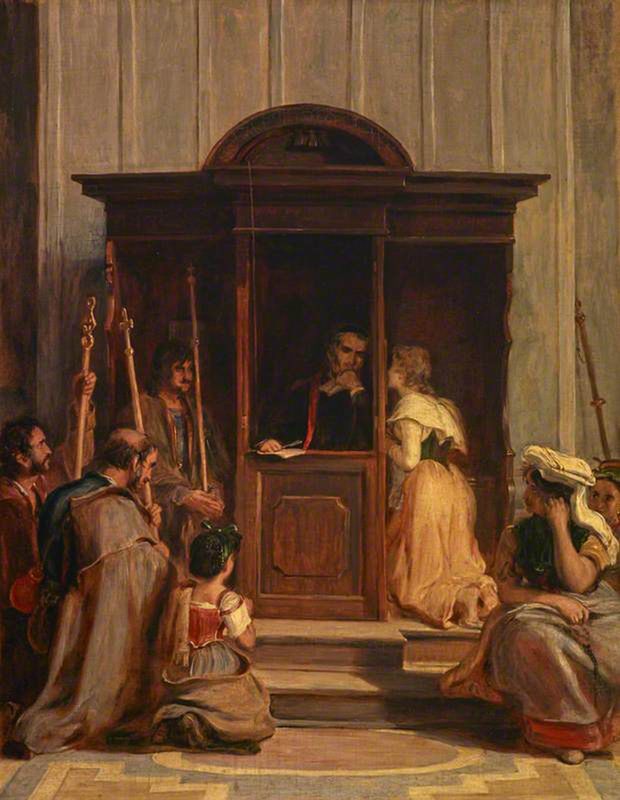 The Confessional
1847 · New York Historical
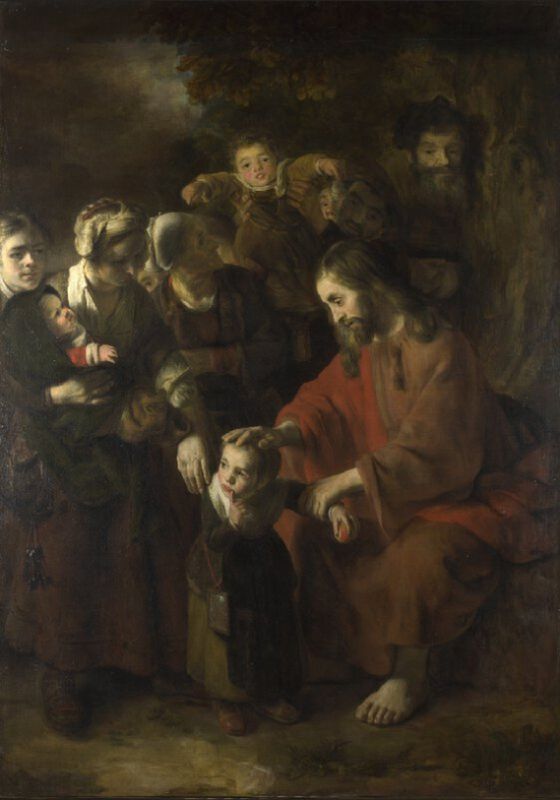 Christ Blessing the Children
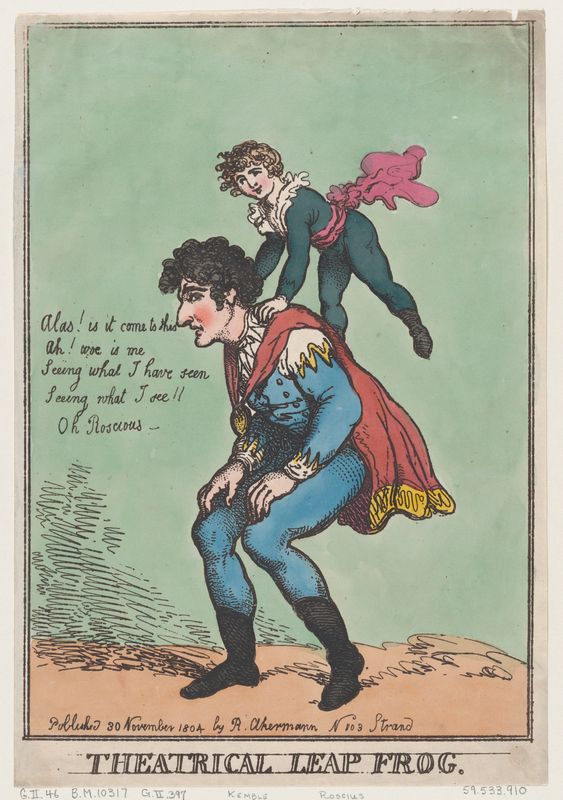 Theatrical Leap Frog
1804 · The Metropolitan Museum of Art
 Thomas R. Fosdick
1818 · Cincinnati Museum Center at Union Terminal
 A column of oriental travelers scattered by a dust storm
1820 · The Metropolitan Museum of Art
