The powdered wig
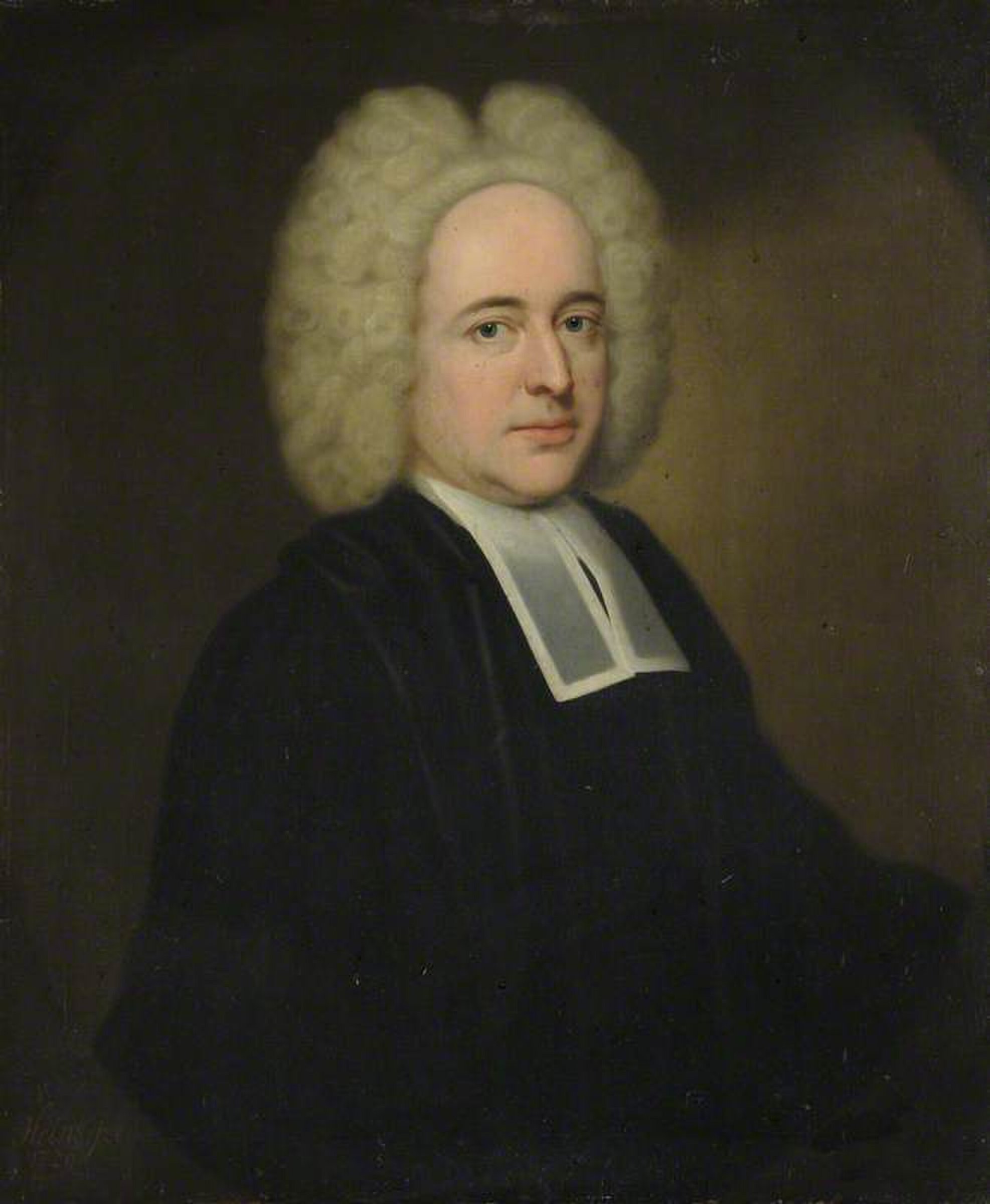
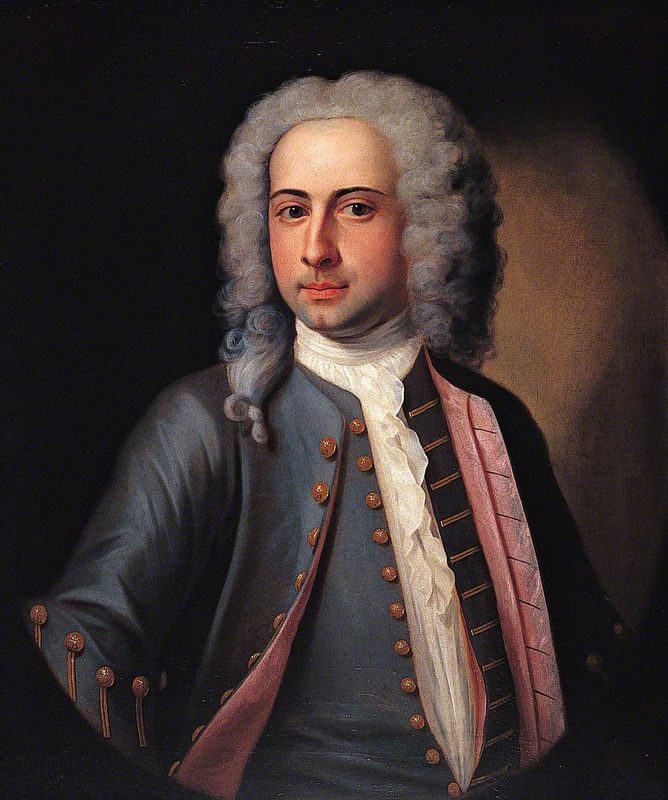
Look at the large wig of tight, pale curls, which rises in two lobes above the forehead. Wigs like this were standard dress for clergy and gentlemen of the period, and the soft texture frames the face.

“Stop to appreciate this dignified portrait of Samuel Bradford, a prominent clergyman and academic, captured by John Theodore Heins in 1729. It's a striking example of early 18th-century portraiture, emphasizing status through symbolic details and a direct gaze.”
Samuel Bradford, a Master of Corpus Christi College and later Bishop of Rochester, gazes directly out at us from this 1729 portrait by John Theodore Heins. He is shown in his academic robes, a symbol of his scholarly and ecclesiastical standing. The artist, active in Norwich from around 1720, captures the texture of the fabric and the sitter's calm, authoritative expression. Bradford’s hand rests on a book, a common motif in portraits of intellectuals and clergy, suggesting his deep engagement with learning and scripture. This work offers a window into the visual culture of early 18th-century England, where portraits served not only as records of appearance but also as affirmations of social status and intellectual gravitas. The painting’s clear lighting and straightforward composition emphasize Bradford’s dignity and the seriousness of his office.

Five details hide in plain sight. Pick one and we’ll show you exactly where to look.
Look at the large wig of tight, pale curls, which rises in two lobes above the forehead. Wigs like this were standard dress for clergy and gentlemen of the period, and the soft texture frames the face.
The pale blue eyes meet you with a steady, mild look. The closed lips give a composed, thoughtful expression.
The two white tabs at the throat are clerical bands, worn by churchmen. They are the brightest crisp shapes against the black robe.
The face is modeled with smooth, blended pinks and creams, especially on the cheeks and forehead. It gives a lifelike softness against the dark ground.
The figure turns slightly, and the pale wig, face, and bands form a bright cluster at the top of a dark pyramid of robe. The eye goes straight to the head.
The full narration walks you through Samuel Bradford (1652–1731), Master (1716–1724), Bishop of Rochester (1723–1731) — the story behind it, the details most visitors miss, and why it matters. Free in the Art Whisper app.
John Theodore Heins was a prolific portrait painter who dominated Norwich's civic art scene for over a decade in the 18th century.
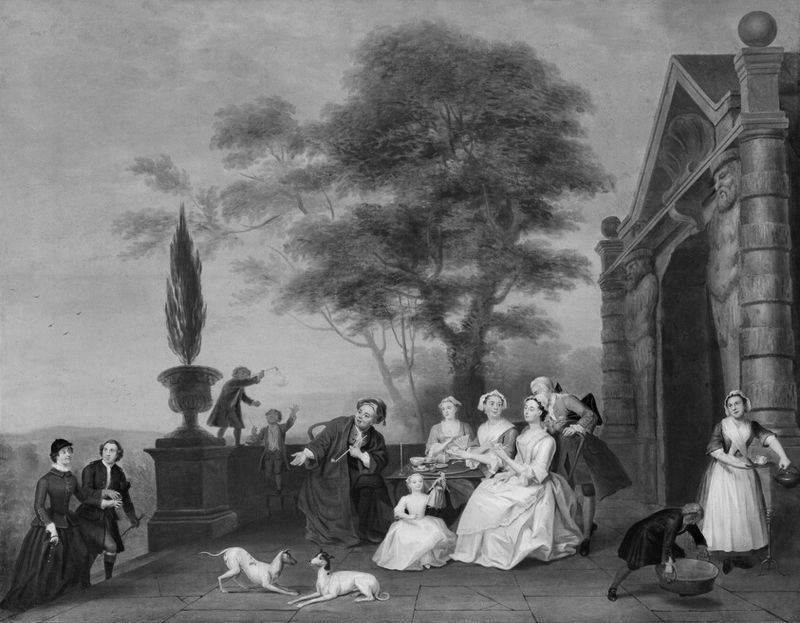
Family Group on a Terrace
1730 · Art Institute of Chicago
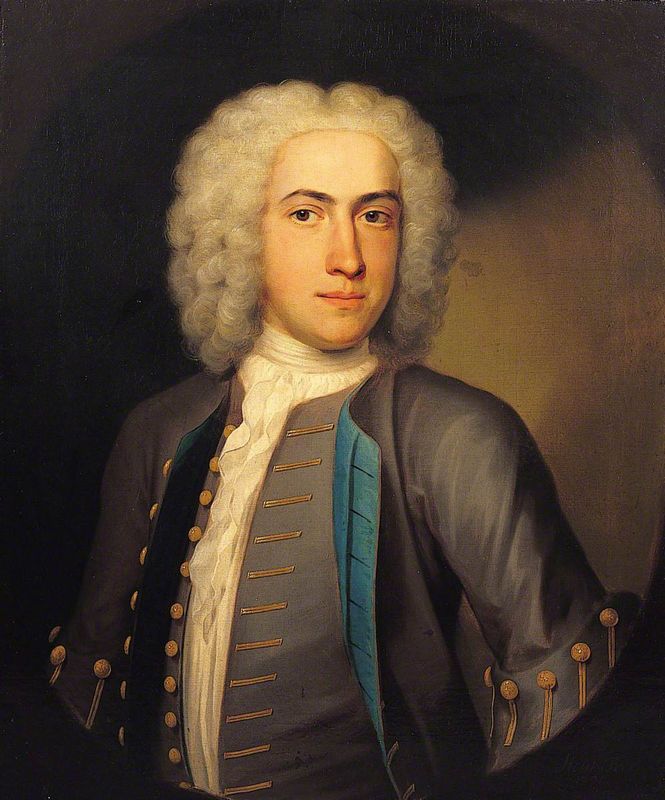
John Gainsborough (1711–1772)
1731 · Gainsborough's House
Thomas Gainsborough (1709–1739)
1731 · Gainsborough's House
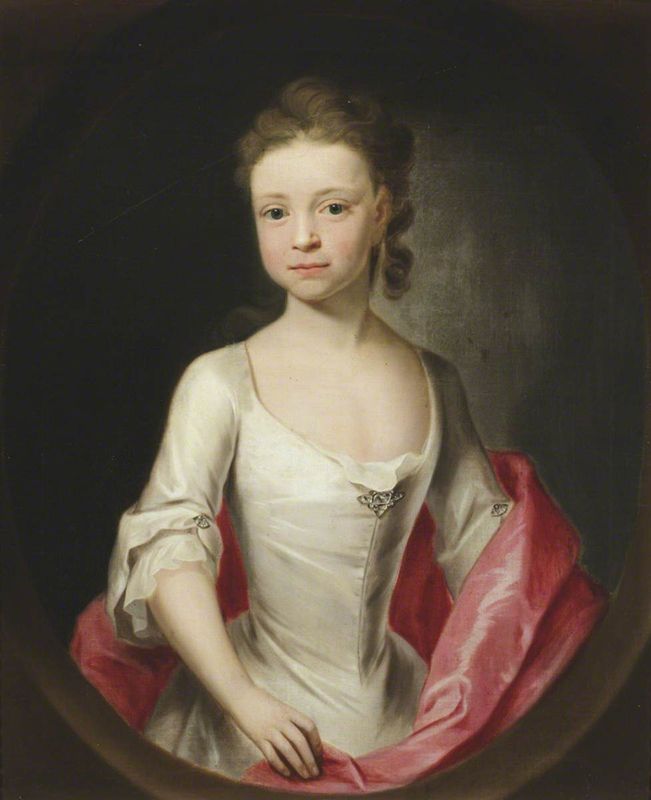
Isabella Astley (1724-1741), aged eight
1732 · National Trust
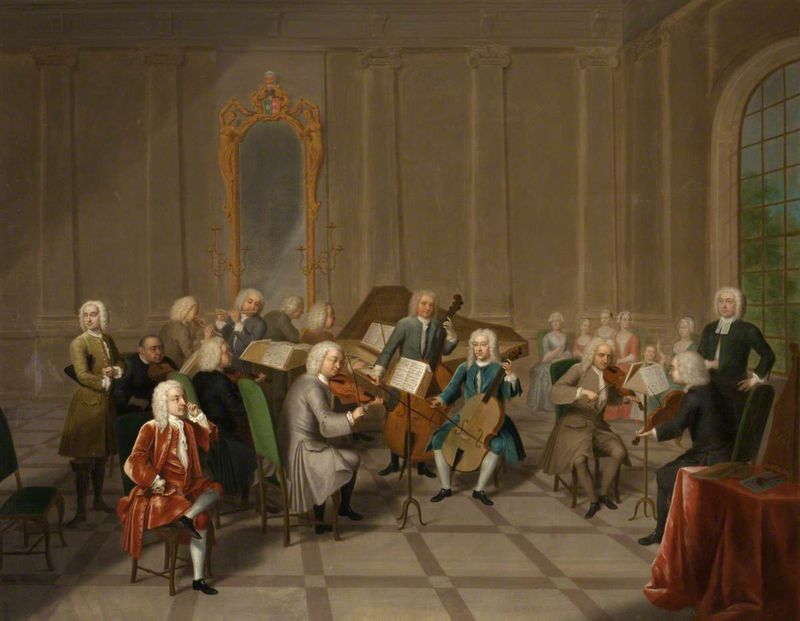
A Music Party at Melton Constable
1734 · Seaton Delaval Hall
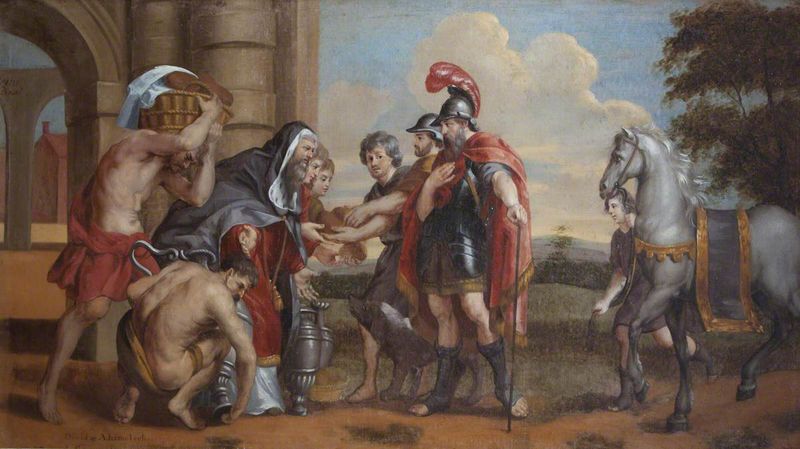
The Meeting of Abraham and Melchizedek
1736 · National Trust
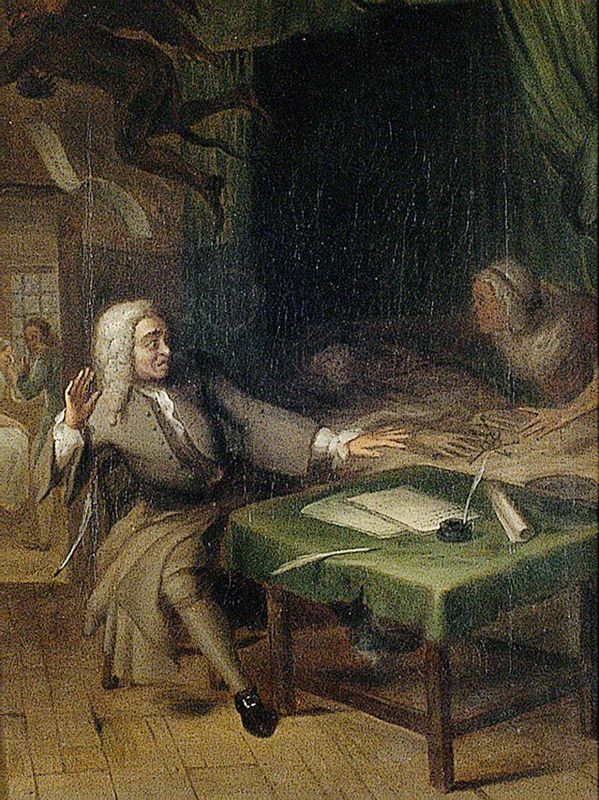
The Death of Thomas Guy
1737 · Norfolk Museums Collections
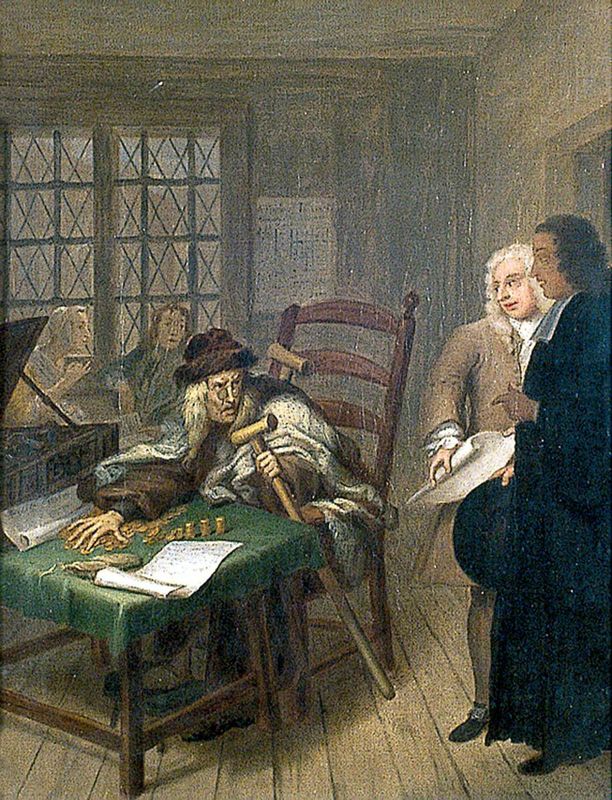
Thomas Guy Counting His Money
1737 · Norfolk Museums Collections
Beyond Heins: works from the same years.
Same era · 1710s–1740s
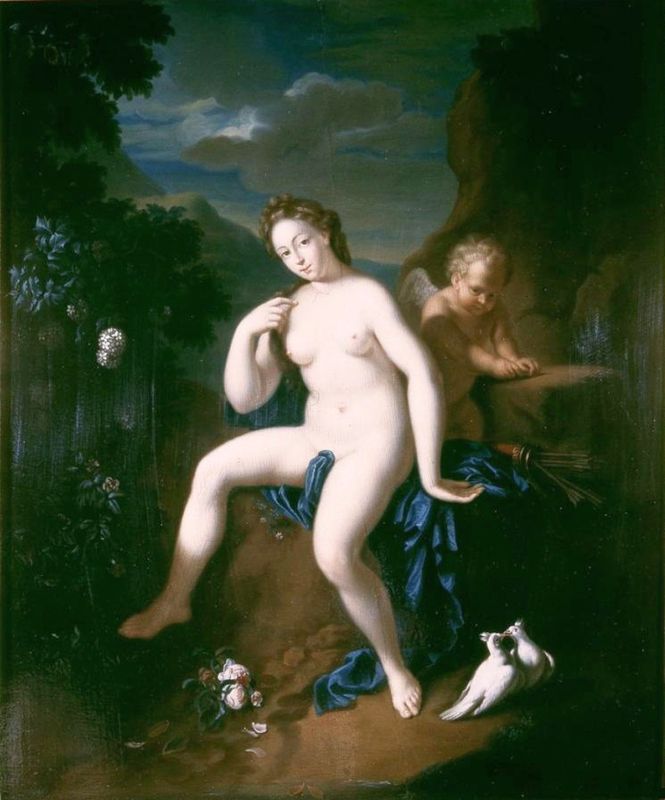
Venus and Cupid
Adriaen van der Werff · 1716 · Czartoryski Museum
Same era · 1710s–1740s
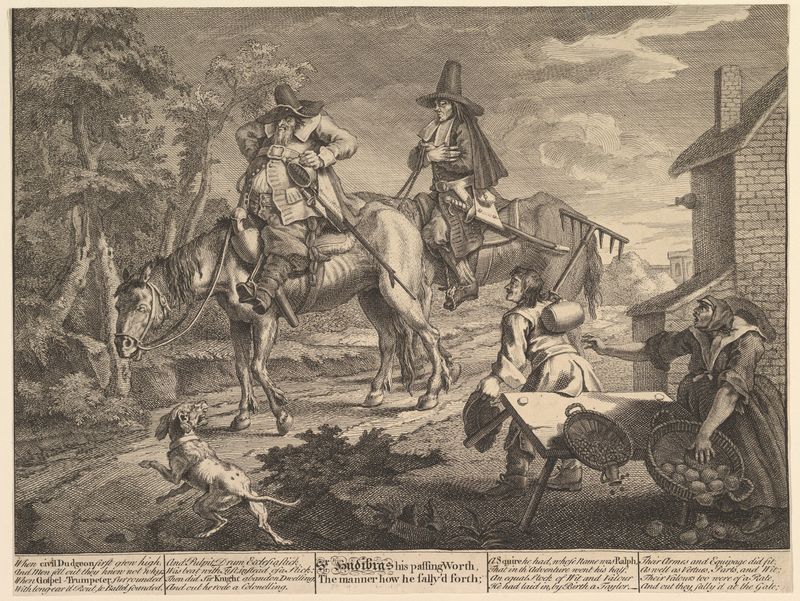
Sr. Hudibras, His Passing Worth, The Manner How He Sally'd Forth": Twelve Large Illustrations for Samuel Butler's Hudibras, Plate 2
William Hogarth · 1725 · The Metropolitan Museum of Art
Same era · 1710s–1740s
Representation...des Chateaux de Weissenstein ...Pommersfeld und Geibach
Salomon Kleiner · 1728 · The Metropolitan Museum of Art
Same era · 1710s–1740s
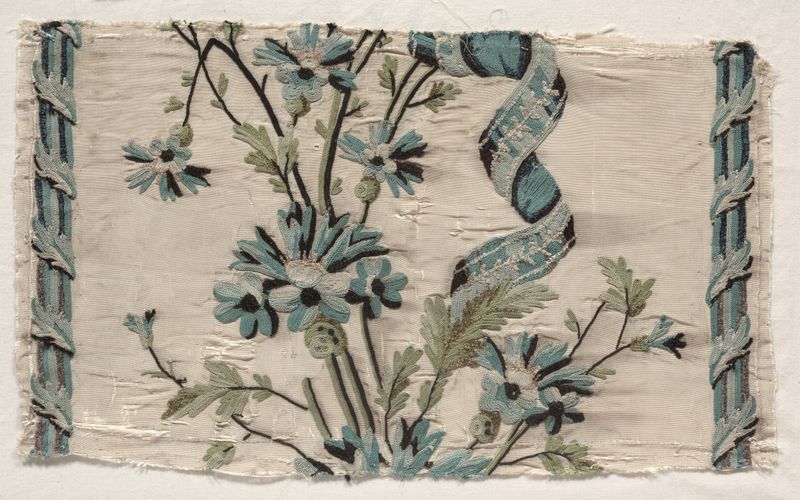
Two Pieces of Embroidery
Philippe de la Salle · 1723 · Cleveland Museum of Art