01
The lone tower
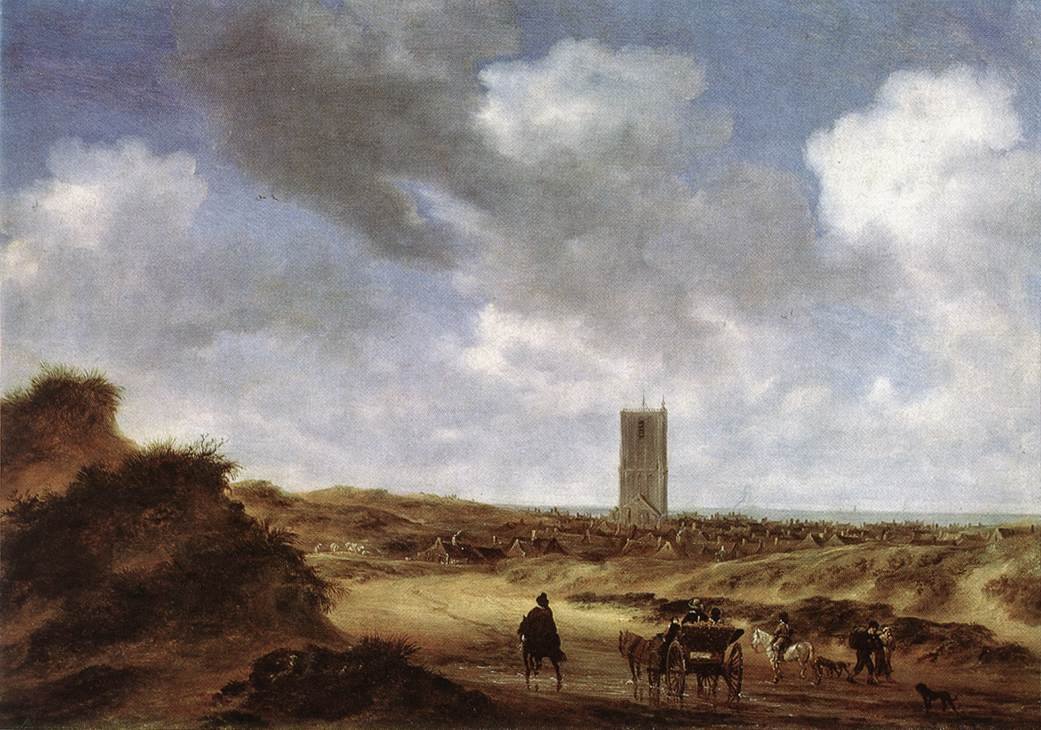
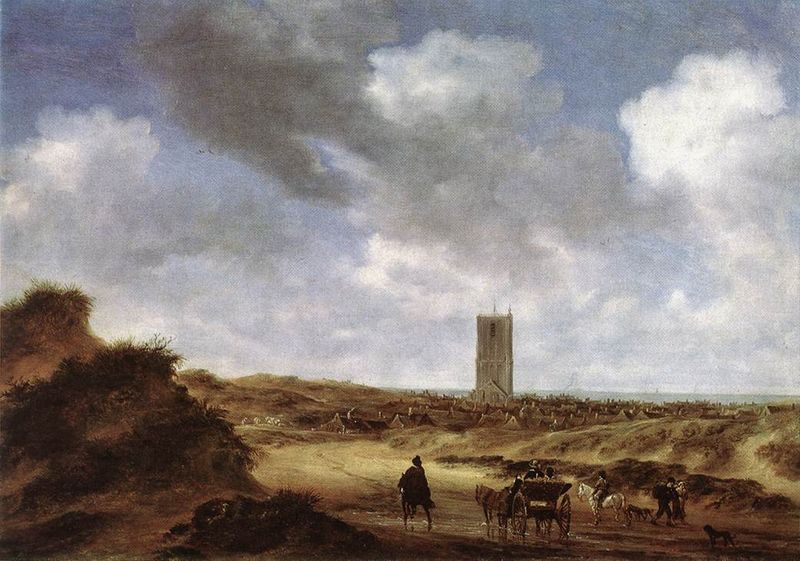
Find the tall, plain church tower on the horizon. It is the one vertical in a flat land, so the whole view hangs on it.
1 of 4 on the painting
“Stop to appreciate this "Landscape" for its remarkable ability to evoke a deep sense of calm and the vastness of nature through its soft light and expansive, unpopulated view. It’s a moment of quiet contemplation captured on canvas.”
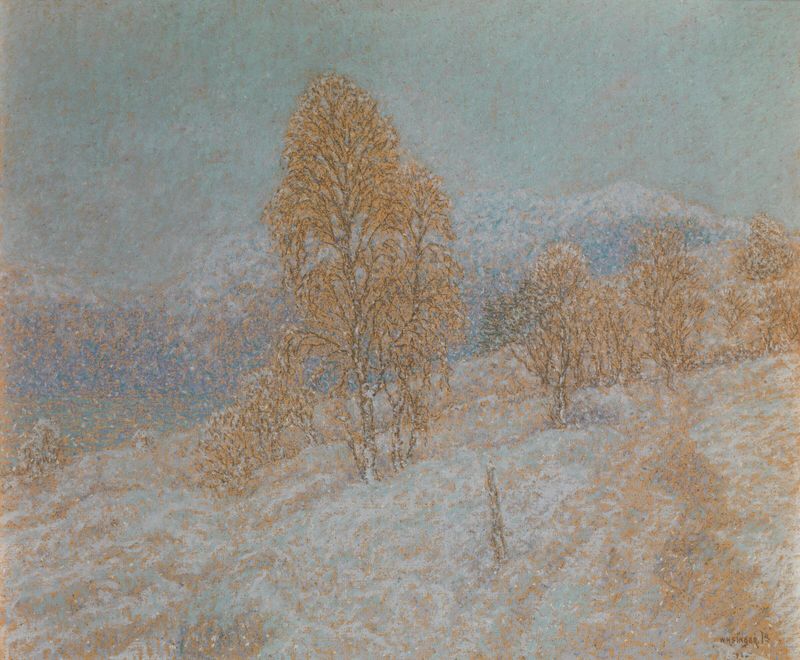
This painting, simply titled "Landscape," invites us to step into a tranquil, almost untouched natural world. The scene unfolds with a gentle sweep of hills, their contours softened by a diffused light that suggests either early morning mist or the quiet hush of dusk. What immediately strikes the viewer is the sense of immense scale, with a vast sky dominating the upper half of the canvas, rendered in subtle gradations of blues and grays that hint at distant weather. The artist uses a muted palette, allowing the greens of the foliage and the browns of the earth to blend harmoniously, creating a feeling of profound calm. It's a landscape that prioritizes atmosphere and the quiet majesty of nature over dramatic incident, drawing the eye deep into the composition through layers of receding forms. William Henry Singer, who lived from 1868 to 1943, often found inspiration in such serene, unpopulated vistas.
Five details hide in plain sight. Pick one and we’ll show you exactly where to look.
Find the tall, plain church tower on the horizon. It is the one vertical in a flat land, so the whole view hangs on it.
The sky takes up roughly two thirds of the picture, so the land feels low and wide. The eye is pulled down toward the small figures on the track.
The pale sandy track curves from the foreground back toward the town. It leads the eye past the rider and the cart toward the tower in the distance.
Near the bottom, a horse-drawn cart with passengers moves through a wet patch of the track. These everyday travelers give the wide space a human scale.
The shadowed, grassy dune at left frames the scene. Its dark tones set off the sunlit sand and the far town, which seem to sit further back.
William Henry Singer, Jr. captured the serene beauty of Norwegian landscapes and the vibrant life of European cities.