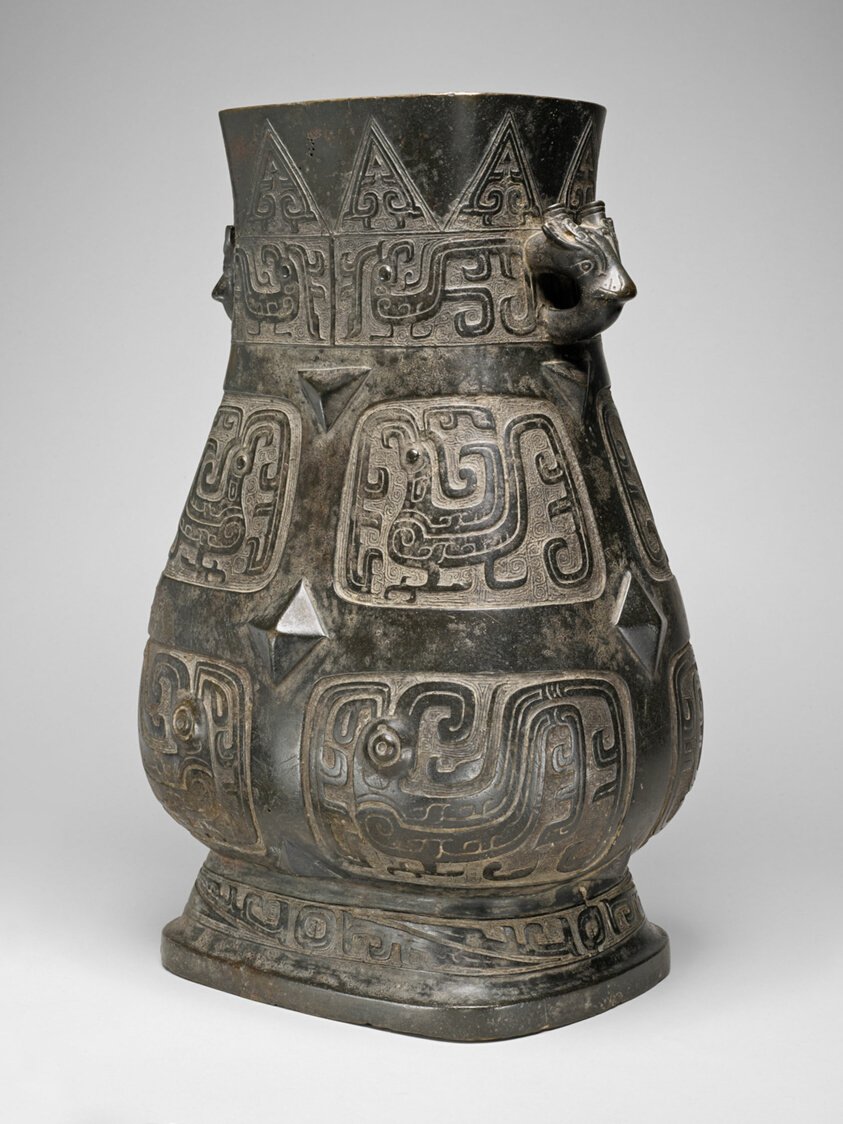
“Stop to appreciate the powerful form and intricate details of this ancient Chinese bronze jar, a vessel that once played a central role in elite rituals and ceremonies.”
This striking bronze jar, known as a hu, immediately draws the eye with its robust form and intricate surface. Its substantial weight and refined craftsmanship speak to the high status of bronze in ancient China, a material reserved for ritual vessels and elite objects. The vessel's elegant silhouette, with its broad shoulders tapering to a narrower base, suggests a sense of stability and grandeur. Look closely at the surface and you'll see a rich patina, a testament to centuries of burial and interaction with the earth, which adds depth and character to the metal. Though its exact original use might have varied, such vessels were often central to ancestral ceremonies or feasts, holding wine or grain, connecting the living with their forebears through shared ritual.
- Artist
- Zhou Kun
- Medium
- Bronze
- Location
- Art Institute of Chicago
- Dimensions
- 48.5 × 30 × 24.5 cm (19 1/4 × 11 3/4 × 9 5/8 in.)
What to Notice
Four details hide in plain sight. Here’s where to look.
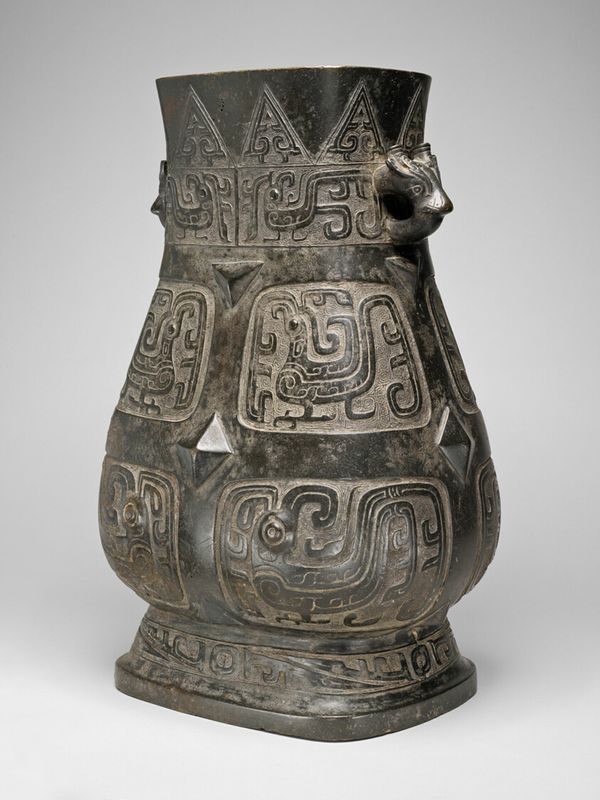
The two large, ringed handles on either side, resembling stylized animal heads.
The subtle concentric bands of decoration encircling the jar's neck and body.
The distinct green-brown patina, revealing the bronze's age and history.
The sturdy, slightly flared foot that supports the vessel's substantial weight.
Zhou Kun
1507 · Ming dynastyZhou Kun, also known as Shaoyu, was a painter from the Ming dynasty known for his evocative landscapes.