
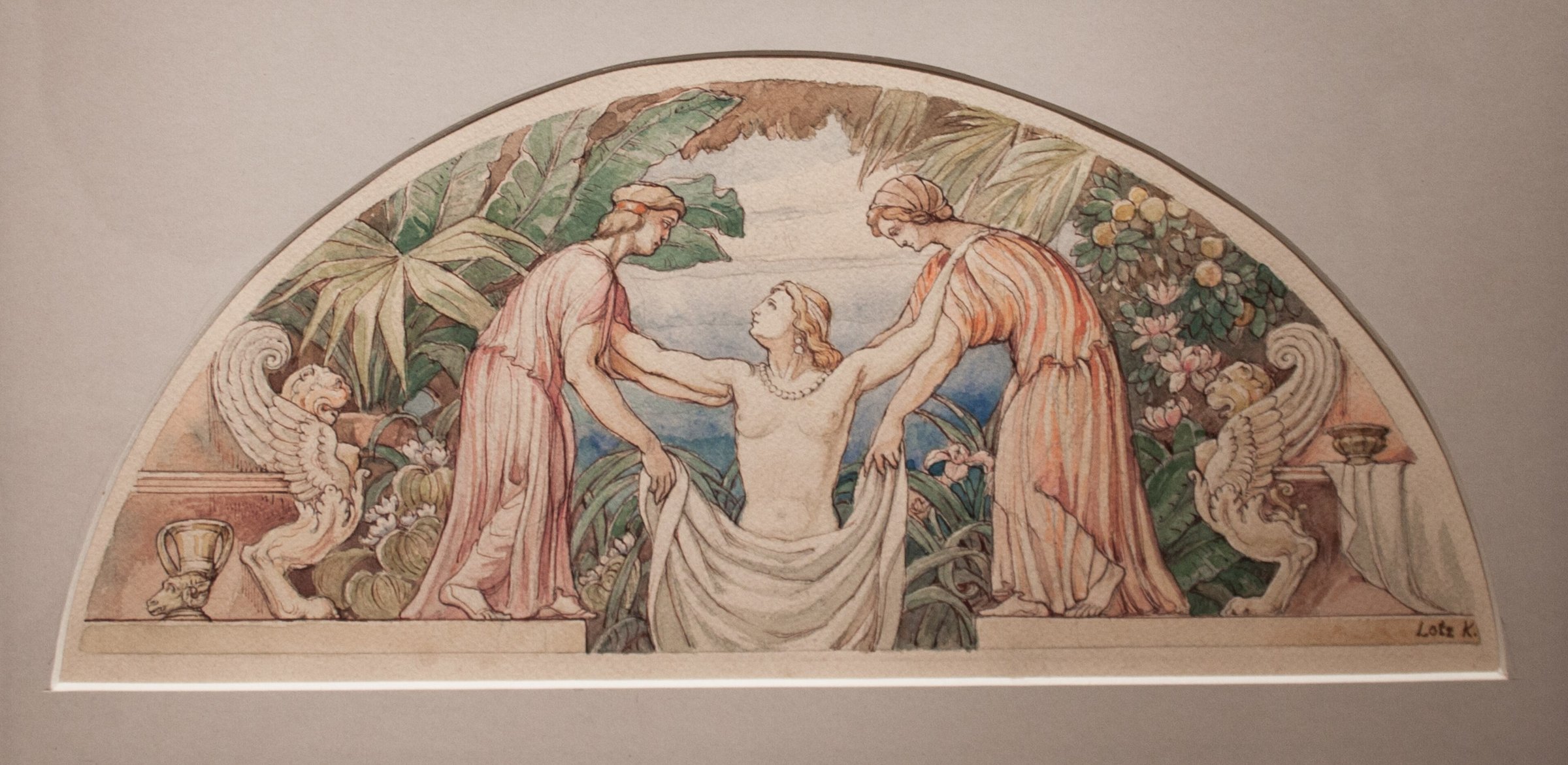
“This preparatory sketch by Károly Lotz reveals the dramatic flair and monumental scale of his frescos, which once adorned many of Hungary's most important public buildings.”
This "Fresco_scheme 2" offers a glimpse into the grand decorative projects of Károly Lotz, an artist celebrated for his monumental murals and frescos. Though this specific scheme is a preparatory study, it reflects the ambition and scale of his finished works, many of which adorned major public buildings in Budapest and Vienna. Lotz was known for his Venetian-inspired style, often evoking the dramatic compositions and vibrant palettes of Tiepolo. He frequently received commissions for large-scale historical and allegorical scenes, such as the now-lost "Apotheosis of the Habsburg Dynasty" in Buda Castle. This scheme, with its dynamic figures and sweeping architectural elements, suggests the kind of elaborate narrative and theatricality he brought to his public art, designed to impress and uplift viewers in grand spaces.
- Artist
- Károly Lotz
What to Notice
Four details hide in plain sight. Here’s where to look.
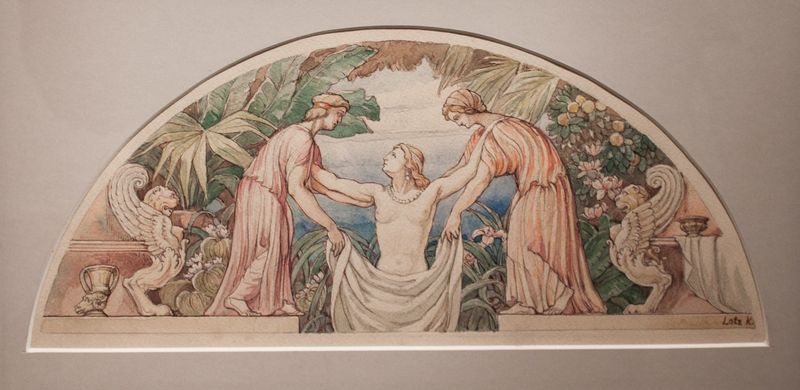
The flowing drapery on the figures, typical of Baroque-inspired frescos.
The sense of movement and drama created by the poses.
The interplay of light and shadow, giving depth to the scene.
Architectural elements suggesting a grand, classical setting.
Stand in front of it and listen
The full narration walks you through Fresco_scheme 2. — the story behind it, the details most visitors miss, and why it matters. Free in the Art Whisper app.
Károly Lotz
1833–1904 · HungaryKároly Lotz, a German-Hungarian painter, transformed Hungarian public spaces with monumental murals and frescos in the Venetian style of Tiepolo.
Further Works by Lotz
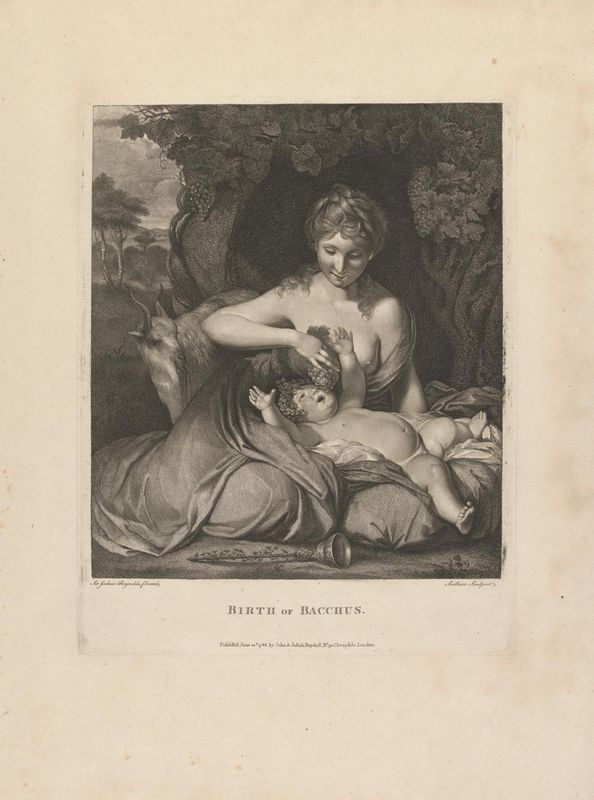 Birth of Bacchus
Art Institute of Chicago
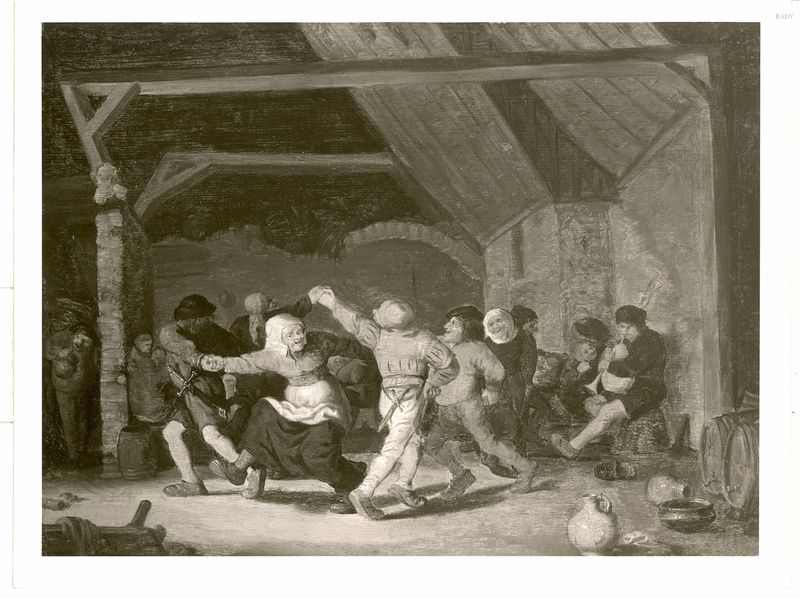 Dancing Peasants
1860 · Hungarian National Gallery
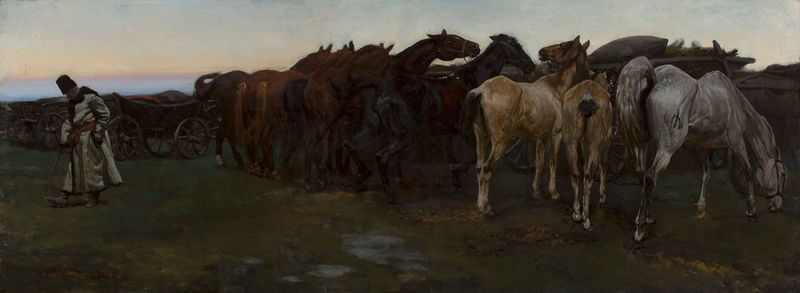 Horses at Rest
Hungarian National Gallery
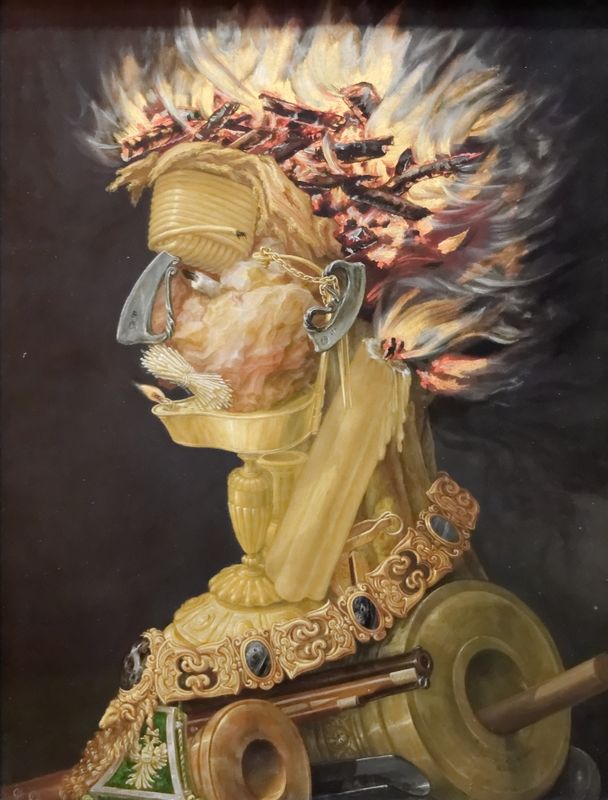 The Allegory of Fire
Hungarian National Gallery
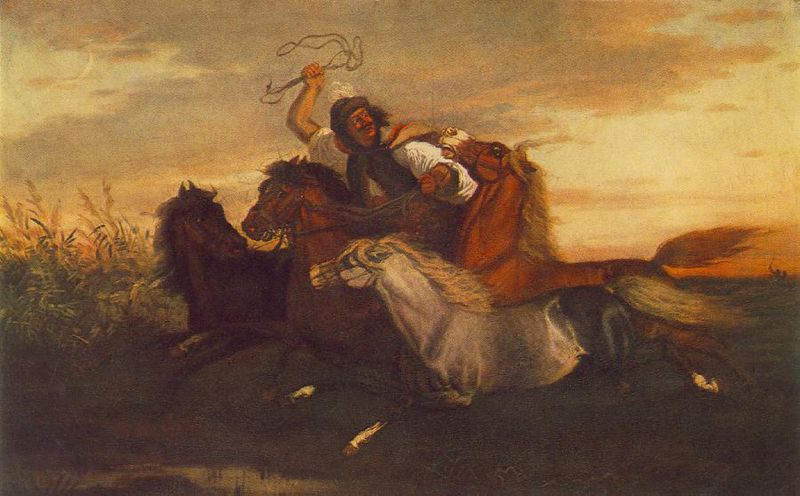 Galloping Outlaw
1857 · Hungarian National Gallery
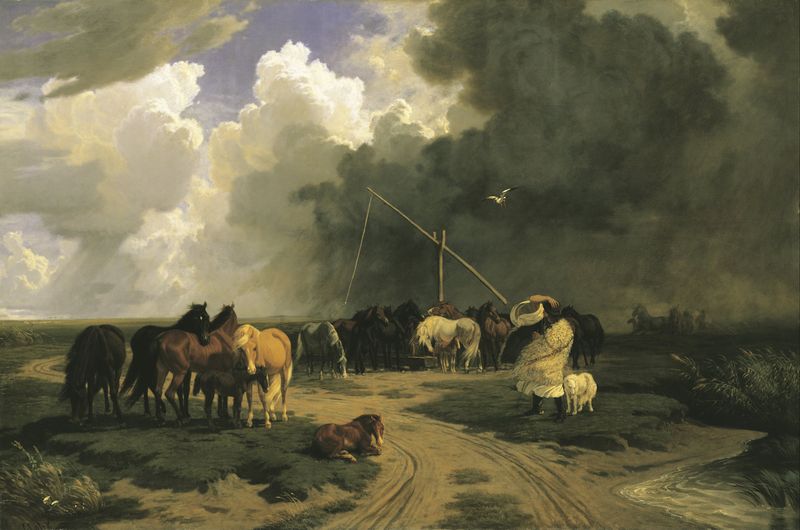 Horses in a Rainstorm
1862 · Hungarian National Gallery
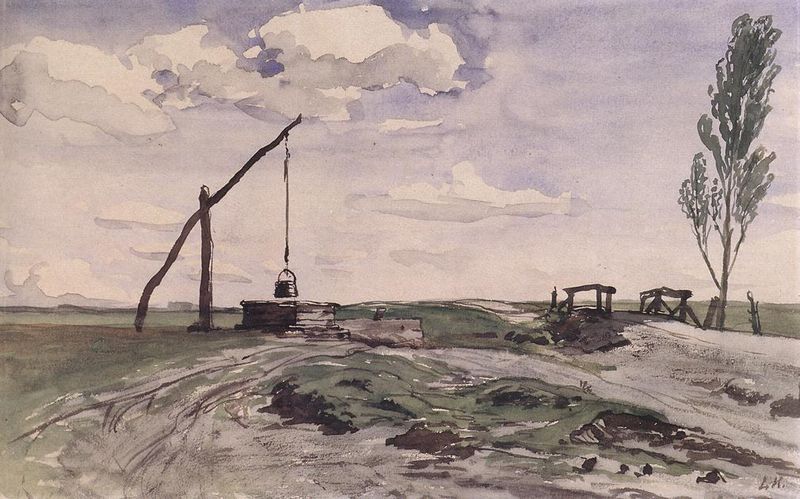 Landscape with a Sweep-pole Well
1869 · Hungarian National Gallery
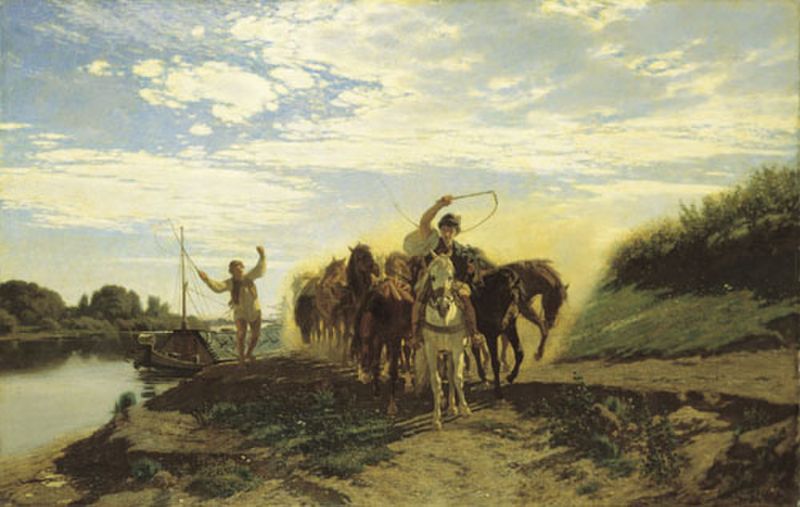 Boat Warpers
1870 · Hungarian National Gallery