
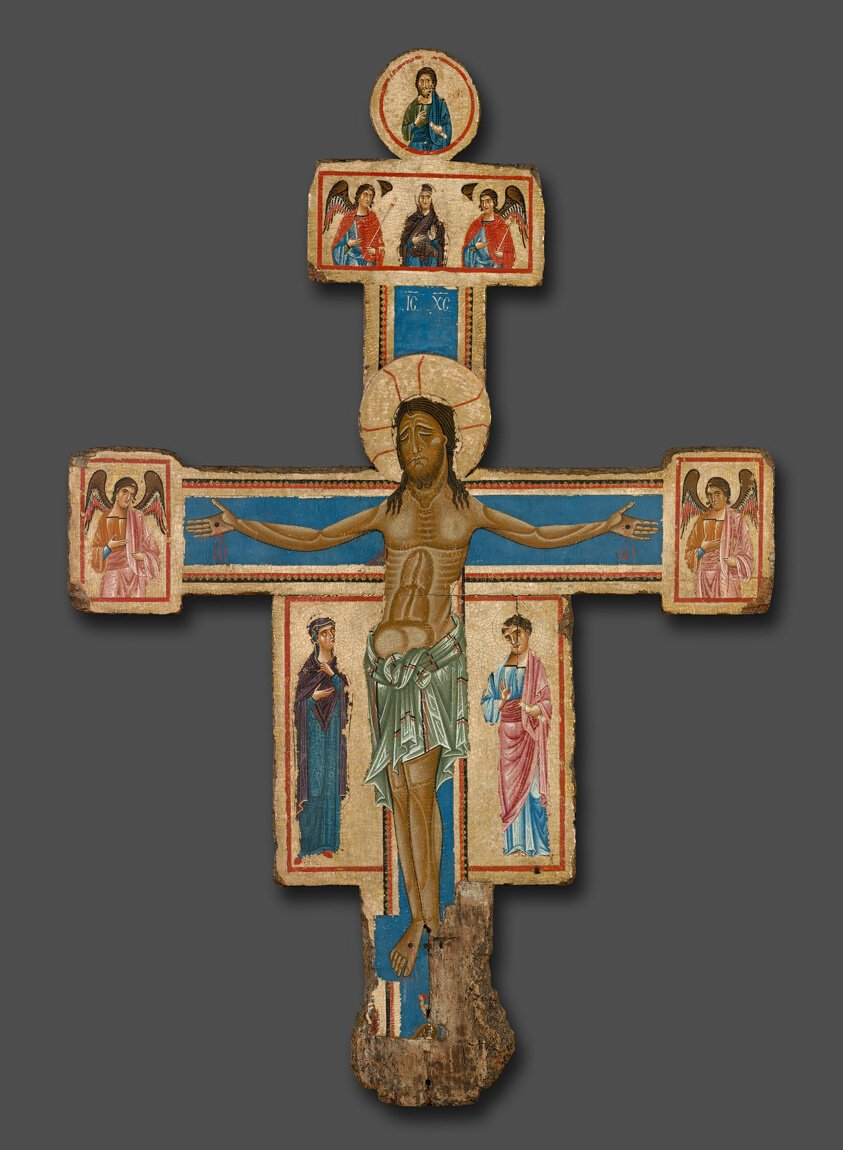
“Stop to observe this powerful 13th-century Crucifix, an early Italian work that captures the raw emotion of Christ's sacrifice through its imposing scale and stylized depiction of suffering.”
This imposing Crucifix, nearly six feet tall, presents Christ in a moment of profound suffering, his body heavily weighted and contorted. Unlike later, more naturalistic depictions, this early Italian work emphasizes the theological meaning of the sacrifice through stylized forms. The figure's elongated body and the dramatic curve of his torso are characteristic of the Christus patiens (suffering Christ) type, which gained prominence in the 13th century. His eyes are closed, his head bowed, conveying the finality of death. The artist, known as the Master of the View of Saint Gudula, utilized tempera on panel, a common medium of the period, to create the rich, earthy tones and the crisp outlines of the figure. The scale of the work would have made it a focal point in a church, drawing the viewer into contemplation of the Passion.
- Artist
- Master of the View of Saint Gudula
- Date
- 1235
- Medium
- Tempera on panel
- Location
- Art Institute of Chicago
- Dimensions
- 191 × 127.2 cm (75 1/4 × 50 1/8 in.)
What to Notice
Five details hide in plain sight. Here’s where to look.
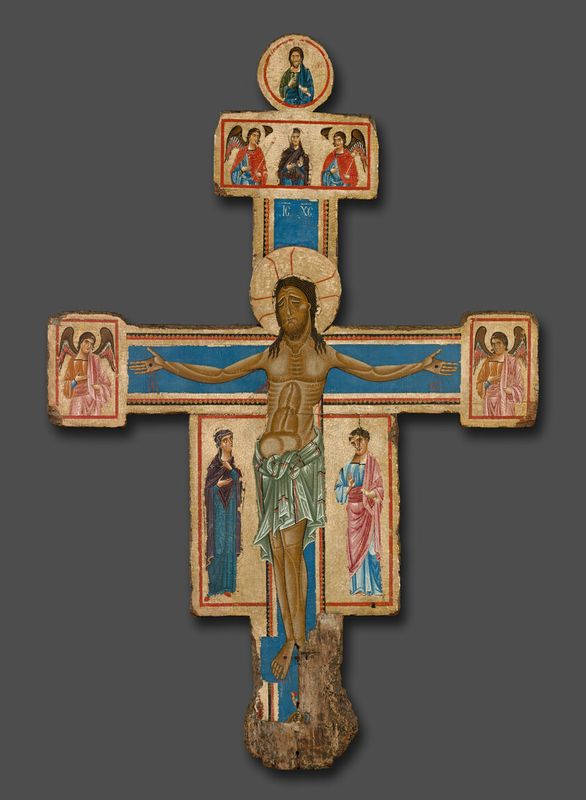
The heavy curve of Christ's body, emphasizing the weight of death.
His closed eyes and slight parting of the lips, signaling his last breath.
The stylized, almost geometric folds of the loincloth.
The delicate, almost calligraphic lines defining the hair and beard.
1 more detail is waiting.
See all 5 in Art Whisper →Master of the View of Saint Gudula
This enigmatic Early Netherlandish painter, active in Brussels, is known for his detailed religious scenes and portraits of church patrons.
Further Works by Gudula
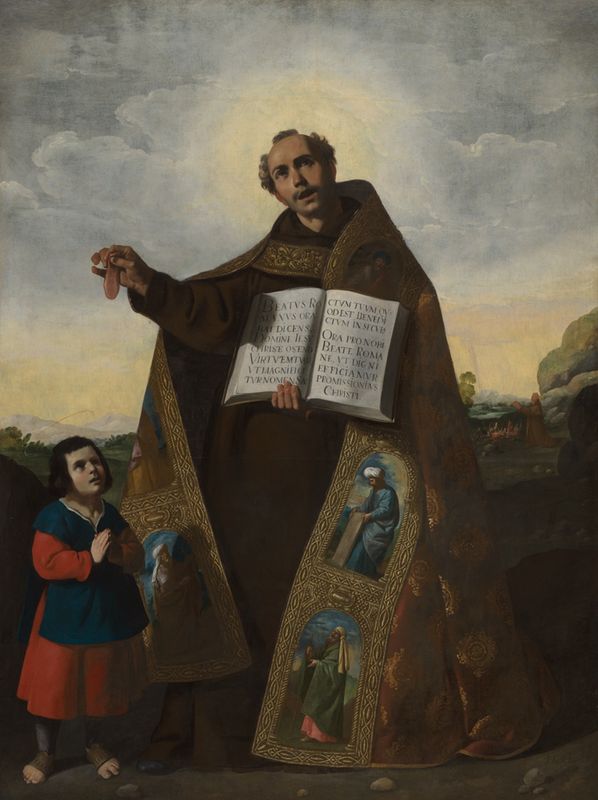 Saint Romanus of Antioch and Saint Barulas
1638 · Art Institute of Chicago
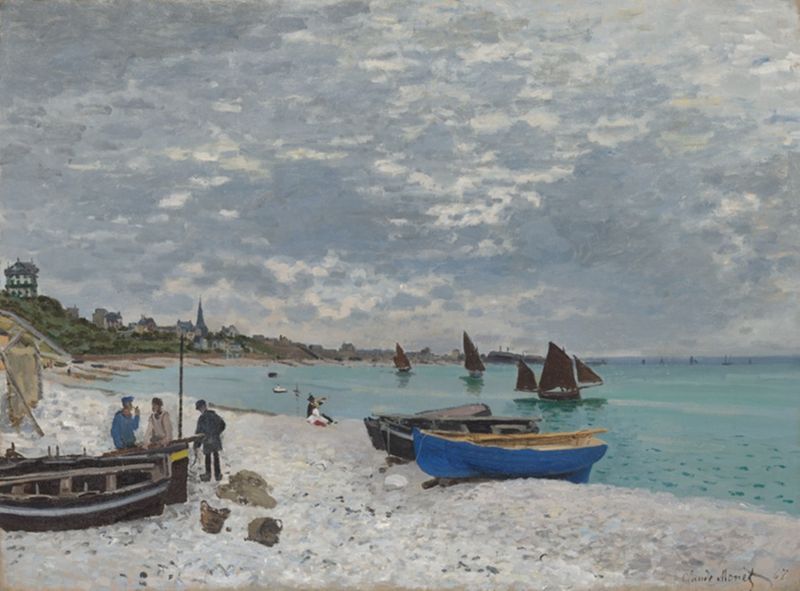 The Beach at Sainte-Adresse
1867 · Art Institute of Chicago
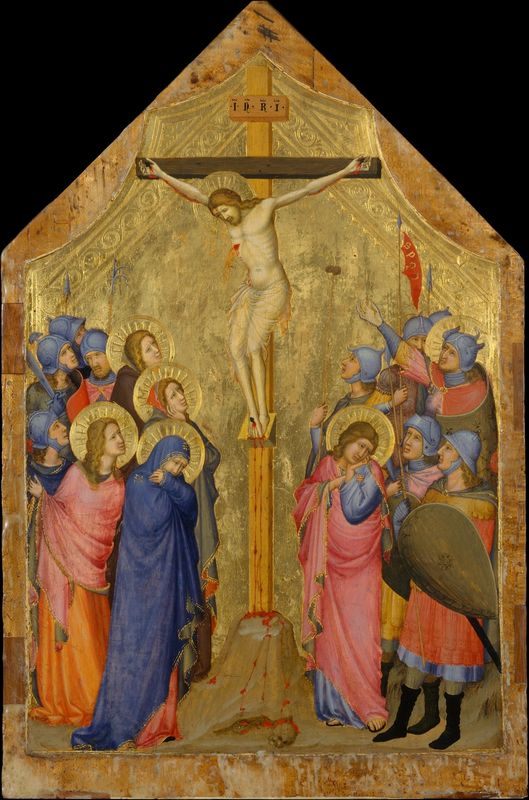 The Crucifixion
1330 · The Metropolitan Museum of Art
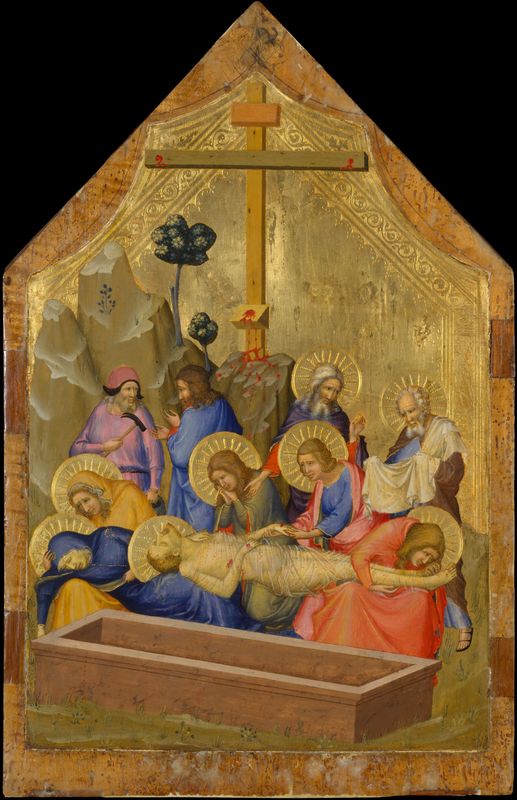 The Lamentation
1330 · The Metropolitan Museum of Art
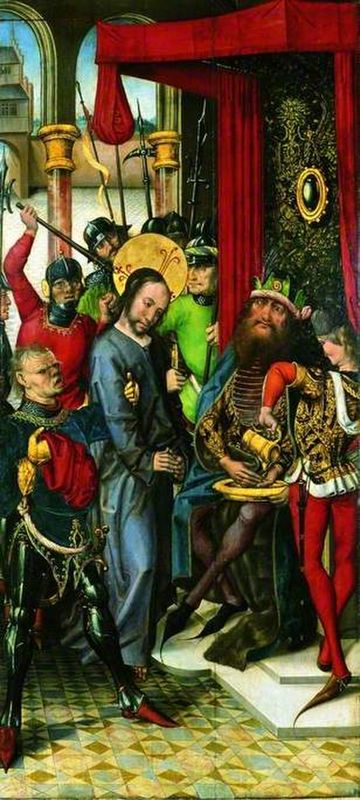 Christ Before Pilate (recto)
1467 · Bowes Museum
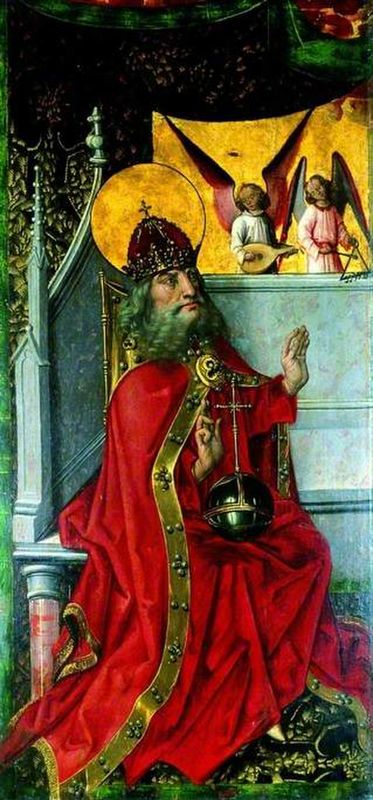 God the Father (recto)
1467 · Bowes Museum
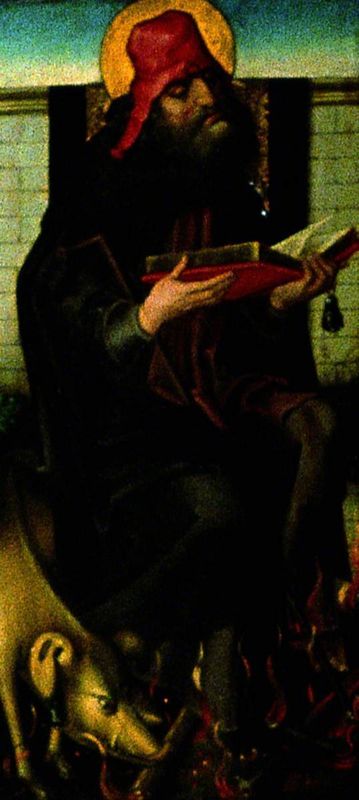 Saint Anthony (verso)
1467 · Bowes Museum
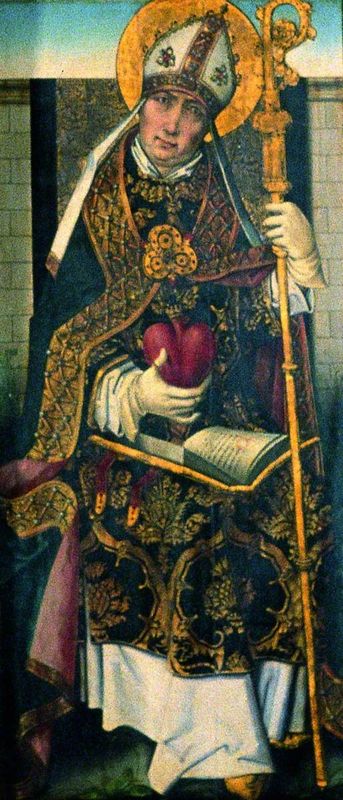 Saint Augustine (verso)
1467 · Bowes Museum