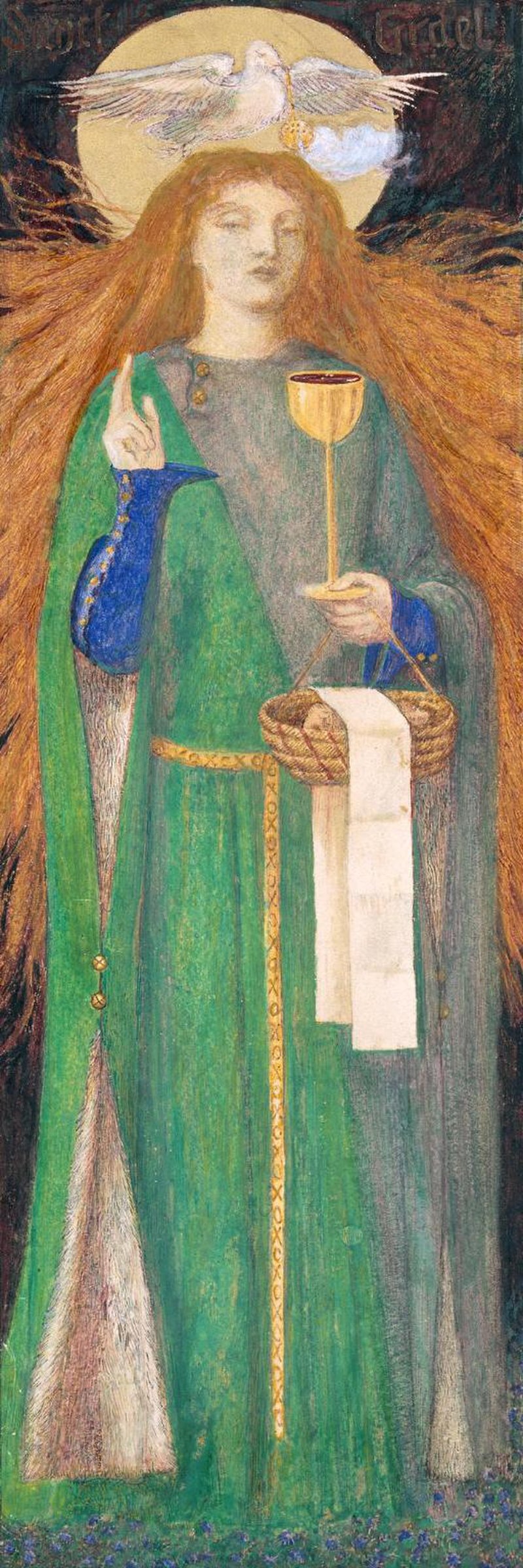
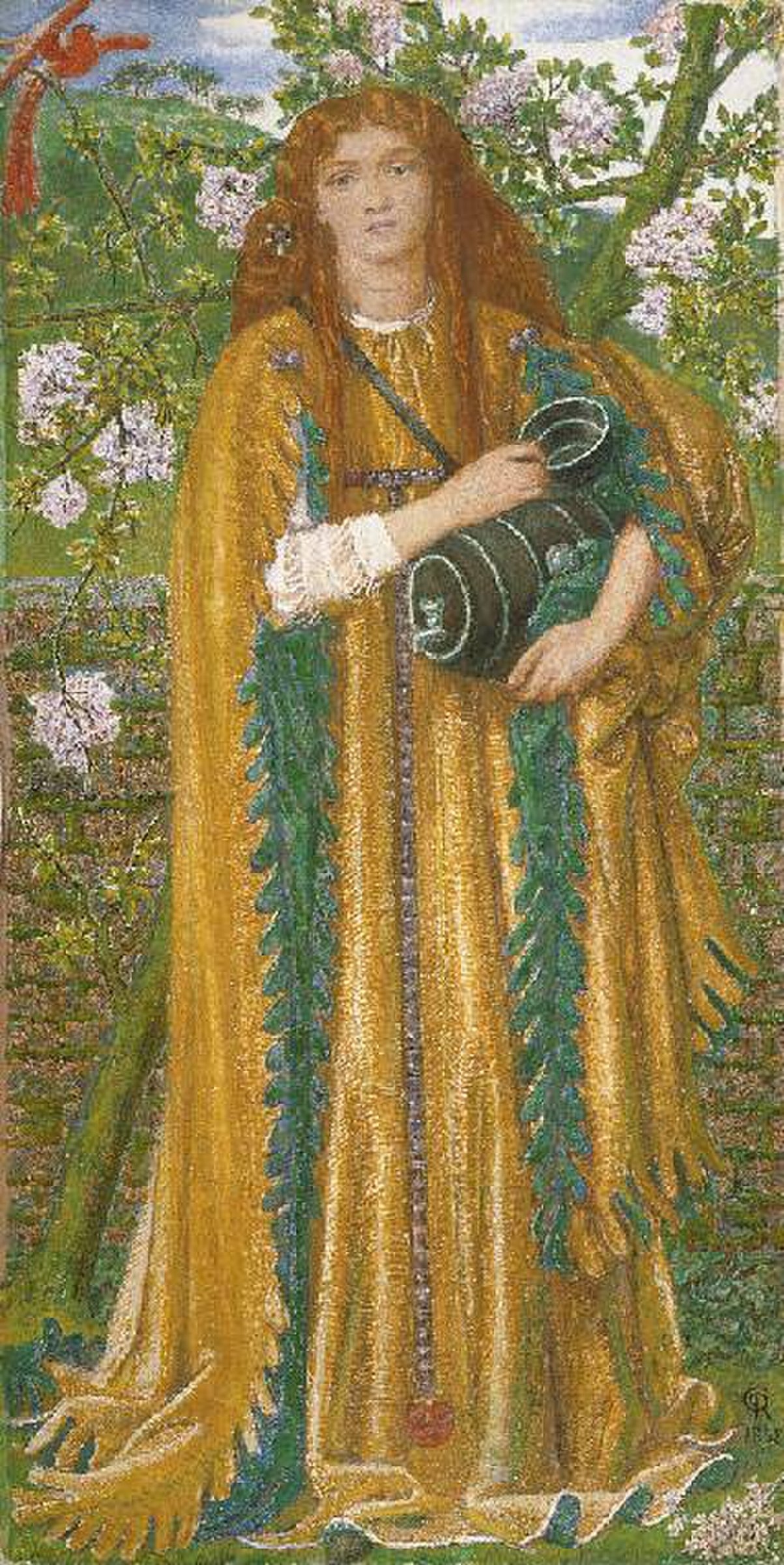
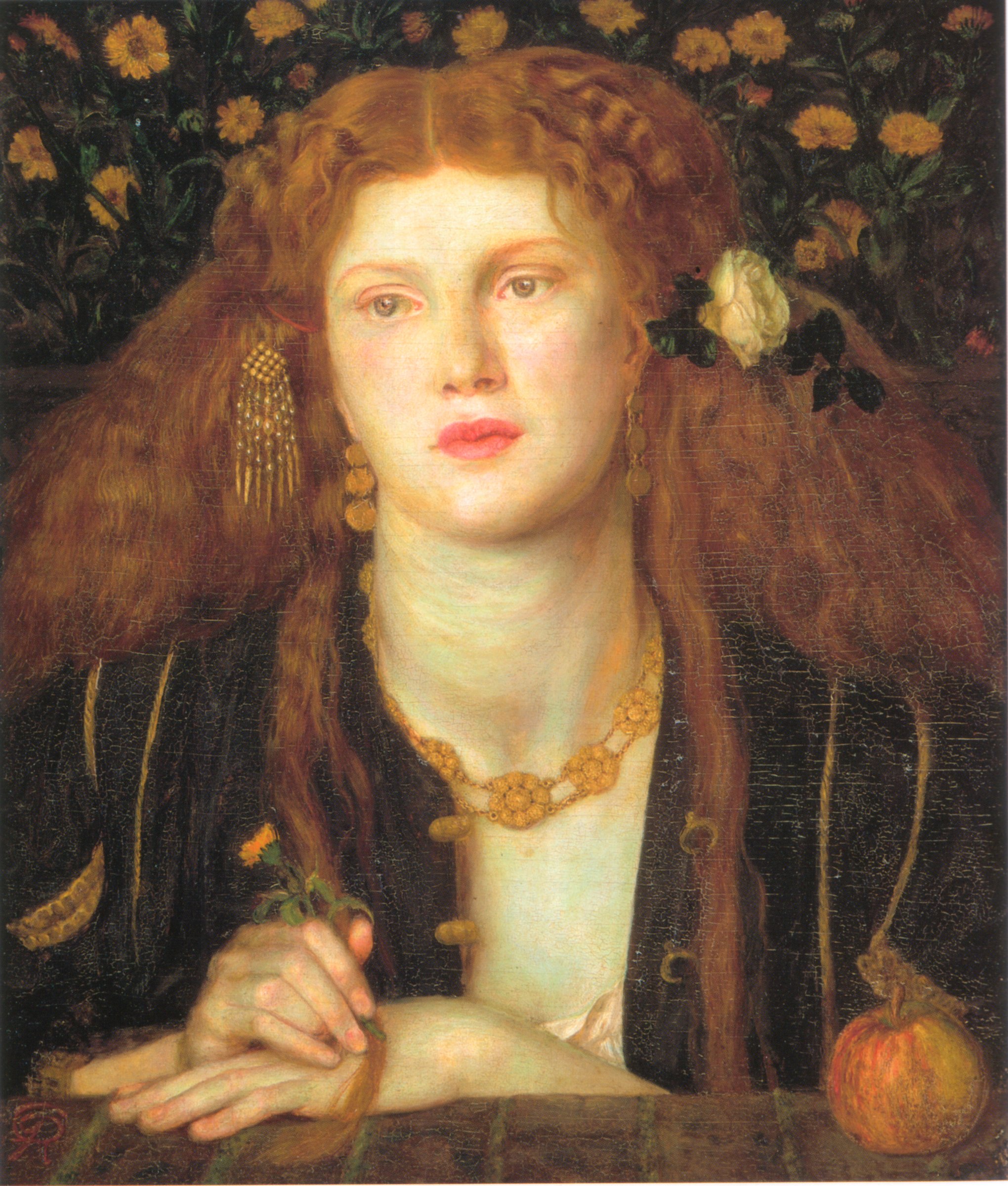
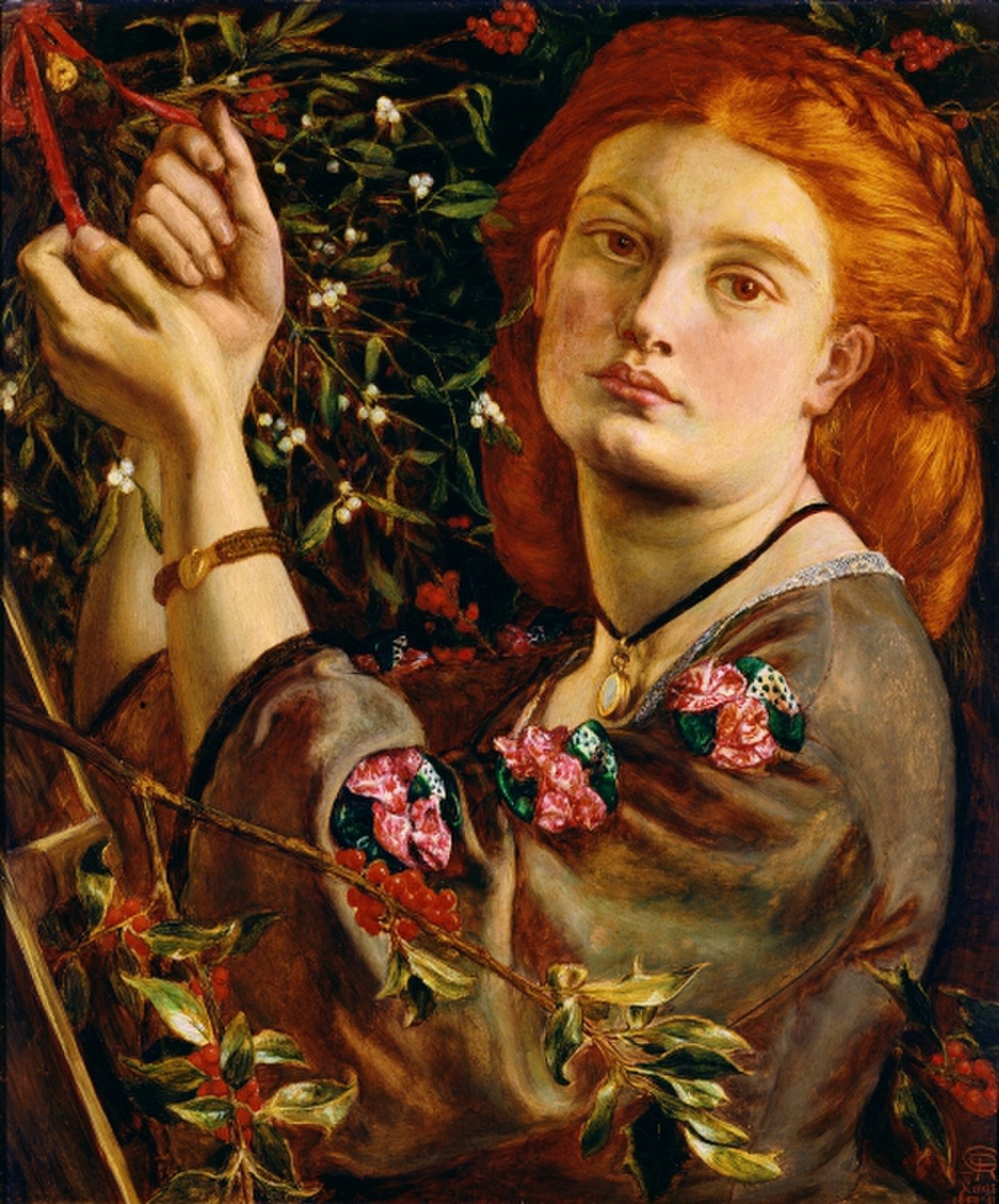

“Picture this: you're walking through a Victorian gallery and suddenly you're hit with colors so vivid they practically glow, subjects so detailed you can count individual flower petals, and faces so earnest they seem to be peering into your soul.”
Welcome to Pre-Raphaelite territory! Founded in 1848 by a secret society of rebellious young artists—Dante Gabriel Rossetti, John Everett Millais, and William Holman Hunt—the Pre-Raphaelite Brotherhood was basically the art world's version of a punk rock movement. They were fed up with what they saw as the stale, academic painting style that had dominated since Raphael (hence the name—they wanted to go back to before Raphael's influence). These artists were only in their early twenties when they decided to shake things up, signing their work with the mysterious initials "PRB" like some kind of artistic secret society.
What made them revolutionary? They rejected the brown, shadowy paintings favored by the Royal Academy and instead went back to studying nature directly, painting outdoors with almost photographic detail. They were obsessed with medieval and literary subjects—King Arthur, Shakespeare, Dante—but rendered them with an intensity and realism that was startling. Think of it as historical fan fiction meets hyperrealism. The women in Pre-Raphaelite paintings are particularly distinctive: often red-haired, pale-skinned, with flowing medieval dresses and an expression that's simultaneously dreamy and intense. Models like Elizabeth Siddal and Jane Morris became iconic muses, their faces appearing again and again.
By the 1860s, the original Brotherhood had dissolved, but their influence exploded into a broader movement that lasted well into the 1900s. The style evolved from the sharp, almost harsh realism of early works to the more decorative, romantic aesthetic of artists like Edward Burne-Jones. When you spot a Pre-Raphaelite painting today, you're looking at art that once scandalized Victorian England but now defines our romantic image of that era.
- Period
- c. 1848–1900
- Peak
- around 1860
- Born in
- London, England
- Key artists
- Dante Gabriel Rossetti
- Came before
- Academic Romanticism
- Came after
- Symbolism and Art Nouveau
When it happened
- CAME BEFOREAcademic Romanticism
- ~1848 · STARTED
- ~1860 · PEAKED
- ~1900 · ENDED
- CAME AFTERSymbolism and Art Nouveau
What makes it Pre-Raphaelite Brotherhood
Jewel-Toned, Luminous Color
Painted on wet white canvas for maximum brightness. Colors pop like stained glass—vivid greens, deep crimsons, rich blues.
e.g. Ophelia by John Everett MillaisObsessive Natural Detail
Every leaf, petal, and blade of grass rendered individually. Artists painted outdoors for months to capture botanical accuracy.
e.g. The Hireling Shepherd by William Holman HuntLiterary & Medieval Subjects
Shakespeare, Arthurian legends, Dante, and medieval romances. Historical accuracy mixed with symbolic meaning.
e.g. The Lady of Shalott by John William WaterhouseIconic 'Pre-Raphaelite Woman'
Pale skin, flowing red or auburn hair, intense gaze, medieval dress. Often looks melancholy, trapped, or transcendent.
e.g. Proserpine by Dante Gabriel RossettiHidden Symbolism Everywhere
Flowers, objects, and colors carry coded meanings. Poppies = death, daisies = innocence, broken chains = freedom.
e.g. The Awakening Conscience by William Holman HuntHow to spot Pre-Raphaelite Brotherhood
Three signs you’re standing in front of one — all easy to see in Charlotte Polidori.
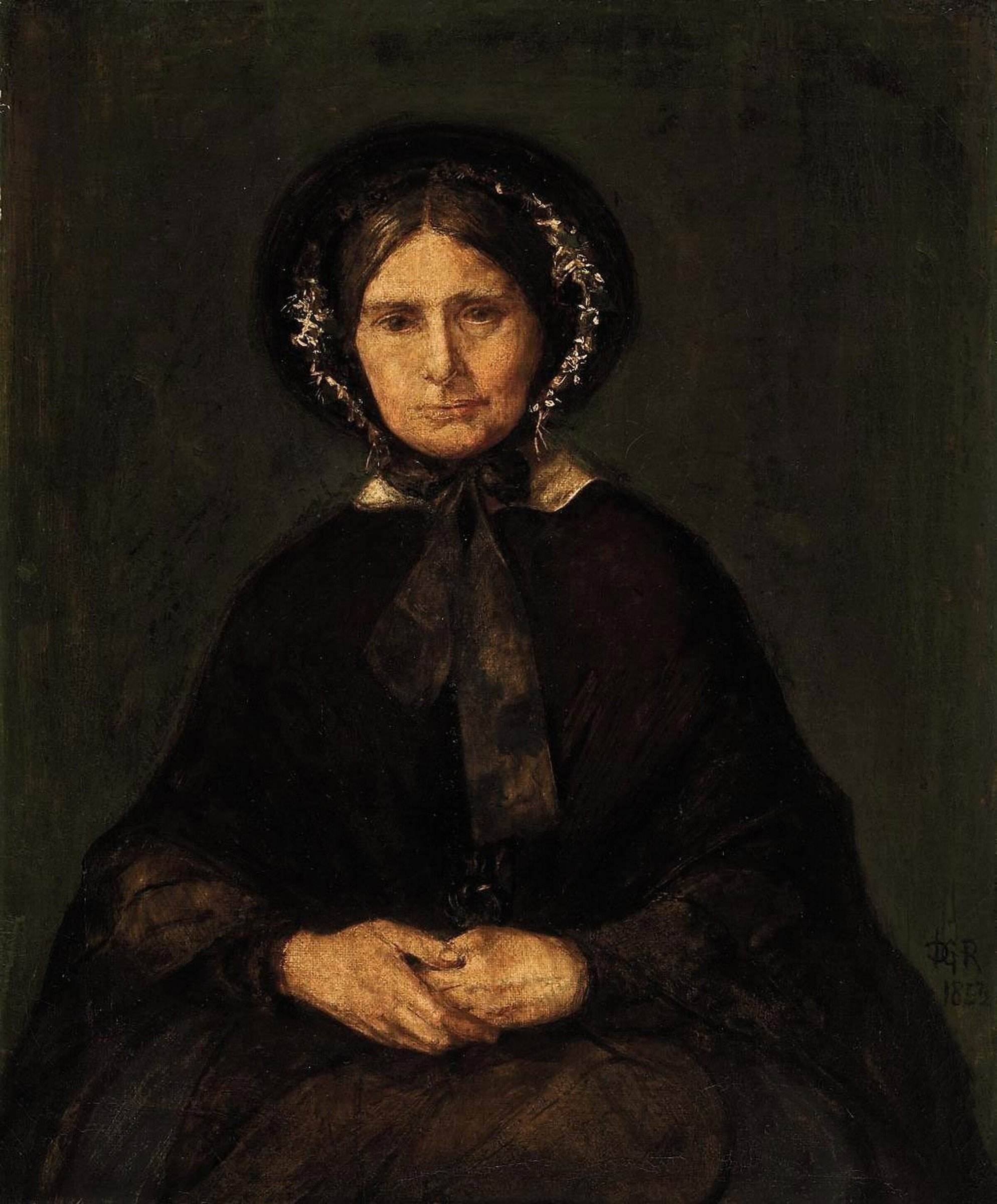
Look for colors that seem almost too bright and clear—like someone turned up the saturation. The whites especially glow with an inner light.
Check the background: if you can identify individual plant species and count leaves, you're likely looking at Pre-Raphaelite work.
Notice the faces: if there's a woman with masses of flowing hair and an expression of yearning or tragedy, and she's in medieval dress, bingo!
Elizabeth Siddal posed for Ophelia in a bathtub for four months. When the lamp heating the water went out, she got pneumonia and her father sued Millais!
The Brotherhood was so secretive at first that critics had no idea what 'PRB' meant. When revealed, some thought it was a dangerous religious cult.
Millais eventually became establishment himself—knighted and elected President of the Royal Academy, the very institution he'd rebelled against.
The artists who defined it
Works to know
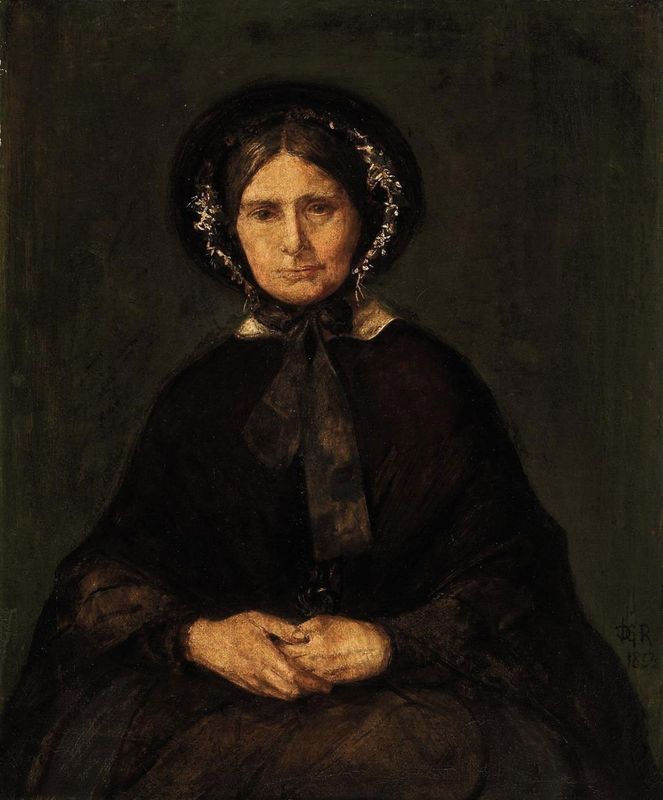 Charlotte Polidori
1853
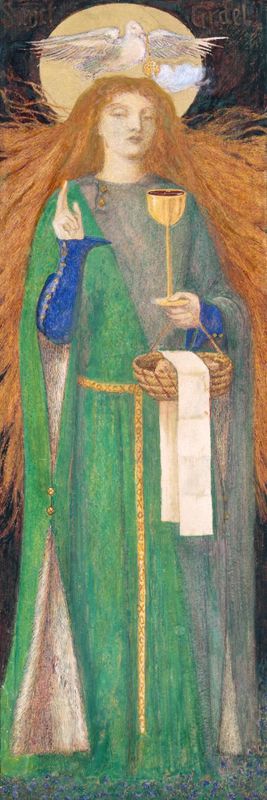 The Damsel of Sanct Grael
1857 · Tate
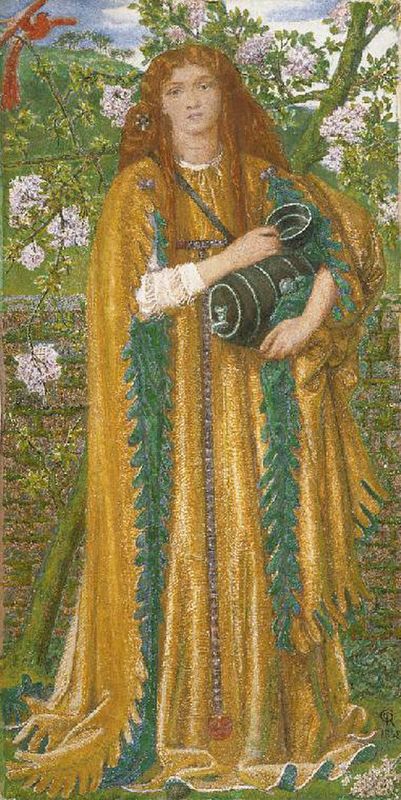 Golden Water
1858 · Fitzwilliam Museum
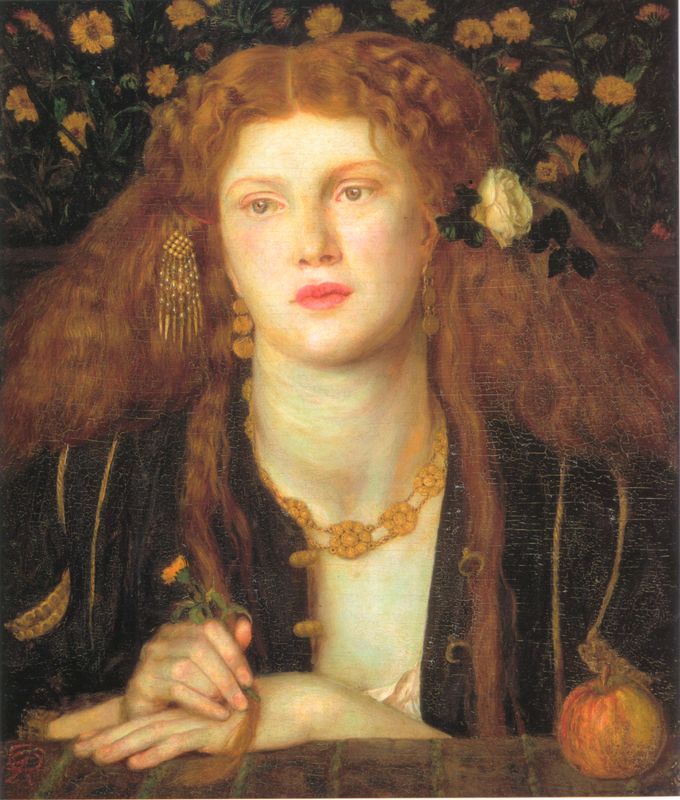 Bocca Baciata
1859 · Museum of Fine Arts Boston
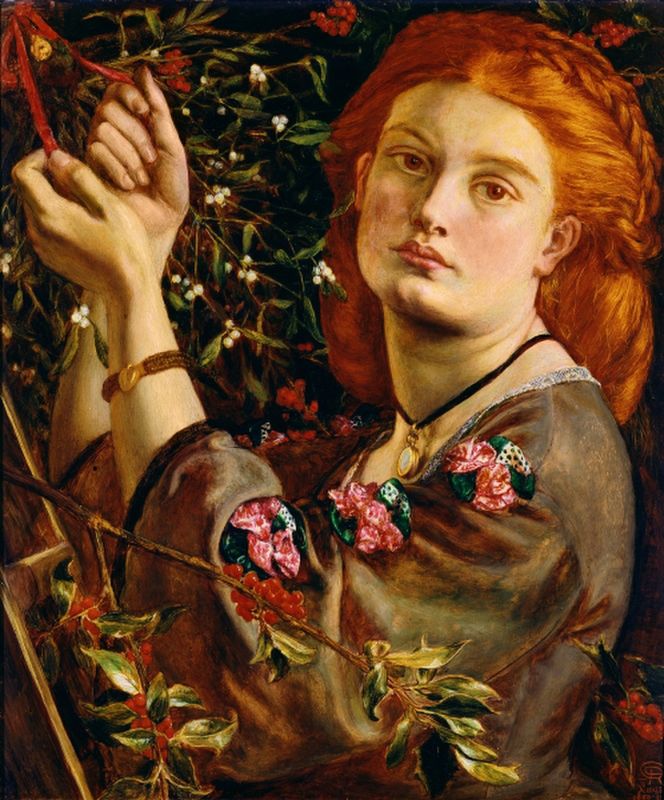 Hanging the Mistletoe
1860
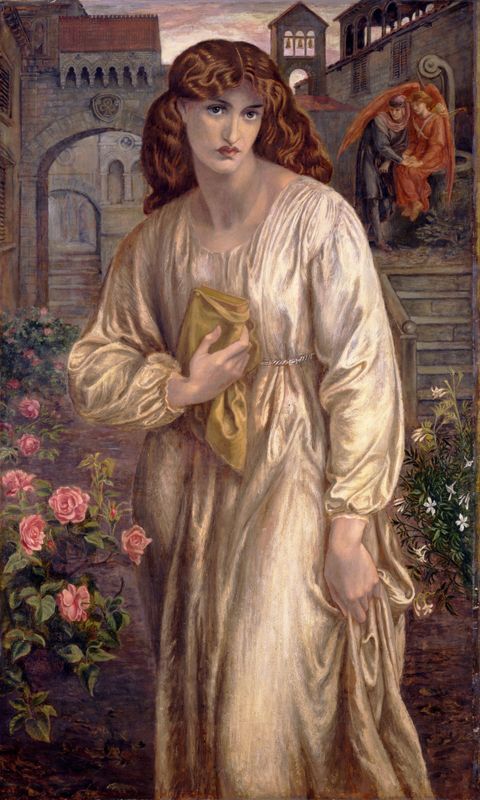 The Salutation of Beatrice
1861 · National Gallery of Canada
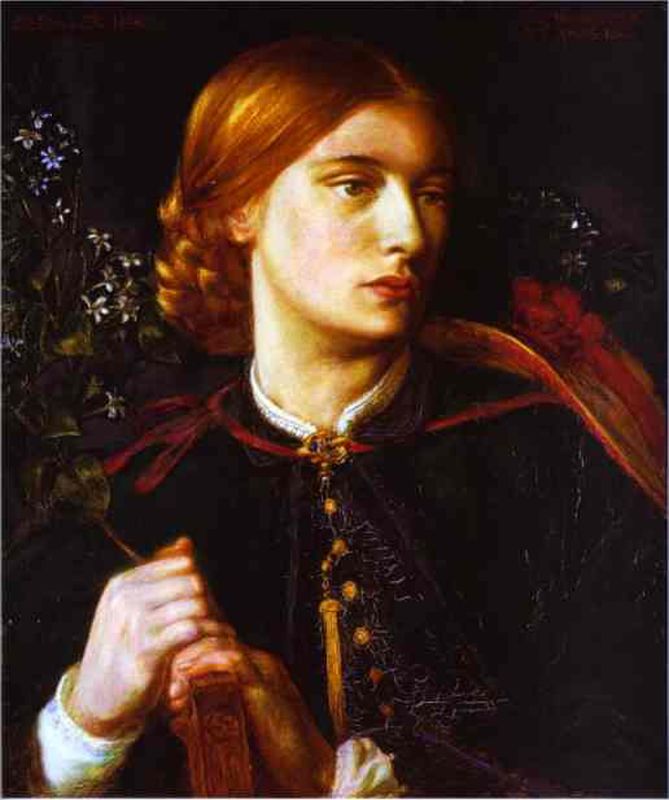 Mrs. James Leathart
1862
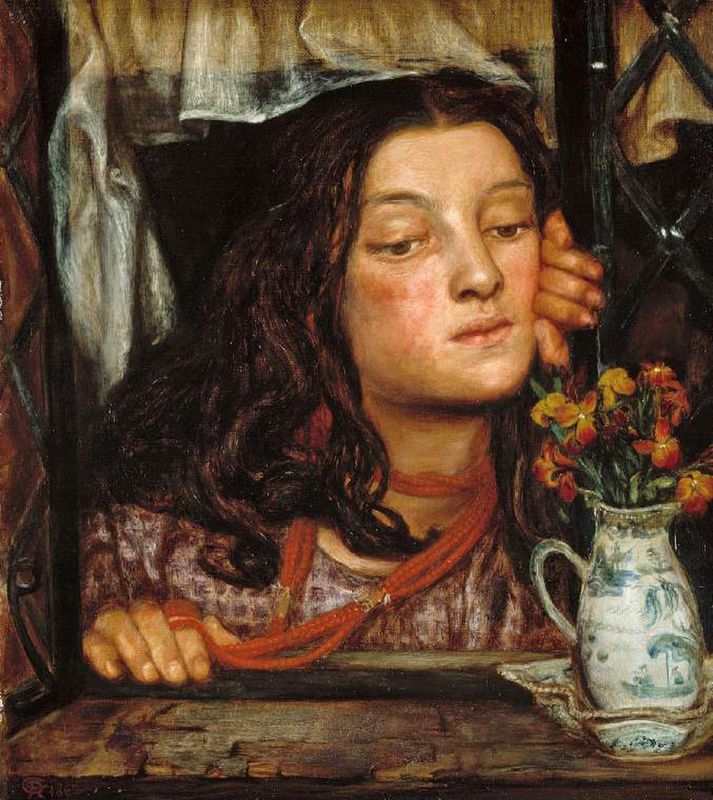 Girl at a lattice
1862 · Fitzwilliam Museum
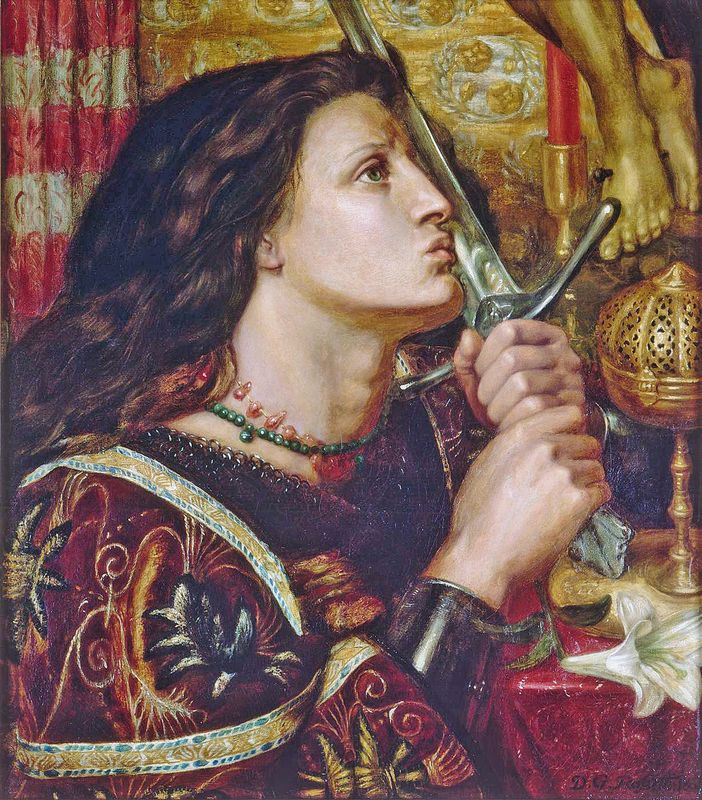 Joan of Arc Kissing the Sword of Deliverance
1863 · Strasbourg Museum of Modern and Contemporary Art
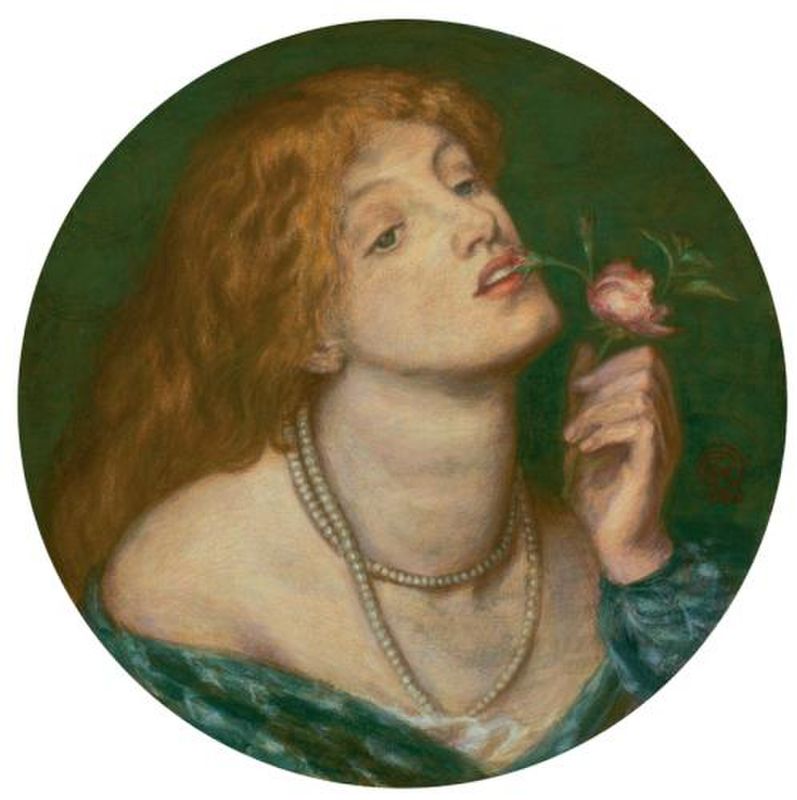 Belcolore
1863
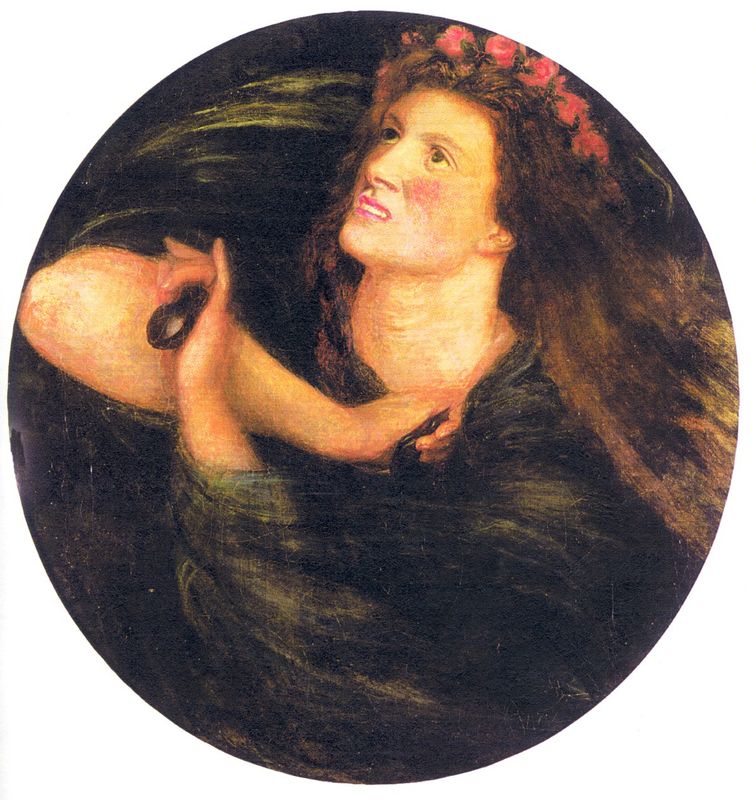 La Castagnetta
1863
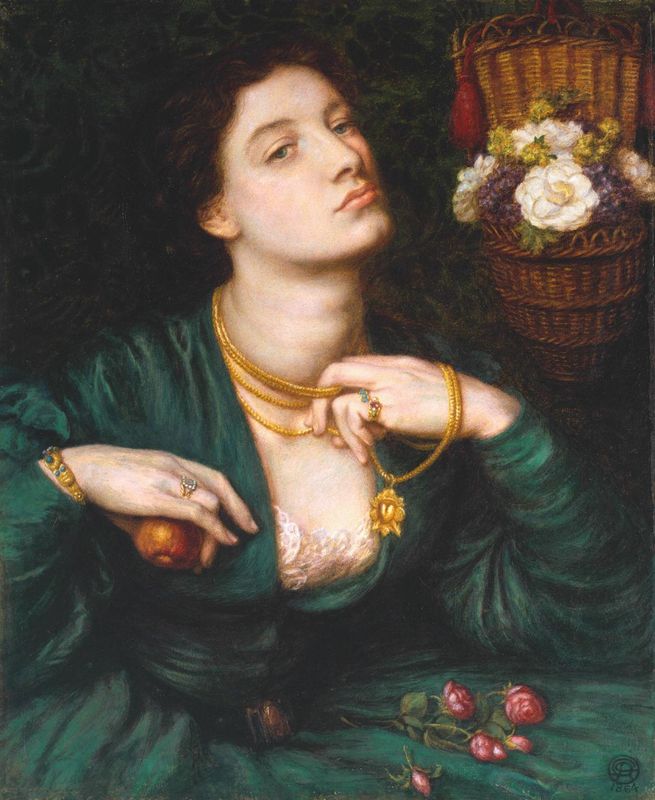 Monna Pomona
1864 · Tate
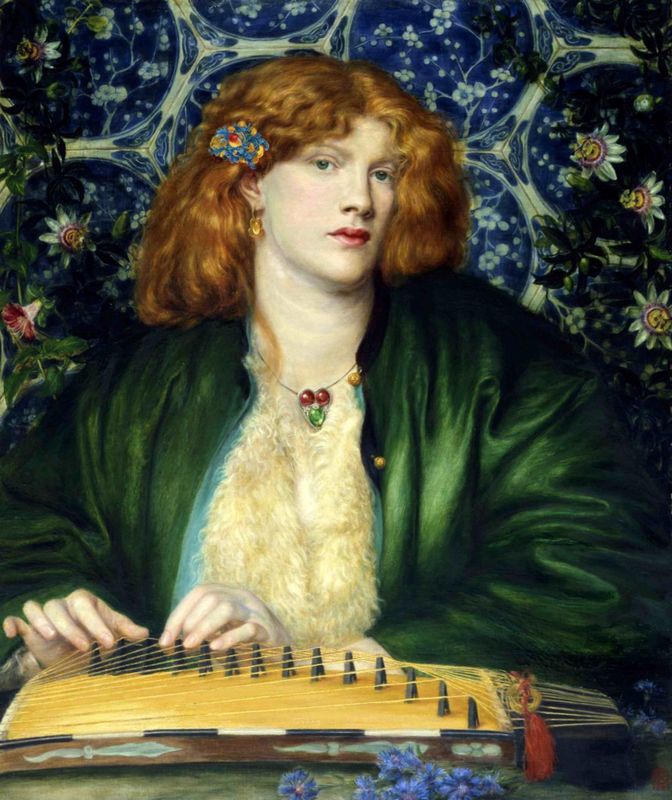 The Blue Bower
1865 · Barber Institute of Fine Arts
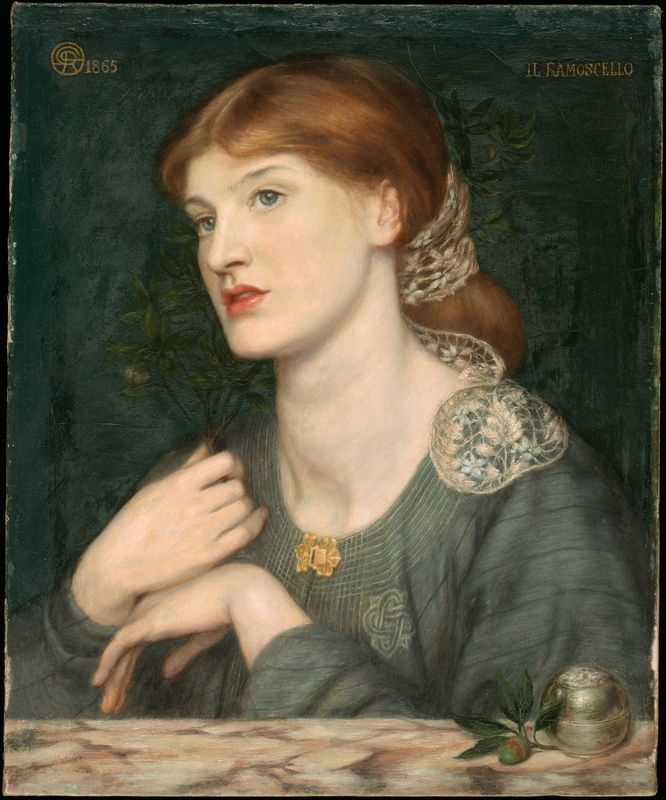 Il Ramoscello
1865 · Fogg Museum
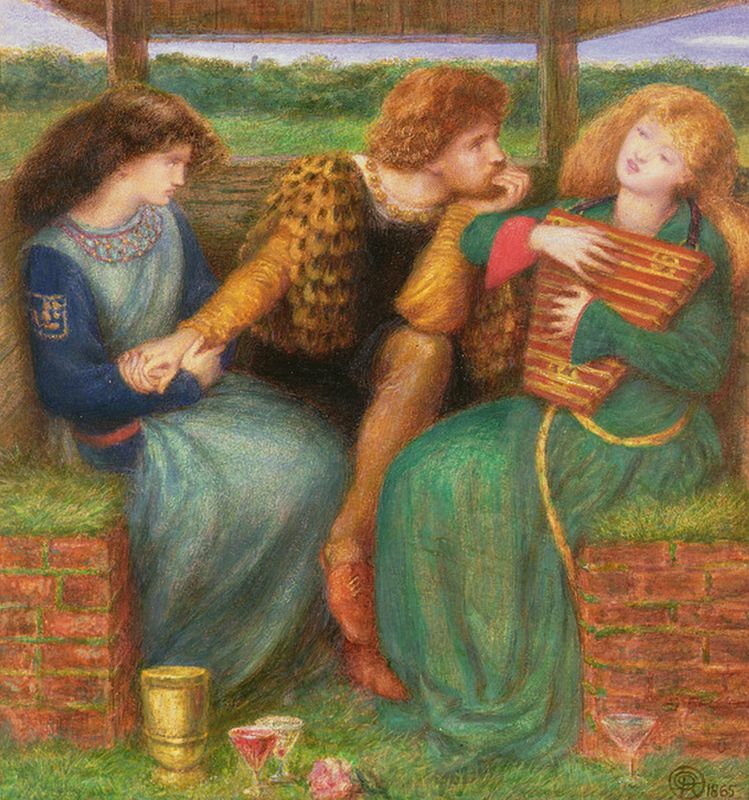 The Merciless Lady
1865
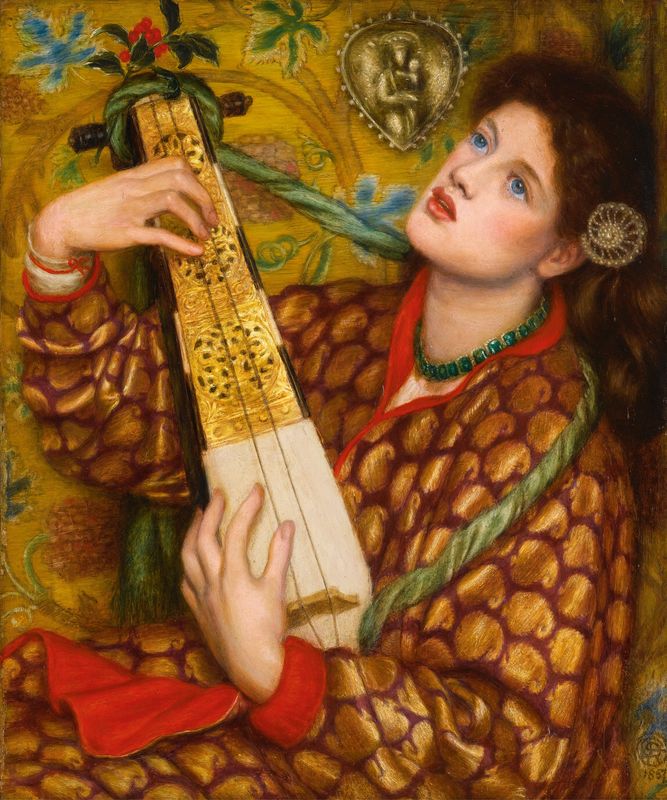 A Christmas Carol
1867
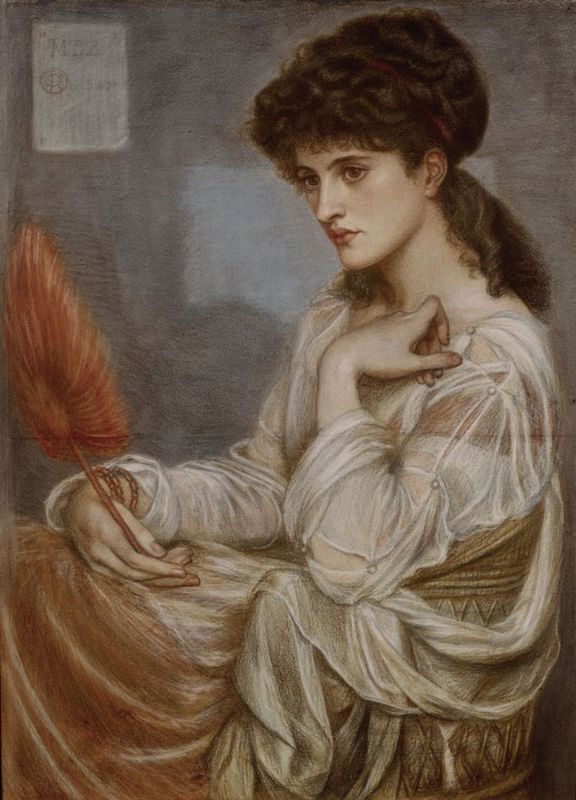 Maria Zambaco
1870 · Clemens Sels Museum Neuss
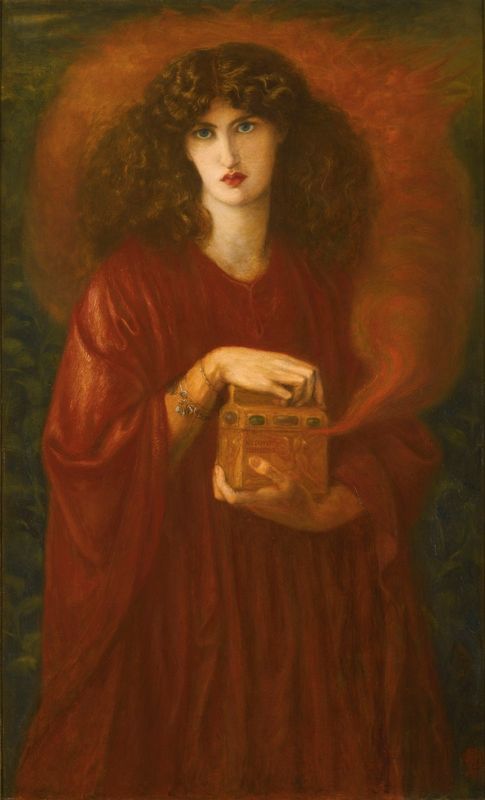 Pandora
1871
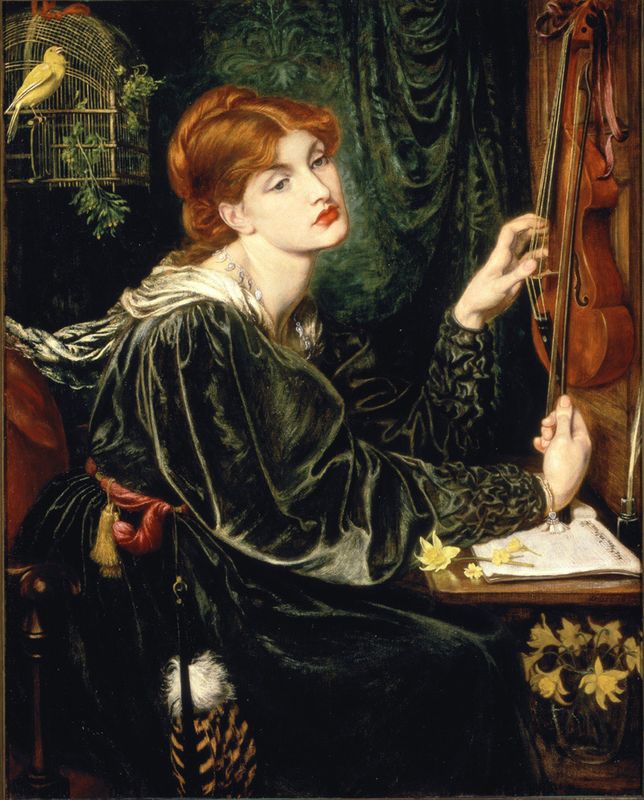 Veronica Veronese
1872 · Delaware Art Museum
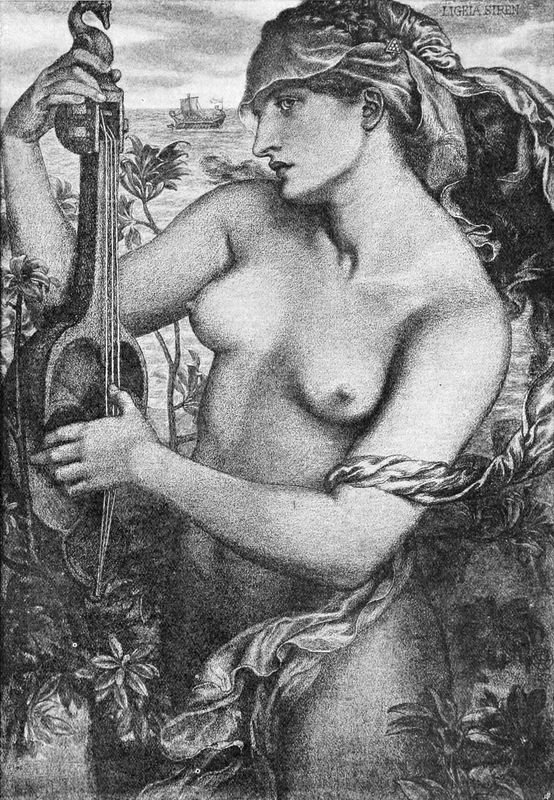 Ligeia Siren
1873
Take Pre-Raphaelite Brotherhood to the museum
Point your phone at any painting and Art Whisper tells you its story — who made it, what to notice, and why it matters. Free to start.