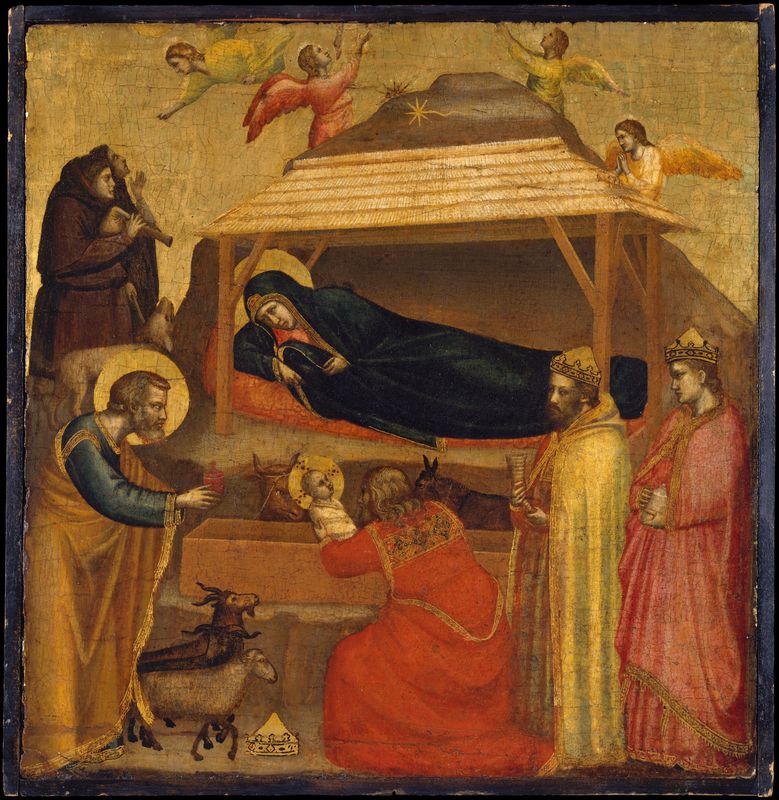
“Giotto’s "The Adoration of the Magi" is a small but powerful example of early Renaissance painting, bringing a new sense of humanity and three-dimensional form to a timeless sacred story.”
In this small, vibrant panel painting, the three Magi kneel before the Virgin Mary and the Christ Child, presenting their precious gifts. Giotto, working around 1315, brings a new sense of three-dimensional space and human emotion to this traditional religious scene. Look closely at the figures; their bodies have a weight and presence, a departure from flatter, more stylized earlier depictions. The rich gold background, a hallmark of the period, highlights the sacred nature of the event, but the expressions on the faces of Mary, Joseph, and the kings feel deeply human. This work, painted with tempera on wood, invites us to witness a moment of profound reverence and wonder, drawing us into the narrative with its intimate scale and compelling detail.
- Artist
- Giotto di Bondone
- Date
- 1315
- Medium
- Tempera on wood, gold ground
- Location
- The Metropolitan Museum of Art
- Dimensions
- 17 3/4 x 17 1/4 in. (45.1 x 43.8 cm)
- Collection
- European Paintings
- Credit line
- John Stewart Kennedy Fund, 1911
What to Notice
Five details hide in plain sight. Here’s where to look.
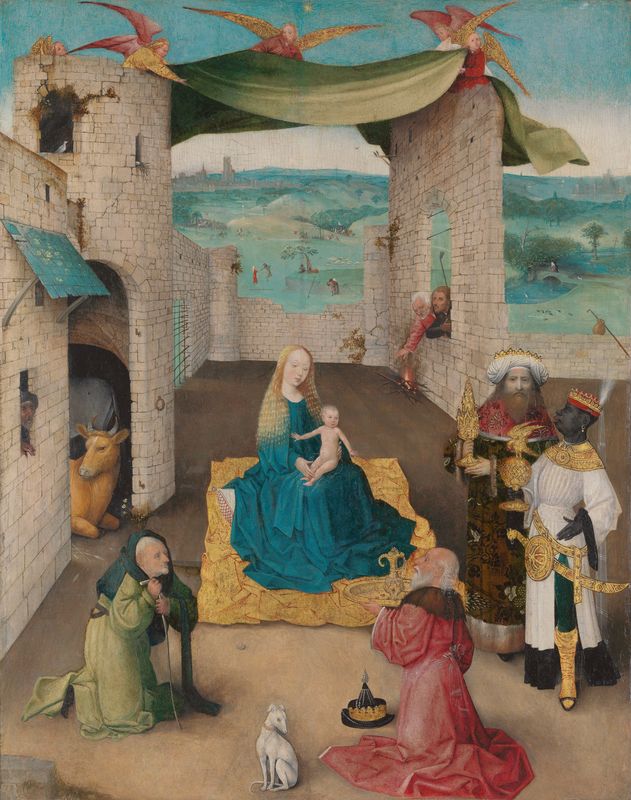
The rich blue of Mary's cloak, a costly pigment reserved for important figures.
Joseph's thoughtful expression as he observes the scene from behind Mary.
The star of Bethlehem, a small but prominent detail at the top center.
The elaborate crowns and robes of the Magi, signaling their royal status.
1 more detail is waiting.
See all 5 in Art Whisper →Giotto di Bondone
1267–1337 · ItalyGiotto di Bondone, a Florentine painter and architect, dramatically broke from Byzantine traditions, ushering in the Proto-Renaissance with his naturalistic figures.