
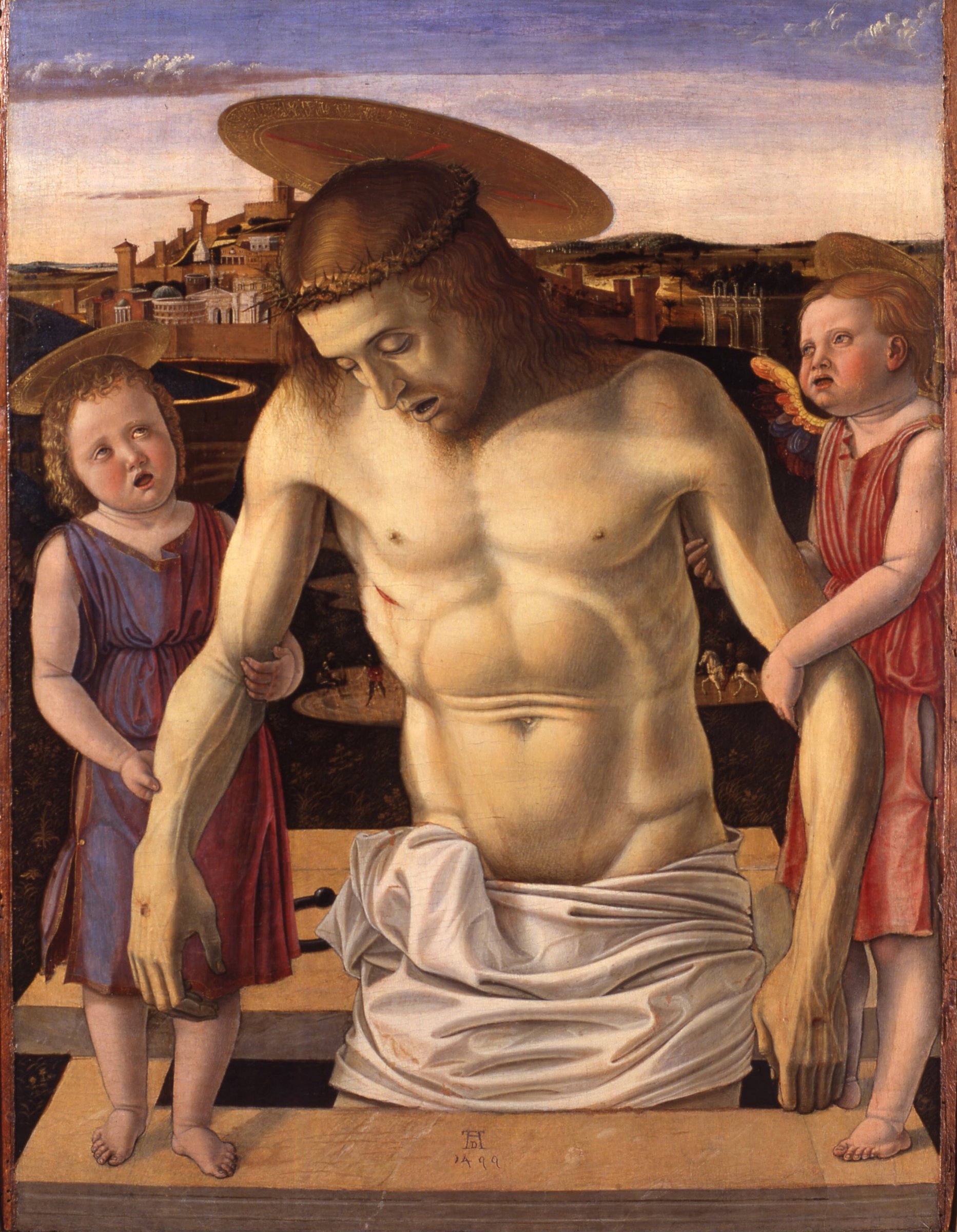
“Stop to observe the raw emotion in this early work, where two angels tenderly support the lifeless body of Christ, inviting a moment of quiet contemplation.”
In this poignant depiction, the lifeless body of Christ is held aloft by two sorrowful angels, a common theme for this artist. The scene is stripped bare, focusing intensely on the figures and their emotional weight. The artist uses the old tempera method, which lends itself to the crisp lines and defined forms seen here, particularly in the drapery and the angels' wings. The starkness of the composition, with the figures presented almost like a sculptural group, draws the viewer into the raw grief. This painting is an early example of a recurring subject for the artist, illustrating his developing approach to capturing human suffering and divine sacrifice.
- Artist
- Giovanni Bellini
- Date
- 1454
- Location
- Museo Correr
What to Notice
Four details hide in plain sight. Here’s where to look.
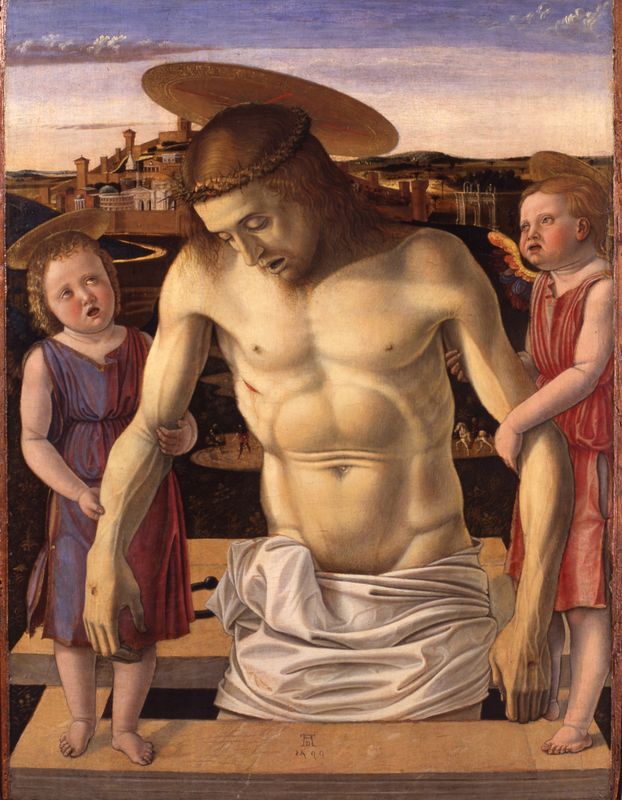
The subtle blush on the angels' cheeks, suggesting their living warmth against Christ's pallor.
The delicate strands of hair on Christ's forehead, damp with sweat or tears.
The precise folds and textures of the fabric draped over Christ's lap.
The faint halo around Christ's head, almost blending into the background.
Stand in front of it and listen
The full narration walks you through Dead Christ Supported by Two Angels — the story behind it, the details most visitors miss, and why it matters. Free in the Art Whisper app.
Giovanni Bellini
1430–1516 · Republic of VeniceGiovanni Bellini brought the Venetian Renaissance to life with his innovative use of oil paint, shaping the careers of future masters like Titian.
Further Works by Bellini
More works to explore
Beyond Bellini: works from the same years.
 Same era · 1430s–1460s
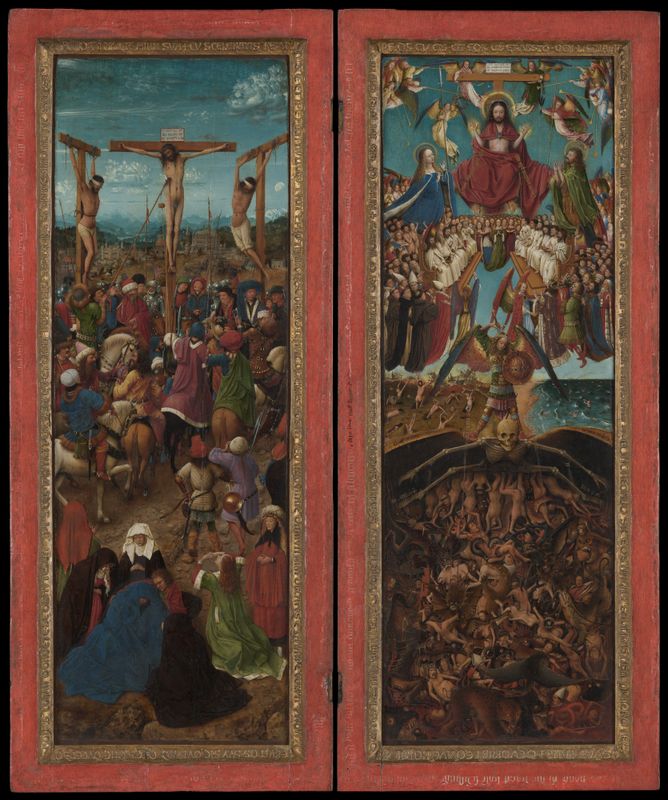
The Crucifixion; The Last Judgment
Jan van Eyck · 1440 · The Metropolitan Museum of Art
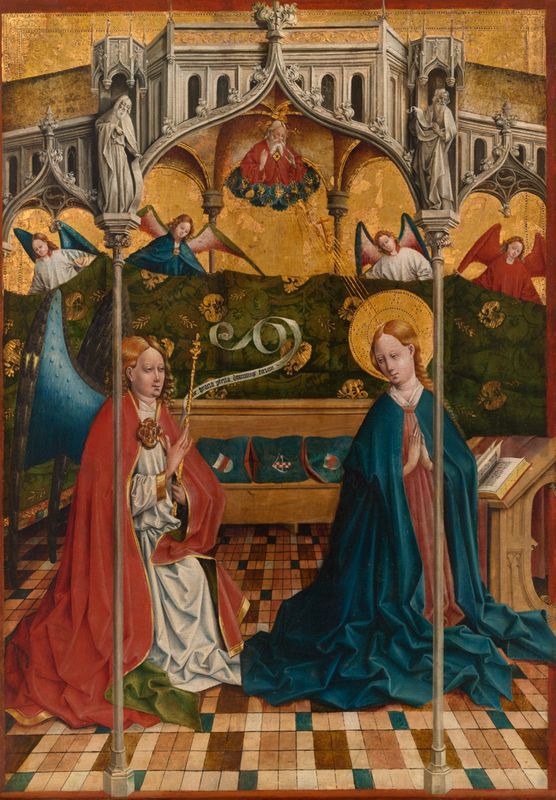 Same era · 1430s–1460s
The Annunciation
Johann Koerbecke · 1457 · Art Institute of Chicago
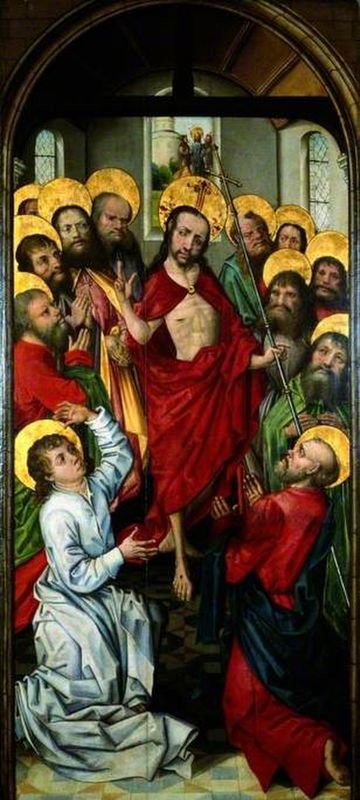 Same era · 1430s–1460s
The Risen Christ (recto)
Master of the View of Saint Gudula · 1467 · Bowes Museum
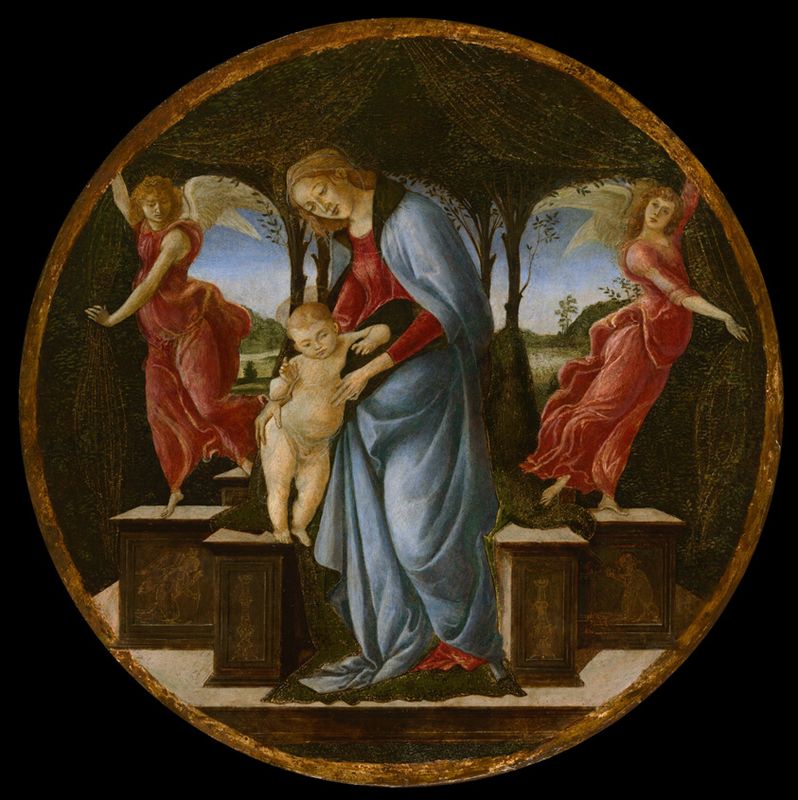 Same era · 1430s–1460s
Virgin and Child with Two Angels
Sandro Botticelli · 1468 · Musée des Beaux-Arts de Strasbourg