
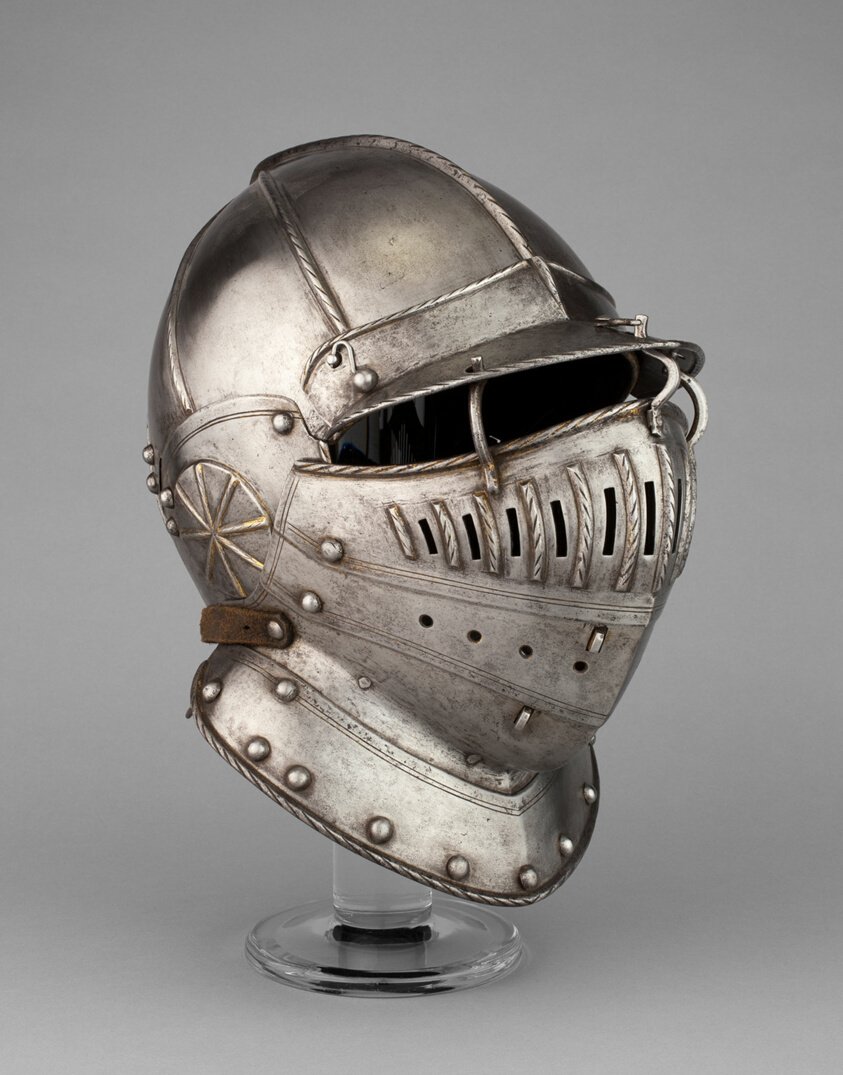
“Step back in time to the 16th century with this exquisite burgonet, a gilded steel helmet that once protected and distinguished a nobleman like William Herbert, Earl of Pembroke, in battle and at court.”
This magnificent Burgonet with Falling Buffe, crafted from steel, gilding, and leather, is a stunning example of 16th-century armor, possibly belonging to William Herbert, Earl of Pembroke. While the provided artist data for William Herbert Allen pertains to a landscape watercolor artist from the late 19th and early 20th centuries, it's clear the artwork's creation date of around 1555 places it firmly in the Renaissance period, long before Allen's birth. Therefore, the 'artist' listed in the initial data refers to the subject or a related historical figure, rather than the creator of the armor itself. This piece would have been a crucial component of a full suit of armor, designed for both protection in battle and display of wealth and status. The intricate gilding would have shimmered, catching the light and emphasizing the wearer's importance. Such burgonets were popular in the mid-16th century, offering a balance of protection and visibility, with the 'falling buffe' providing additional defense for the lower face, which could be raised or lowered as needed.
- Date
- 1555
- Medium
- Steel, gilding, and leather
- Location
- Art Institute of Chicago
- Dimensions
- H.: 21.6 cm (8 1/2 in.)
What to Notice
Four details hide in plain sight. Here’s where to look.
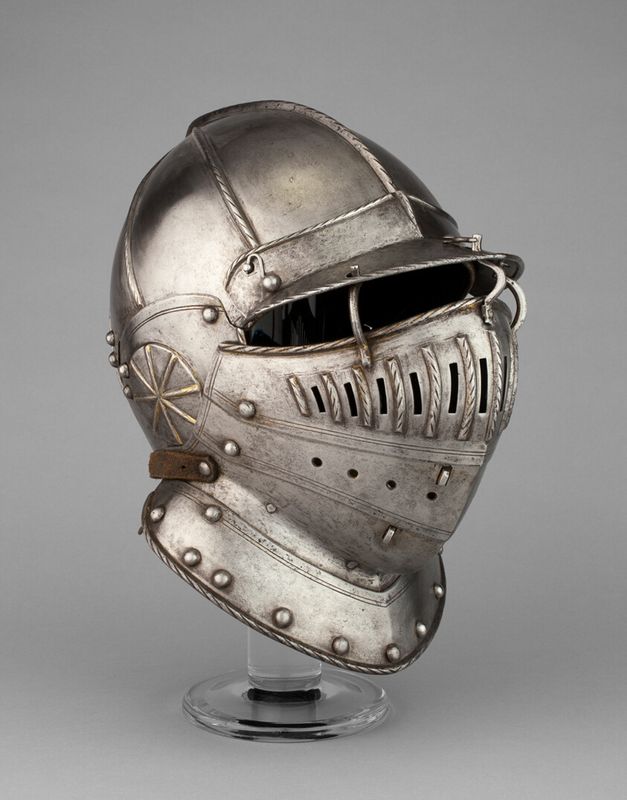
The intricate gilding details on the steel
The functional 'falling buffe' for face protection
The precise craftsmanship of the steel
The subtle curves and lines of the helmet
Stand in front of it and listen
The full narration walks you through Burgonet with Falling Buffe possibly from an Armor of William Herbert, Earl of Pembroke — the story behind it, the details most visitors miss, and why it matters. Free in the Art Whisper app.