
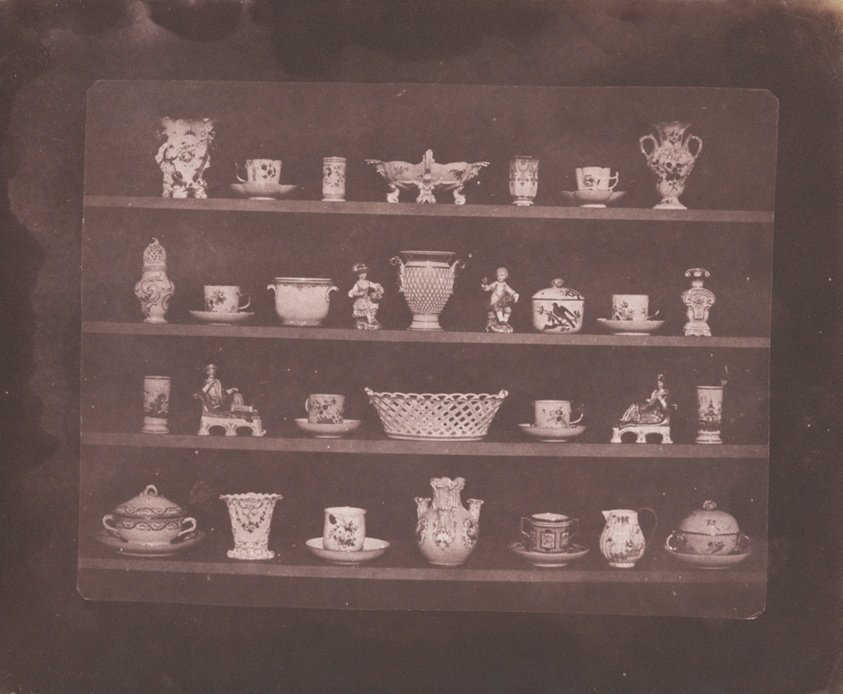
“This early photograph by William Henry Fox Talbot showcases the exquisite detail and texture that the new medium could capture, elevating simple domestic objects into a captivating study of light and form.”
In this early photograph by William Henry Fox Talbot, a collection of delicate porcelain pieces is arranged on a patterned cloth, bathed in a soft, diffused light. The subject matter, humble domestic objects, reflects a common theme in early photography: exploring the medium's ability to capture texture and form with unprecedented fidelity. Here, the subtle variations in light and shadow across the curved surfaces of the bowls and cups reveal the inherent qualities of the china. The patterned fabric beneath adds another layer of visual interest, its intricate design a testament to the camera's capacity for detail. This image, a salted paper print from 1843, demonstrates the nascent power of photography to transform everyday items into subjects worthy of close observation, inviting viewers to appreciate the quiet beauty in their surroundings.
- Artist
- William Henry Fox Talbot
- Date
- 1843
- Medium
- Salted paper print
- Location
- Art Institute of Chicago
- Dimensions
- Image: 13.7 × 18.2 cm (5 7/16 × 7 3/16 in.); Paper: 18.7 × 22.4 cm (7 3/8 × 8 5/8 in.)
What to Notice
Four details hide in plain sight. Here’s where to look.
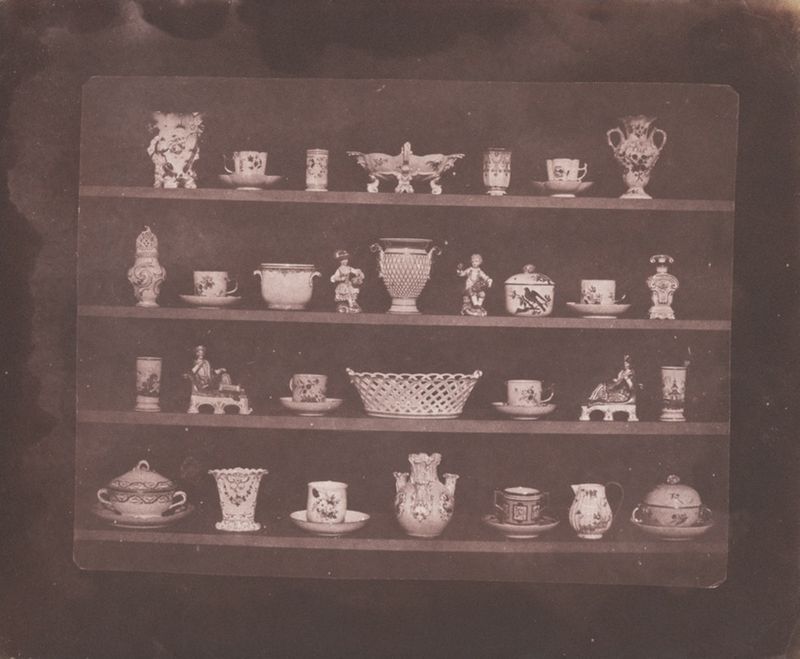
The way light reflects off the smooth, glazed surfaces of the porcelain.
The intricate floral pattern on the cloth beneath the china.
The subtle shadows cast by each piece, adding depth to the composition.
The varying sizes and shapes of the bowls and cups.
Stand in front of it and listen
The full narration walks you through Articles of China — the story behind it, the details most visitors miss, and why it matters. Free in the Art Whisper app.
William Henry Fox Talbot
1800–1877 · Kingdom of Great BritainThe man who invented the negative-positive process, making every photograph ever printed possible.